UPDATE: This story was updated to reflect that California’s Department of Social Services also received a letter from the Trump administration.
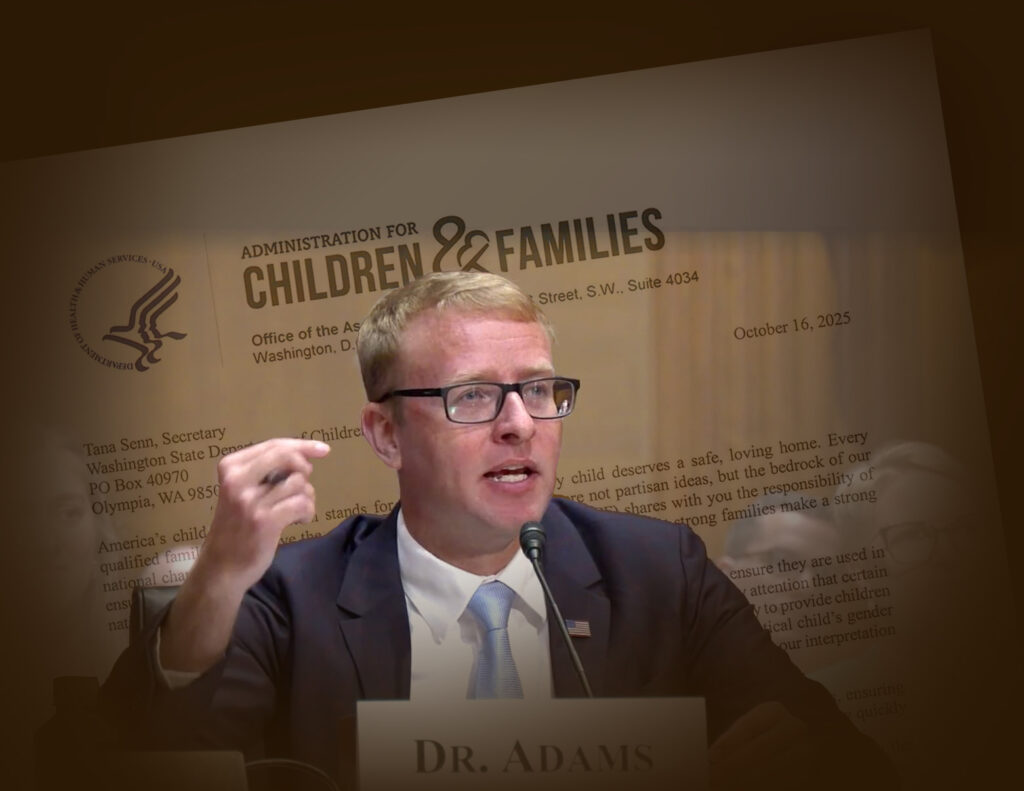
The federal official appointed by President Donald Trump to oversee the nation’s child welfare system has told at least five states to “review and, where necessary, amend” policies that require foster parents to affirm the gender identity of foster youth, documents obtained by The Imprint confirm.
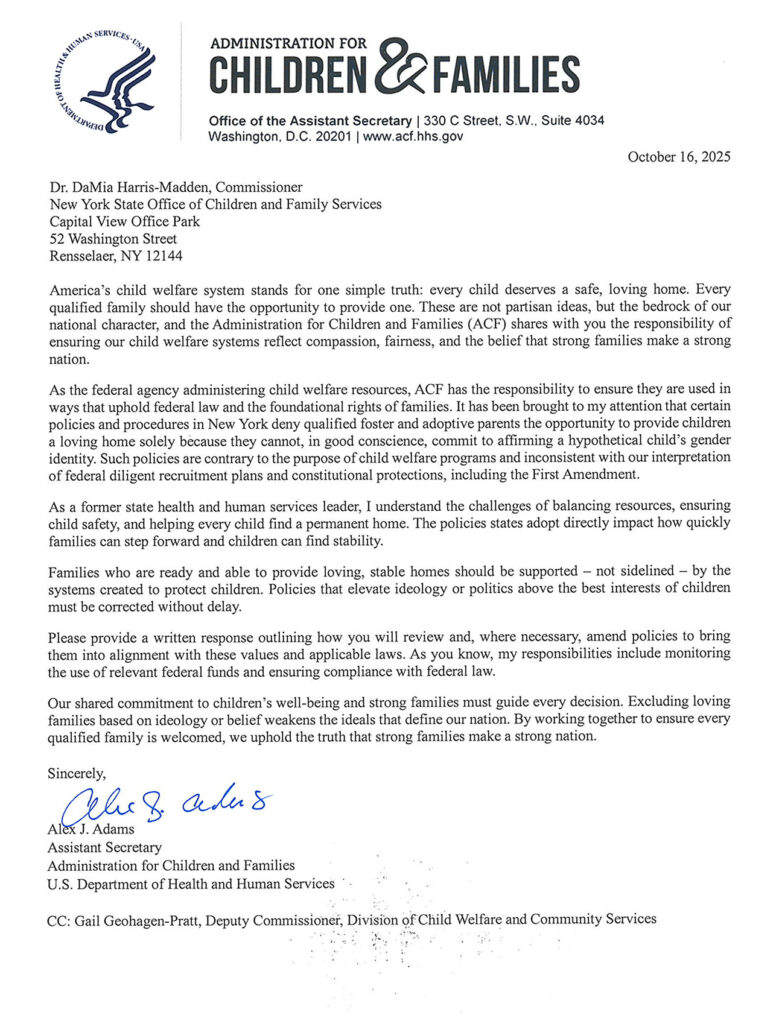
In nearly identical, one-page letters sent over the past week to New York, Vermont, Illinois, California and Washington, newly appointed head of the Administration for Children and Families Alex Adams describes the states’ gender-affirming requirements as unconstitutional. Qualified foster parents who refuse to accept children’s gender identities are being barred from service “solely because they cannot, in good conscience, commit to affirming a hypothetical child’s gender identity,” Adams wrote.
“Families who are ready and able to provide loving, stable homes should be supported — not sidelined — by the systems created to protect children,” he stated. “Policies that elevate ideology or politics above the best interests of children must be corrected without delay.”
The letters follow two similar forcefully worded directives mailed last month to Oregon and Massachusetts by Adams’ interim predecessor, Andrew Gradison. In his letters last week, Adams instructed state officials to “provide written response outlining how you will review and, where necessary, amend policies to bring them into alignment with these values and applicable laws.”
It was unclear by press time how many more states may have received the letters.
Did your state receive a letter from Alex Adams? Let us know: MFitzgerald@imprintnews.org
One in three foster youth identify as LGBTQ+, according to numerous government and academic surveys, and many states have created policies to meet their distinct needs. In some states, that has prompted lawsuits from foster parents who do not want to refer to children by their preferred pronouns, for example, or to support a transgender youth’s medical care.
The federal directives are among the first-known actions taken in office by Adams, a former pharmacist and state budget director confirmed by the U.S. Senate on Oct.7.
Calls and emails to the federal Department of Health and Human Services and its Administration for Children and Families — which have limited operations during the government shutdown — have gone unreturned.
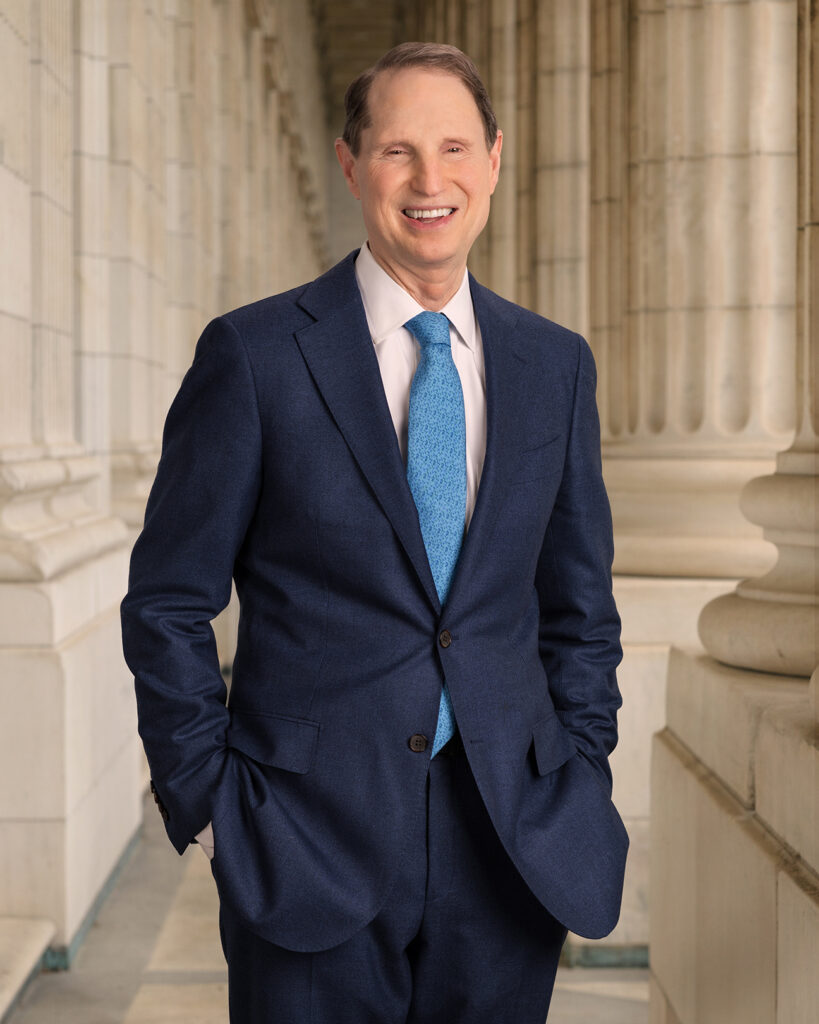
In a statement responding to the letters Oregon and other states received, U.S. Sen. Ron Wyden, who is one of the most active federal policymakers on child welfare issues, vowed his state would resist the pressure.
“Kids do best when they are loved and cared for by people who accept them for who they are. The Trump administration is engaged in a scorched earth effort to erase and demonize young people based on their identity, and this action is a part of that vile campaign,” Wyden said. “Oregonians aren’t going to bow to threats from bullies and ideologues.”
“The research is clear: LGBTQ+ youth who are accepted by their families and communities thrive.”
— Nesta Johnson, advocate and former foster youth
Washington Gov. Bob Ferguson said his administration was still considering how it would respond to Adams’ letter to his state’s Department of Children, Youth and Families (DCYF).
“DCYF’s mission is to protect children, and to consider their welfare above all other concerns when placing them in homes. It is, and has always been, about the kids,” said Ferguson in a statement emailed by a spokesperson. “We are working with legal counsel on how to respond to this misleading and inflammatory letter.”
Child welfare agency leaders in New York and Vermont said they are still reviewing the letters from Adams.
LGBTQ+ foster youth: a sizeable group
In recent years, 35 states have developed a patchwork of laws, policies and practices to protect foster youth from gender-identity discrimination, according to the Movement Advancement Project. Many teens enter foster care after experiencing abuse or neglect at home related to their gender identity or sexual orientation. Once in foster care, they report similar discriminatory treatment and face higher-than-typical placement disruptions, according to public testimony and surveys conducted by government and academic researchers.
At Adams’ Senate confirmation hearing this summer, Sen. Wyden pressed the Idahoan to say what he would do to protect LGBTQ+ youth. He also stated that his staff had recently collected dozens of stories of verbal and physical abuse from these young people living in group care facilities.
“You are very articulate,” Wyden told Adams during part of their exchange, “but it’s really hard to understand what you stand for and what you would do.”
“My operating principle in Idaho has been, when there’s a fork in the road, I’m going to do what’s in the best interest of the child,” Adams responded.
Adams joins an administration targeting LGBTQ+ policies
In his previous role leading Idaho’s Department of Health and Welfare, Adams placed a strong emphasis on addressing a shortage of foster parents, and recruiting them from churches. He has pledged to make foster care his priority in his new position leading a sprawling $70 billion federal office that oversees an array of other child- and family-serving public programs.
His recent letters to states are in line with the Trump administration’s broad and unprecedented campaign to pressure state and local governments, schools, business and charities to adopt its preferred policies — particularly those targeting gender-affirming care for transgender children.
“The Trump administration is engaged in a scorched earth effort to erase and demonize young people based on their identity, and this action is a part of that vile campaign.”
— Sen. Ron Wyden
But LGBTQ+ rights in the foster care system has been a point of broader contention. Many Republicans and conservative Christian advocates have argued that under the constitution’s protections for freedom of religion and speech, state child welfare agencies cannot require that foster parents support a child’s sexual orientation or preferred pronouns.
Civil rights advocates, medical societies and numerous child welfare leaders, in turn call the unwillingness to accept and support LGBTQ+ children’s identities as discriminatory and harmful.
Washington State, for example, has regulations that require foster parents to support foster youths’ sexual orientation, gender identity and expression — referred to as SOGIE. Foster parents must “support a foster child’s SOGIE by using their pronouns and chosen name, and respecting the child’s right to privacy,” it reads.
In response, a string of lawsuits against states has been filed nationwide by conservative legal advocacy firms that oppose such policies. Their clients are typically Christian foster parents who have had their licenses denied for refusing to affirm the gender identity of foster children, such as supporting clothing and pronoun choices for trans and nonbinary youth.
The influential Arizona-based Alliance Defending Freedom has served as co-counsel for a plaintiff mother in Oregon — who prevailed on appeal — as well as in others filed against the child welfare agencies in Washington, Vermont and Massachusetts.
Sam Whiting of the Massachusetts Liberty Legal Center is co-counsel on the Alliance’s case against the Massachusetts Department of Children and Families (DCF). He hailed the Trump administration’s Sept. 30 letter challenging the state agency’s LGBTQ+-affirming policy.
“The policy both harms Christian foster families and strips loving homes away from foster children,” Whiting stated in an email. “If DCF does not change course, they will continue to face opposition not only from us, but from the federal administration as well.”
What’s in the letters
The letters sent this month by Adams do not name states’ specific policies or prescribe specific changes. But they describe requirements that foster parents affirm children’s gender identity as a violation of the caregivers’ First Amendment rights, and inconsistent with the current administration’s interpretation of federal laws calling for “diligent recruitment” of foster homes.
The letters also suggested that federal funds could be at stake for states with a policy that “weakens the ideals that define our nation.”
As a teenager who identified as queer, Nesta Johnson spent time in a conservative Catholic foster home. Now an experienced legal advocate for children and families, she described Adams’ position as deeply concerning.
“Agencies in every state should take this development seriously,” Johnson said of his recent letters to states. And child welfare agencies, she added, “can and should” take action to protect LGBTQ+ foster youth, while minimizing the risk of lawsuits or federal funding issues.
“The research is clear: LGBTQ+ youth who are accepted by their families and communities thrive,” said Johnson, who now runs a consulting firm. “Rashly rescinding evidence-based policies that keep LGBTQ+ foster youth safe will cost lives.”
Johnson pointed to her own childhood as “incredibly fortunate.” She landed with a foster mother in rural, upstate New York who did not attempt to impose religious values on her, or enforce her beliefs about sexual orientation and birth control.
“She was aware I did not share her Catholicism, and was willing to drive me to Planned Parenthood, even while muttering ‘I wouldn’t even take my cat to Planned Parenthood,’” Johnson recounted. “She knew I was not her child and she did not feel it was appropriate for her to impose her beliefs on my access to medical care.”