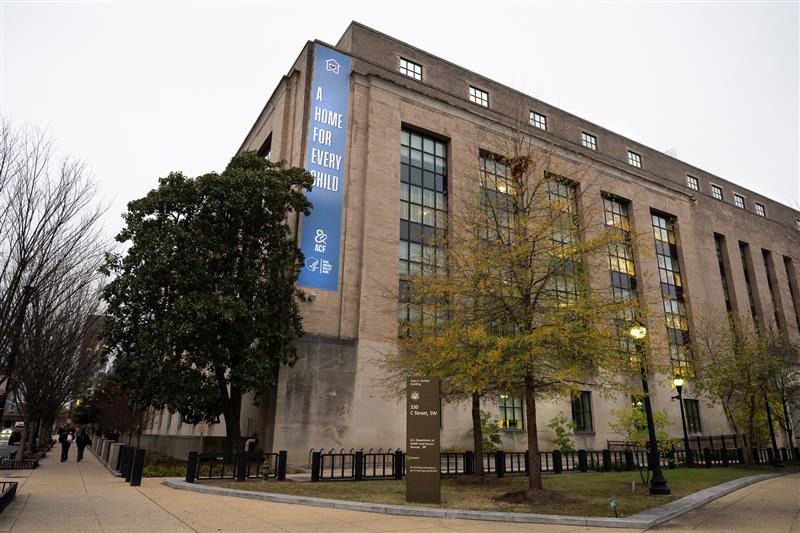
After two years covering child welfare in New York, Imprint reporter Susanti Sarkar shadowed a frontline worker with New York City’s Administration for Children’s Services. The access granted was just one day. But it provided rare insight into how Child Protective Services does its job after reports of child maltreatment are called in to the state hotline, known as the Statewide Central Register of Child Abuse and Maltreatment.
To protect family privacy, The Imprint has agreed to publish only non-identifying information and photos.
It would turn out to be a day of shifting stories and differing accounts.
By the end of the months-long ordeal, a father will either be absolved of endangering his kids, or the family will find itself more deeply enmeshed in the child welfare system.
Photos by Susanti Sarkar
The Case
Jael Brooks starts her day at 8:30 a.m. in a squat, brick building on Jamaica Avenue in Queens. Brooks, a 37-year-old licensed clinical social worker, has been at the agency for nine years. She is assigned to the hospital and sexual abuse unit — the division that investigates some of the most severe allegations of abuse.
Most days involve tough conversations with parents and their children. Then there’s the succession of doctors, therapists, teachers, counselors and retired police detectives who serve as investigative consultants to speak with as well.
Brooks catches up on her other cases throughout the morning of May 29, until 11 a.m., when her supervisor, Janice Hogg, calls her over to her desk in the bustling, open-plan office.
There’s a new case.
Hogg, a veteran in the child protection field, has been with the Administration for Children’s Services (ACS) for almost four decades. She remembers when caseworkers had to juggle as many as 40 families at a time. But in recent years, the agency has stepped up its efforts to hire and retain staff, and now workers like Brooks typically carry about eight cases at a time.
Hogg tells Brooks about a recent call to the Statewide Central Register of Child Abuse and Maltreatment. The register forwards “screened in” reports to local county child welfare agencies, which then investigate. Since there are no new cases to assign that fall specifically under her unit’s purview, this one comes to Brooks.
Dressed in a navy blue pantsuit, Brooks listens intently to details about the family’s history with Child Protective Services. She dips her head to jot down notes in a little black book, a ubiquitous tool among CPS workers.

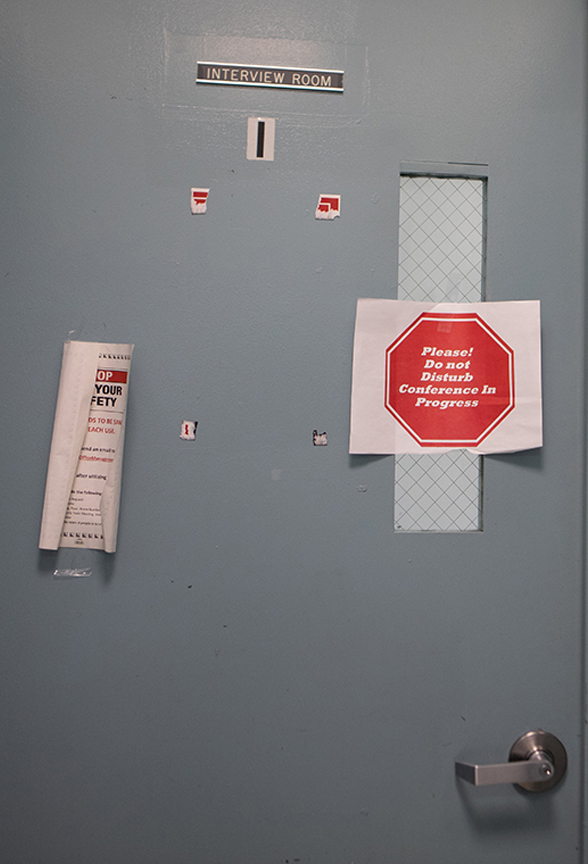
The Emergency Children’s Services unit, which responds to calls overnight and on weekends, took the original call from a mandated reporter. The allegation: A father with a history of alcohol abuse had driven while intoxicated with his two children in the car, and was speeding. The emergency team had visited the family’s Queens home the night before, Hogg tells her. The account, if true, could be a case of parental neglect.
“ACS comes into their lives and it’s involuntary. I get it. I’m a stranger.”
This family is known to the agency. In 2020, in the height of the pandemic, a domestic violence allegation was lodged against the father. A caseworker noted that the family was struggling financially at the time, and that the father was depressed and had started drinking heavily. He had been referred to substance abuse counseling, and CPS worked with the mother on a safety plan. They also referred her to intimate partner violence services and recommended counseling for the children.
Now there’s this new allegation and it’s Brooks’ turn to try to get to the bottom of what really happened on that drive. The Queens family has been told to expect her visit today. And like any good detective, she will have to interview everyone and arrive at her own conclusions.
Her involvement will launch a 60-day investigation during which she will watch the family very carefully. They will need to agree to bi-weekly check-ins with her, among other conditions.
Ultimately, Brooks will need to determine whether the allegation is unfounded or has merit. If found to have merit, the report will be labeled “indicated,” meaning that CPS found evidence of abuse or neglect.

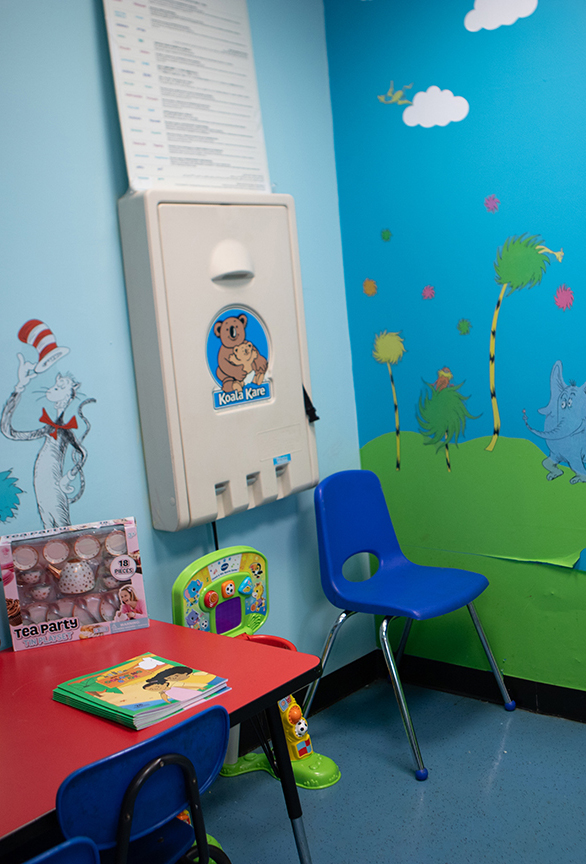
Before leaving the office around 1 p.m., Brooks enters a room filled with emergency items for families. She moves past clothing racks of blue and pink onesies and shelves stacked with diapers, baby powder and car seats to reach the carbon monoxide detectors. She tucks a detector into her black tote bag. The night before, the emergency caseworkers who visited the family noted one was missing from the home.
She heads out. Most days she takes the subway to reach the families she needs to check on, but today she hops into one of the agency’s shiny black vans.
Interviewing the children
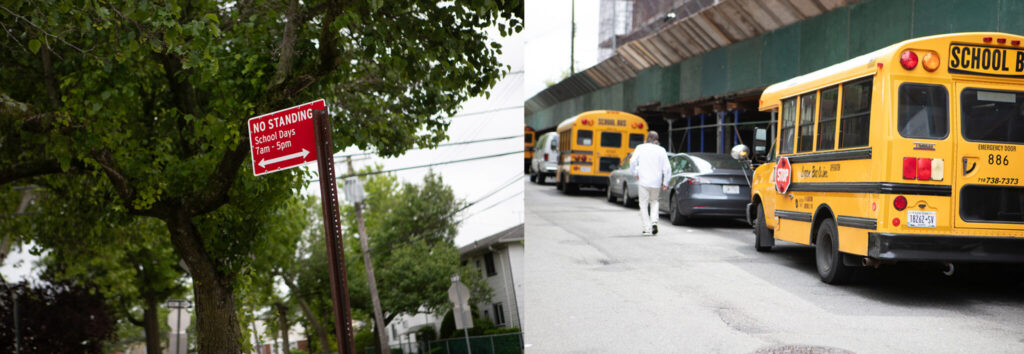
The agency driver takes her to the first stop, the son’s elementary school. Bright yellow buses wait outside. It’s around 2 p.m. and kids are being picked up or shuttled to after-school programs. Parents smile as children emerge with bouncing, cartoon-character shaped backpacks.
Once inside, Brooks first speaks with a school guidance counselor who had been informed earlier in the day that CPS would be paying a visit. Generally, Brooks tries to find out more about the child during these conversations — how they are faring in school, whether they need any special education services.
The boy is ushered into the guidance counselor’s office. Brooks tries to put him at ease.
“I know you met with some people last night,” she tells him. “I work with them, but my face is the one you’re going to see for a few weeks. I’m going to be working with your family moving forward.”
He is quick to dispute the accusation against his father. His dad only drinks a beer or two at family gatherings, the child insists, and he “always feels safe” with him.
The path to the truth dims and curves.
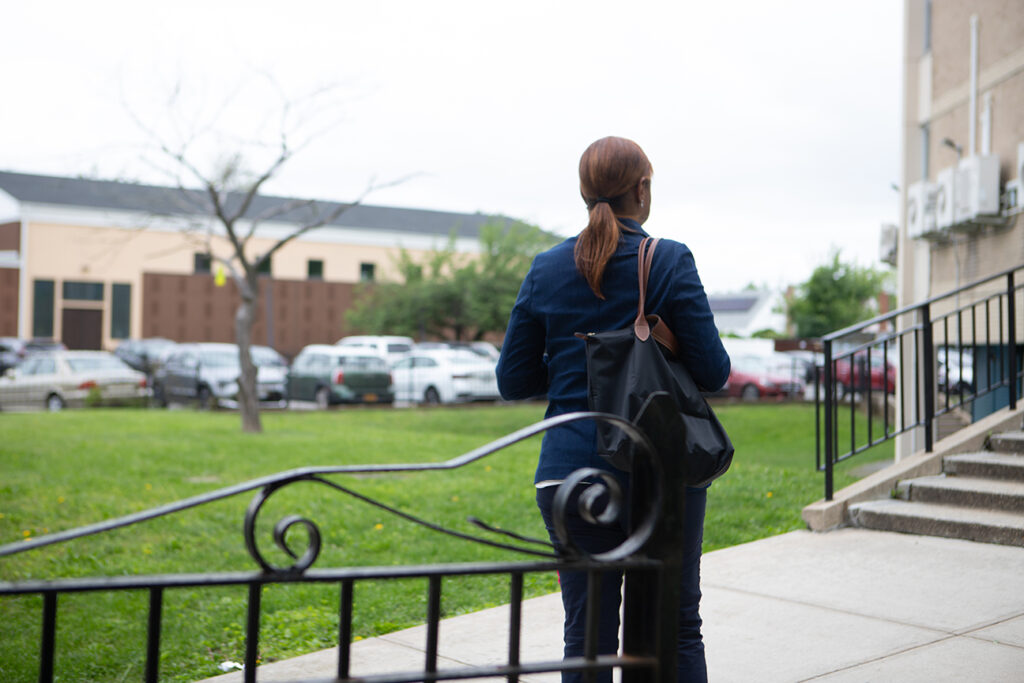
The next stop is the daughter’s middle school. The copper-colored brick building sits on a residential, tree-lined street where the sound of chirping birds mix with the tinkle of a passing ice cream truck.
Inside, the roar of children’s voices surrounds Brooks. Students rush around hallways lined with posters advertising school competitions and clubs. Teachers trade jokes as they wind up their day. Brooks waits in a private office for someone to bring in the boy’s sister. It was her medical provider, a counselor, who made the original report to the state hotline.
“I could tell she was very nervous. She was rambling a lot. Her mom told her we would come. So all day she’s been waiting.”
Brooks has spent nine years on the job talking to children. She is also the mother of two boys. So she knows when kids are trying to hide something. She has a strategy — a few techniques to put them at ease. When she spoke with the younger brother earlier, she made her words casual, her voice friendly and light.
But she knows that middle schoolers don’t like to be coddled. They are hyperalert to adults’ attempts to get them to talk. So when the pre-teen enters the room, she uses a direct approach and speaks to her like a grown-up.
“I could tell she was very nervous,” Brooks says later of the encounter. “She was rambling a lot. Her mom told her we would come. So all day she’s been waiting.”
This is all a big misunderstanding, the young girl tells Brooks. She is guarded, and Brooks guesses that she regrets her words during an appointment with the counselor whose call led to this investigation. Like her brother, she also disputes the report her counselor made to the child maltreatment hotline.
“You can tell, obviously, she loves her family.”
On her cell phone with her supervisor afterwards, Brooks relays the conversation.
“The daughter said she went to the appointment yesterday; they were asking a lot of personal questions,” Brooks says, black notebook in her lap, phone pressed to her ear.
“She said she doesn’t understand how it escalated from having that little conversation into this being a situation.’’
“You can tell, obviously, she loves her family,” Brooks adds.
Next it’s time to talk to the counselor, the mandated reporter whose call launched the investigation. Brooks phones her. Once again, the story shifts. The original report to the hotline noted the dad’s history of alcohol abuse and that he was driving under the influence. Now the counselor tells Brooks the daughter didn’t exactly see her dad drinking before driving, just that he was driving too fast for her liking.
Brooks now knows there is a chance that a misunderstanding prompted the report. Even so, the safety of the children in the house remains her priority, and once a report is made to the hotline, she is duty-bound to follow the investigation to its end.
At this point in her day, Brooks only knows one thing for sure: She needs to talk to the parents.

Meeting the parents
They’re living apart now, but dad has come to where the children live with their mother so they can be together for Brooks’ visit.
Earlier in the day, Brooks had asked them to meet after the mother got off work. She knew it would mean more overtime on her end, but she tries to make things easier for those she interviews. She understands the disruption and fear she causes in their lives.
“That’s their livelihood,” Brooks says of parents who often have to leave work and sometimes lose pay to deal with CPS visits. “I want to respect them and meet them where they’re at.”
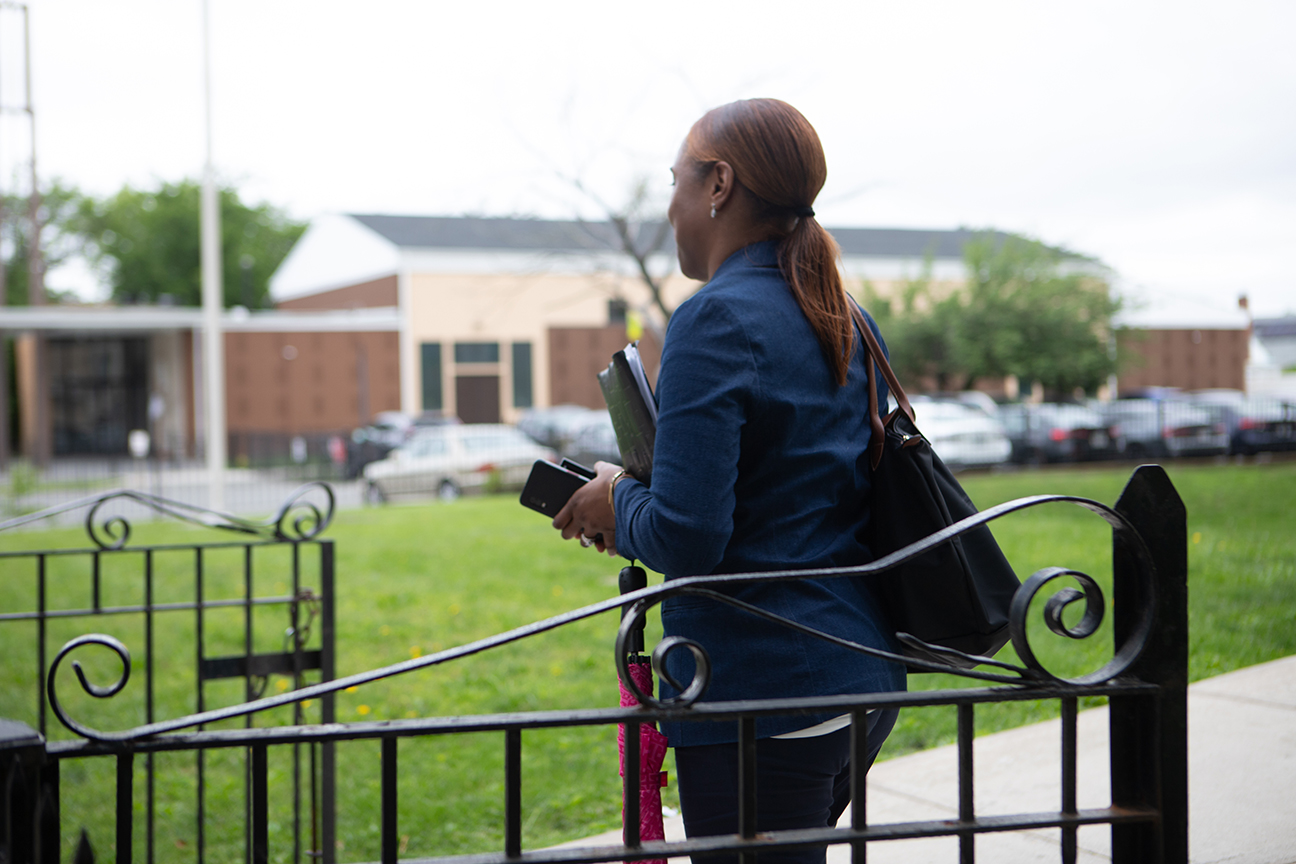
The van pulls up to a street lined with brick rowhouses as the sun sets and the sky turns pink. Brooks exits and walks by children’s bikes sprawled on the sidewalk.
“Good evening, I’m Jael Brooks from the Administration for Children’s Services,” Brooks says when the mother’s front door opens to her knock. “We received a report today regarding your children. Can I come in and speak to you?”
During their first visit, child protective specialists provide families with a written notice at the front door.
It explains that families don’t have to let CPS into their homes and that they have the right to speak to an attorney. The information is available in 10 languages.
She hands the mom a flyer that states the agency’s notification policy and waits while she reads it. It explains that families don’t have to let CPS into their home and that they have the right to speak to an attorney. If a family were to refuse her entry, Brooks would need a court order to enter, so she tries to persuade them to cooperate. Most of the families she interacts with agree, she says.
So does this family. Once inside, she hands the parents a Notice of Existence. This sheet of paper informs them that the agency has opened an investigation of abuse or maltreatment regarding the family. She has other paperwork as well. She asks them to sign consent forms so that she can confirm they are keeping up with the children’s medical appointments.
Then she does a quick inspection of the home and finds the two-bedroom apartment tidy. The family rents one bedroom to a subtenant. The mother shares the other room with her children, who sleep in a bunk bed.
“A lot of people think all we do is remove kids, and that’s not true…There are challenges that need to be addressed. But on a daily basis, when we go into homes, that’s not our first option, that’s not our main intention.”
In the living room, Brooks and the parents talk for nearly two hours while the children wait in their room. The mother is up front about her ex-partner’s drinking habits, but says she feels confident that he would not drive while intoxicated with their children in the car. And the children’s father firmly denies the allegation.
“My children do not see me drunk,” he tells Brooks. He tells her he is willing to undergo random alcohol screenings and will cooperate with the investigation.
“Whatever it takes,’’ he says, “just to prove I’m not drinking.”
There is still no way for Brooks to be entirely sure what happened in that car. But what she can do is put up some safeguards for the family and give the dad some time to prove himself.
For now, she suggests that the father meet with an agency alcohol and substance abuse counselor. He also agrees to undergo random alcohol tests over the next couple of months.
At this point, this family is now under supervision of the Administration for Children’s Services, and Brooks will continue to assess the family for safety concerns.
Families like these face potentially dire consequences.
If child maltreatment reports are determined to be founded, or “indicated,” the case comes before a judge who orders services for the parents and children. The children either remain at home under CPS supervision or are taken into temporary foster care. In the rare cases of extreme abuse, a criminal complaint can be taken to the District Attorney.
Parents found to have abused or neglected their kids are named on the child maltreatment registry that potential employers in child-related fields can access until the parent’s youngest child turns 18.
Day’s End
Nearly 12 hours after her shift began, Brooks’ workday is finally winding down.
Today’s family easily agreed to the suggestions she laid out, Brooks says, as she heads back to the office in the van. But that’s not always the case.
“Some days can be overwhelming,” she says. “You feel like you’re doing everything you can to help this family, and it seems like nothing you do is working for them.”
Sometimes families don’t follow through on the promises they make to her — they fail to attend anger management or parenting classes, or they don’t show up for therapy appointments.
And sometimes CPS does need to remove a child from the home.
But those times involve serious allegations and evidence of neglect and abuse and are rare, Brooks insists.
After all these years being the face behind the knock on families’ doors, Brooks is well aware of the public’s perception of people like her.
“ACS comes into their lives and it’s involuntary,” she says. “I get it. I’m a stranger.”
But, she says, there’s so much more to a caseworker’s job that people don’t see.
“We do a lot of good work. A lot of people think all we do is remove kids, and that’s not true. In those situations, there are issues, right? There are challenges that need to be addressed. But on a daily basis, when we go into homes, that’s not our first option, that’s not our main intention.”
Most of her work days, she says, are about finding solutions for the stressed and struggling families brought to her agency’s attention. She has advocated for families who don’t know who to turn to when their children are bullied in school. She has intervened for parents who are desperate to enroll their kids in special education classes.
A week earlier, a visit she’d paid to one home reminded her of how much a little help can mean for the families she encounters. A call had come into the state hotline about a mother of two whose older child had missed some therapy appointments. When Brooks arrived at the family’s home to investigate the child neglect allegation, she met an overwhelmed, pregnant mother.
Brooks connected the mom to a more conveniently located therapist and ultimately determined that the neglect allegation was meritless. But while there, she also learned that the woman was unable to afford a crib for her soon-to-be-born third child. She and one child shared a bed, and another child slept in a too-small toddler bed. By the visit’s end, Brooks had ordered diapers, a crib and a new bunk bed for the kids.
“She was so grateful for it, because she’s not working right now and doesn’t have the financial means,” Brooks says.
It is 8:30 p.m. by the time Brooks is dropped off by her city-issued van and heads to the subway for the 40-minute ride home. Over the years, she’s learned how to leave the hard parts of her day at the office, so she can offer her full attention to her family when at home.
“It’s simple things,” she says. “When I go home, I have learned to separate myself from it, and I have a good support system.”
Maybe tonight, once she’s fed the children and put them to bed, she’ll unwind by watching her favorite reality TV show, “Love & Hiphop,” or by scrolling through Expedia to plan her next vacation. Jamaica and New Orleans are high on her list.
In the months to follow, Brooks will continue to work with the Queens family.
In July, the case is closed, with no indication of child maltreatment.
The family has had no additional contact with the agency.
Editor’s note: Some quotations are based on Jael Brooks’ recounting of events.