
Since federal immigration and military personnel swarmed Los Angeles County this summer on orders from the Trump administration — arresting thousands of residents and disrupting public life — safety fears among immigrants have escalated statewide.
Families have avoided in-person graduation ceremonies. Workers have stopped showing up to clean-up and construction sites ravaged by wildfires, and street vendors have vanished. Agricultural raids have slowed the state’s normally robust food production.
This week, California leaders responded, passing a package of bills to protect state residents from the Trump Administration’s aggressive use of surveillance, deportation and detention. Those included bills prohibiting Immigration and Customs Enforcement agents from wearing masks in the state and stipulating that schools and hospitals require a judicial warrant or court order from officers showing up on their premises.
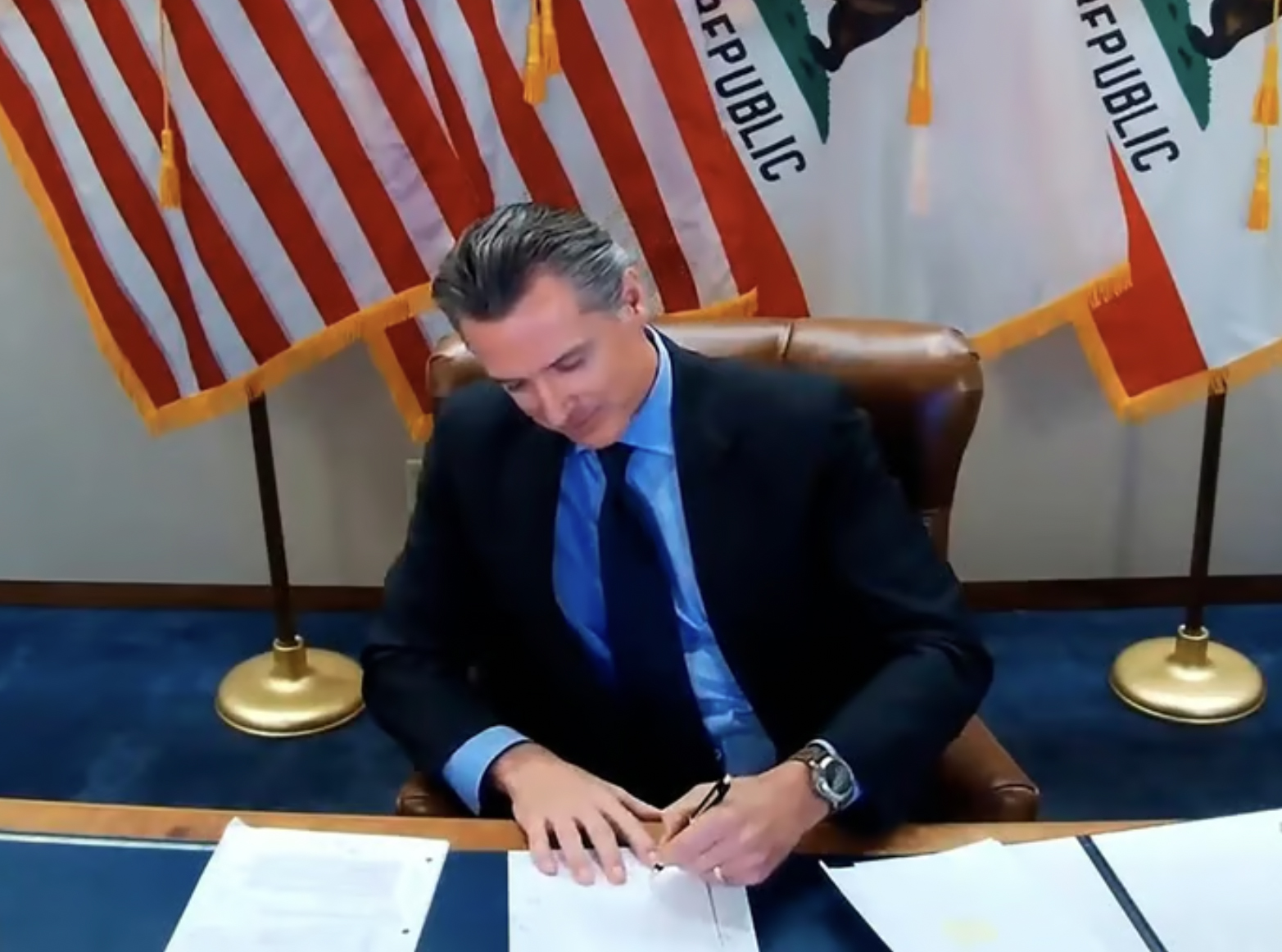
Chief among the immigrant-related protections for families is a new law signed on Oct. 12 allowing parents to designate other adults to care for their children in case they are deported.
“Our children deserve to feel safe at home, in school and in the community,” Gov. Gavin Newsom said in a press statement after signing Assembly Bill 495, the Family Preparedness Plan Act. “We stand by our families and their right to keep their private information safe, maintain parental rights and help families prepare in case of emergencies.”
The bill is one of nearly 800 signed by the two-term governor in the past month, roughly the same number as last year. Other child welfare-related bills signed by Newsom will bolster transition plans for aging-out young adults, improve efforts to find relative caregivers, and expand access to a hotline for children in crisis.
“There’s no reason that somebody should forever lose their children because they were deported. With joint guardianship, we’re hoping that parents have an option to share custody and keep open the door for reunification down the line.”
— Sharon Ballmer-Cartagena, Public Counsel
California faces unique challenges this year, with lower-than-expected revenues, a slowing economy and uncertainty surrounding President Donald Trump’s megabill cutting federal taxes and social spending.
Newsom cited budgetary concerns in many of the roughly 120 bills he vetoed this month. The Family Preparedness Plan Act was among his priorities, another sign of these unprecedented times. The bill allows parents to make an emergency plan and name a caregiver as a joint guardian if they are temporarily separated through deportation.
More than a quarter of California residents are immigrants, and nearly half of all children in the state have at least one immigrant parent. The newly passed AB 495 prohibits child care providers from collecting immigration status information about these families.
But the bill’s provision allowing parents to transfer custodial rights to another caregiver in an emergency stirred controversy this summer. Conservative and religious activists said the legislation would make it easier for children to be trafficked by eroding the custodial rights of parents.
Supporter Sharon Ballmer-Cartagena, an attorney with Public Counsel, called the outcry a “roar of misinformation.”
“There’s no reason that somebody should forever lose their children because they were deported,” she said in an interview. “With joint guardianship, we’re hoping that parents have an option to share custody and keep open the door for reunification down the line.”
Two other bills also signed by Newsom will support immigrant children amid the national crackdown that has also swept up college students, journalists and wrongly accused American citizens.
Assembly Bill 1261 requires the state to provide legal representation for migrant children entering the country without a parent or guardian. In March, the Trump administration abruptly terminated the federal contract providing attorneys for these unaccompanied minors.
A California trailer bill closes a loophole that left hundreds of undocumented young adults in extended foster care without health coverage.
The need for it resulted from a June budget agreement that ended health care for undocumented adults from ages 19 to 59, and left undocumented current and former foster youth without access to state medical care. Assembly Bill 144 reinstates health coverage for these young adults up to age 26.
Newsom also signed other pieces of legislation affecting the state’s child welfare system, roughly 20 bills in total.
Among them is Assembly Bill 896, which directs the state to help foster children transition between placements and move back into their homes, by weighing their unique needs and including caregivers in the decision-making process.
Assembly Bill 562 requires county child welfare agencies to better monitor how many foster children are placed with relatives. Counties with relative placement rates below the statewide average, which is currently at 35%, must take steps to improve their performance, including consulting with the Davis-based Center for Excellence in Family Finding.
“Our children deserve to feel safe at home, in school and in the community. We stand by our families and their right to keep their private information safe, maintain parental rights and help families prepare in case of emergencies.”
— California Gov. Gavin Newsom
Finally, Assembly Bill 898 will expand access to the Family Urgent Response System, a centralized hotline that dispatches mobile teams to respond to a family crisis or issues disrupting foster care placements. The law now allows the service to be used by families with children who are living at home while still under court supervision. The program also saw a $9 million reduction in funding this year.
Newsom vetoed several key child welfare bills, including one that would have created a special fund to help county agencies grappling with natural disasters, such as the Los Angeles-area fires in January that uprooted hundreds of foster youth and families.
In his veto message for Assembly Bill 689, the governor cited the state’s “challenging fiscal landscape.”
Newsom also rejected bills aimed at strengthening the state’s social safety net.
Assembly Bill 1074 sought to stabilize families during the court-ordered foster care reunification process, by allowing them to continue receiving welfare benefits known as CalWORKS while their children are placed in out-of-home care.
Bill author Darshana Patel described the legislation as “critically needed to ensure California prioritizes keeping vulnerable families together by removing bureaucratic hurdles that unintentionally undermine family reunification efforts.”
The governor also vetoed Assembly Bill 1378, which would have allowed tribes to create their own network of providers for foster care prevention services and legal counsel. Currently, California tribes rely on the state to provide these services at a cost.
The governor’s veto message noted the overrepresentation of Indigenous children in California’s foster care system, but said AB 1378 “would create significant uncertainties about how these agreements could be implemented and how funding would be provided.”
In a newsletter announcement, the California Tribal Families Coalition vowed to continue pushing.
“Although we are disappointed with the outcome of the bill, we are not deterred and will continue to advocate for sensible funding of services for tribal children and families,” the coalition stated.