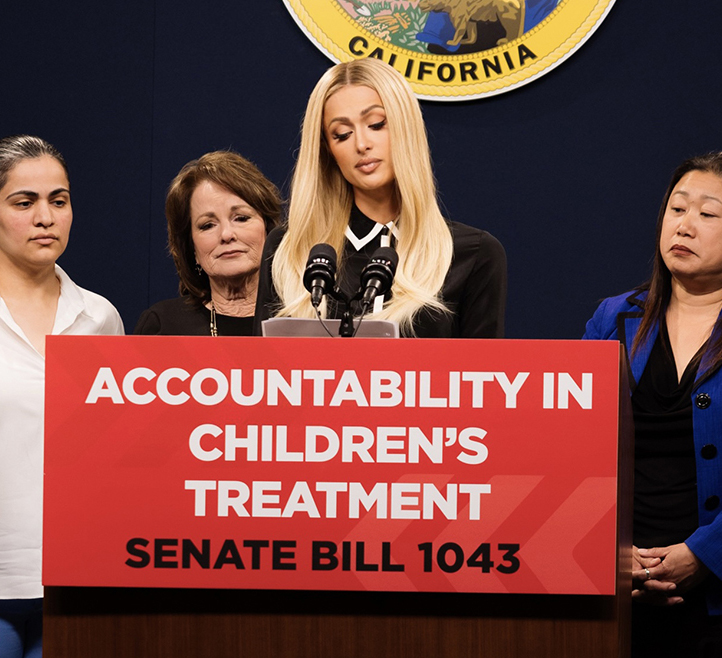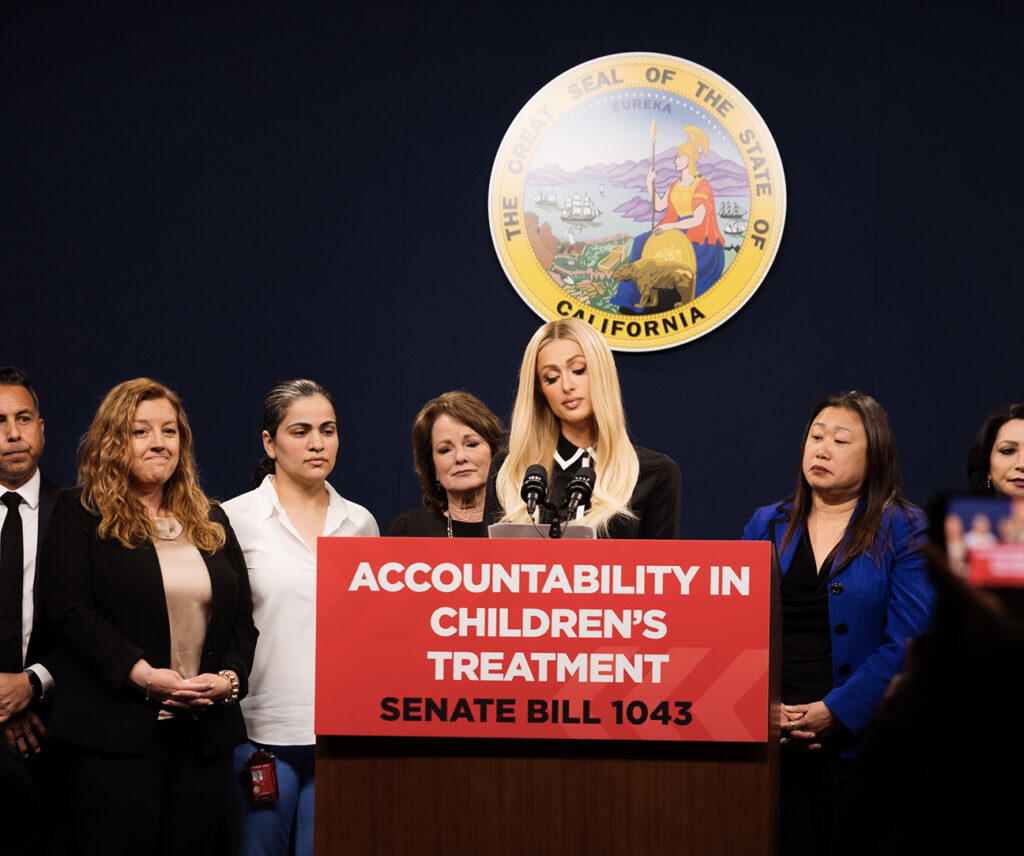

Senate Democrats have released a report highlighting verbal abuse and other forms of marginalization, at a time when the Trump administration has issued policy directives targeting the LGBTQ+ community.
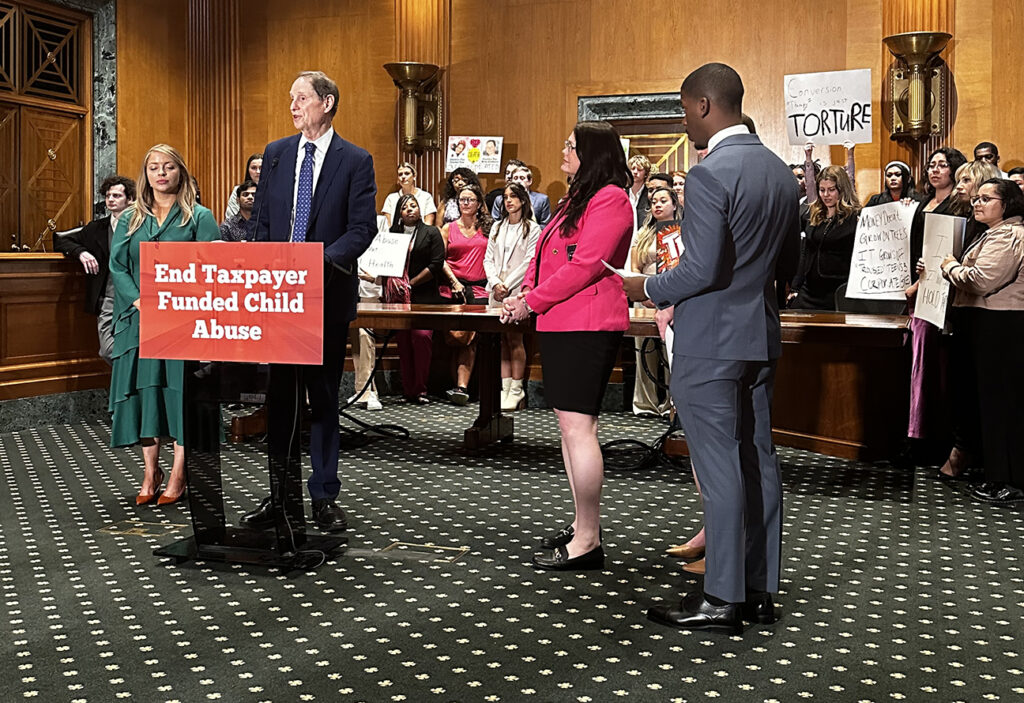
In a national survey released last week by Senate Democrats, LGBTQ+ youth living in institutional settings reported bullying, isolation and being told homosexuality was a punishable sin.
The survey findings, published in a 30-page report, detail the experiences of more than 130 LGBTQ+ young people living in therapeutic boarding schools, boot camps and residential treatment facilities.
Staff for the U.S. Senate Finance Committee’s Democratic minority who authored the report describe it as an addendum to one issued last summer called “Warehouses of Neglect,’’ which revealed a broader pattern of abuse, neglect and profit-maximizing cost-cutting by residential treatment facilities for youth, also known as RTFs.
But the new report, titled, “Myself as I Am: Experiences of LGBTQIA+ Youth in Residential Treatment Facilities,” narrows in on the unique vulnerabilities of young people in these settings who “identify with some type of gender or sexual diversity.” Each respondent was either lesbian, gay, bisexual, trangender or another sexual and gender minority, including asexual. They are described with the acronym LGBTQIA+ in the report. (The Imprint follows style guidelines of the Associated Press, LGBTQ+.)
“Over 100 personal stories make clear that LGBTQIA+ kids are suffering from extreme isolation in residential treatment facilities and being abused and discriminated against,” said Oregon Sen. Ron Wyden in a press release. “The whole point of an RTF is to help kids get better, but ‘Warehouses of Neglect’ showed that abuse and neglect are too often the norm. Today’s addendum shows that these facilities can be even worse for LGBTQIA+ kids.”
In response to an email inquiry, a spokesperson from Wyden’s office added that his team is working on legislation to address concerns raised in both reports, which they hope to introduce during this Congress.
The addendum, “Myself as I Am,” arrives at a time when President Donald Trump has issued numerous policy directives targeting the LGBTQ+ community. A January executive order directed government agencies to eliminate diversity, equity and inclusion from all materials and activities.
That order accused the Biden Administration of forcing “illegal and immoral discrimination programs under the name ‘diversity, equity, and inclusion’ (DEI), into virtually all aspects of the Federal Government.”
Within weeks of Trump’s inauguration, references to lesbian, gay transgender and other sexual and gender minorities were removed from scores of pages on government websites.
The administration has also canceled grants and programs for HIV vaccine and prevention research, and its Department of Justice has subpoenaed doctors and hospitals for information about juvenile patients receiving gender-related medicine.
The authors of the “Myself As I Am” report state that these and other administration actions have “a serious effect on the mental health and wellbeing of all LGBTQIA+ people, especially children.”
Many of the LGBTQ+ survey respondents wrote that they choose to conceal their identities when in residential treatment facilities out of fear for their own safety. The facilities were described as hostile environments in which staff and other residents were sometimes abusive or punitive towards them.
Some of those who identified as transgender reported being barred from wearing their clothing of choice. Other young people said they’d been placed in “solitary confinement’’ because of their identity.
One young person reported being told by staff that their identity was “a phase and a trend.” Another said a staff member told them in vulgar terms that they were only identifying as a lesbian because they hadn’t had sexual contact with a man before.
“I felt pressure to hide who I was to avoid conflict, which impacted my mental health and sense of self-worth,” one young person wrote.
Leaders from the residential facility industry have disputed the Senate Democrats’ critical reports of their operations.
In response to the Warehouses of Neglect report last year, a spokesperson for Universal Health Services, a multi-billion dollar holding company for hospitals and behavioral health care facilities, told The Imprint that the company, “vehemently disputes the characterization” of their facilities, and said its staff “work tirelessly to provide the best possible care.”
Still, one independent expert said the recent Senate report confirms LGBTQ+ young people remain especially vulnerable in such facilities.
“The whole point of an RTF is to help kids get better, but ‘Warehouses of Neglect’ showed that abuse and neglect are too often the norm. Today’s addendum shows that these facilities can be even worse for LGBTQIA+ kids.”
— Oregon Sen. Ron Wyden
More than 25 years ago, Gerald Mallon, a leading scholar on LGBTQ+ youth and families, authored a book titled “We Don’t Exactly Get the Welcome Wagon: The Experiences of Gay and Lesbian Adolescents in Child Welfare Systems.” He noted that child welfare staff typically lacked training on how to work with such young people, and that, in the absence of policies and procedures, would often instruct kids to keep quiet about their identities.
Today, he said, there are policies and procedures in place in these settings — many of which he helped states design. Yet, as the Senate report shows, problems persist.
“I’m sad to see it. This report could have been written in 1992 in my opinion,’’ said Mallon, a professor of child welfare at New York City’s Hunter College. “Not much has changed.’’
And, he said, he fears that recent state and federal crackdowns and funding cuts on diversity, equity and inclusion initiatives — particularly for transgender youth — have silenced would-be critics of those government actions. That includes child welfare leaders who support LGBTQ+ youth but now find themselves threatened by the possible loss of federal grants they depend on.
“I’m not sure agencies are enacting their policies anymore, because of the way the government has been behaving with respect to LGBTQ lately,” said Mallon. “It’s been signaling, ‘You shouldn’t talk about this stuff, you won’t get a grant from us.’”
In the meantime, he added, young people may be “on their own once again” to try to protect themselves — and even to educate staff.
Still, there were some positive signs for institutionalized youth in the Senate Democrats’ report. One of the seven findings was that “LGBTQIA+ youth expressed feeling safer when facility staff engaged in affirming and safe practices related to their identities.”
“They gained my trust — it took about a year and a half — but I trusted them, and we still talk to this day…,” said one young person about their facility’s staff. “They’re like sisters to me.”