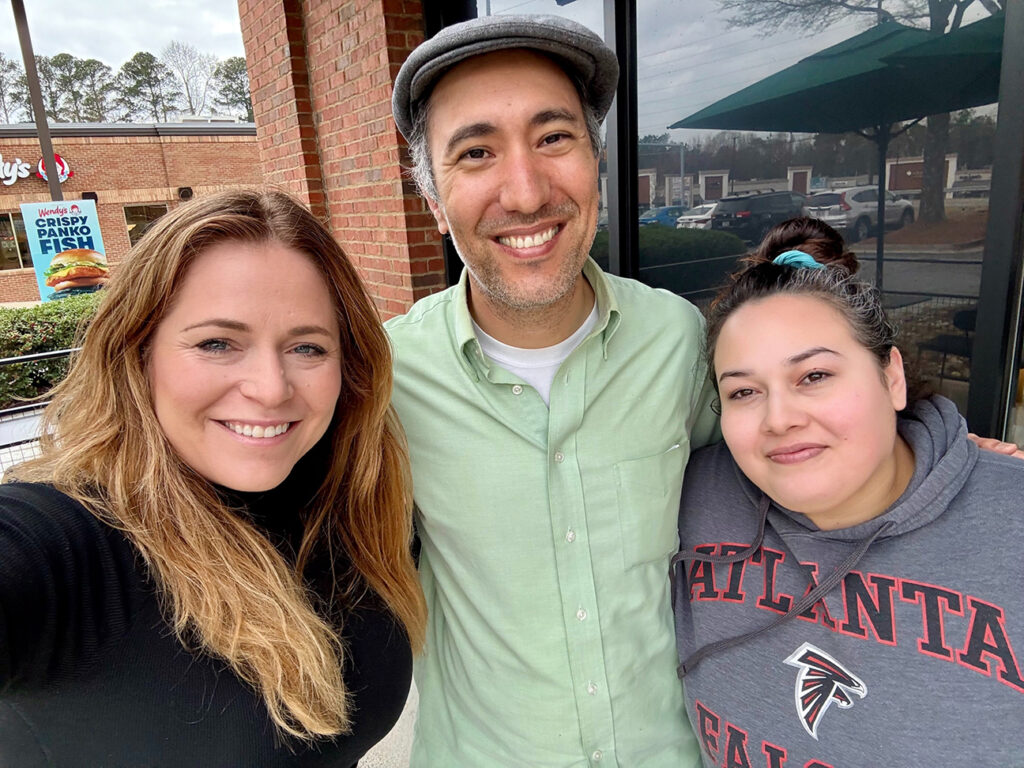
Georgia officials have responded to a federal lawsuit claiming the state is unfairly charging impoverished parents for their children’s time in foster care.
The case involves Kennesaw mother Annalinda Martinez, who filed the suit on Aug. 19 in the U.S. District Court for Northern Georgia. Martinez lost custody of her six daughters in early 2018, after she became homeless and sought help from Georgia’s child welfare agency. Since 2019, she has been billed nearly $500 a month to cover the costs of their care in foster homes, she alleges.
The potential class-action suit alleges that the state “operates an unconstitutional child support program, in which the biological parents of children in foster care are charged exorbitant amounts of money with no regard for the parents’ inability to pay.”
According to the complaint, Martinez’s bills became crushing debt — at one point amounting to $13,000 — and made it more difficult to regain custody of her eldest daughters. Her monthly bills have not been lowered even though only one of those children remains in foster care, she alleges. Her other daughters have been adopted or aged out of the system.
The Georgia Department of Human Services as well as its divisions managing child support and children and families are the respondents. This month, the agencies pushed back on Martinez’s claims and asked that the suit be tossed.
In documents filed Oct. 15, they argue the lawsuit fails to identify any other similarly situated families, and doesn’t show that the state gave favorable treatment to other parents.
The state explains that the children were taken from Martinez due to her “acknowledged inability” to provide proper care for them. She was homeless at the time.
Martinez was initially charged $100 a month and, within a year and half, fell $500 into debt. Because she failed to appear at the hearing to plead her case, it left the court with “no choice” but to order child support based upon her ability to earn minimum wage, the state lawyers argue. The amount due each month increased to $472 for the six kids.
“Not every parent has their children removed from their custody due to lack of sufficient housing,” the new filing states. “Not every parent has paid little of their assessed child support payments. Not every parent voluntarily surrendered parental rights to their children.”
In 2022, the federal government issued a directive that encouraged states to stop collecting payments from impoverished parents with children in foster care. At present, more than a dozen states have passed laws or issued administrative orders limiting the practice, according to Jill Duerr Berrick, a professor of social welfare at the University of California.
At least six states and the city of Philadelphia foregave overdue payments, also known as arrears. California, for example, relieved tens of thousands of parents’ foster care-related debts, amounting to as much as $400 million.
Georgia didn’t follow suit. But last year, its Division of Family and Children Services (DFCS) revised its policy to clarify that the agency must consider whether these payments could prevent or delay family reunification.
Martinez’s suit asserts that the new policy should apply to prior cases like hers.
“A parent with limited income cannot simultaneously pay hundreds of dollars in child-support and save money for adequate housing, food, clothing and medical care for their children,” her complaint states.
About 4,000 Georgia parents have been on the hook for foster care fees, according to 2024 reporting by WABE.
Charging such fees can force kids to stay longer in foster care — six months for every $100 charged, a 2016 study published by the Children and Youth Services Review found. And, according to 2017 research, child welfare agencies also spend more money collecting the payments than what they get in return.
The state’s arguments
The recent filing in Georgia offers a rare glimpse into how some states still justify passing on the costs of foster care to parents.
Georgia officials put it this way: “All parents have a duty to support their children,” a duty that is not “performed only at the voluntary pleasure or whimsical desire of the parent.”
Phil Telfeyan, executive director of Equal Justice Under Law, the Washington, D.C.-based legal group representing Martinez, disagrees with this characterization.
“Annalinda herself absolutely agrees that she should take care of her kids,” he said. “But that’s a far cry from whether she should have to pay money that she doesn’t have.”
“A parent with limited income cannot simultaneously pay hundreds of dollars in child-support and save money for adequate housing, food, clothing and medical care for their children.”
— Excerpt from Annalinda Martinez’ legal complaint
It remains unclear precisely where the child support Martinez and other parents send to DFCS actually goes. The agency previously declined to answer The Imprint’s questions about the policy.
And although the state asserts that Martinez knew she could negotiate the payments but waited years to pursue the legal process, Telfeyan said his client has tried and failed to do so. Martinez has written to the state and submitted court paperwork, only to keep being told she doesn’t have the right documentation.
“They just made it impossible for her to get any reduction,” he said. “She’s doing everything that would be reasonable to expect of someone, and the state is putting up barriers,” he said. “Even in admitting her children are aging out of the system, they’re still not taking the steps to reduce the bills.”
Arguments made in the state’s motion to dismiss her case prompted Martinez’s legal team to resubmit her complaint on Oct. 23. The newly filed version now names specific officials at the Department of Human Services, including its Commissioner Candice Broce.
The amended complaint also pushes back against the state for claiming that it’s not treating parents who have been billed under the pre-2024 policy change any differently, and that the fees don’t unfairly punish low-income parents.
“We point out that Annalinda has two additional children she’s caretaker for,” Telfeyan said. “She fears that if she can’t continue to pay these bills, those children will be taken from her as well.”
The state has until Nov. 13 to respond to the newest filing.
In the meantime, Martinez continues to receive letters threatening jail time if she doesn’t pay off her accumulating debt.
“We were hoping that would stop,” Telfeyan said. “But nothing has changed.”