
Since taking office, Gov. Tim Walz has presided over notable child welfare reforms, including a groundbreaking state law assisting families disproportionately impacted by foster care, as well as free college aid and the creation of Minnesota’s first ombudsperson for foster youth.
When the Democratic nominee for president, Kamala Harris, announced her choice for vice president Tuesday, she praised the smiling, understated midwestern governor as a champion of children and families. Gov. Tim Walz of Minnesota has made breakfast and lunch free in schools, provided one of the nation’s most generous tax credits for low-income parents and ensured paid family leave for almost all workers.
Less acknowledged by the national media now scouring Walz’s record is his enthusiastic approval of a series of reforms to the often-overlooked child welfare system.
As governor for the past six years, Walz stands out as a rare politician presiding over noteworthy changes to the lives of children taken into government custody — policies that aim to prevent that outcome whenever possible and protect those being raised outside of their family homes. His record includes signing bills that allow all foster youth to attend college with little to no cost, preventing family separation through foster care for all marginalized residents of the state and creating a new state department focused solely on low-income families and children. Walz also appointed Minnesota’s first ombudsperson for foster youth, a four person office that opened in May.
“Walz’s commitment to Minnesota children and families is remarkable and he’s helped bring critical reforms to improve the state’s child welfare system and practices to better keep families together and connected,” said Joanna Woolman, a law professor with the Mitchell Hamline School of Law.
Systemic reforms Walz has signed off on have long been sought by advocates for families and people of color in the state. Passage of the laws was also made possible by a Democratic takeover of the statehouse that began in 2022, a Legislature that is now the most diverse in state history, with women heading the House and Senate, and the election of the first openly transgender lawmaker.
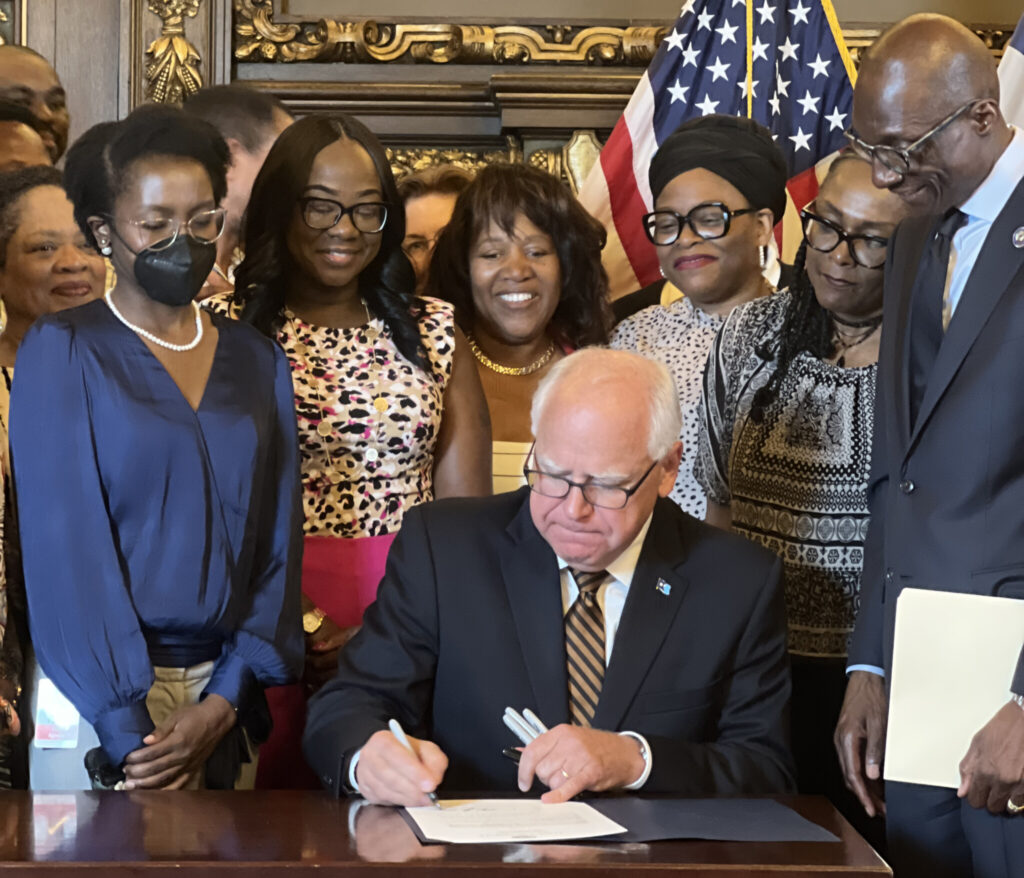
Kelis Houston, founder of the nonprofit Village Arms, is among those praising Walz as the vice presidential nominee. Houston, an influential advocate for Black families in Minnesota, has worked closely with state lawmakers leading up to the governor’s May signature on the African American Family Preservation and Child Welfare Disproportionality Act. The law soon taking effect will expand protections for almost all families facing separation through the foster care system, setting a significant national precedent. The bill met resounding approval from Democrats and Republicans in the state Legislature.
“As Minnesota’s governor he’s always been the people’s choice; he’s progressive, he listens and constantly engages with communities,” Houston said. “Although he holds the highest office, he doesn’t neglect the experience of those from marginalized communities; he acknowledges the disparities that exist here and the work needed to address them.”
“So often children are an afterthought in public policy, and this really helps lift the visibility and focus of the government on children.”
— Bruce Lesley, First Focus on Children
When Walz signed the bill two months ago, the governor made clear his intentions — positions that are rarely voiced by state leaders in the midwest.
“Prioritizing the welfare of children today will pay off for generations to come,” Walz said. “Disparities in our child welfare system have persisted for too long. This is a major step towards becoming the best state in the nation for all children.”
Bruce Lesley, a longtime child advocate in Washington, D.C., saw signs of Walz’s interest in these issues during his years as a congressman. While representing a rural Minnesota community from 2007 to 2018, Walz co-sponsored bills on expanding child care funding and school nutrition, making adoption more affordable, and supporting homeless youth. He was also the lead sponsor on a series of bills funding child protection education, including college curriculums on child abuse and neglect and forensic interviewing training.
Most notably, added Lesley, president of the nonprofit First Focus on Children, Walz supported early versions of the child tax credit bill in congress that was adopted nationwide during the COVID-19 pandemic, and contributed to a historic drop in child poverty. The 60-year-old former high school social studies teacher created a similar tax credit as Minnesota governor. His administration’s Children’s Cabinet coordinates related policies.
“Minnesota’s Child Tax Credit bills is one of the best in the country in terms of helping reduce child poverty, which we would argue is a major factor in reducing child abuse and neglect,” Lesley stated in an email.
Walz’s creation of a Children’s Cabinet is also noteworthy among states.
“So often children are an afterthought in public policy, and this really helps lift the visibility and focus of the government on children,” Lesley said. “This was a major development and cannot be understated.”
Lt. Gov. could continue her trailblazing path
If Democrats prevail in November’s presidential election, Lt. Gov. Peggy Flanagan would take Walz’s place leading the Minnesota statehouse — another noteworthy development in the nation’s history, which now has its first Black and Indian-American woman running for president.
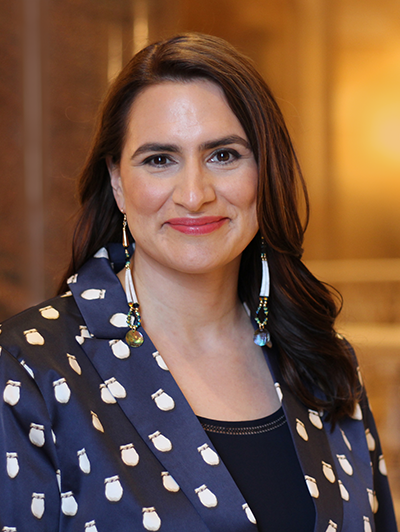
Flanagan, a citizen of the White Earth Band of Ojibwe, is already the highest-ranking Indigenous woman serving in a statewide elected office, and the first to head the Democratic Lieutenant Governors Association. To date, there have been just two Native American governors: Kevin Stitt of Oklahoma, who is an enrolled member of the Cherokee Nation and has served since 2019, and Johnston Murray, citizen of the Chickasaw Nation, who governed Oklahoma from 1951 to 1955.
Like Walz, Flanagan’s professional past is firmly rooted in children and family issues. She previously served as executive director of the Children’s Defense Fund in Minnesota, and established the country’s first Missing and Murdered Indigenous Relatives office in state government. Her biography frames “progress for children, working families, communities of color and Indigenous communities, and Minnesotans who have historically been underserved and underrepresented,” as the “center of all her work.”
When the state passed its foster care prevention bill in May, Lt. Gov. Flanagan spoke out on the importance of the law that mirrors the 1978 Indian Child Welfare Act, granting similar protections to Black and other disproportionately represented families. The law known as ICWA was created to counteract the devastating effects of forced assimilation, government-run boarding schools and the adoptions into white homes that devastated tribal communities.
“Family separation is the most traumatic event that can happen in the life of a child,” Flanagan said at a bill signing ceremony. “Many communities of color and specifically the African American community have seen their families broken apart at disproportionate rates. I’m excited to see our state beginning to work upstream and find solutions that will help keep families together and teach us lessons that can inform the child welfare system as a whole.”
‘Hate has no home’
While certain to raise controversy among conservatives, the Walz administration has also been notable for its willingness to champion the rights of LGBTQ+ youth. These are positions Walz shares with other progressive governors, including Democrat Gavin Newsom of California and J.B. Pritzker of Illinois.
LGBTQ+ youth — who comprise roughly one-third of the foster youth population 12 and older — are more likely to end up in foster care and more likely to be poorly treated in government custody than their peers.
At an exuberant rally in Pennsylvania on Tuesday, presidential hopeful Harris told the crowd that Walz “saw the potential in kids that didn’t even see it in themselves.” Walz also ensured that the teenage years would be safe and welcoming, she noted.
“At a time when acceptance was difficult to find for LGBTQ+ students, Tim knew the signal that would be sent to have a football coach involved with the school’s Gay Straight Alliance club.”
Since taking office in Minnesota, the governor has worked to make the state a haven for LGBTQ+ youth. Earlier last year, he issued an executive order creating a refuge in Minnesota for trans youth from across the country seeking gender-affirming health care. His order directs state agencies to protect youth, their families and medical practitioners from legal repercussions for treatments of gender dysphoria that have become deeply politicized.
“In this state, hate has no home,” Walz said at a bill signing in March 2023. “In this state, love and acceptance is what we preach.”
Taking child welfare reforms to a national stage
Houston, Woolman and other child welfare advocates in Minnesota said they hope Walz’s leadership on needed child welfare-related reforms — issues that rarely reach the mainstream — will now be taken to a national stage, should the Democratic ticket prevail in November.
Woolman said Walz’s antipoverty measures speak directly to preventing child removal and protecting all ways of life for Minnesotans, however they choose to live.
“His focus on reproductive justice, racial equity, LGBTQ+ rights and inclusion for trans communities means that families can safely parent and exist in a multitude of ways in Minnesota,” Woolman said.
Houston noted the reparative work his nomination could achieve.
“His selection couldn’t have come at a better time,” she said. “The Democratic Party has lost the confidence of the African American community and many of our votes recently. This is the perfect time and opportunity for our nominees to take the African American Family Preservation Act national, as this crisis exists across the country.”