The legislation is one of the first in the nation creating far more stringent requirements to avoid foster care removals and reunify families. (Updated May 21, 2024)
After six years of failing to meet approval in the Minnesota statehouse, legislation that will greatly increase protections for almost all families facing separation through the foster care system was signed into law Tuesday, in what could become a significant national precedent.
Gov. Tim Walz quickly approved the Minnesota African American Family Preservation and Child Welfare Disproportionality Act, which had passed with resounding approval from Democrats and Republicans in the state Legislature.
“Prioritizing the welfare of children today will pay off for generations to come,” Walz said in a press statement Tuesday.* “Disparities in our child welfare system have persisted for too long. This is a major step towards becoming the best state in the nation for all children.”
Lt. Gov. Peggy Flanagan also acknowledged the importance of the bill, and gave a nod to the numerous community advocates and elected leaders who have worked on the issue for years.
“Family separation is the most traumatic event that can happen in the life of a child,” she said. “Many communities of color and specifically the African American community have seen their families broken apart at disproportionate rates. I’m excited to see our state beginning to work upstream and find solutions that will help keep families together and teach us lessons that can inform the child welfare system as a whole.”
The bill includes some significant changes to the way the foster care system works. Specifically, it goes far beyond an ill-defined “reasonable efforts” requirement that child welfare agencies nationwide must take to prevent removals and reunify children with parents once they can be safely returned home. Instead, it requires the higher standard of “active efforts.” Under previous state and federal law, active efforts standards applied only to children who are members of Native American tribes and those who are eligible for membership.
Under the new law, judges will have to more carefully scrutinize child protective service agencies’ decisions to remove kids from their homes, and the standard of evidence will be raised for declaring abuse and neglect allegations “substantiated.”
The law also requires caseworkers to involve families in planning and choosing what social services they receive in order to reunify with their children. That process will soon have to take into account “social and cultural values at all times,” with judges evaluating and approving whether sufficient steps were taken.
“Systematic discrimination and racial disparities in the child welfare system has been separating Black families in Minnesota for decades. This law is a major step toward preserving the essential relationships between parents and their children.”
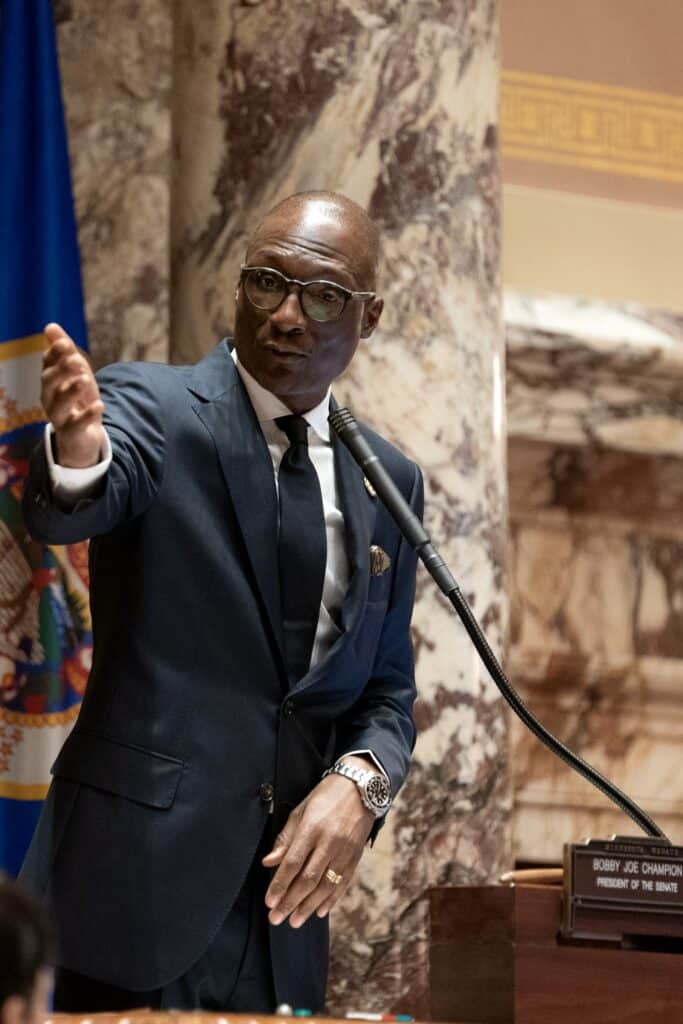
Senate President Bobby Joe Champion
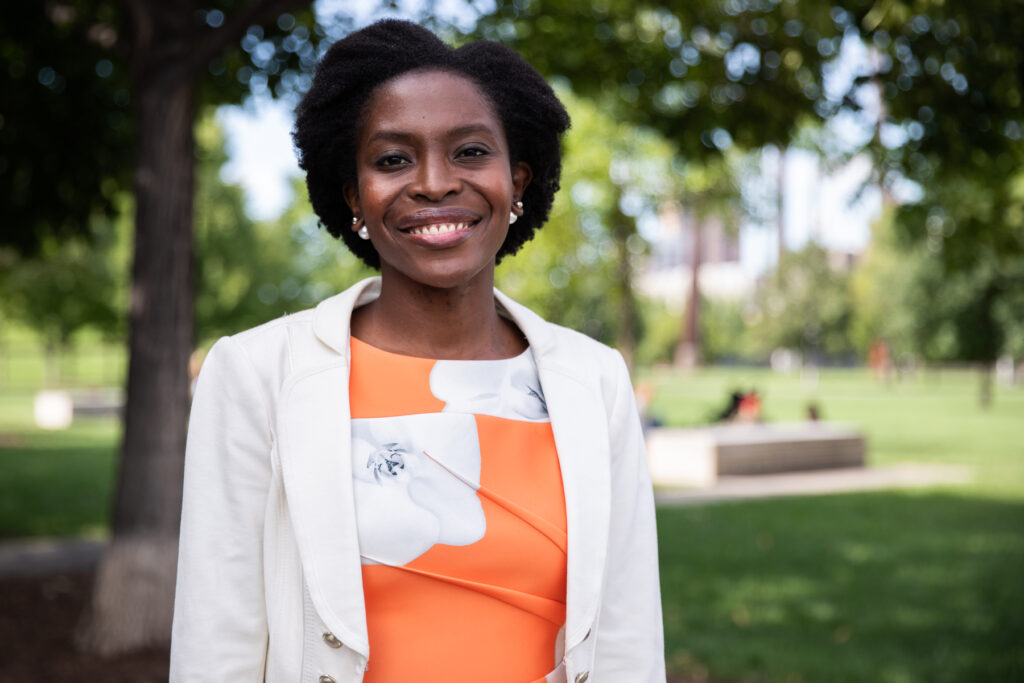
Bill author State Rep. Esther Agbaje, speaking on the House floor last Wednesday before a 120-0 vote of approval, articulated the need for such changes. “Family separation has long been and continues to be a scourge of American society, with families of color especially feeling the brunt of the disruption, trauma, and pain,” she said. “And this bill attempts to address those disparities.”
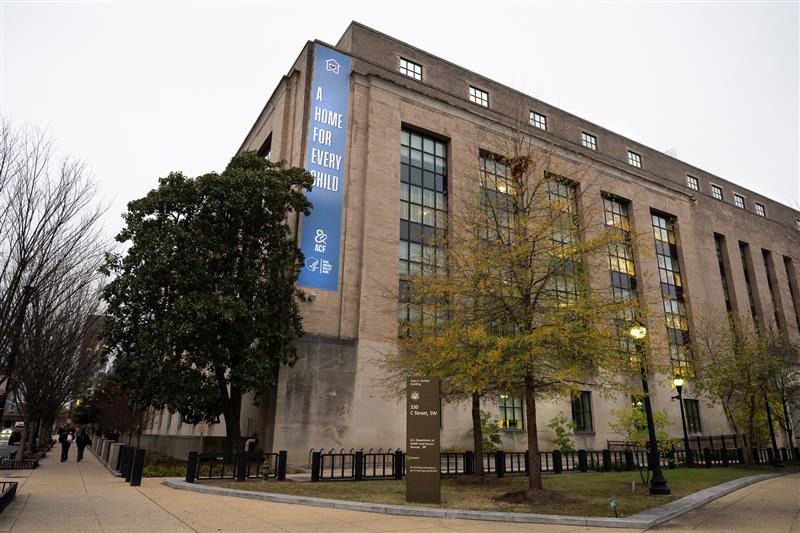
The state agency responsible for overseeing foster care in Minnesota has also expressed support. A spokesperson for the Department of Human Services (DHS) told The Imprint it has advised on Agbaje’s legislation and believes it can be effectively implemented.
“DHS remains deeply concerned about the pattern of disproportionate placements for African American children in Minnesota and supports efforts to eliminate those disparities,” the email statement said. “We still have considerable work ahead. Our vision for child and family well-being means reducing racial disparities so all Minnesota families can thrive.”
Earlier versions of the African American Family Preservation and Child Welfare Disproportionality Act focused exclusively on Black children, who, along with Latino kids, are roughly twice as likely to be placed in out-of-home care as white children. The local NAACP chapter joined national child advocates to file a federal civil rights complaint over the issue in March.
The legislation has since undergone heavy revisions, and faced scrutiny as to its constitutionality for potentially singling out groups of kids by race for different treatment.
But in amendments approved in March, the bill was expanded to include all “African American and disproportionately represented children” — a group so large it has been estimated to encompass nearly all children currently in foster care. Its final language, described in 20 pages, states the law would apply to any child who comes from a “disproportionately represented” group, whether due to “race, culture, ethnicity, disability status, or low-income socioeconomic status.” One estimate by the state’s association of counties indicated that amounts to 90% of all families involved in the child welfare system.
The title of the bill was also changed after the language was made more inclusive. A previous version, the Layla Jackson Law, paid tribute to a 17-month-old Black infant who was killed by her white foster parent.
The changes will roll out initially through a pilot program in Minnesota’s two largest counties — Ramsey and Hennepin — beginning in January. The protections will be applied statewide in 2027.
“Systematic discrimination and racial disparities in the child welfare system has been separating Black families in Minnesota for decades,” said Senate President Bobby Joe Champion of Minneapolis, one of the bill’s authors. “This law is a major step toward preserving the essential relationships between parents and their children, and keeping siblings in the same household.”
The African American Family Preservation Act has been the subject of heated public discussion dating back to its 2018 inception. Yet while different concerns have been raised by representatives of some child welfare agencies, Indigenous advocates and legal experts, in recent weeks lawmakers from both parties have spoken in passionate and personal terms about the need for the reform.

“Every parent deserves a second, third, or fourth chance,” Grand Rapids Republican Rep. Ben Davis said last week in floor remarks supporting the bill. The pastor-turned-lawmaker quoted the Old Testament and described seeing many parents lose and regain custody of their children during his 12 years working at a faith-based drug and alcohol counseling program.
“The relationship between a parent and a child is so important to God, so important to God that he even says right here — if it doesn’t happen ‘I’m going to come and strike the earth with a curse,’” said Davis. “This subject will break your heart — it’s very important to God, therefore it’s very important to me.”
He added that if the system needs to be fixed “one group at a time,” he’s “all for it.”
Child welfare experts have also weighed in on the potentially landmark law.
“This is a moment of racial reckoning,” said Professor Joanna Woolman, executive director of the Mitchell Hamline School of Law’s Institute to Transform Child Protection. Woolman, who has helped advocate for the bill, called the unanimous support for this bill a catalyst for awareness in disparities. “The bipartisan support for this — the 120 to zero vote, I mean, I was in tears.”
The standards set under the proposed law would mirror protections for Native American children created by the 1978 Indian Child Welfare Act, known as ICWA. The new legislation specifically states it will do nothing to change those provisions, which apply not to racial groups, but to citizens of tribes that the U.S. government recognizes as sovereign nations.
But the new legislation in Minnesota includes standards that go beyond ICWA’s child removal rules, including increasing requirements the state will have to meet before petitioning a family court judge to terminate a parents’ rights, and establishing a state-run African-American Child Well-Being Unit and advisory council.
“Every parent deserves a second, third, or fourth chance. This subject will break your heart — it’s very important to God, therefore it’s very important to me.”
Grand Rapids Republican Rep. Ben Davis
The law also defines the “best interests” of Black children — and all overrepresented groups — as including the provision of “a culturally informed practice lens” that embraces “the child’s community and cultural norms and allows the child to remain safely at home with the child’s family.”
Parents will also have new leverage to litigate if they think counties have failed to comply with the heightened state standards, said Woolman. Of particular note, she and other child welfare experts said, Minnesota will be one of the first states to apply “active efforts” for so many children in the system. Last year, Republicans in Montana passed a similar, but less-sweeping “ICWA for all” law.

Kelis Houston, who has advocated tirelessly for the Minnesota bill since 2018, praised its progress.
“There’s other harmful policies in play right now that lead to child welfare disparities that we intend to tackle,” she said. “But I believe this bill is a good first step.”
Still, lawmakers speaking this month and at a hearing last month acknowledged the potential for legal challenges to the bill, which faced a closer 41-26 vote in the state Senate earlier this month. Legal observers have noted risks in singling out a specific race in the law — namely, Black children who are overrepresented in foster care. Walter Olson, a widely cited constitutional law commentator, authored a 2020 Wall Street Journal op-ed stating that the bill would “segregate” the child welfare system.
“To the extent that the law treats children differently because of factors like race or national origin, it may draw a legal challenge, because courts apply exacting scrutiny to laws that distinguish by race,” Olson wrote. “If active efforts are the best policy for the children’s sake, it’s hard to see why we wouldn’t want to use them in all cases, whether in underrepresented categories or not.”
But Professor Woolman said the latest revisions of the bill tried to address the potential legal issue by broadening its application beyond African American families, to include all “disproportionately represented” groups.
“This bill is a statement about Minnesota’s commitment to disproportionately affected families and African American families,” she said. “It’s a calculated risk on the part of the House of Representatives to say we feel like it’s come as far as we need to support this. If there are issues, so be it — they’ll be challenged and dealt with in a different way on a different day.”
*This story has been updated since it was published on May 18, 2024, when the Minnesota legislature passed the African American Family Preservation and Child Welfare Disproportionality Act. The story now reflects that the governor signed the bill on May 21, 2024.