
Within days of the White House announcing its intent to make foster care a major focus, on Monday, President Donald Trump’s top child welfare appointee announced his plan to help realize the administration’s goals: An initiative titled A Home for Every Child.
The federal Administration for Children and Families, led by Alex Adams, made the announcement in a one-page press release that sets a goal of “achieving a foster home-to-child ratio greater than 1:1 in every state.” That would amount to nearly doubling the nation’s current foster home capacity, which the press release — linking to state-by-state data collected by The Imprint — places at 57 licensed foster homes for every 100 children and youth in foster care.
The statement clarifies that this goal will not be achieved though foster parent recruitment and retention alone. Rather, it will “focus on both sides of the equation,” by simultaneously aiming to reduce the number of children removed from their families. That means “reducing entries into foster care” through prevention programs and prioritizing recruitment of kinship caregivers. It also means finding “faster pathways” for children to leave foster care and move into permanent homes.
“Our mission is straightforward: homes waiting for kids, not kids waiting for homes,” Administration for Children and Families Assistant Secretary Adams said. “Every child grows best in family, and our A Home for Every Child initiative will ensure we are doubling down on prevention to keep families intact whenever it’s safe to do so, while ensuring there are enough loving foster homes available for any child who needs one.”
In a separate press release Monday, the federal Department of Health and Human Services — which includes the roughly $70 billion Administration for Children and Families — announced that Secretary Robert F. Kennedy, Jr. had officially sworn Adams into office. Kennedy praised Adams’ track record in Idaho and stated that his goal would be to “cut red tape, drive efficiency, and put America’s most vulnerable front and center as we work to Make America Healthy Again.”
“Our mission is straightforward: homes waiting for kids, not kids waiting for homes. Every child grows best in family, and our A Home for Every Child initiative will ensure we are doubling down on prevention to keep families intact whenever it’s safe to do so, while ensuring there are enough loving foster homes available for any child who needs one.”
— Alex Adams, Assistant Secretary of the Administration for Children and Families
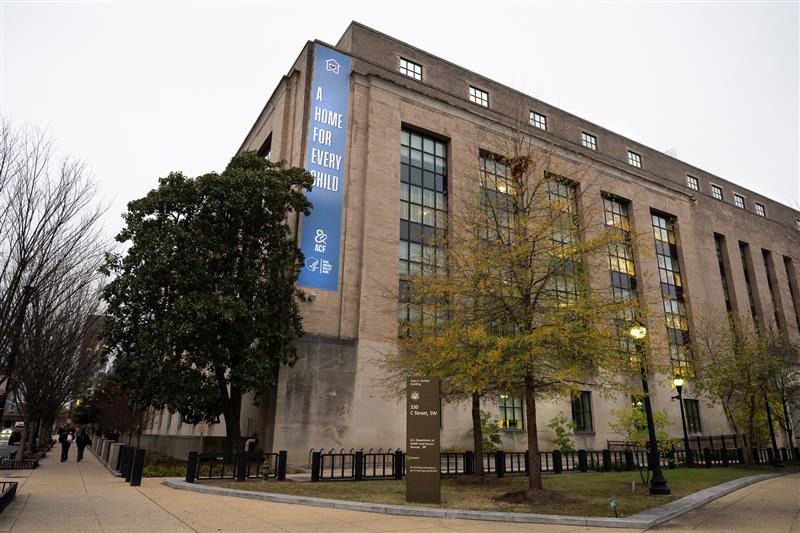
A new billboard outside the agency’s Washington, D.C., headquarters and a banner stripped across the Administration for Children and Families website now announces “A Home For Every Child.” Adams also highlighted the initiative in a Friday op-ed in the conservative news and commentary site The Daily Signal. He wrote that his agency will hold itself accountable by asking: “Does a state have more foster homes available than foster children in need of placement?” He also stated that the gap between available homes and the number of foster children “isn’t just a statistic.”
“It means toddlers spending nights in office buildings, teenagers shuttled between hotels, and siblings separated not for safety, but for lack of space. It means overuse of congregate care, such as group home settings,” Adams wrote. “When there aren’t enough homes, states turn to temporary placements that are unstable, costly, and often damaging to a child’s well-being.”
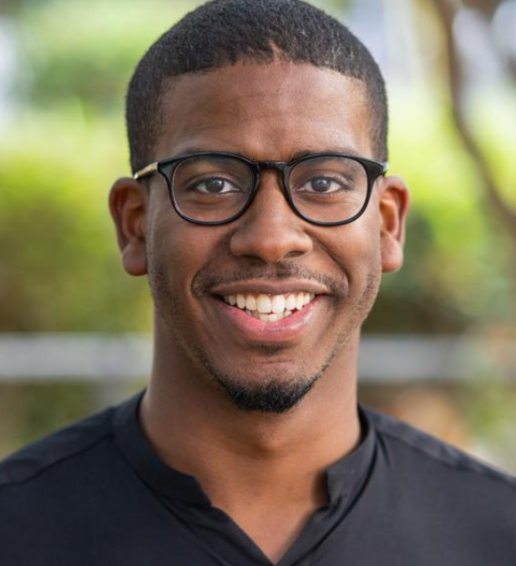
Sixto Cancel, a former foster youth-turned high-profile child welfare leader, praised Adams’ plan, but emphasized that youth who have experienced foster care must have a say in its implementation. Cancel, who wrote a damning portrait of the system that placed him with strangers instead of loving relatives in a 2021 New York Times op-ed, has advised several presidential administrations and congressional lawmakers from both parties.
“This initiative gives states the flexibility to design what works for them, but that must include lived experts at the table from the start and strong data to guide decisions. If we are serious about a home for every child, then young people with lived experience must help define what that home looks like,” said Cancel, who leads the Washington, D.C., research, design and advocacy firm Think of Us. “Whether it is keeping children safely at home, recruiting and retaining foster families, kin or advancing reunification, adoption, and guardianship, lived experts must shape these approaches. This is how we turn a campaign into real change.”
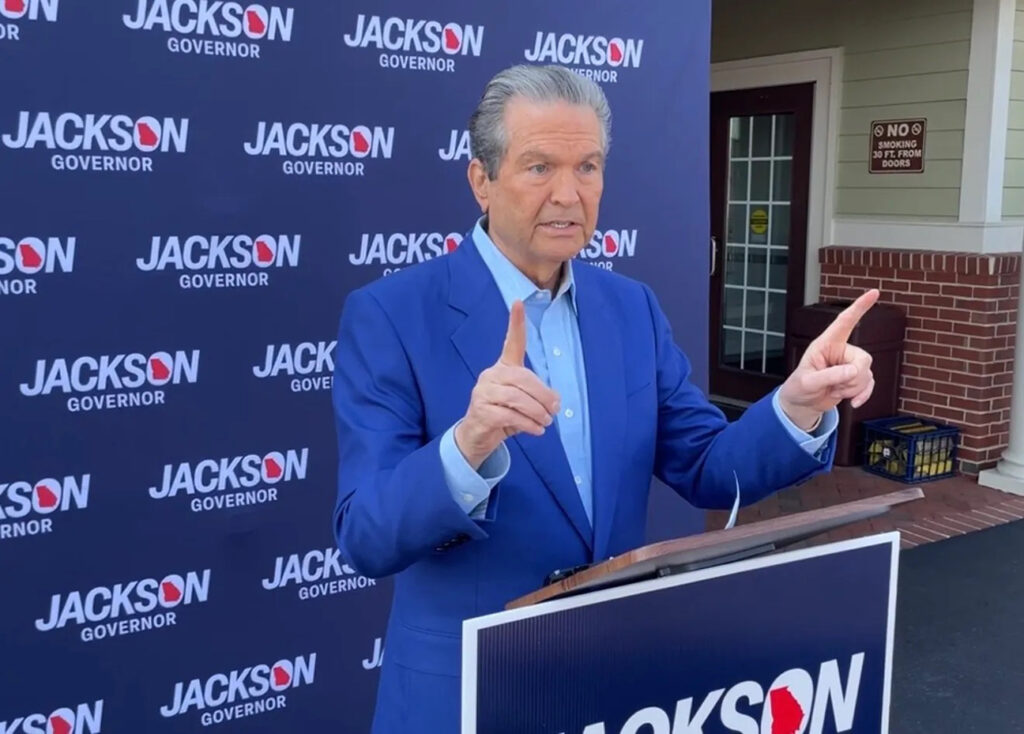
The Monday announcement from the Administration for Children and Families follows a flurry of activity from the Trump administration on foster care issues: First, the Republican majority in the U.S. Senate confirmed Adams in a party-line vote on Oct. 7. Within weeks, Adams sent a series of letters to states, introducing himself and his intent to reduce regulations governing state-run child welfare systems, and to crack down on states seizing federal Social Security money from foster youth. In separate communication, he informed some states they are under investigation due to their policies requiring that licensed foster parents provide gender-affirming care for foster youth, including transgender teens and young adults who are overrepresented in the system.
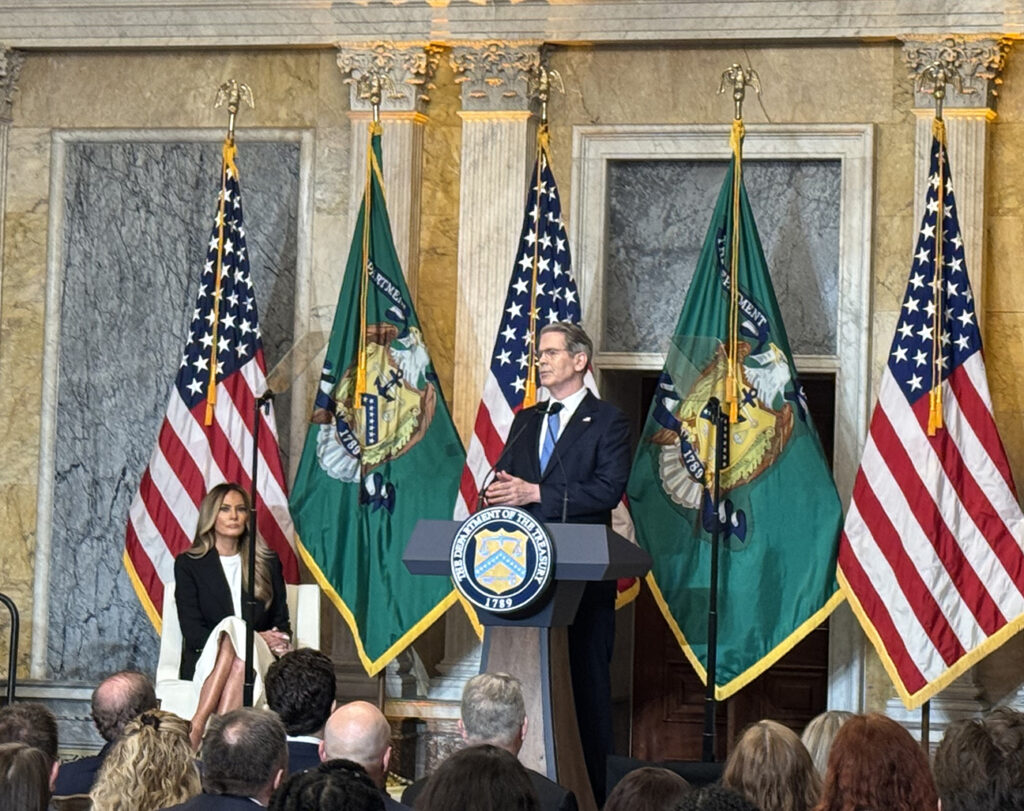
Then, on Nov. 13, President Trump and First Lady Melania Trump hosted many of the administration’s top officials for a high-wattage signing event in the White House, where the pair presented the new foster care executive order that aims to boost support for older foster youth, expand partnerships with faith-based organizations and modernize the system’s technology. Within days, Congressional Republicans held hearings and introduced legislation to codify the executive order.
These moves have garnered strong praise from leading child welfare advocates, as well as some questions and skepticism about what the administration’s series of short, boldly worded announcements will amount to in practice, especially for older foster youth.
“In a community accustomed to receiving the bare minimum, any new initiative can feel like a victory,” wrote policy advocate and social worker Kaysie Getty in an op-ed published last week by The Imprint. “The child welfare community should not rush to celebrate every new announcement. Instead, we must examine the details, question the gaps, and hold policymakers accountable for investing in what actually works.”
BEFORE YOU GO … If you learned something from this article, pay it forward and contribute to The Imprint. Our work is funded by readers like you who are committed to unbiased journalism that works for you, not for the algorithms.