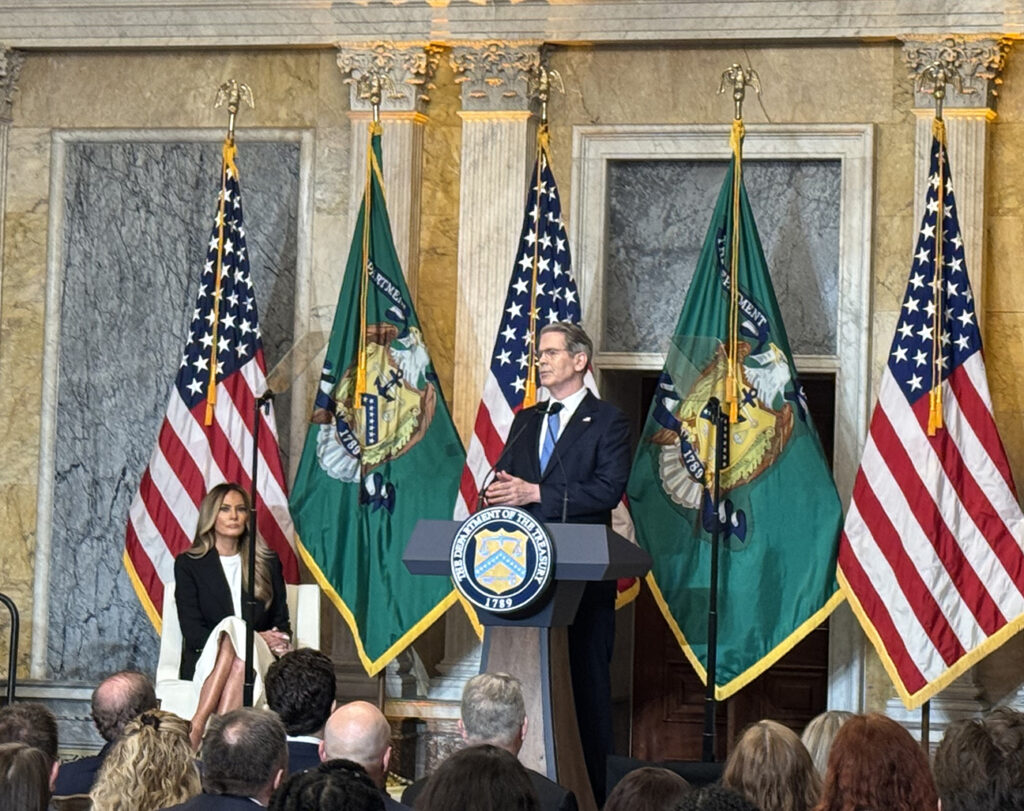

In what some observers called the most high-profile child welfare event in recent memory, President Donald Trump and First Lady Melania Trump announced an expansive set of initiatives on Thursday, aimed at boosting support for older foster youth, expanding partnerships with faith-based organizations, and modernizing technology used by the nation’s state-managed child welfare systems.
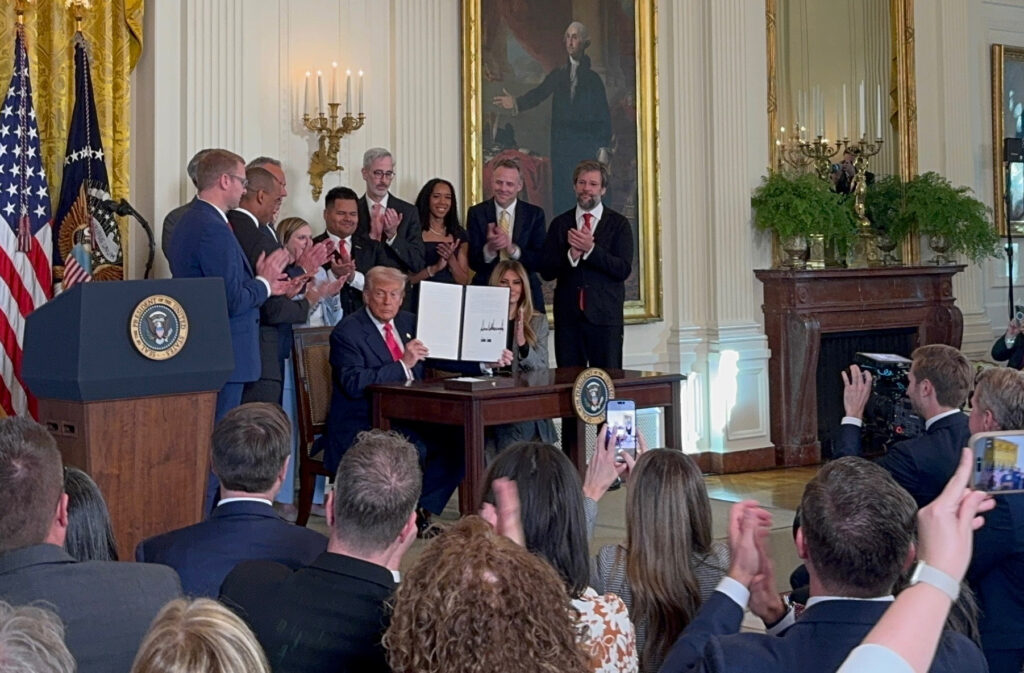
After brief remarks before an audience in the White House’s East Room that included Vice President JD Vance, top administration officials and congressional Republicans, President Trump signed an executive order titled “Fostering the Future for American Children and Families.” It requires key federal agencies to “harness federal support, technology, and strategic partnerships to provide young Americans in or transitioning out of the foster care system with the tools they need to become successful adults.”
Under the order, the Department of Health and Human Services must work with the First Lady’s office to launch a “Fostering the Future” program next year that will link transition-age current and former foster youth to jobs and educational opportunities with “leading private sector organizations, academic institutions, and non-profit entities.”
The order also calls for new strategies to reallocate unspent child welfare funds and more flexibility in using education and training vouchers reserved for transition-age youth.
With typical bombast, the President described his intention to make the foster care system “better, fairer and more effective than ever before.”
“As we make America great again we are going to protect American children in foster care, and we are going to ensure they will never, ever be forgotten,” he said. “They are gonna grow up to be unbelievably strong, smart, wealthy, productive citizens.”
Reactions to the announcement included strong praise, uncertainty about whether the administration will follow up with more detailed plans, and accusations of hypocrisy from some Democrats.
Former foster youth Cadon Sagendorf, who watched the announcement online from his home state of Utah, said it was “profoundly meaningful” that he and his peers’ “voices were heard,” and that “federal leadership is serious about building pathways to success for youth transitioning from care.”
But, added the 24-year-old state child welfare agency employee, he hoped that the White House’s pledge to reform foster care will be “empathetic and productive” and not simply “performative.’’
“The work ahead requires accountability, sustained funding, and genuine collaboration,’’ he said in an email. “Youth aging out of care deserve more than promises, they deserve action that delivers stable housing, healthcare, education, and meaningful employment especially as critical supports like Medicaid and SNAP face uncertainty.”
The order also requires the Department of Health of Human Services, led by Robert F. Kennedy Jr., to take steps over the next 180 days that include:
- Expediting child welfare data releases, eliminating “duplicative or unnecessary” reporting requirements for state agencies.
- Publishing annual scorecards evaluating states’ progress on key child welfare metrics, including reducing “unnecessary entries into foster care” and “child injuries and fatalities caused by caregiver neglect and abuse,” as well as increasing foster parent recruitment.
- Expand states’ use of predictive analytics and artificial intelligence “to increase caregiver recruitment and retention rates,” and “improve caregiver and child matching.”
- Increase partnerships between child welfare agencies and “faith-based organizations and houses of worship,” to serve families who have lost or are at risk of losing their children to foster care.
“I predict this small spark today will ignite a profound and lasting nationwide movement,” the First Lady said Thursday. “Together, we will illuminate the pathway for today’s foster children to become tomorrow’s builders.”
The Imprint’s Youth Services Insider reported Tuesday that Melania Trump has become a leading voice on foster care policy for the administration. The First Lady’s policy director, Sarah Gesiriech, is a veteran of child welfare policy at the state and federal level.
With their announcement, the Trumps briefly thrust an often-overlooked system serving the most vulnerable families into the national spotlight. The order came during a politically turbulent moment for the White House that included this month’s Democratic elections sweep, the conclusion of the longest-ever government shutdown, and renewed scrutiny of the President’s former friendship with Jeffrey Epstein following a new release of emails from the deceased alleged child sex trafficker.
“If they’re able to follow through on these commitments, it will elevate child welfare significantly across the country.”
— Jedd Medefind, Christian Alliance for Orphans
Following their statements and the order signing, President Trump and the First Lady left the East Room promptly and without taking questions from the dozens of journalists in attendance. Prominent Democrats later went on social media to accuse the president of hypocrisy, including references to his administration’s recent refusal to distribute food aid to families during the federal shutdown.
Within the child welfare field, reactions were more nuanced, with many praising the President and First Lady for elevating foster youth issues onto a national stage. Washington policymakers have spent decades seeking to address the high rates of housing, education and financial insecurity that former foster youth face as they leave the system.
“This executive order is another step toward expanding those opportunities and helping more young people move into adulthood with confidence and support,” said a statement released by the Washington, D.C. nonprofit National Foster Youth Institute, which helps train current and former foster youth in leadership and advocacy.
Jedd Medefind, president of the Christian Alliance for Orphans and former leader of faith-based initiatives during George W. Bush’s administration, praised the Trump administration’s focus on foster youth, but added that the 962-word order left much to interpretation.
“An executive order like this is more like a compass than a detailed map. It sets direction and priorities, but not the precise steps or how to take them. That means the most important work lies ahead,” Medefind said in an email. “If they’re able to follow through on these commitments, it will elevate child welfare significantly across the country.”
Ruth White, co-founder and executive director of the National Center for Housing and Child Welfare, said this population’s needs remain urgent as federal agencies have “failed spectacularly for more than a half century” to support transition-age foster youth’s path to economic independence.
“It was clear to me sitting in that room yesterday with all of the youth authors, Secretary Kennedy, and the elected officials that the shift towards economic and educational success for youth and families involved with child welfare is well underway,” she said.
But Sagendorf and other advocates also noted the dissonance between the new initiative and legislation President Trump signed earlier this year — and touted during Thursday’s event. That bill, H.R. 1, abolished a long-sought exemption from food aid work reporting requirements for former foster youth under the age of 24, and greatly expanded paperwork requirements for accessing Medicaid, which provides health care coverage for nearly all children in foster care.
“Youth aging out of care deserve more than promises, they deserve action that delivers stable housing, healthcare, education, and meaningful employment especially as critical supports like Medicaid and SNAP face uncertainty.”
— Cadon Sagendorf, Former foster youth
Some also criticized what the order left out, including only scant mention of foster care prevention efforts that were a hallmark of the first Trump administration, and no mention of the overrepresentation of Black and Native American families in the child welfare system.
Rev. Starsky Wilson, president and CEO of the Children’s Defense Fund, said the order “names some valid challenges with our child welfare system,” but “stops short” of addressing disparities such as race and poverty “being used as an excuse for family separation.”
For decades, policymakers have repeatedly attempted to address holes in the support system for transition-age youth. Those efforts have included the extension of foster care through age 21, which was approved as part of the Fostering Connections to Success and Increasing Adoptions Act in 2008.
Guaranteed Medicaid eligibility after foster care through age 26 was also a provision of the Affordable Care Act. And dedicated vouchers to support affordable housing after foster care, a program called Foster Youth to Independence, was first established by the Trump administration during his first term.
Meanwhile, Trump’s highest ranking child welfare appointment, Administration for Children and Families Assistant Secretary Alex Adams was confirmed by the Senate on Oct. 7. Since then, he has sent letters to states describing his expansive policy plans, and warned some to roll back policies related to gender identity protections for foster youth.
Correction: Fostering Connections to Success and Increasing Adoptions Act was passed in 2008, not as previously written, in 2009.