
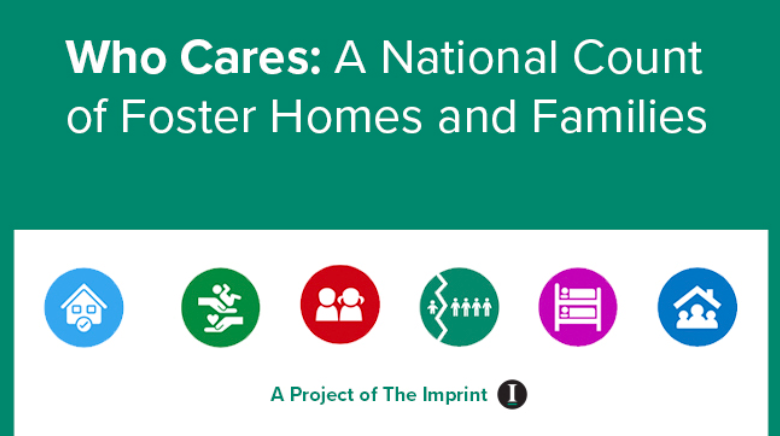
The Imprint’s Who Cares Project, which uses a 50-state survey to track foster care capacity in the United States, has been updated with new data from 2025. This is the only state-by-state collection of information about the kinds of homes and placements available in United States foster care systems.
The project has been incorporated as a key measurement in A Home for Every Child, the federal government’s goal of reaching a 1:1 ratio of homes and foster youth by the year 2028. Data from Who Cares shows that, in 2025, there was about one licensed foster home for every two children in foster care.
New Who Cares data for 2025, drawn directly from the responses of each state’s child welfare agency, identified 178,026 licensed foster homes in the country. This is a 9% decrease from our last survey, conducted in 2023, and a 19% drop from 2019, when there were 220,002.
The decline is actually higher, given that Virginia did not provide data for the project in 2019.
There are also fewer youth living in foster care, according to both recent government reports and this project. There were 328,947 youth in foster care in 2024, according to the federal Adoption and Foster Care Analysis and Reporting System. While Who Cares did not capture a number for two states, Michigan and Mississippi, our collection projects that the total has declined again in 2025.
You can access all of the information collected from states for the Who Cares project at FosterCareCapacity.com, which features national datasets as well as individual profile pages for each state. Among the data points available:
-Total licensed homes
-Non-relatives homes
-Relative caregivers with active and ongoing placements
-The number of congregate care providers
-Youth in foster care
The site also includes federal data about the number of youth living with relatives or in congregate care, and a unique Family Separation metric calculated by statistician Andy Barclay.
The research questions for this project focus entirely on issues of quantity. It does not relate to policies or practices that ensure the quality and preparedness of all foster caregivers, or efforts to ensure that the removal of children from families is done only when it is absolutely necessary.