
A New York appeals court has revived a class-action lawsuit filed on behalf of children removed from their biological parents and later denied formal foster care placements with relatives who had decades-old charges for minor offenses.
“The plaintiffs have suffered a real-world harm,” judges on the Second Circuit ruled earlier this month.
As a result, some of the children grew up with strangers, exposing them “to risks of psychological and emotional harms.” Others ended up in informal relative caregiver arrangements that deprived the children of “medical and social services provided to children in foster care,” the Feb. 2 ruling states.
A spokesperson from the city’s Administration for Children’s Services said the agency is reviewing the court’s decision.
“Finding safe, loving homes for children who need to come into foster care is essential,” spokesperson Marisa Kaufman said in a statement to The Imprint.
The class-action lawsuit, B.B. v. Hochul, was first filed in 2021 in eastern New York’s U.S. District Court by the Legal Aid Society and Dechert LLP. The plaintiffs, 14 New York City children, alleged that the city’s child welfare agency violated their due process rights by denying their relatives foster parent licenses as a result of dated reports to New York’s child maltreatment hotline and prior offenses related to possession of drugs or weapons and driving under the influence.
At present, the state Office of Children and Family Services lists nearly 300 felonies that disqualify kin caregivers from being licensed, regardless of how long ago they occurred. According to court documents, the list is more “expansive” in New York than other states.
The lawsuit argues that plaintiffs who were not placed with relative caregivers were denied the rights to “family integrity,” connectivity that research shows is best for children’s long-term well-being — including better health, fewer behavioral challenges, reduced trauma and deeper ties to cultural identity and shared history.
Another group of plaintiffs ended up spending years in “direct placements” with relatives “even when those same relatives have been denied certification to foster or adopt,” court records show.
But under these informal arrangements, known as “hidden” or “shadow” foster care, kin caregivers are not monitored by the courts and social workers, and the households do not receive the same financial, educational or medical benefits provided to licensed foster parents.
B.B. v. Hochul was dismissed by a lower court years ago, citing a lack of standing. But the appeals court decision earlier this month partially overturns that ruling and allows the case to move forward for 11 remaining plaintiffs. In the four years since the case was first filed, one plaintiff has aged out of foster care, and two others have been placed with licensed relative caregivers. One has standing to challenge the state over an adoption certification.
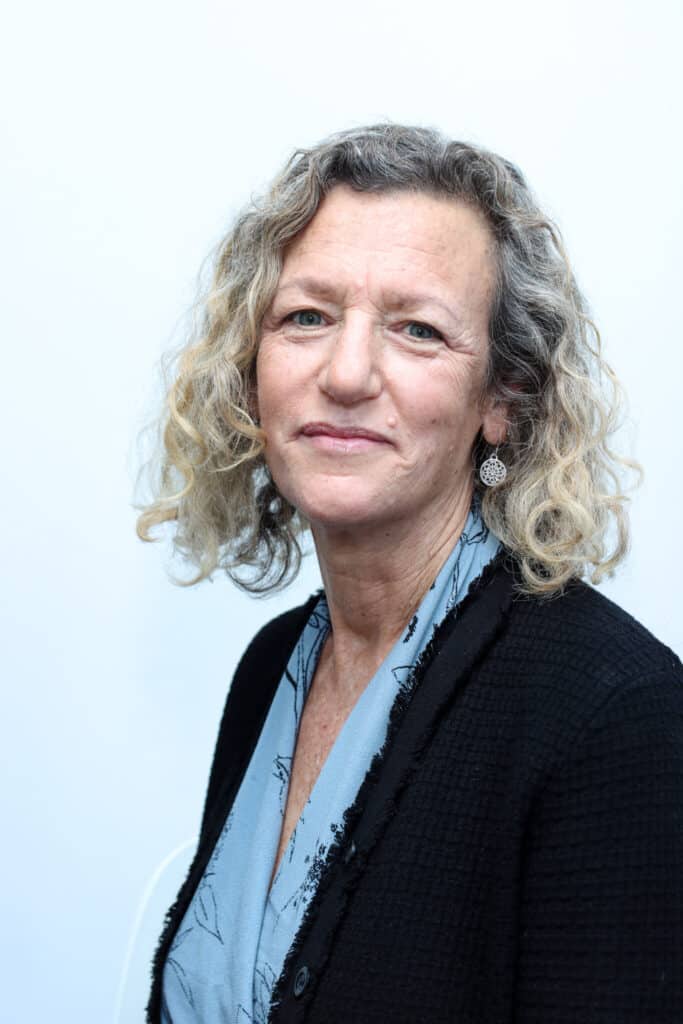
In an interview with The Imprint, Lisa Freeman, The Legal Aid Society’s director of special litigation and policy advocacy on juvenile rights, discussed the case and why her team is pursuing it.
This conversation has been edited for brevity and clarity.
Can you remind our readers why Legal Aid and your clients chose to file this lawsuit?
This case is important because children are being removed from their parents and then deprived of the opportunity to live with safe and loving relatives, and to have those relatives be certified as foster parents and adoptive parents.
These children don’t get the services and supports that they need, and are not given stable homes with loving relatives.
Some relative caregivers in this case were disqualified due to prior reports of child maltreatment that were all more than eight years old. Others found their application denied due to low-level charges such as loitering, prostitution and driving while intoxicated — many from the 1980s and 1990s. Why did the lawsuit focus on this?
What our lawsuit seeks is an individualized, meaningful assessment of whether a relative can provide a safe and loving home. The current practice does not give that, so in some instances, decades-old criminal records that have no bearing on the person’s ability to parent prevent them from being certified as a foster parent.
What is so powerful is that 11 out of our 14 plaintiffs were actually placed with their relatives, even though their family members have been denied foster parent certification. So it’s obvious that there is no safety concern about the child living with that family member.
In the original lawsuit, the 14 children alleged that New York violated their due process rights by not allowing them to challenge denials of their relatives’ foster parent license applications. Why is this so important?
Social science is very clear that children do better with families. If a child has to be removed from their parent, that child will most likely do better if they remain with a family member. A family member is typically committed to the child in a way that a stranger foster parent is not. And the child remains with lifelong connections.
What we’re asking for is that if the state is denying certification to a relative as a foster parent, that the child be given an opportunity to challenge that decision, to show how important it is so that it’s not simply a decision in a vacuum. It’s a decision that recognizes the relationship of the child to that relative.
“In some instances, decades-old criminal records that have no bearing on the person’s ability to parent prevent them from being certified as a foster parent.”
— Lisa Freeman, The Legal Aid Society
Many plaintiffs alleged that they experienced psychological and emotional harm because they were not allowed to live with relative caregivers. What were the “real-world injuries” faced by the children who ended up living with relatives in a “direct placement” or informal foster care setting?
What’s happening is that children are being placed with a family member, but denied the services and supports that they would get through the foster care system. So for instance, one of our plaintiffs didn’t have medical coverage as a result of being just “directly placed.”
If his relatives had been certified as foster parents, he would automatically get Medicaid. This deprives them of opportunities for permanency. It makes them live in a less stable situation.
It essentially means that they are being placed in an unstable situation because of the financial hardship and the services needs of the child, when any other child would not be denied those services and supports if they were placed in stranger foster care.
Why have plaintiffs asked the state to focus on individualized evaluations of caregivers?
Some children’s relatives are denied on a mandatory basis as a result of their criminal convictions. There is no individualized determination being made with regard to those relatives. It’s an automatic decision.
The person could have gone on to raise the president of the United States and still they would be disqualified as a foster parent based on their criminal history. So for those children we are asking for an individualized assessment.
Our clients’ experience is that all too often, the evaluation is not a meaningful one, and they are just denying the potential foster parent certification.
Are you a kinship caregiver who was denied a foster care license, or do you have any experience or tips you’d like to share about hidden foster care? Email ssarkar@imprintnews.org