
To take care of herself, a Minnesota mental health clinician spends time outside, enjoys animals, sits under the moon, takes naps and does “lots of breathing.”
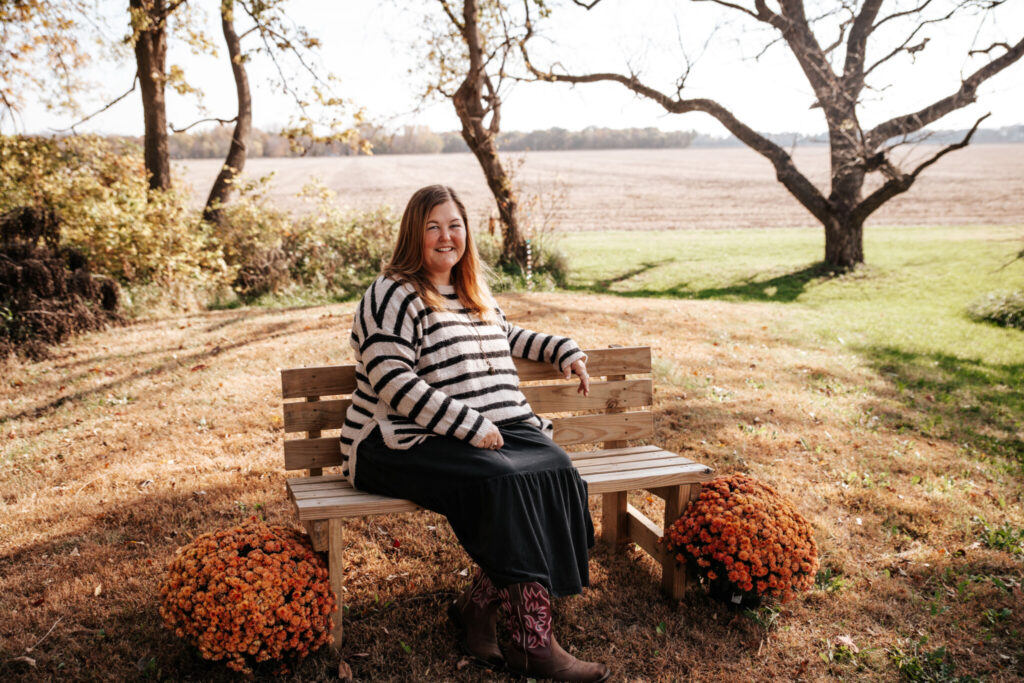
Heidi Rimstad has a critical job at the Child and Family Advocacy Center of South Central Minnesota that few see: She helps police officers, social workers, victim advocates and forensic interviewers cope with stress and vicarious trauma after investigating child abuse.
During group sessions where they learn how to take care of themselves, participants do body scans and meditate. Sometimes, Rimstad draws on her knowledge of Reiki, an ancient Japanese healing method centered on energy flow, for a relaxation exercise. Throughout, the professionals can fiddle with fidget gadgets and coloring books, or reach into a bowl of candy. Though Rimstad describes some of her strategies as “woo-woo,” she says they’ve helped teams of toughened staff navigate the burden of investigating child abuse.
Rimstad, a longtime therapist, end-of-life doula and Universal Life Interfaith minister, has contracted with the Child and Family Advocacy Center in Mankato since 2021. One of 1,000 like it across the country, the center conducts forensic interviews with children who have experienced abuse or witnessed violence in a setting designed to be as child-friendly and safe as possible.
Rimstad describes her work with these teams as “helping the helpers,” by paying attention to their emotional needs. Multidisciplinary employees of the center — and the law enforcement officers and child protection workers they confer with on children’s cases — are all eligible to participate free of charge in her monthly reflective group sessions, “light debriefs” and individual appointments.
“The healthier the people are who are doing the work,” Rimstad said, “the healthier our community is.”
Forensic interviews at local Children’s Advocacy Centers aim to avoid causing further trauma to child victims. But the staff of such places are often left to fend for themselves when it comes to their own mental health. A study published in the journal Child & Family Social Work in 2020 examined the impact of burnout, secondary trauma and organizational stress on forensic interviewers working at Children’s Advocacy Centers across the country. High numbers of those surveyed met the diagnostic criteria for post-traumatic stress disorder. Impacts of the job included “intrusive thoughts about the child’s disclosure, engaging in avoidance techniques such as avoiding people and places that remind them of work and suffering from psychological arousal, including having trouble sleeping,” the study concluded.
Mankato center staff have the option to work through those job-related hazards with Rimstad.
“The healthier the people are who are doing the work, the healthier our community is.”
— Heidi Rimstad
Though she does not provide one-on-one therapy in this setting, she offers a variety of ways for clients to process their feelings, including light debriefing sessions, in which staff explain cases they’re handling and how the work is affecting them. That can include people having a hard time processing the way a child retold the story of their abuse, she said, or difficulty expressing their concerns about whether they are supporting a family in the best way. During “reflective consultations,” staff members dive deeper into how their emotions are impacting their work and learn tips to regulate their nervous systems, feel their bodies, and practice meditation.
In an interview with The Imprint, Rimstad touched on the emotional difficulties that can accompany the difficult work of investigating child abuse and her role in supporting professionals who do this work.
This conversation has been edited for brevity and clarity.
On your website, a child protection investigator praises you, saying: “Heidi has been able to help me maintain my joy and sanity despite investigating horrific child maltreatment.” How do you describe the vicarious trauma that Children’s Advocacy Center staff and the multidisciplinary teams they work with can experience?
Vicarious trauma is where your perspective on life changes — even your personal life.
Vicarious trauma is when so many of these events are just compounded and compounded. And we don’t deal with it. We don’t talk about it. We just keep compartmentalizing it. It’s the cumulative effect of stories, and caring so much, and then just feeling like “I’m just starting to shut down and lose parts of myself.” And so the goal is to not lose yourself as you’re doing the work.
How do you help staff process and heal from working on particularly difficult or emotionally challenging cases?
I always ask: What is it about this situation or experience that’s hardest for you? Because I think it’s important for the individual to define what’s the hardest part. And that can be different for everyone.
We can all be sitting in the same room hearing the same story, but something will speak to us differently. And so it’s about understanding for each individual, what is it about this that resonates most with you? Building that awareness so that it can help us shift our perspective.
What are the potential long-term effects of second-hand or vicarious trauma if it goes unaddressed?
Certainly, physical changes: high blood pressure, increase in anxiety, depression, just feeling unwell. There’s potential for increase in infidelity, addiction, any addiction behaviors. It can impact how we do our job, and if we’re seeing things clearly, or if we get focused in our tunnel vision — that inability to take in new information.
How can vicarious trauma and the weight of this work lead someone to burnout?
It can cause people to start avoiding certain parts of their work, so mistakes might be made. They might not be getting information to families as quickly as they’d like to, avoiding phone calls, avoiding collaboration, making decisions on their own, maybe not collaborating with the team members. It almost feels like people start to isolate a little bit, and that can get dangerous.
What do you see as the biggest barrier to mental health support and therapy for the staff who work at Children’s Advocacy Centers?
These individuals are so giving and attentive to others. And by the time they have energy to focus on themselves or time, the energy might not be there. So you get to the end of the day, it’s like, “I don’t want to run to one more appointment. I don’t want to fit in one more big conversation. I just don’t have it in me.”
On your website, you describe your specialty as “blending evidence-based practices with what some may call ‘woo-woo’ methods, integrating both to help clients achieve holistic well-being.” How do you help clients achieve holistic well-being?
It really is about starting to understand who I’m working with and their awareness and comfort level.
I don’t start with meditations with team members until I have some credibility and relationship and rapport built up, because it can feel uncomfortable. It takes time to settle into our bodies while we’re at the workspace. I ask about the tangible: Let’s talk about values. Let’s talk about decision fatigue. And now we’re going to transition to nurturing our body, being mindful, doing a body scan, listening to what our body is saying.
And with my Reiki practice, I do bring it up if people are interested or comfortable.
How do you take care of yourself and your own mental health?
I do a lot of walking outside. I have a lot of animals. I live in a rural community, and so sitting under the moon, lots of breathing. I also take naps and just let my body shut down for a little bit, even if it’s just closing my eyes and listening to calming music. I also can do Reiki on myself.