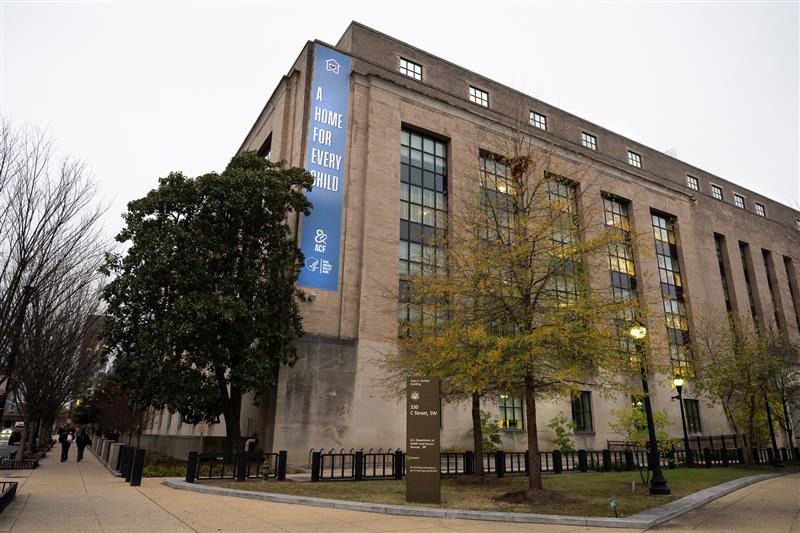
A new GAO report found that since enactment of the “Family First” law in 2021, states have not decreased use of group homes and facility care for foster youth.

A federal survey of states released last week found that more than half say a landmark foster care reform law, the Family First Prevention Services Act, has yet to accomplish its goal of reducing reliance on group facilities for foster youth.
Since the law known as the Family First Act went into full effect five years ago, 26 state child welfare agencies report an increase or no decline in the percentage of children and teens placed in congregate care settings, which include small-scale group homes and larger residential institutions, according to the U.S. Government Accountability Office.
Eighteen states reported they have been placing more youth in “hotel rooms, office buildings, and hospital emergency rooms.” Nearly four dozen states said they face a shortage of “community-based mental and behavioral health services” and 41 claimed a shortage of substance use treatment for foster youth.
In findings released March 3, the congressional watchdog agency described another consequence of the Family First law, which restricted federal spending on congregate care: “Officials in three of four states we visited reported they were using state funds to support youth in congregate care to make up for lost federal funds.” One state told the GAO that has had a spiral effect on its broader child welfare system, reducing available funds for “the child welfare workforce, family interventions, or other services.”

Attorney Jennifer Rodriguez, the executive director of the San Francisco-based Youth Law Center and a former foster youth, described the report as a sobering reminder that states are “still struggling to translate federal policy into real practice change on the ground.”
“These are children, children who have already lost so much, being told, again, that they are unworthy of a family. I think about the many teenagers these numbers represent across the country – sitting in a facility at night, wondering why they’re there, wondering why no one wanted them,” Rodriguez said. “Family First was supposed to move us toward belonging. If these findings show us anything, it’s that we still have work to do to make sure young people feel wanted, not warehoused.”
The most recent federal data available shows that in 2024, nearly 40,000 foster youth were placed in group facilities. That number has remained steady since 2021, even as the total foster care population has declined.
In a statement emailed by a spokesperson in response to questions, Administration for Children and Families Assistant Secretary Alex Adams did not directly address the GAO’s findings. But he emphasized his agency’s commitment to expanding the number of home-based settings for foster youth.
“Congregate care should always be used as the tool of last resort, only when therapeutically necessary, and for the shortest duration clinically indicated,” Adams said. “It should not be used as a substitute for diligent recruitment and retention of safe, loving foster families, and should never be a substitute for robust prevention and permanency plans.”
The number of foster youth in congregate care had been declining for decades prior to passage of Family First. This trend coincided with public campaigns by advocates and child welfare experts to end the warehousing of children. Their efforts were driven in part by youth testimonials and scores of studies finding that children sent to live in residential centers for extended periods are less likely to thrive and more likely to face difficulty later in life than those raised in family homes.
Family First was signed by President Donald Trump in 2018, with full implementation delayed until late 2021. The senators behind the law said they were seeking to “reduce overreliance on group foster care homes.” A key provision limited federal funding for congregate care to only 14 days. It included exemptions for youth in facilities offering enhanced services for “serious emotional or behavioral disorders or disturbances,” those who are pregnant or parenting and youth who had experienced sex trafficking or were at risk of it.
“Congregate care should always be used as the tool of last resort, only when therapeutically necessary, and for the shortest duration clinically indicated.”
—Alex Adams, assistant secretary for the Administration for Children and Families
The law has been hailed by some as a major child welfare reform. But some critics argue that its funding restrictions contributed to foster youth ending up stuck in unlicensed, inappropriate settings such as county social work offices, hotels and even Airbnbs. Others have cautioned that some youth with complex behavioral health conditions will always need residential programs.
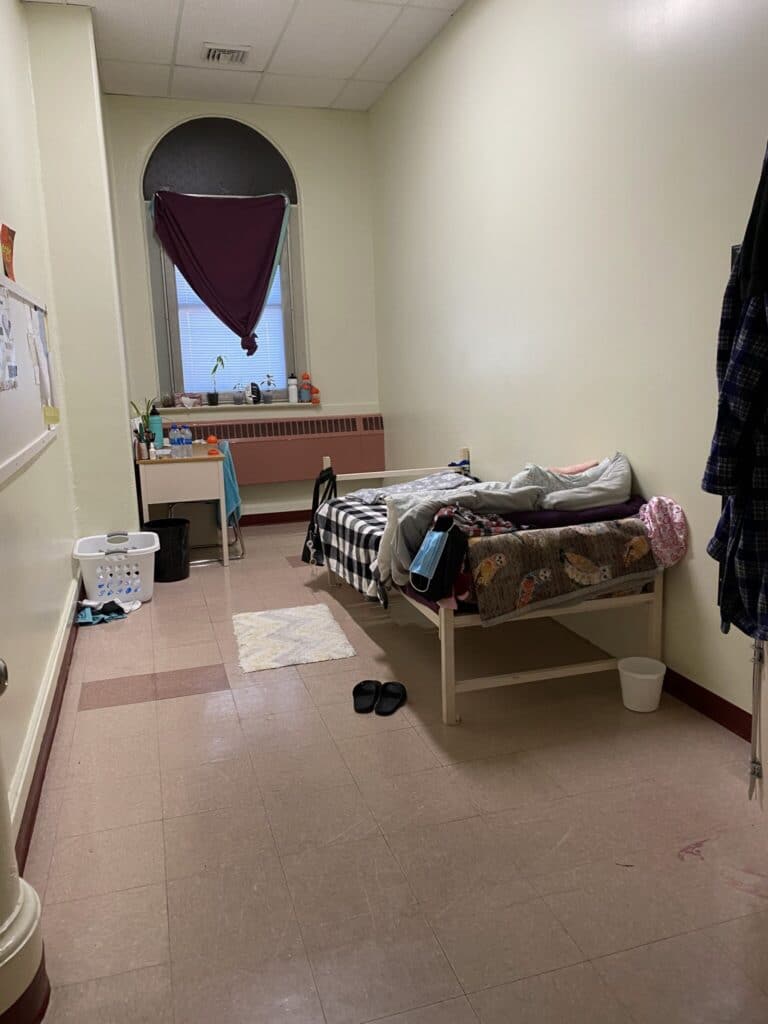
For its recent review, the GAO queried the child welfare and juvenile justice agencies in all 50 states and Washington, D.C., with open-ended questions about placement trends through 2025. It received responses from each, except for the child welfare agencies in Alaska and Massachusetts, and California’s juvenile justice agency.
The federal report is not all negative findings. A total of 21 states reported a decline in the percentage of youth in congregate care since late 2021, and 12 credited Family First for that trend. Twenty states reported benefits of the federal law’s congregate care provisions, including 12 that said it helped them improve the use of “trauma-informed” treatment in group facilities.
The findings came from survey responses; the watchdog agency did not analyze federal spending on congregate care.
But publicly available data reviewed by The Imprint shows taxpayers’ investment in congregate care has increased significantly since Family First went into effect. It grew 25% between 2020 and 2023 to $350 million, even as the federal government restricted when it would pay, and the foster care population continued to shrink. The GAO report suggests one possible explanation: Twenty states reported an “increasing cost of congregate care for reasons unrelated to Family First.”
Meanwhile, nearly every state reported challenges finding appropriate placements for foster youth. More than three dozen said they face a serious shortage of foster homes.
“These are children, children who have already lost so much, being told, again, that they are unworthy of a family. I think about the many teenagers these numbers represent across the country – sitting in a facility at night, wondering why they’re there, wondering why no one wanted them.”
—Jennifer Rodriguez, executive director of Youth Law Center
The GAO also conducted an anonymous survey of 26 young adults between 18 and 25 who spent time in congregate care since 2021. Some described destructive experiences that have haunted them into adulthood, while others said they bonded with staff, or that group facilities were better than alternatives at the time.
“Emotionally, these facilities changed my life,” said one young person. “I vividly remember the doors clicking behind me and the fear that filled my chest. In these facilities, I saw abhorrent acts of violence, sexual assault, and suicidal behaviors.”
“It was more awful than losing my parents and that’s saying something,” said another young person.
Others described congregate care as a refuge.
“They had seen me at my worst in the middle of my addiction,” said a young woman who said she had a baby in high school. “They took me to school every day. They supported me. They helped me raise a child in the midst of also going to high school. It was really nice. It was a good place to be.”
“I will always have a special place in my heart for my old group home. It is where I learned so much and felt connected,” said another respondent.
The GAO report included only one recommendation for the federal government to consider: clarifying the definition of “youth found to be or at risk of becoming victims of sex trafficking.” That’s one of the exemptions to Family First’s 14-day limit on federal funding for congregate care placements, but the category is not defined in federal law or regulations.
“Emotionally, these facilities changed my life. I vividly remember the doors clicking behind me and the fear that filled my chest. In these facilities, I saw abhorrent acts of violence, sexual assault, and suicidal behaviors.”
—Anonymous survey respondent who was in congregate care
The GAO found vast differences in how states are applying this exemption: At least one state is classifying 81% to 95% of youth in federally funded placements as possible or confirmed sex trafficking victims. In other states, the percentage was under 40%. The GAO reported that the federal Administration for Children and Families rejected its recommendation to issue clarifying guidance, citing the latitude states need to “tailor programs to local or statewide needs.”
Oregon Sen. Ron Wyden, a Democrat, called on the Trump administration and the leader of its Administration for Children and Families to reconsider that stance.
“These independent, non-partisan findings make it clear that the Trump administration has the tools to hold states to a higher standard when it comes to placing children in congregate care facilities, but is choosing not to use them to the fullest extent,” he said in an emailed statement. “I will continue to hold Alex Adams and the Administration for Children and Families accountable for any action or inaction that allows the intent of the bipartisan Family First Act to be tarnished.”
In response to a request for comment, the current chair of the powerful Senate Judiciary Committee and one of the architects of Family First, Iowa Republican Chuck Grassley, did not directly address the GAO’s findings. But his statement emailed by a spokesperson said the report “will help Congress ensure federal dollars are working as intended to secure better outcomes for vulnerable kids, whether that’s keeping families safely intact, finding a forever home through adoption or paving brighter futures for foster youth transitioning to adulthood.”