
An ambitious anti-poverty experiment in Michigan that provides expecting and new parents a jolt of cash assistance for the first several months of their child’s life has expanded statewide — with two recent studies analyzing whether the benefits also decreased calls to CPS.
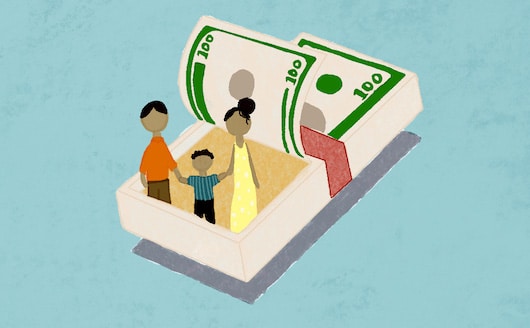
The program, known as Rx Kids, gives applicants a one-time, $1,500 payment during pregnancy and then monthly payments of $500 for up to a year after a baby’s birth. Detroit’s Mayor-elect Mary Sheffield describes the initiative as “setting a new standard on how government shows up for families when they need it most.” There are no conditions on how the cash assistance can be used, but families have largely reported spending it on rent, utilities, diapers, food, transportation and medical care.
Since its launch in Flint, Michigan, two years ago, more than $14 million has gone out to the families of more than 2,240 infants. The program has continued to earn accolades and supporters, including Gov. Gretchen Whitmer. Last fall, she approved a state budget with a $270 million boost for Rx Kids, expanding its reach to nearly 100,000 babies in 39 Michigan counties and towns in rural, suburban and urban areas.
Proponents say the financial relief provided translates into healthier families and by extension, healthier communities. Rx Kids claims its program caused another significant outcome: As early as last summer, Rx Kids founder Mona Hanna told a Michigan Senate panel that the program was “preventing child welfare involvement.’’
A working paper released by Rx Kids later that year concluded that cash aid led to a 32% decrease in investigated allegations in 2024.
But a second, newly released working paper tests that assertion and reaches a different conclusion. That study examined the same data on births in Flint, as well as infant-involved CPS reports and investigation results. It, too, compared that data with a batch of “control” cities.
However, unlike the Rx Kids study, the second paper found “no differences in overall referrals to child protection.”
Jill Duerr Berrick, a University of California, Berkeley, social work professor widely cited for her child maltreatment research, said the study Rx Kids conducted is, “methodologically very rigorous, so it’s important.”
“But,’’ she said, “it doesn’t negate other studies that haven’t found as much positive. It just shows we’re not done yet.”
Rx Kids is not the nation’s only monthly cash assistance program, but it is one of the largest — a closely watched “model for mitigating the high cost of having children,” according to the Associated Press.
Why Flint, why cash?
The stakes were high in 2024 when the program launched in Flint, a predominantly working-class city and the founding home of General Motors. The city of 80,000 residents had become a national symbol of post-industrial decline, plagued by high levels of unemployment and child poverty, and most recently, a drinking water crisis that began in 2014. That decade-long public health emergency exposed tens of thousands of residents — including an estimated 14,000 children under age 6 — to high levels of lead.
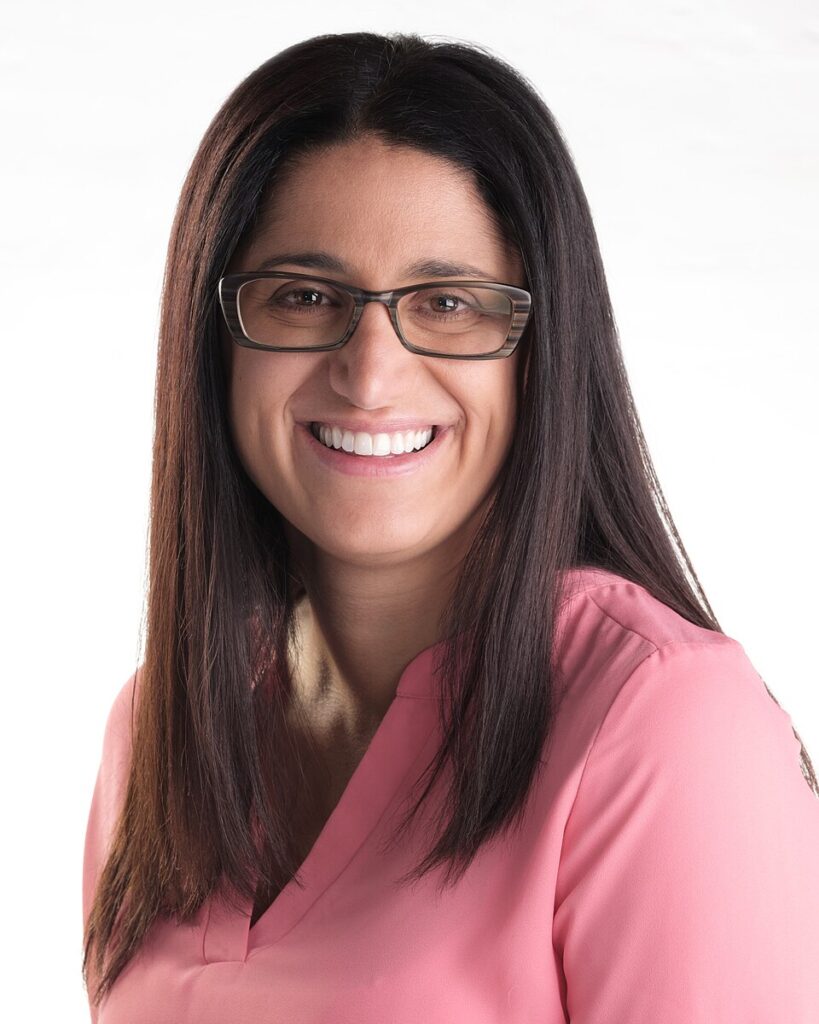
Dr. Hanna, the founder of Rx Kids, was hailed for playing a central role in exposing the disaster after she spoke out about elevated lead levels she was finding in her child patients.
In the years that followed, she extended her advocacy efforts to improve the well-being of Flint’s residents, making an energetic case for the investment of public dollars in the city’s families. Michigan State University, where Hanna is an associate dean, partnered with the University of Michigan, and social policy researcher Luke Schaefer, to realize that vision.
Their idea, Rx Kids, is a “prescription” of “no-strings-attached love” in the form of flexible, unrestricted monthly stipends for up to a year, according to the group’s website. The goal: providing “life-changing financial security” to families during a time when “income plunges and expenses spike,” as well as “improving maternal and infant health, and boosting local economies.”
“We in the richest country in the history of the world should not be OK with our babies growing up without the resources they need to thrive,” Dr. Hanna said recently.
She and her colleagues have also cited growing scientific evidence for the health and well-being benefits of similar aid programs.
Rx Kids, now run by Michigan State and administered by the nonprofit GiveDirectly, is funded by state, federal, and local tax dollars, as well as philanthropic donors. The time frame for the stipends — pregnancy through a child’s first year of life — is “the period of greatest vulnerability for economic instability and child welfare involvement, when maltreatment rates are two to four times higher than among older children,” according to Rx Kids.
More than half of the households who have received assistance from the program earn under $10,000 annually, though people of all income levels are eligible. Roughly two-thirds of the program’s recipients have been Black, and nearly one-third white. In a January interview, one of the scholars who conducts research for Rx Kids described the program’s unique potential.
“We’re infusing millions of dollars into a very poor community. That kind of infusion of cash can have spillover effects,” said Dr. Sumit Agarwal, a physician and health economist at the University Michigan. “You have the direct effects on the family, but then you have effects on the community, which can improve the outcomes overall.”
Fewer child welfare investigations?
In the working paper released last December by Rx Kids researchers, Agarwal said he and his coauthors concluded that the program also likely caused investigated child welfare allegations to “plummet quite steeply” in 2024.
Prior to the 2024 launch of Rx Kids, almost 22% of infants born in Flint experienced an investigation into child maltreatment. In the months after the program started, that number dropped to 15.5%, the Rx Kids study states.
That translated into 57 fewer Flint newborns being suspected victims of maltreatment, and at least as many new parents avoiding intensive scrutiny and possible separation from their babies by CPS, according to the study.
By comparison, the average rate of investigations ticked up slightly in 21 comparison cities that didn’t participate in Rx Kids.
“We in the richest country in the history of the world should not be OK with our babies growing up without the resources they need to thrive.”
— Dr. Mona Hanna, RX KIDS
But similar cash aid efforts have become the subject of growing debate, and Rx Kids’ fast growth has drawn scrutiny from some researchers who once worked with the program. A second working paper on the program that used different statistical methods has circulated among more skeptical child welfare experts.
“There is no evidence that unconditional cash transfers totaling $1,500 at mid-pregnancy and $500 per month affect contact with child protection or substantiated allegations of maltreatment within the first six months of life,” concludes the paper, which was lead authored by Joe Ryan, a University of Michigan professor of social work.
Jason Baron, an economist at Duke University who coauthored Ryan’s paper, argues that it’s unclear whether cash could solve issues such as addiction or severe mental illness, which are common factors in CPS cases involving newborns.
He also noted a discrepancy: investigated allegations declined more in the first half of 2024, when fewer Rx Kids enrollees received the full cash benefit.
“Anyone that thinks this program had an effect must explain why the effects are mostly in the first half of the year, and not the second half of the year,” Baron said in an interview.
Agarwal strongly disputes that. His findings, he said, show “a consistent decrease in investigations in both halves of 2024.” He added that the other researchers’ methodology was ill-suited for a short-term study.
He acknowledged his study did not identify how cash could have caused a steep decline in child maltreatment investigations. But Agarwal said Rx Kids participants have reported reductions in evictions and financial and food insecurity — common circumstances for families with CPS cases.
The bigger picture
Both study teams and those paying close attention to the Flint experiment acknowledge it’s too early to come to any firm conclusions about the program.
Duerr Berrick hopes that uncertainty, and the growing debate over cash aid’s exact impact, doesn’t distract from the intervention’s promise.
“I just don’t want the narrative to swing — like so many things in child welfare, like a pendulum — from one extreme to another; from, ‘It’s just about money,’ to ‘Oh, money doesn’t matter,’” Duerr Berrick said. “I just have to believe there’s something in the middle that’s probably true.”
For some Flint parents there’s little question about the program’s value.
Teagan Medlin, a participant whose story was highlighted in the policy-focused Family Justice Journal in 2024, received the cash assistance after she had already lost two children to foster care due to an addiction she developed during the pandemic.
“It broke me to lose them,” she said in the journal, adding that she often slept in abandoned houses at times. “I stopped caring if I lived or died because I thought I’d never get them back.”
Eventually, she moved into addiction recovery housing and began a job training program. But she didn’t reunite with her first two children until after becoming pregnant with her third baby, Audrina — which made Medlin eligible for Rx Kids.
She used some of the money she received to purchase bunk beds for Audrina’s siblings, hoping for their eventual return from foster care. She also bought a Pack ‘n Play playpen, a bouncy chair, clothes, diapers, wipes, pull-ups and toys, she said.
She believes the extra income helped her convince a judge to allow her to begin trial visits with her older kids, aged 3 and 5. And in the summer of 2024, she regained full custody of them.
“It was awesome,” she wrote of those first reunions with her children. “They were all over me, just so much loving and snuggling. It was so, so good.”