“I’m just glad child welfare is back in the picture, and that we’re getting the attention we deserve,” Sierra Burns told The Imprint in her first media interview since leaving the Capitol this week. “And also, free tuition would really be amazing.”
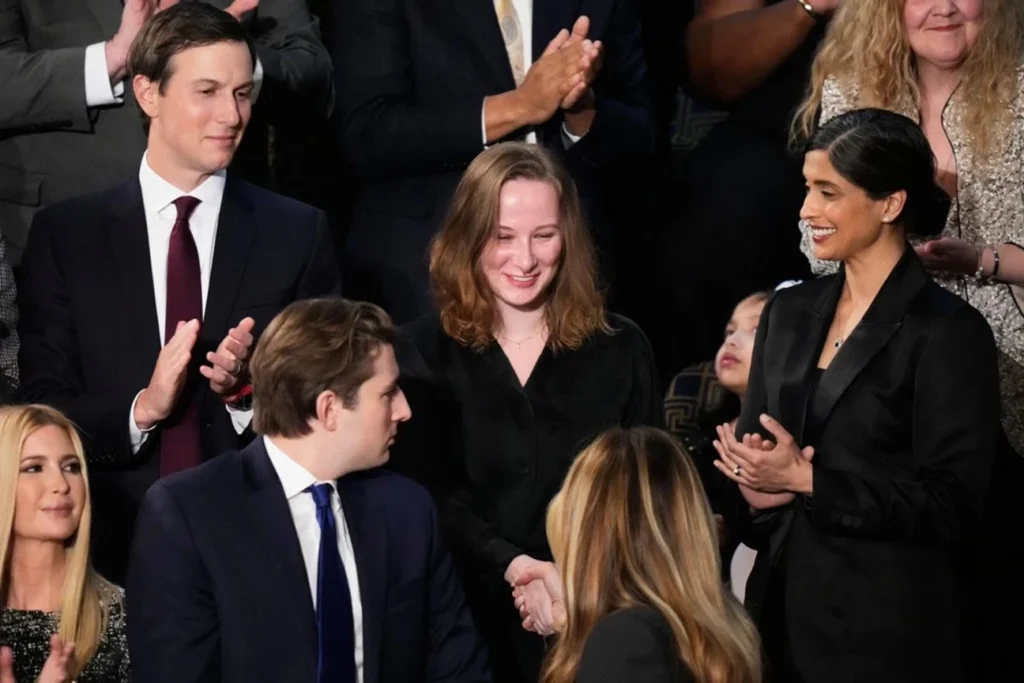
President Donald Trump cast a rare spotlight on foster youth this week during his State of the Union speech, hailing 24-year-old Sierra Burns — a South Carolina graduate student and advocate for her peers.
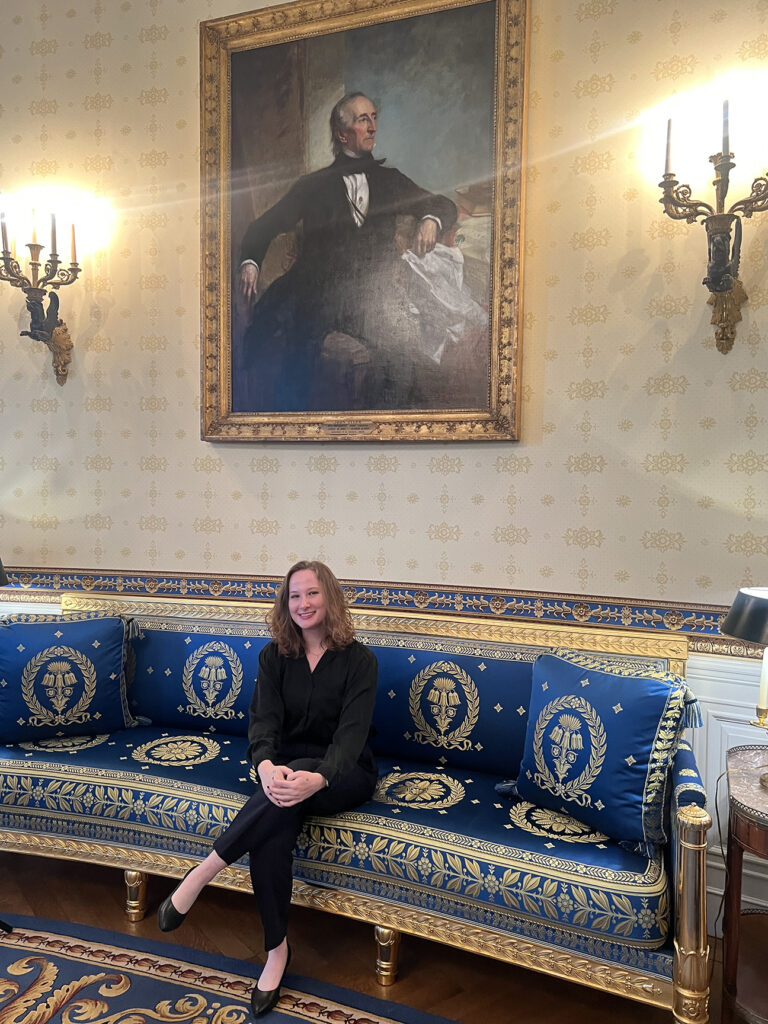
Burns, 24, beamed, standing in sleek black attire between Jared Kushner and Usha Vance in the congressional gallery as the president described her: one of the two young people whose “lives reflect the first lady’s impact.” A separate statement from Melania Trump called Burns a “dedicated advocate for children in foster care after having experienced the foster-care system firsthand.”
The Greenville native helped launch a foster youth support group on her undergraduate campus, conducted award-winning research, developed training for caseworkers statewide, and helped lead campaigns to pass landmark reforms for young people aging out of the child welfare system.
She appears to be the first guest named in a State of the Union address who has an acknowledged foster care background, according to American Presidency Project records that date back to 1982.
In an interview Thursday, Burns said since leaving an unsafe home and entering foster care at 16, she’s proud to have “become exactly the adult I needed as a child.”
Within months of exiting the system on her 18th birthday, she had to find emergency shelter and struggled to afford food, an experience she has described as being “slapped in the face by reality.” In response, she implored South Carolina lawmakers to join dozens of other states that allow foster youth to extend their time in foster care to age 21 so they can continue receiving state support as a more gradual offramp into adulthood.
In 2022, lawmakers listened to Burns and her peers, and she stood by Gov. Henry McMaster as he signed the bill.
Burns said she hopes her presence at the president’s State of the Union speech highlights a growing but still underutilized housing voucher program, the Foster Youth to Independence program. Conceived by current and former foster youth and created during Trump’s first term, FYI vouchers serve young adults between 18 and 24 who have left or are about to leave foster care. The vouchers ensure that youth don’t pay more than 30% of their income on housing for up to three years, or longer if they work or attend school, and enroll in a self-sufficiency training program.
Burns said the vouchers have allowed her to return to school and afford a small apartment — the nicest home she’s ever had — with her gray tabby Ophelia who she calls “Ophie” and her orange tabby Illuminati, or “Lumi.”
“SO WE NEED MORE LANDLORDS THAT KNOW ABOUT THE VOUCHERS AND THAT ARE WILLING TO HELP, BECAUSE THEY’RE AN AMAZING RESOURCE.”
— SIERRA BURNS
Burns is now working as a health care referral specialist and completing her master’s degree in advocacy and social policy at Furman University. She’s also doing advocacy work to persuade the South Carolina Legislature to make two key reforms on behalf of foster youth: waiving state college tuition bills and raising the age of eligibility for the state’s main federally funded support program for transition-age youth.
In conversation, Burns described the heady experience of presidential attention, the need for lawmakers to continue investing in older foster youth, and how she’s found a community she never had as a foster youth by livestreaming herself playing video games like Mario Kart Wii on Twitch.
This conversation has been edited for brevity and clarity.
During the State of the Union, what was going through your head when the president named you in front of the whole world?
My heart was not racing, but beating quite fast. I was as locked in as I could have been, soaking it in. I even did a little wave. It was a heartwarming experience being named like that.
I understand you’ve done a lot of advocacy and helped pass several major foster care reforms in South Carolina. What put you on the radar of decision makers in D.C.?
We have a group through the Department of Social Services, called Youth Engagement Advocates, or YEA! I’ve been a part of that since 2021. In 2022, when the extension of foster care was being passed, I testified at the bill signing and got a picture with Gov. McMaster. From then on, I’ve just been working on those issues.
It led to a month ago — I was asked to write a biography about myself, and the organization Think of Us has connections to the White House, and so they passed along my name. The first lady was, I guess, impressed with me, and so she decided to bring me along.
What has been your biggest message to all these decision makers about the needs of foster youth?
I want to communicate about the Foster Youth to Independence Vouchers. Right now, we don’t have enough landlords that are accepting those vouchers. They’re incredibly helpful.
It takes a little bit to get them because of all the paperwork — but we only have a certain amount of months with the voucher before we have to find a place, before we become ineligible.
So we need more landlords that know about the vouchers and that are willing to help, because they’re an amazing resource.
Could you speak about how important or useful a tool that has been for you to pursue your goals?
The place I’m living — it’s super stable. It’s the best place I’ve ever lived in. When I first started with the voucher, I didn’t have any income. With the voucher, I was able to afford rent, because it increases based on whatever you’re earning.
Without it, I don’t know that I could be pursuing education and going to school.
Did you have a chance to share with the president or first lady any particular issues in foster care that you wanted to bring wider attention?
I met with her, but to be honest with you, I was so overwhelmed with the whole day and the whole experience. It was in a good way, but in the forefront of my head, it was really hard to access these important points.
So I know for interviews like this, I really wanted to touch on these messages.
It’s obviously a very polarized time politically in the United States. As incredible an accomplishment as it is to be recognized this week, did you have any kind of hesitancy or fear about being in the spotlight like that in such a politically tense time?
Honestly, no. It’s an opportunity, and child welfare is getting the attention it deserves, finally. And so I’m just glad that I could be there.
I’ve never been one to shy away from attention. I grew up as an only child, so it’s kind of been the theme of my life. And I love speaking. I enjoy it, and I thrive in it. It was like, yes, I feel confident.
What are your future goals that this voucher is helping you to achieve?
I’m gonna sound really optimistic with you, Michael.
My current goal is to get my master’s degree in four years, and honestly — I am much more than just a foster youth advocate.
I will always advocate for foster youth. I care about them. I love them. But I am so much more.
I also care a lot about building a community and how I found an outlet for that is live streaming on Twitch. I play video games there. I’m currently playing Mario Kart Wii. I previously live streamed all of Elden Ring, but have since finished that.
Honestly, it’s like a pipe dream. I would love for that to be my source of income, but I do it just because I love to do it. I would love to bring people together that way. So those are kind of my aspirations as of right now.
For people in our audience who might not be familiar with Twitch, what is satisfying about streaming yourself playing video games?
It’s just an outlet to express myself. Video games have always been important to my life. They tell stories.
I just get to engage in a hobby that I really enjoy and connect with people. When I was living in a group home during COVID times, it was really positive for me — it was a nice outlet during that time, because everyone was online.
“HONESTLY, LIFE IS A DREAM TO ME NOW. THEY’RE ALL GOOD THINGS THAT I COULDN’T HAVE IMAGINED HAPPENING FOR MYSELF AND YET, HERE WE ARE.”
— SIERRA BURNS
You mentioned you’re now living in the nicest home you’ve ever had. Can you share what kind of living situations you had in the past, including in foster care?
I went into foster care at 16, I was in there for a month until my court case was unexpectedly closed. After two months, I went back into the foster care system.
After I aged out at 18, I lived with a friend for a month or two, and then they told me they were gonna sell their house. I suddenly had nowhere to go. Because the group home where I stayed at the time was the most comfortable, I went with them.
I didn’t really connect with the foster families, because I didn’t really have the freedom to not go to church, and that was a big issue for me. I needed that freedom at that time to explore what I felt was right for me and I didn’t really have that choice when I was there. We need the option to choose our own faith and what that looks like.
Now that you have this stable housing with this voucher, can you talk about how meaningful it is to have a place of your own that you can afford — with two cats, no less — after what sounds like a lot of moves?
All good things do take time. Finally seeing the fruits of my efforts, I showed up for myself. I kept fighting, I kept pushing, and it led me to this place of stability. I’m in my 20s, so inevitably, I’m going to be in a time of transition, but I know that I can expect to be here for the next three to five years.
Honestly, life is a dream to me now. They’re all good things that I couldn’t have imagined happening for myself and yet, here we are.
Your colleagues have told me you’ve been “kicking doors open” your whole life, and not waiting for others to open doors for you. Your journey must have required a lot of grit or determination. Are there any memorable examples you could share where you kind of figuratively kicked a door open for yourself?
Getting to foster care was actually a goal of mine, if you can believe it. I lived at home for 16 years, and home was not safe for me at times. It resulted in me going to CPS over and over and over again, and going to the police and saying, hey, things are happening at home that shouldn’t be happening, I need help — and no one would listen.
The same cycle would go over and over and over until I finally found an outlet at 16. I had a friend whose mom was a domestic violence counselor. And so I stayed with them for four months until they were unable to keep me. And then that’s what landed me in foster care.
I paved that path for me, I made it happen.
What are you most proud of, either in school or in your advocacy work?
I’m definitely proud of my extension of foster care testimony, but I’m most excited about my work in education. Getting my undergraduate degree was a big deal for me, and we have a bill in the Senate and House of South Carolina that there would be free tuition waivers for foster youth. If we get that passed, that will be huge, and that’s been a goal of mine for years now.
Any other takeaways from your big moment in the spotlight in Washington, D.C. that you wanted to share?
I’m just glad child welfare is back in the picture, and that we’re getting the attention we deserve. And also, free tuition would really be amazing.