The Imprint spoke with three Minnesota lawmakers about their hopes and the budget realities of boosting support for college-bound foster youth in their state.
Vivian Dudley was operating in “survival mode” when she began her college career at Saint Paul College. The Minnesota foster youth also worked two jobs with back-to-back shifts. She sometimes walked the 45 minutes between home and campus so she wouldn’t have to spend money on a ride with Lyft.
But a few years ago, Dudley found out about the Fostering Independence Grant, which covers whatever college-related costs are left over after other state and federal grants for foster youth have been exhausted. The grant was life-changing, she said. It allowed her to quit one of her jobs and secure housing.
“Before I knew about this grant, I was only thinking about how I was going to pay for lunch for the semester,” said Dudley, 27, who has written about her harrowing journey through foster care for The Imprint’s partner publication Youth Voices Rising. “That was one of the main things on my mind: How am I going to eat every day at school? But having this grant opened my mind to more possibilities.”
Dudley was a recipient of one of nearly 1,200 Fostering Independence Grants (FIG) distributed over the last two years. Last year, the program almost became a victim of its own success when so many foster youth enrolled that the funding ran out.
A last-minute legislative effort transferred another $5 million to the program, allowing enrolled students like Dudley to stay on track.
“It took the pressure off of having to pick between school, housing, food and other necessities. I was able to just focus on my education.”
—Student and grant recipient Vivian Dudley
This year, the St. Paul-based advocacy group Foster Advocates is working with state legislators on a bill that would hopefully prevent the funding debacle from happening again. SF 2597 proposes to create a new special revenue fund that would ensure that the money set aside for the grant could not be used for anything else, and it would allow any unused funds to roll over to the next year.
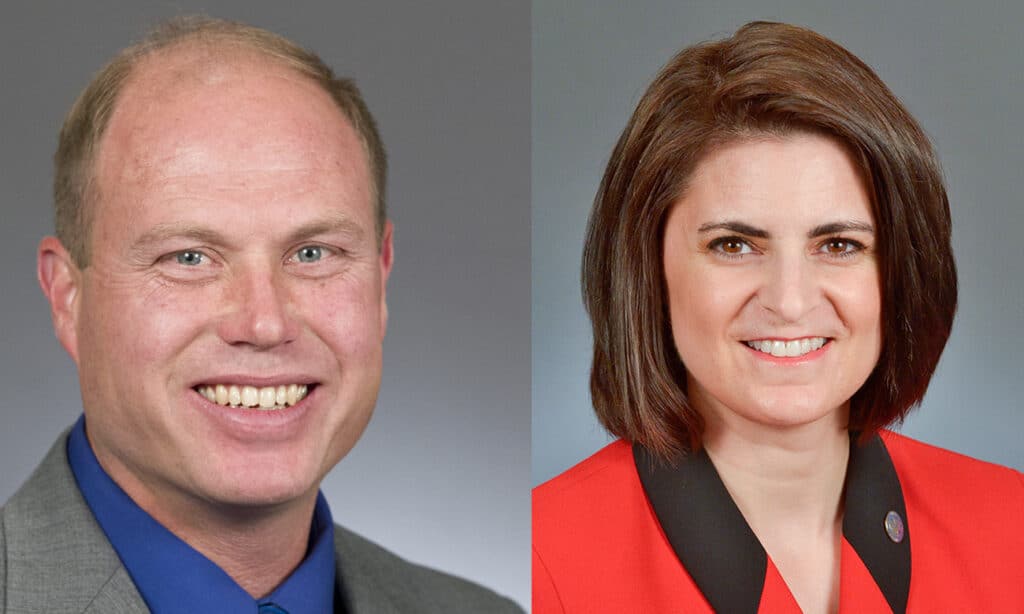
“What we’re looking for are ways to make sure that the funding remains there at the levels that are needed to keep the program whole, and we don’t have to ration it out,” state Sen. Jason Rarick told The Imprint. The Pine County Republican is the bill’s lead author in the Senate and author of the initial 2021 bill that created the grant program.
Budget roadblocks
Rarick expects the bill to have bipartisan support, but tight budget constraints in Minnesota this year could pose an obstacle to passage.
There are threats to all college students on the horizon as well, including a projected budget shortfall for the widely used Pell Grant, and a move this month by the Trump administration that slashed the U.S. Department of Education staff in half. Minnesota’s Fostering Independence Grant for college-bound foster youth kicks in after they receive Pell Grants, Education and Training Vouchers, and other state-funded resources — so impacts to those programs would add further financial pressure.
Minnesota state leaders vow to fight back against any federal education cuts.
“As President Trump and his billionaire-led administration slash resources for students, I’m going to fight back as hard as I can to make sure kids have access to food, education, and opportunity,” Gov. Tim Walz said in a statement.
“Everyone agrees we have to find a way to fulfill this promise we made to fosters in Minnesota. We know we have broken far too many in the past — and nobody wants to do that.”
—Ariana Chamoun, interim executive director of Foster Advocates
Rep. Marion Rarick, a fellow Republican who is chair of the House Higher Education Finance and Policy Committee and married to Sen. Rarick, said she’s advocating to keep the $8.8 million currently budgeted for the grant, but without the special revenue fund. She said the state financial aid program North Star Promise, which covers all tuition and fees for Minnesota students whose families make under $80,000 a year, already has a significant budget shortfall this year.
“I have a really big issue and no money to solve it,” Rep. Rarick said of North Star Promise. “So to then turn around and create a special revenue account for FIG — there’s no justification that I can see for that, not in the political and economic environment that we’re finding ourselves in.”
Ariana Chamoun, interim executive director of Foster Advocates, acknowledged the concerns and urged lawmakers to deploy “a lot of flexibility and creativity” to increase the funding streams.
“What we’re really up against with this bill is a math problem,” she said. “Everyone agrees we have to find a way to fulfill this promise we made to fosters in Minnesota. We know we have broken far too many in the past — and nobody wants to do that.”
A popular program
College bound foster youth don’t have to apply for the Fostering Independence Grants. They are automatically referred if they fill out a FAFSA or the state financial aid application and meet another set of requirements — they must have been in foster care after age 13 and are currently 26 or younger.
Adam Johnson, a state financial aid program administrator overseeing the grant program, said after it rolled out in 2022, there was a sharp increase in the number of eligible students, as they became aware of it and set their sights on college. At the same time, the cost of college went up and inflation soared, making it difficult to keep up with the demand.
“This program was really hard to budget for,” Johnson said. “Now that we are in year three and four, we’re finally getting a good sense of how many of these students are actually out there and going to college, and also where they’re going.”
In the 2022-23 school year, 492 students received the grant, receiving on average $8,639. The following year, 679 students received the grant, receiving an average of $10,674. Not only were more students eligible for the grant, but more started attending four-year institutions as well, Johnson said.
If the funding remains at the level established in the last legislative session — $4.4 million per year — Johnson predicts about 45% of eligible students would be waitlisted for the 2025-26 school year. Priority will be given to students who have already received the grant, so they can finish their degrees. After that, it will be first-come, first-served based on when they file their FAFSAs. If the new bill passes, the chances of students being waitlisted decreases substantially.
Myriad college barriers
Less than 3% of foster youth nationwide receive a bachelor’s degree, compared with 24% of young adults total. The barriers to attendance and completion are myriad.
Minnesota Rep. Kim Hicks said she’s seen the challenges firsthand, and wants to help in her state. She and her husband are foster parents themselves, and Hicks previously worked at a center for independent living serving the disabled.

“For many youth coming out of foster care, going to college isn’t always something that they believe they can do for a variety of reasons — including conversations that people have had with them that are frankly pretty disheartening,” Hicks said in an interview. “The idea that these young people deserve the right to go to college and deserve the support to be successful and that they listened to us and tried is a success of the program.”
What makes the Fostering Independence Grant unique is that it doesn’t just cover tuition and fees, but can also be used for other college-related expenses. Chamoun called the offering unique in that it covers the full cost of attendance, “the housing piece, tuition, books and child care for students that are also parents.”
In January, Dudley testified in front of the Minnesota Senate Committee on Higher Education. Though she is now 27 years and unable to continue receiving the grant, Dudley wanted to share her experience in the hopes that more lives could be changed, as hers was.
Dudley plans to transfer to St. Catherine University in the fall to complete her bachelor’s degree in social work. She wants to help kids who are going through what she did in the child welfare system.
“One of the main ways it’s helped me is that it allowed me not to worry about the cost of college and just focus on my career and being a successful social worker,” Dudley said. “It took the pressure off of having to pick between school, housing, food and other necessities. I was able to just focus on my education.”