

Each year across Georgia, hundreds of thousands of students are continually marked absent from school, including foster youth who miss class for reasons beyond their control. Under a new state law, they cannot be expelled.
Senate Bill 123, authored by Sen. John F. Kennedy, encourages less punitive and more effective approaches to keeping kids connected with academics: districts must take a closer look at the underlying reasons children are persistently absent, and seek solutions. By next year, schools with high rates of “chronic absenteeism” must appoint review teams that include educators, parents, administrators, counselors and social workers tasked with creating individual plans to correct the problem.
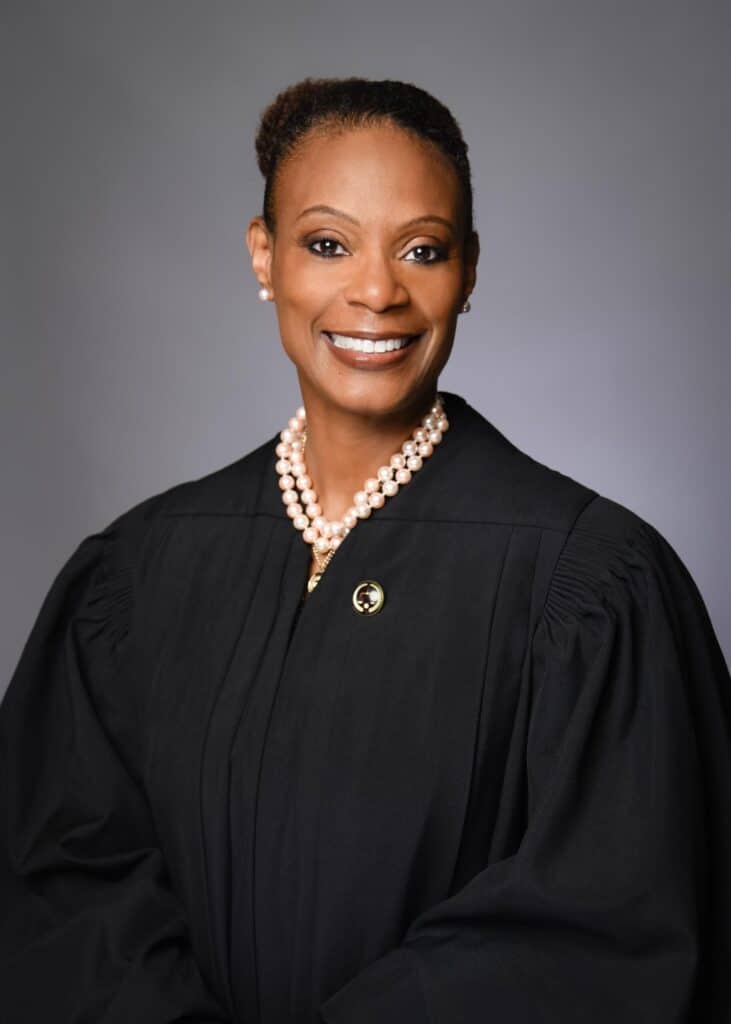
“There’s a lot of excitement around what we all hope Senate Bill 123 will bring about, which is more opportunity for the community and the schools and the courts to work with children who are at risk of dropping out and disengaging,” said Judge Caren Cloud, who oversees delinquency and dependency cases in the Fulton County Juvenile Court.
Disengagement an ongoing challenge
The pandemic posed unique challenges to school attendance for all children, with millions logging in to class from computers at home, and reentry hampered by widespread infection and extended lockdowns. But many schools, like those in Georgia, have never fully recovered.
Chronic absenteeism is defined as missing at least 10% of school, or roughly 18 days of the academic year. In Georgia, the number of students who fell into that category doubled between 2019 and 2023, according to the state Department of Education. Nearly 360,000 students were chronically absent last year.
The statewide chronic absenteeism rate has eased, dropping to 19% from a pandemic-era peak of 23% this past school year. Still, attendance has not returned to pre-pandemic levels, when the rate hovered around 12%.
Rates of chronic absenteeism continue to be highest among students of color and those who are homeless, according to state data.
“This isn’t just about reducing numbers. It’s about understanding why students aren’t showing up for class. What support are they missing? How can we respond in ways that are compassionate, strategic and effective?”
— Senate Bill 123 author, Sen. John F. Kennedy
A new Senate study committee led by Kennedy has been examining the root causes of the problem since August. The committee’s most recent meeting was held on Monday in the Georgia State Capitol.
School district leaders, researchers and advocates who have testified all agree: the attendance crisis is driven by complex issues inside and outside the classroom. Academic achievement, transportation, housing, school climate and perceptions about school all play a role.
“This isn’t just about reducing numbers,” Kennedy said during the committee’s first hearing on Aug. 7. “It’s about understanding why students aren’t showing up for class. What support are they missing? How can we respond in ways that are compassionate, strategic and effective?”
Hedy Chang is among those who have testified. She’s spent the past two decades helping states devise strategies to improve school attendance through her nonprofit Attendance Works.
In a follow-up interview, Chang said one theme has been constant: Punishing kids for being absent does little to help them stay in school.
“It can send the impression to schools that they don’t have to do anything — they just need to refer a kid to court,” she said. “Taking a punitive approach at the very beginning alienates families and doesn’t encourage them to tell you what’s going on or find support. It sends the wrong message.”
When absences escalate
Rates of “chronic absenteeism” capture the best possible picture of lost instructional time due to absence from school. If a student is chronically absent for reasons such as illness or family emergencies, it does not automatically lead to punishment under Georgia state law mandating school attendance.
But while unexplained chronic absenteeism can no longer lead to school expulsion under the new law, it can lead to other serious consequences. A series of unexplained absences can turn into truancy, which is a status offense in Georgia and comes with potential juvenile court involvement.
Students who accumulate five or more unexcused absences in a school year meet Georgia’s definition for truancy. At that point, school officials must meet the child and their legal guardian to address the concern. If the unexcused absences continue and amount to 10 days, school social workers and officials can — at their own discretion — refer students to juvenile court.
In Georgia, truant children are classified as Children in Need of Services, a status that prioritizes resource referrals and support. In Fulton County, for example, a specialized court unit reviews each child’s case individually to determine next steps.
“The hope is that once these services are in place, and the family is compliant and engaged in the services, the case will not move any further,” Judge Cloud said. “It’ll be dismissed, and the child will return to school with some supports in place.”
But if the case does move forward in court because, for example, families fail to follow through with services or the child continues to be absent, the repercussions can escalate. In those cases, students must appear before a judge who can place them on probation.
Under Georgia law, parents, too, can face consequences, including fines up to $100, 30 days in jail and child welfare investigations.
Tonya Malone Ferguson, executive director of Atlanta’s Truancy Intervention Project, sees these outcomes as largely preventable. Her organization assists families at risk of ending up in court or those already facing legal consequences for truancy. She said providing basic resources, such as housing assistance and mental health care, can often resolve these issues before they ever need to be handled by judges — particularly among families who come from marginalized, low-income communities.
“Truancy is the tip of the iceberg,” Ferguson said. “When you see truancy, there’s a lot of other things going on.”
Attendance challenges unique to foster youth
For foster youth, the challenges are even more apparent. Nationwide, they miss twice the number of school days as their peers — at times, for unavoidable circumstances or required appointments that conflict with school schedules.
Last month, a young boy in foster care had eagerly told Cloud in her Fulton County courtroom that he was “excited” to start the new school year. He had spent weeks without being enrolled in school after his placement changed. Cloud called that unacceptable.
“I said, ‘He has to be enrolled,’” she recounted in an interview. “I don’t know what you have to do — somebody has to drive the two hours from one county to the other,” she told the boy’s advocates in court, adding: “I’ll be waiting for a report that he’s been enrolled by 5 p.m. today.”
Placement changes and mandatory court or medical appointments are common logistical reasons foster youth miss school, and Georgia law does offer some protection. Students in foster care who miss class to attend court hearings, for example, must be credited as present.
But other legitimate reasons they end up skipping class are not excused, and often involve complex challenges for schools to understand or address, said Mary Kathryn Velazquez, policy staff attorney at Georgia Appleseed Center for Law and Justice.
“Taking a punitive approach at the very beginning alienates families and doesn’t encourage them to tell you what’s going on or find support. It sends the wrong message.”
— Attendance Works Executive Director Hedy Chang
The group’s FAIR Project supports foster youth and other vulnerable groups of students facing school disciplinary hearings that could lead to expulsion, sometimes called “tribunals.” FAIR also works with school staff to help them understand the unique challenges these students face — such as the instability of repeated moves, chaotic family lives and uncertainty about their futures. Students in foster care can easily become disengaged or act out in class. And when schools then kick them out, it only makes matters worse for the child, Velazquez said.
“A new placement can mean a new school district. But we still haven’t really been able to address the root of the behavior issue that showed up at school — most likely because of the trauma,” she described. “So they may act out again, and we restart the cycle.”
More work ahead
Judge Cloud said her powers to assist can be limited. She can’t order a school to re-enroll children, even if she feels it would be in their best interest. The kids in her courtroom aren’t just there for truancy. Many have been accused of committing a crime and at the same time aren’t showing up to school. The law doesn’t take those overlaps into account, she said.
But she has recently used her position to convene school leaders, district attorneys and local youth advocacy organizations, including the Truancy Intervention Project, in a work group focused on school re-entry after suspension or expulsion. The goal is to find more compromises for children who have pending criminal charges, but do not pose a safety risk and are not being allowed back in school.
“There’s some kids who just fall in between the cracks,” Cloud said. “So we’re trying to figure out, how do we get schools to focus on those kids?”