Texas lawmakers have invested $3 million this year in a project to ready former foster youth for college, expanding it from a summer program on a single campus to a year-round hotline and help center for high school seniors and recent grads statewide.
The public investment builds on successes of the FAST Academy — a three-week crash course at Texas Woman’s University where former foster youth earn credits and get a preview of campus life. Its new Foster Care Alumni Success Center will provide them with a one-on-one guide as they apply for and get ready to start college.
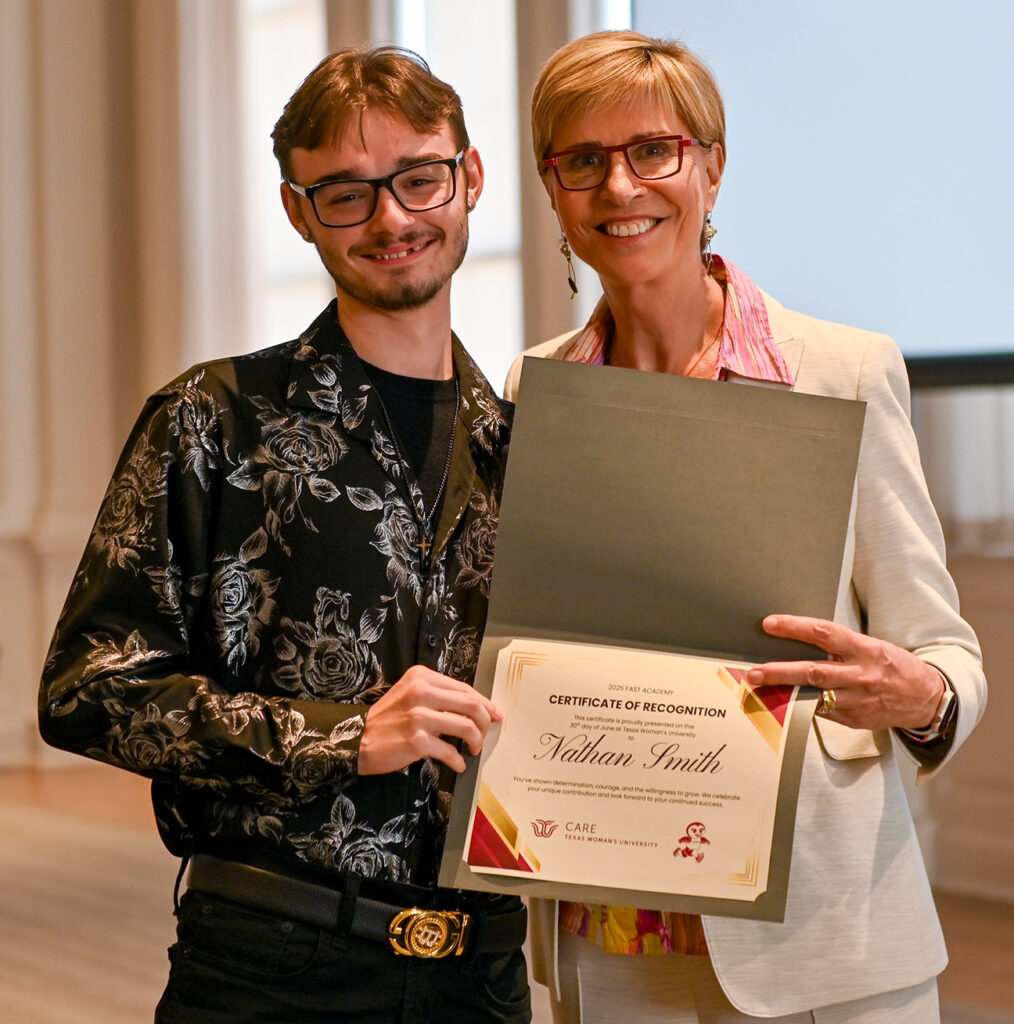
Nate Smith, 20, was among this year’s FAST Academy cohort after graduating high school and falling behind in his first semester of college last year. He said the program was a “game changer” and gave him renewed confidence to restart his studies toward a degree in aviation maintenance.
“Especially for kids like me who have been behind, they take steps with you. They get to know you at a deeper level, asking how your day is, your emotional state,” said Smith, who was adopted from foster care at 15. “And when it comes to work, they’re always asking questions like, ‘Hey, do you need help with this, are you getting it?’ They make sure you understand it.”
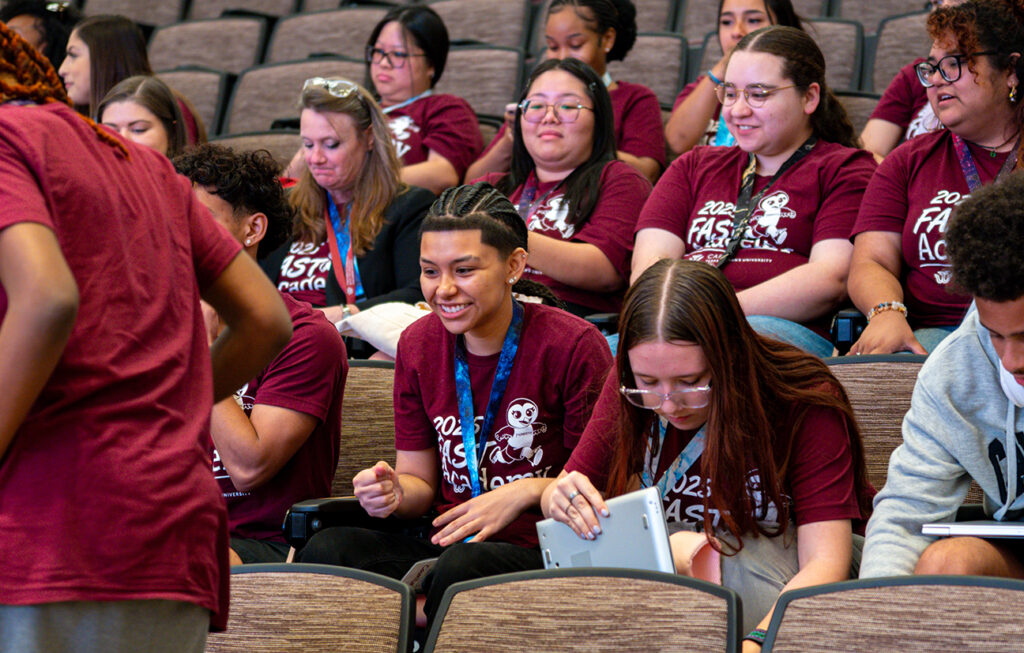
The all-expenses-paid program at Texas Woman’s University brings college-bound foster youth of all genders to campus over summer break, where they live in the dorms and eat in dining halls. Participants take two accelerated courses, with the help of two co-teachers per course and peer tutors. If they pass both classes — which most do, outcome data shows — they leave with six credits in English and math, which they can transfer to any Texas college they choose to attend.
The goal is to increase students’ comfort level and preparation for freshman year, so they are less likely to fall behind.
In its first two years, FAST Academy has served roughly 50 youth and shown promising results. Last year, 17 of the 18 students enrolled in college following the program. All of the students passed the math course, more than half with As, and all but three earned English credits as well.
FAST Academy director Amy O’Keefe says most Texas foster youth want to go to college, but just a small fraction end up able to enroll. She and her staff were happy with the summer program’s outcomes, but early on, they learned more about the barriers participants face: complicated financial aid and application paperwork, low expectations and little support from adults in their lives, and a lack of knowledge about available help.
So they developed a plan to boost outreach to high school students and provide guidance through the sometimes rocky and confusing process. In June, the Legislature approved an additional $1.6 million for the program’s statewide expansion, in addition to $1.4 million in continued funding for the FAST Academy.
The Foster Care Alumni Success Center is currently building out its team and will open to students later this year.
The new resource hub will have a staff of nine, including “success coaches” who can help students identify the right school, fill out financial aid forms and complete applications. They’ll also visit high schools to spread awareness about resources for foster youth interested in college, including the tuition waiver Texas provides to young people who grew up in government custody.
“Especially for kids like me who have been behind, they take steps with you. They get to know you at a deeper level, asking how your day is, your emotional state.”
— Nate Smith, FAST Academy student
Once enrolled in college, coaches will connect students with an on-campus staffer providing dedicated support throughout their college years.
A dedicated hotline will be also available for foster and adopted youth, caregivers and high school counselors or others looking to help these students.
Some hotline callers may have a simple question to answer, O’Keefe said. Others might be young people in need of more extensive support. In those cases, “success coaches” will work with teens to build a checklist of tasks to get from graduation to day one of college: taking a mandatory placement exam, getting transcripts sent over and making sure vaccines are up to date so they can move into the dorms.
These seemingly minor tasks can become the things that trip up a prospective student leaving foster care.
“By itself, is this a huge deal?” O’Keefe asked. “No, but when you stack it up with these others, it can feel so overwhelming for the student who may be really worried about, ‘Where am I living when I graduate from high school?’”