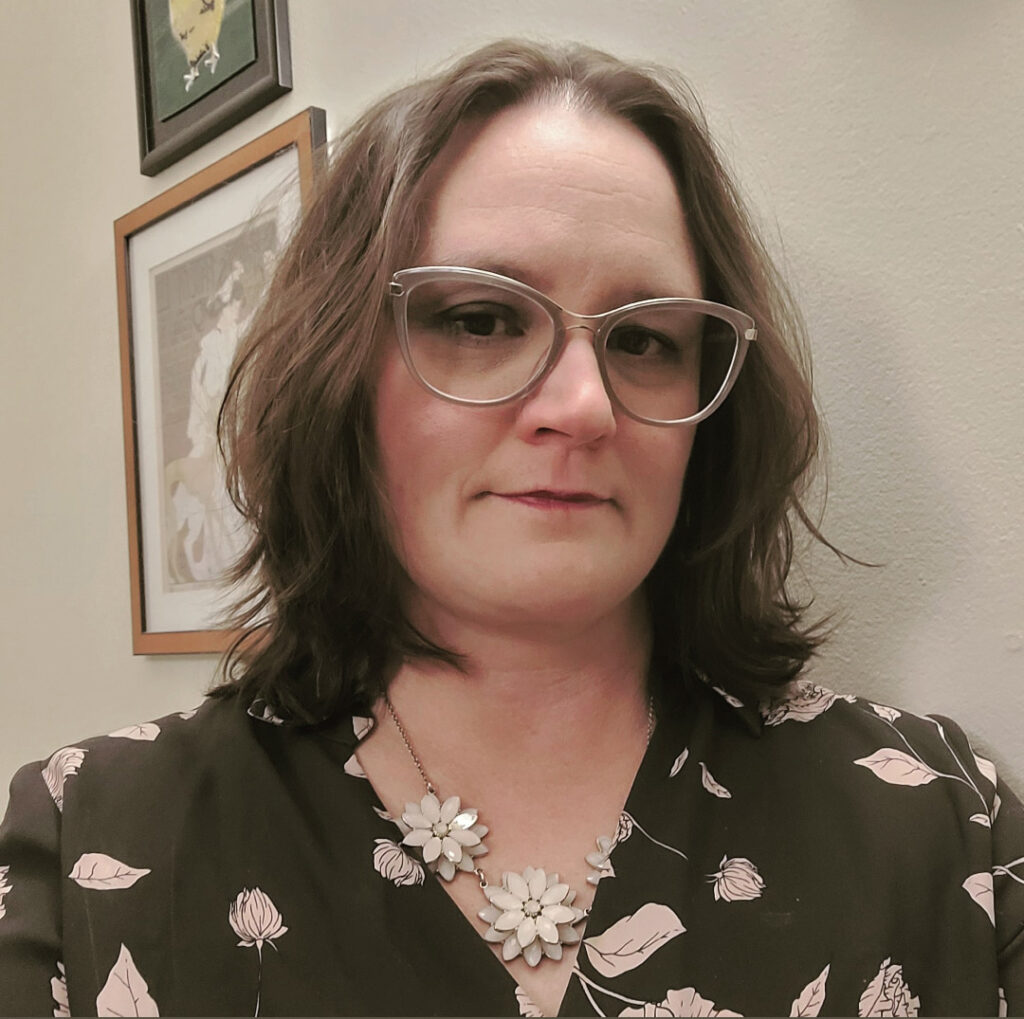
To determine how many children might be buried on the former site of a Colorado Indian boarding school, state archeologist Holly Norton and her team traveled to a swath of land where a forgotten cemetery once stood. Using ground-penetrating radar, near-infrared photography and drones, they scoured a site as large as 68 football fields — roughly 90 acres of ankle-sweeping prairie grassland.
The search turned up signs of disturbed soil beneath the hard earth, rough shafts believed to have cradled small bodies. In all, Norton’s team reported finding the resting places of 31 children who had attended the Fort Lewis Indian Boarding School more than a century ago.
Norton, state archaeologist and deputy state historic preservation officer, led the one-year effort. The undertaking — part of a larger examination of the two former boarding schools in the state — was initiated by legislation that made clear the mandate: “In order to heal from the generational trauma, we must confront the past and shed light on the hidden cruelty.’’
Colorado’s work mirrors nationwide efforts to document the systemic abuse endured by Indigenous children who attend federally-operated or church-run Indian boarding schools — a forced assimilation attempt that began in the 1800s and endured for over a century. In 2022 and 2024, the Department of the Interior released its first-ever acknowledgment of the federal government’s genocidal policies, in reports that confirmed nearly 1,000 student deaths. Last year, President Joe Biden apologized for the government’s culpability.
As part of the Colorado project, a 13-member team of archeologists, geophysical specialists and archivists spent hundreds of hours combing through roughly 5,500 pages of documents to build the backstory of students’ lives.
The investigation focused on the Fort Lewis site in Hesperus and the state’s other federal Indian boarding school, the Teller Institute in Grand Junction. Children at both schools endured neglect and abuse, unsanitary conditions, and ravaging outbreaks of tuberculosis and trachoma, according to the report authored by Norton and published in June 2023.
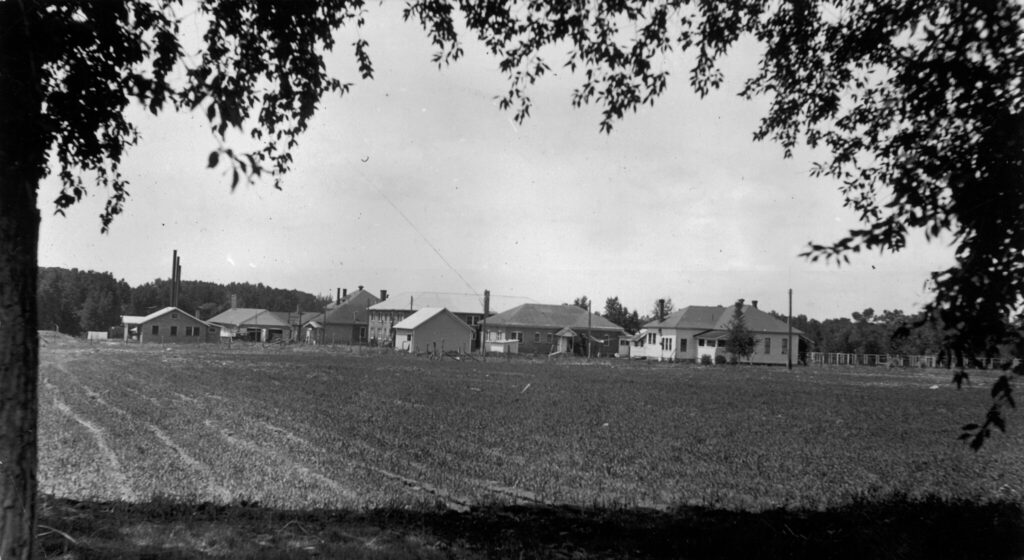
About 600 children attended the Teller Institute during its 25-year existence until it closed in 1911. Norton’s team believes that 37 people died at the school during that time, but a cemetery on the site has yet to be identified, she said.
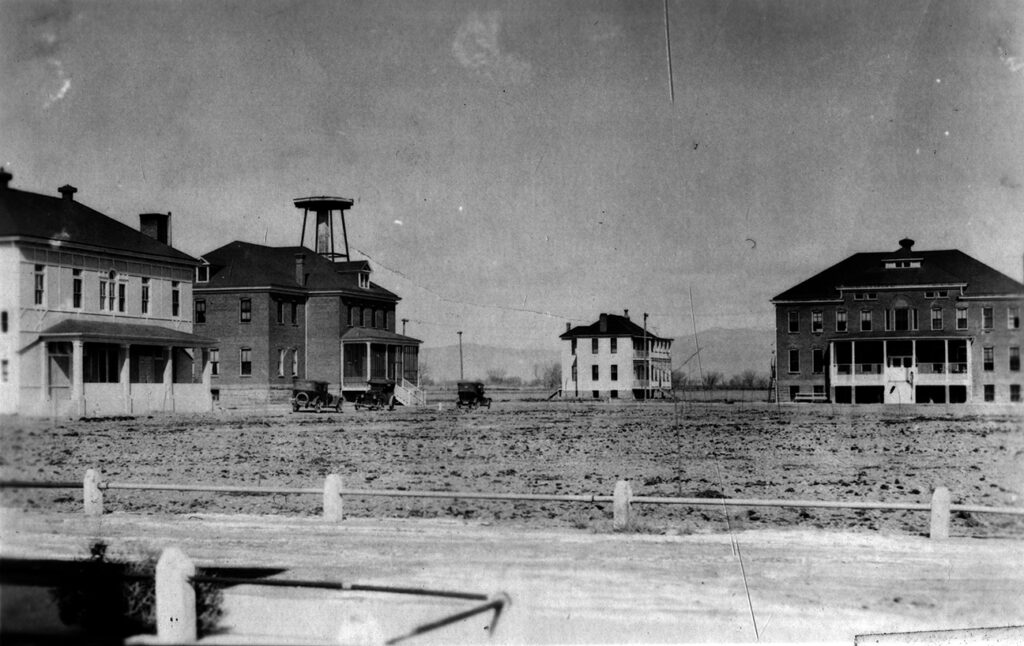
The Fort Lewis Indian Boarding School was established on the site of a former military post. It housed roughly 1,100 children from 20 tribes including Navajo, Paiute and Southern Ute between 1892 and 1909. Now owned by Fort Lewis College, the property sits against the backdrop of snow-capped peaks in the San Juan Mountain range.
Investigators discovered the boundaries of the previously unknown cemetery through archival research.
Some information remained elusive. Many school documents were damaged or incomplete. Attendance numbers were sometimes inflated by dishonest superintendents; officials ignored tribal affiliations and only identified some students as “Indian’’ in records, or used racist and derogatory terminology. The true number of students who attended the schools and who died may never be known, according to the report.
Revealing what time has erased is what has motivated Norton in her 23-year career as an archeologist. Norton, who currently works at the State Historical Society of Colorado, which is under the Department of Higher Education, has investigated sites for both state and federal agencies.
Her June 2023 report has only served to “scratch the surface” of the harm the state’s Indian boarding schools caused Indigenous children and families in Colorado, she said. Next steps include the formation of a steering committee that will guide the state’s continued efforts to research and acknowledge the schools’ history.
“It’s important for us and for me as a representative of the state to acknowledge these historic harms,” Norton said, “and create spaces and support for these communities and families to find their path to heal.”
The Imprint sat down with Norton to discuss the investigation’s findings and Colorado’s next steps as the nation continues to grapple with the legacy of its federally operated boarding schools.
The following interview has been lightly edited for clarity and length.
In your 2023 Federal Indian Boarding Schools In Colorado: 1880-1920 report, one of your top findings was that the Fort Lewis cemetery is the final resting place of 387 people. Of these, 31 are “hypothesized” to be Indigenous children, and the remainder could either be adults or juveniles.
What do you mean by “hypothesized,” and how hard is it to confirm through the technological methods you used that children are indeed buried at these schools?
We used several different types of geophysical methods so we could get different streams of data to get a more full picture. That picture is metaphorical. We can’t get a literal picture of what’s under the ground. Geophysicists and geophysical archeologists are able to use that data, and they can read soil disturbances.
A lot of labor goes into that, so often people would not excavate more soil than they needed to. We’re able to identify rough sizes of burial shafts and estimate a rough range of age of a person who might have been interred within that space. That’s really what we were hypothesizing.
Are there proper ways, protocols or considerations in your work, and how are tribes involved in guiding that process in a culturally appropriate and sensitive manner?
Our tribal partners often come out to the location with us, and they do their own ceremonies. We defer to them on how, when and where that is done. All of our consultations often begin and end with an invocation.
It was important to the tribes and the archeologists involved to use every method to get as much information as we could without disturbing any final resting places.
Every tribe has different values, beliefs and approaches to death, and we were able to gather information for the tribes so they can then make their own decisions about what our next steps forward might be. Archeology is inherently destructive. We are incredibly lucky to live in a time period where we have technology to help us get that data. What we wanted to do was make sure we were not doing anything that couldn’t be undone.
Your work also involved examination of historical records. What were the most significant challenges you faced in documenting the lives of students who attended the schools, particularly when it came to analyzing these very old archival records?
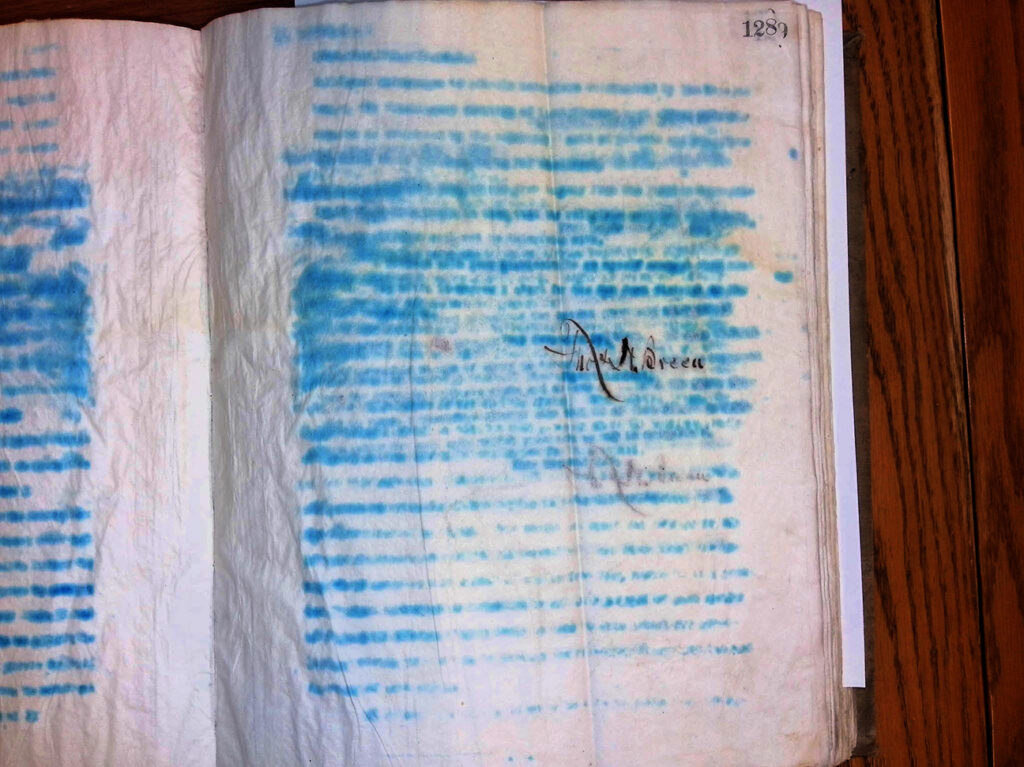
There was at least one flooding event that heavily damaged the Fort Lewis documents. They were just completely waterlogged, and the ink had just completely run so they were illegible. I’m optimistic that maybe someday some sort of technology can recover some of that. There was a fire at one point that damaged a lot of texts, especially related to the Southern Ute tribe. And then, frankly, there was just a lot of carelessness in record-keeping. That was a huge challenge.
It was also really clear when we were at the National Archives in D.C. that people had never been through some of these records. I was the first person to literally touch some of these since they had been sent in from the school.
On my last day in the archives, I was going through a box and I pulled out an envelope, and there were apples from 1898 inside because the superintendent thought they were subpar. He sent this nasty telegram to D.C. about these terrible apples being sent to him and his students, and he sent samples to show them. Nobody in 1898 opened the envelope.
Which parts of the process, logistically and emotionally, proved most difficult for you?
When you go through documents and you see things written about children, I don’t think you can ever be prepared for that. I learned really quickly that I needed to be super disciplined about when and how I went through documents.
Sometimes in other research, I like to pick at things. I might be home on a Friday night and open up some documents, and go through them for whatever my project is. I learned I could not do that, because you need to be more emotionally prepared, and be in a better environment for what you read and what you see from these children. It was often very blunt and callous about their experiences, about their illnesses, about their deaths. That was the more difficult part.
What is the current status of this effort to unearth the childrens’ remains, and how will you be involved?
In terms of the research, there are no plans right now to unearth any of the graves or the children. We have not definitively identified a cemetery or graveyard for the Teller site. And we might not. The Earth is dynamic and we bury our kin so the earth reclaims them. And that may have occurred in this case.
In tribal consultations, the consensus has been there would be more harm than any good that can come of it to attempt to excavate the cemetery at Fort Lewis. The direction the conversation is going now in tribal consultation is, well, how do we memorialize — how do we honor the tribes who have been identified as having children at the schools?
I expect our conversations around memorialization will continue to leave space for how the state can ensure tribal elders, leaders and members who are descendants have access to spaces to perform their own cultural practices in honoring their ancestors.
The two Ute tribes have historically shown “nearly universal” resistance to sending their kids to these institutions by simply refusing to enroll them in off-reservation schools. In what ways do you think that historical resistance has special significance today as the nation continues to reckon with this history?
Resilience and resistance is a common thread through so many aspects in how they interact with state government and federal government. I see both tribes as being active in questions around education and issues on their reservations, and they’re just constantly fighting these governments for their resources and access to different things for their people.
I think it’s extraordinary, because they’re relatively small compared to some other tribes. It seems like they might not have that political power, but they carve it out for themselves in Colorado. By being able to work with them, I learn a lot about what good governance looks like for all of us.
How did you personally handle the weight of seeing the graves, and imagining the lives these children could have lived had they not died at school?
For the most part, this isn’t a question I’m comfortable answering, because I am a subject matter expert and a representative of the state. But more importantly, I’m a white woman, and I know it’s not appropriate for me to ever try to center myself in this, even emotionally. I would prefer to recognize the deep harm and trauma that boarding schools and federal policy has done to Native families, and center their feelings and their attempting to grapple with this.
As a professional, yes, it is an emotionally difficult topic, but much of my professional work has been. Professionals who work in this space find coping mechanisms and we try to just make sure we are keeping space for the descendant communities for whom this is more important.