
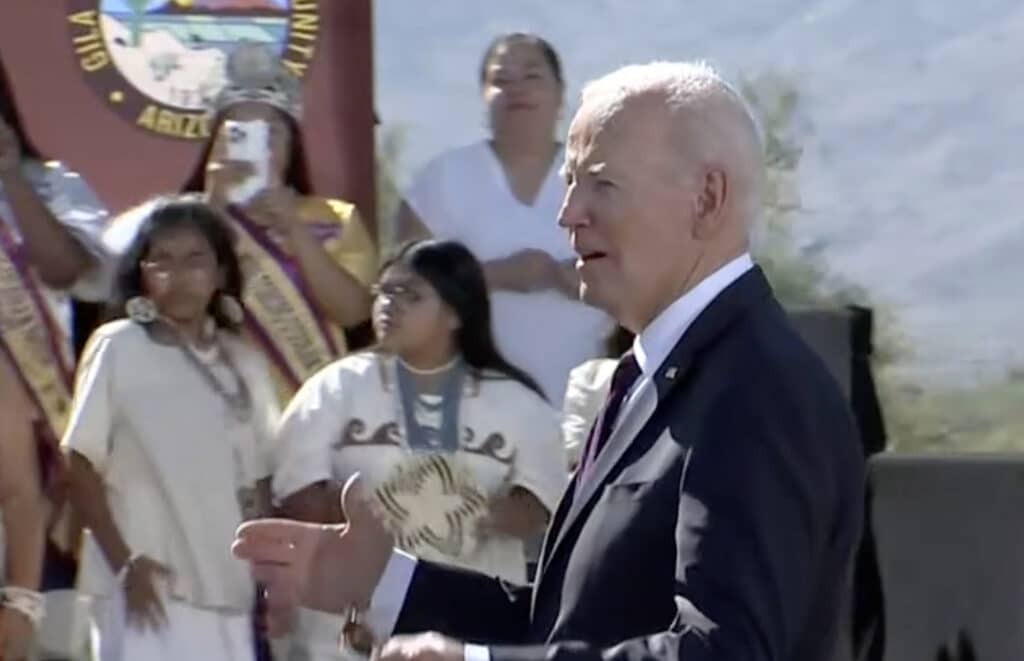
Standing beneath the foothills of the Estrella Mountains near the Gila River Indian Community, President Joe Biden delivered an impassioned, first-ever apology to survivors of Indian boarding schools today, calling the years between 1819 and 1969 shameful and “one of the most horrific chapters in American history.”
Surrounded by Native American tribal leaders in Arizona, the 46th U.S. president appeared visibly emotional as he belted out his main message to the assembled:
“I formally apologize!” Biden said, slamming his fist on the podium. “It’s long, long, long overdue.”
Referring to the end of the boarding school era, he added: “Quite frankly, there’s no excuse that this apology took 50 years to make.”
Stephen Roe Lewis, the Gila River Indian Community’s governor, stood shoulder-to-shoulder at the president’s side.
“All of us present today are joined in spirit by those who did not survive the unimaginable,” Lewis said in opening remarks. “We offer our prayers to those who did not survive, and we offer our heart to those who did, as we admire their strength.”
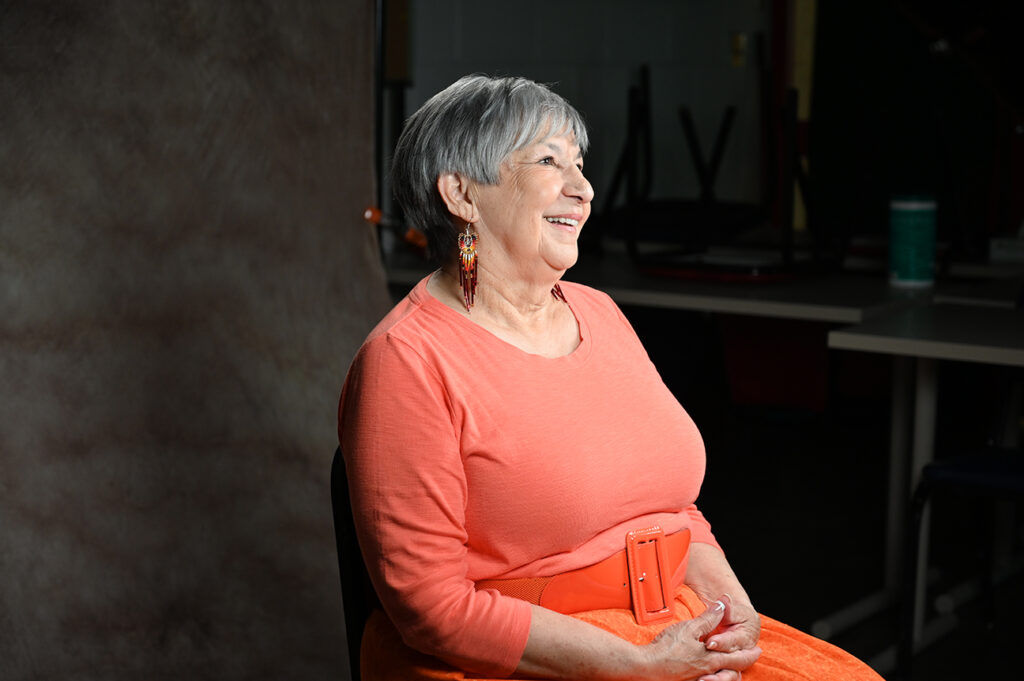
Biden included the experiences of one survivor, Ramona Klein, in his speech. Klein, 77, was whisked off in a green bus to Fort Totten school in North Dakota, and has testified before Congress about her traumatic experience there.
Speaking by phone with The Imprint after her appearance today with the president, Klein described the “historic moment” as “almost overwhelming.”
“I was good until I met him,” Klein said of Biden, “and then it’s like, this is really happening — I started boarding school 70 years ago, and my father went before that, so having this history recognized is a milestone.”
“We still have so much more work to do, but this is a good first step,” Klein said shortly after meeting the president and having her picture taken alongside him. “I would never have thought that I would hear an apology from President Biden, or from any president. I haven’t cried yet, but I feel like I’m ready to cry.”
Tribal leaders and activists across the country were quick to respond to the apology today.
“President Biden’s apology for the Federal Indian Boarding School Era represents a significant step toward healing, justice, and reconciliation for Native American and Indigenous Peoples of the United States,” said Cheyenne Brady, associate director of youth programs at the Washington, D.C.-based Center for Native American Youth. “This painful and traumatic chapter in our history, characterized by the removal and abuse of our children and communities, sought to sever our people from our rich cultural identities.”
The federal government publicly assuming responsibility and apologizing for the “often heinous” treatment of Native children, Brady of the Sac and Fox Nation said, “provides a spark of hope and paves the way for collective healing.”
‘Generations of Native children stolen’
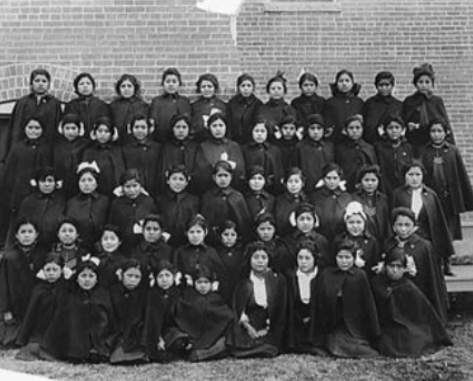
The U.S. government removed thousands of Indigenous children from their families and communities beginning in 1819, forcing them to attend hundreds of Indian boarding schools across 38 states. The schools, run by churches or the government, stripped American Indian, Alaskan Native and Native Hawaiian children of their language, religion and cultural beliefs. Students were physically, emotionally and sexually abused over centuries. Many never came home. The government has so far identified nearly 1,000 deaths of school children, many buried in unmarked graves.
Biden acknowledged “generations of Native children stolen, taken away to places they didn’t know, with people they never met, who spoke a language they had never heard.” He described “Native communities silenced,” extinguishing “their children’s laughter and play.”
“Children would arrive at schools, their clothes taken off, their hair that they were told was sacred was chopped off, their names literally erased, replaced by a number or an English name,” the president said.
As for the Indigenous children at the heart of this apology, Biden described “some put up for adoption without the consent of their birth parents, some left for dead in unmarked graves.” “Those who did return home,” he added, “are wounded in body and in spirit.”
“I would never have thought that I would hear an apology from President Biden, or from any president. I haven’t cried yet, but I feel like I’m ready to cry.”
— Ramona Klein, boarding school survivor
The president also noted the shortcomings of his formal apology.
“This is about restoring your dignity,” he said. “No apology can or will make up for what was lost during the darkness of the federal boarding school policy. But today, we’re finally moving forward into the light.”
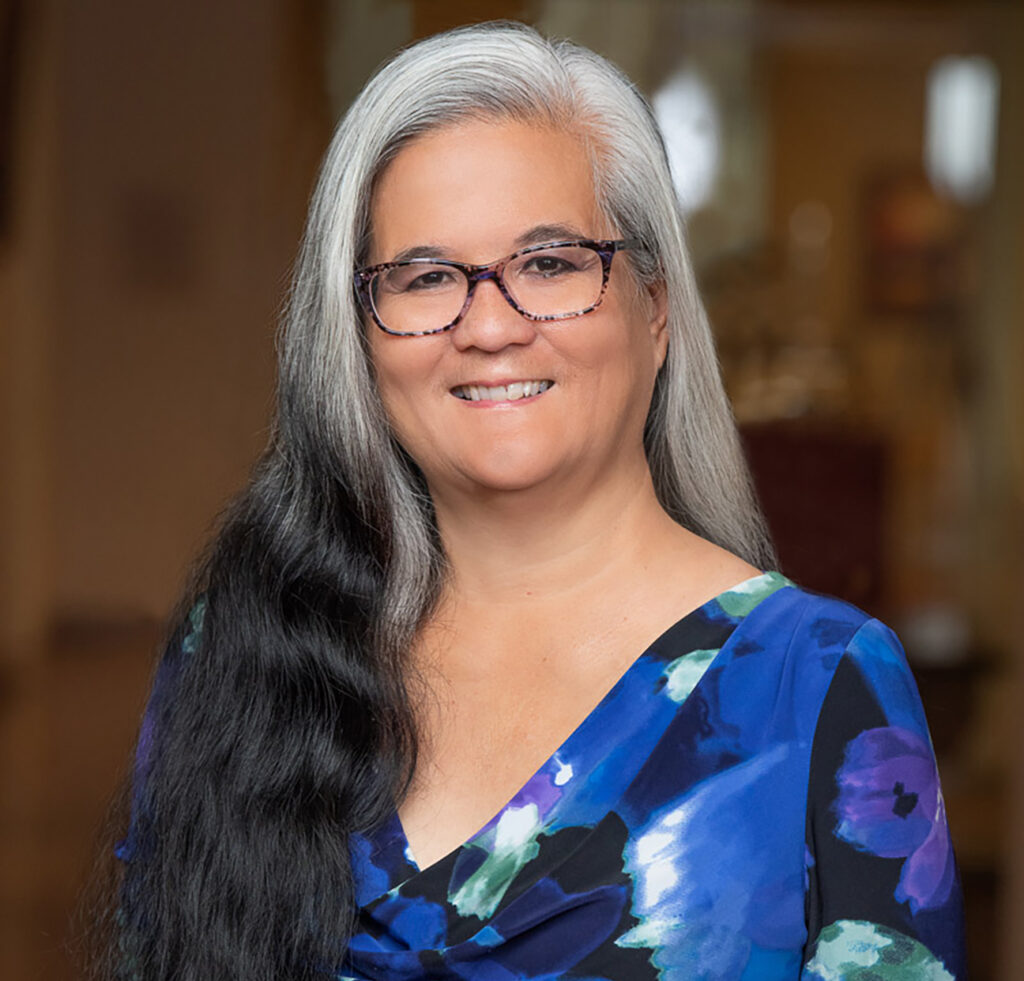
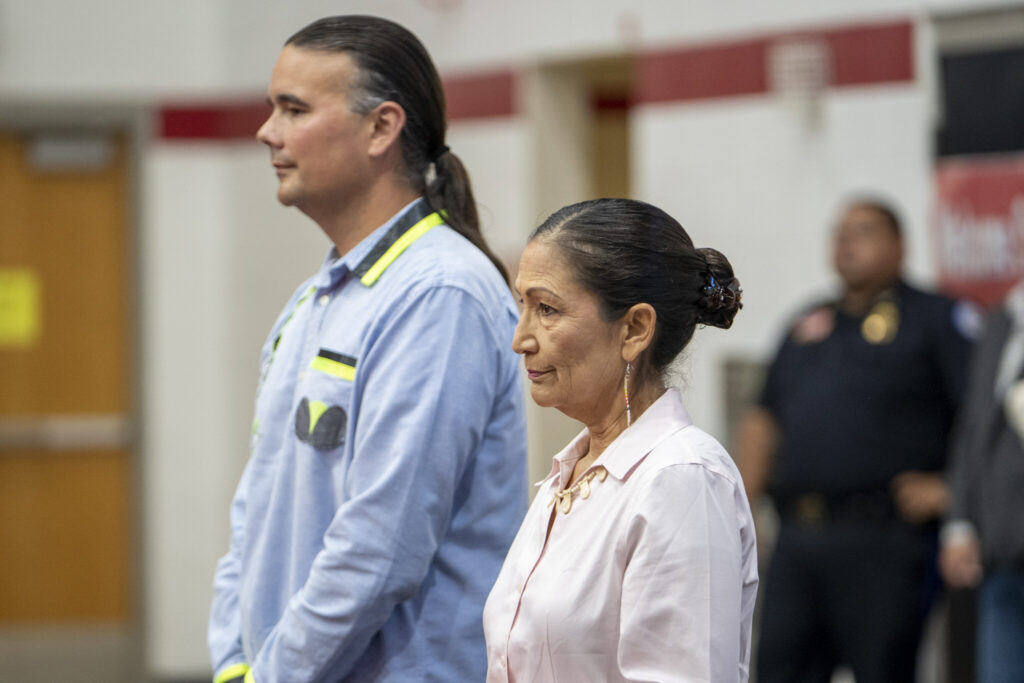
Boarding school survivors and their families attended today’s presidential remarks alongside tribal leaders and first-ever Indigenous members of the state and federal U.S. government. They included Secretary of the Interior Deb Haaland, a member of the Laguna Pueblo tribe whose ancestors attended the abusive boarding schools, and Minnesota Lt. Gov. Peggy Flanagan, a member of the White Earth Nation.
Biden administration efforts to restore tribes
In announcing today’s apology, President Biden outlined his record of investment in Indian Country and relationships with tribal nations, efforts he described as “advancing Tribal sovereignty and self-determination, respecting Native cultures, and protecting Indigenous sacred sites.”
The president has issued three executive orders that reform federal funding to enhance tribal self-determination and improve public safety and criminal justice for Native Americans, including addressing the crisis of missing and murdered Indigenous people, and improving educational outcomes and career opportunities for Native American students.
The current administration has included more than 80 Native appointees, including Haaland, first Native American cabinet secretary and Chief Lynn Malerba, the first Native American U.S. Treasurer.
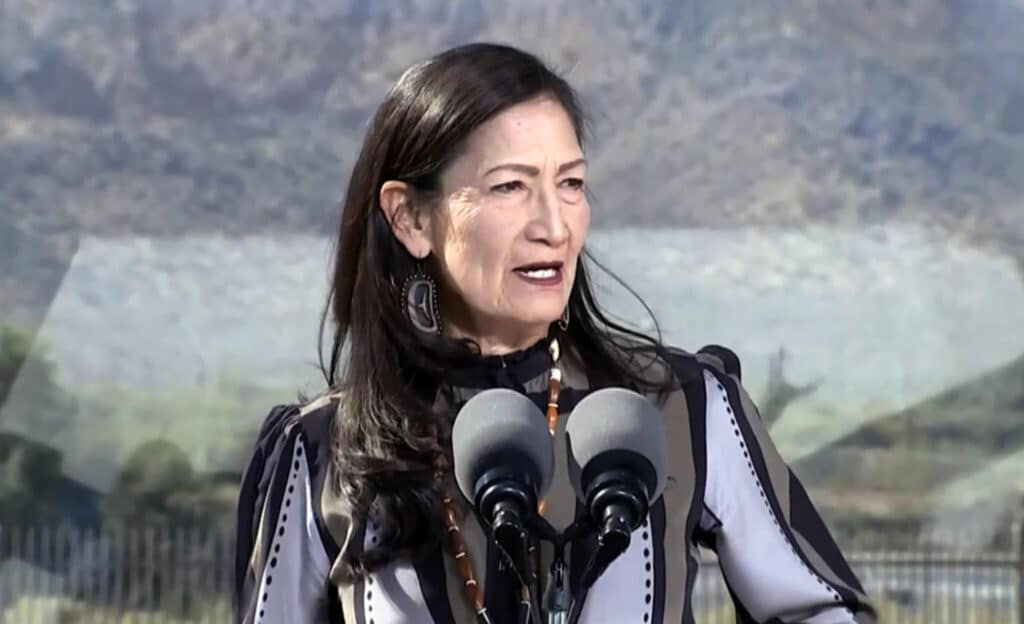
Haaland wept during her comments at the Arizona event, recounting the horrors visited on her maternal grandparents, who were just 8 years old when they were “stolen” from their homes. The Interior Secretary recently concluded a 16-month-long Road to Healing Tour for boarding school survivors such as her relatives.
“This is a president and an administration that truly sees Indigenous people,” Haaland said, “and has worked tirelessly to address the issues in Indian Country that have long been underfunded or outright ignored.”
There were once 50 Indian boarding schools in Arizona, according to the federal government, the second-highest number of any state and 37 fewer than Oklahoma. The state is also home to 22 federally recognized tribes.
“The true measure of these words will be in the actions that come from them.”
— Jonathan W. Smith, Sr., Confederated Tribes of the Warm Springs Reservation
President Biden’s apology comes more than 15 years after former Canadian Prime Minister Stephen Harper issued a formal apology to former students of that country’s abusive Indian boarding schools. Two years ago, Pope Francis addressed onlookers from the Cree Nations in Maskwacis, Alberta.
“I humbly beg forgiveness for the evil committed by so many Christians against the Indigenous peoples,” Francis said outside the former Ermineskin Indian Residential School. At the former school site, ground-penetrating radar had been used to locate students’ unmarked graves.
Across the hemisphere, Indigenous leaders say these types of apologies are an important step, but not enough.
“Still today, nearly every Cherokee Nation citizen somehow feels the impact,” Cherokee Nation Principal Chief Chuck Hoskin Jr. said in a statement. “We are grateful to President Biden and Vice President Harris, and largely Secretary Haaland for her role in ensuring these truths were exposed.”
But the chief added: “The significance of this public apology by the President on behalf of this nation is amplified and an important step, which must be followed by continued action.”
Jonathan W. Smith, Sr., chairman of the Tribal Council for the Confederated Tribes of the Warm Springs Reservation of Oregon, issued a similar statement.
“The true measure of these words will be in the actions that come from them,” he said. “We look forward to working together on concrete commitments that demonstrate a genuine redress of this deliberate pain.”