
An unusual bill now before the Texas Legislature would tighten the conditions for CPS workers to pull kids from their parents’ homes, ensure they remain close to kin when they do enter foster care, and make it more difficult to permanently sever family ties.
State and national policy experts called the proposed legislation “transformational” and “a huge step” toward necessary reforms of the child welfare system.
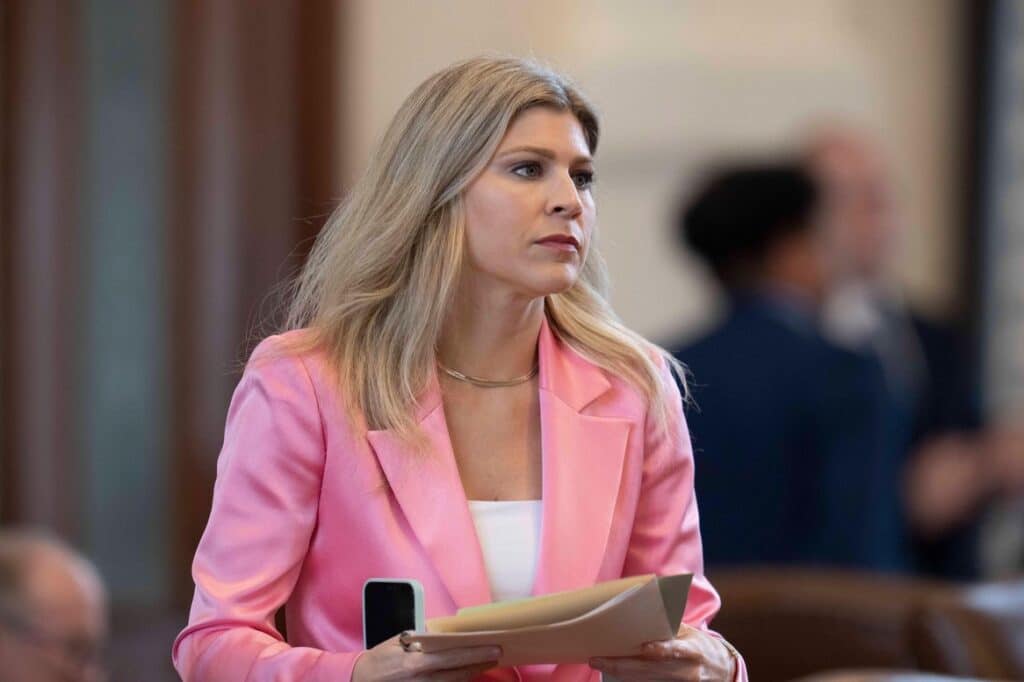
Specifically, House Bill 2216 sponsored by Houston Rep. Lacey Hull would require the state’s child welfare agency to undertake “active efforts” to keep all families intact before removing a child into foster care — setting a higher legal bar than the current “reasonable efforts” required of social workers in most cases.
Under the proposed legislation, terminating the rights of parents deemed abusive or neglectful would require proving in court “beyond a reasonable doubt” that their children would otherwise be in danger — a significant step up from the current burden of proof.
In Texas and most states across the country, only Native American children and families are owed these higher standards prior to foster care separations, the result of the 1978 Indian Child Welfare Act, or ICWA.
“HB 2216 would provide the Gold Standard of due process for parents and families in a child abuse or neglect case, and protect the rights of children to be placed with their own families and kin,” Hull said in a statement emailed to The Imprint.
In crafting the legislation, the lawmaker’s team mirrored the language in ICWA, bedrock federal legislation created almost 50 years ago to protect Indigenous families and tribes at a time when as many as one in three Native American children was taken into government custody.
HB 2216 is the latest “ICWA for all” bill introduced in states attempting to apply the same heightened standards more broadly.
“We want to see that standard applied to all children,” said Emily Fankell, Hull’s chief of staff who helped craft the legislation. “It’s about ensuring all families have the most legal protections possible when dealing with the child welfare system.”
“HB 2216 would provide the Gold Standard of due process for parents and families in a child abuse or neglect case, and protect the rights of children to be placed with their own families and kin.”
— Texas state Rep. Lacey Hull
Texas’ Department of Family and Protective Services declined to comment on pending legislation. But based on the department’s statistics from last year, if the legislation passed, more than 15,000 Texas children and families now in the system would have the new standards apply to their cases.
Leila Blatt, a staff attorney with the Family Defense Project at Texas Rio Grande Legal Aid who represents parents involved with child protective services, said if passed, the legislation would make a “material change” to her clients’ cases.
Under the current standard of reasonable efforts, she’s seen poor communication between caseworkers and parents, and a to-do list of services parents must complete with no assistance. If active efforts were required, she added, the child welfare agency would have to better support parents in their efforts to reunify with their children.
“The department often will operate based on what they can legally get away with,” Blatt said. “If the legal standard is raised, I do think that that will change things in practice.”
Blatt added that requiring proof beyond a reasonable doubt in order to terminate parental rights “is huge.”
“It brings us in alignment with the criminal system, which I think signals to the court that your evidence truly does need to be conclusive, and that the consequence of having your rights terminated is akin to the consequence of restriction of your liberty by being incarcerated,” she said.
Hull’s bill also seeks to protect parents from having their rights terminated based on conditions of poverty — including “crowded or inadequate housing.” It outlines several additional circumstances that cannot be used as grounds for termination of parental rights, including administering cannabis to their kids for prescribed medical purposes, being charged with most nonviolent crimes, substance use and isolation or “nonconforming behavior” by the parent.
The legislation further notes that if the child welfare agency does seek to terminate parental rights, it must be able to document “evidence of a causal relationship” between problems in the home and the likelihood that keeping the child with the parent would “result in serious emotional or physical injury to the child.”
Under the federal standards of ICWA, foster children who are members of tribes or eligible for membership must receive priority placements with relatives, close kin or tribal members.
Hull’s legislation does not similarly aim to preserve cultural ties. But it lays out placement priorities social workers would have to follow: Adults connected to the child through blood lines, marriage or adoption would receive priority as caregivers, followed by people with whom the child has had a longstanding relationship. Notably, the bill also seeks to enforce these priorities, and states that a potential caregiver’s socioeconomic status cannot work against them for consideration — apparent efforts to discourage prioritizing wealthier foster parents over a child’s lower-income kin. Relatives or people closely connected to the child would also be able to participate in otherwise confidential court hearings and be involved in the case.
‘ICWA For All’ efforts elsewhere
Other states have undertaken similar “ICWA For All” efforts in recent years, but none go as far as what Hull’s legislation seeks. A Montana bill set to sunset this year took effect in 2023. It requires the state to conduct in-depth assessments, provide services and engage kin in an effort to reduce foster care removals and improve family reunification rates. Last year, Minnesota’s governor signed the African American Family Preservation and Child Welfare Disproportionality Act, which took effect this month. It applies “active effort” requirements to any family from a community disproportionately represented in the child welfare system, which — between race and class disparities — accounts for the vast majority of cases, according to state data. Additional states, such as South Dakota, have tried and failed to pass similar laws.
“Texas has seen with the reforms we’ve done over the last three legislative sessions that these changes to law and to practice not only work, but they’re effective at keeping kids with their families and keeping them safe.”
— Andrew Brown, Texas Public Policy Foundation
Local and national policy experts praised the Texas bill as a major step toward improving due process for families entangled in the child welfare system and said it should serve as a model for other states.
“By raising the burden of proof for terminating parental rights and ensuring that poverty or social circumstances are not mistaken for neglect, this bill reinforces the principle that families should only be separated as a true last resort,” said Vivek Sankaran, director of the Child Advocacy Law Clinic at the University of Michigan. “This legislation reflects a more just, research-based approach to child welfare — one that upholds both parental rights and the well-being of children.”
Andrew Brown, vice president of policy at the Texas Public Policy Foundation, said the bill is part of a yearslong movement “in the culture and thought behind child welfare practices, that’s shifted dramatically toward family integrity.”
“I think it could be probably one of the most transformational things that the Texas Legislature accomplishes this session,” he said.
The state has spent years having to comply with court-ordered reforms to its troubled foster care system, which Brown said has forced lawmakers to “fundamentally transform” child protection in the state, “recognizing that when kids go into the foster care system, it’s harmful.”
Brown pointed to a series of laws passed over the last five years focused at narrowing the front door to the child welfare system and keeping kids safe with families, including a 2021 law that tightened the criteria for what could be deemed neglect; improved access to legal counsel and prioritizing kids’ placements with non-offending parents when only one parent was deemed abusive or in cases of domestic violence. What’s more, a 2023 law requires social workers to issue “Miranda-style” warnings to parents before they conduct CPS investigations of maltreatment claims.
“Texas has seen with the reforms we’ve done over the last three legislative sessions that these changes to law and to practice not only work, but they’re effective at keeping kids with their families and keeping them safe,” Brown said. “Representative Hull’s bill is the next step in that transformation, and it’s a huge step.”