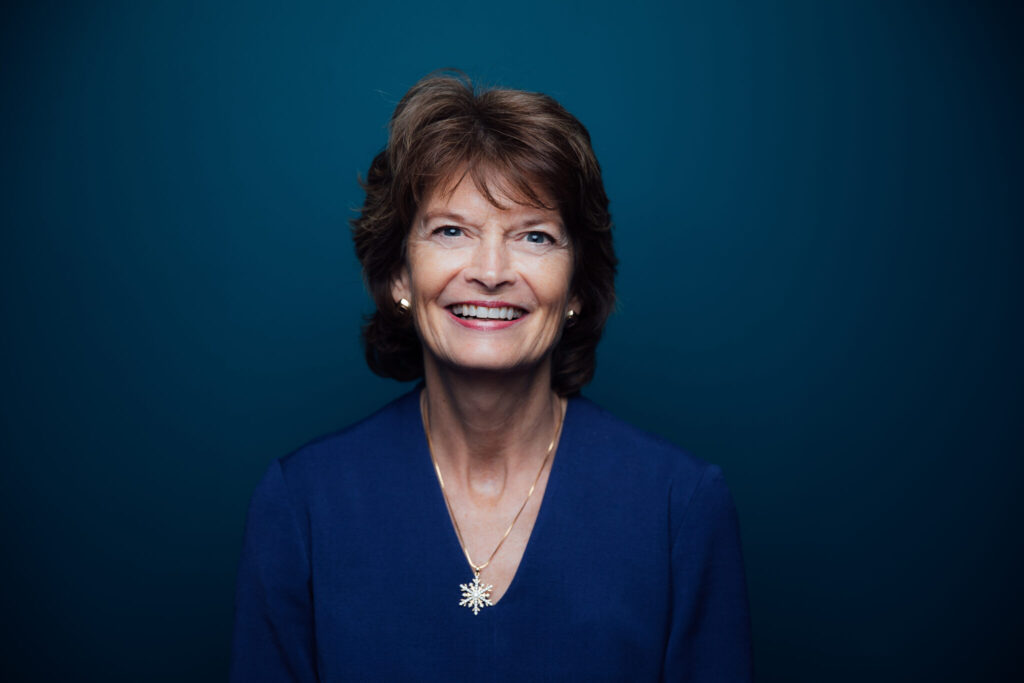
Friday is the deadline for public comment on draft legislation that calls for increased funding and new programs aimed at improving the well-being of Indigenous children and their families. Proposed by Alaska Republican Sen. Lisa Murkowski, the federal Native Children’s Commission Implementation Act of 2025 seeks to address a wide range of issues including health, housing and education.
Feedback will be incorporated in the draft bill expected to be introduced on the Senate floor at some point next year.
“I look forward to hearing from Tribal leaders, advocates, and non-profits supporting Native families as we work to improve policies that directly impact their communities,” Murkowski, chair of the U.S. Senate Committee of Indian Affairs, said in a statement.
Millions of dollars are proposed for tribally run child welfare and juvenile justice programs, as well as culturally appropriate mental health and substance use services.
The draft legislation also addresses homelessness, child care, environmental health and research and data collection. The proposed initiatives include:
- Tribal advisory committees on juvenile justice and maternal health
- A Tribal Homeless Assistance program
- A study of the relationship between domestic violence and maternal mortality among Indigenous mothers
- A nationwide examination of the number and status of all missing Indigenous children cases
- An Office on Native Children at the Department of the Interior, which would, in part, serve as a clearinghouse for federal data and grant opportunities
The bill also proposes making the Bureau of Indian Affairs’ Tiwahe Program permanent. Established in 2015 as a pilot with six tribal communities, the initiative named for “family” in Lakota delivers social services integrated with tribal practices, values and customs to children and their families.
“It has given tribes over the last 10 years the flexibility to build structures that really reflect tribal views and tribal cultural traditions that are specific to individual communities,” Holly Cook Macarro, a citizen of the Red Lake Nation and a tribal lobbyist, said of the program.
Murkowski’s draft legislation draws on recommendations from The Way Forward Report, published in 2024 by the Alyce Spotted Bear & Walter Soboleff Commission on Native Children. The commission, which studied critical issues affecting Indigenous children and their families, was created through bipartisan legislation introduced by Murkowski and former Sen. Heidi Heitkamp of North Dakota.
The senators were motivated by the testimony of Native young people who “courageously shared their experiences with violence, substance abuse and suicide in their communities,’’ during the 2013 Alaska Federation of Natives Convention, according to a press release from Murkowski’s office.
Do you have experience or tips on the needs of Indigenous youth in the foster care or juvenile justice systems? Email nspears@imprintnews.org.
Selected experts in the fields of juvenile justice, child welfare, social services, education, and physical and mental health convened to complete the report. To determine the scope of — and gaps in — federal, tribal state and local programs serving Native children, they conducted site visits and held hearings throughout the United States.
The legislation in response to their findings is being drafted at a time of great uncertainty regarding federal funding for tribes and the programs that serve them. The Trump administration and its Department of Government Efficiency has slashed or frozen funding for tribes’ federal offices, social services, education and health care.
Representatives from the Department of the Interior, the Office of Justice Programs and the Bureau of Indian Affairs said they could not comment on Murkowski’s forthcoming legislation.
But tribal experts are tentatively hopeful the bill will progress in Congress, despite tensions between Indigenous communities and the federal government over the past several months.
“The Native Children’s Commission Implementation Act comes with several years of hearings and testimony supporting the legislation’s key policy changes,” said David Simmons, spokesperson for the National Indian Child Welfare Association. “We feel optimistic the legislation will be able to move forward, if not this year, then next year.”
Input on the proposed legislation can be emailed to Murkowski_Outreach@Indian.Senate.Gov.