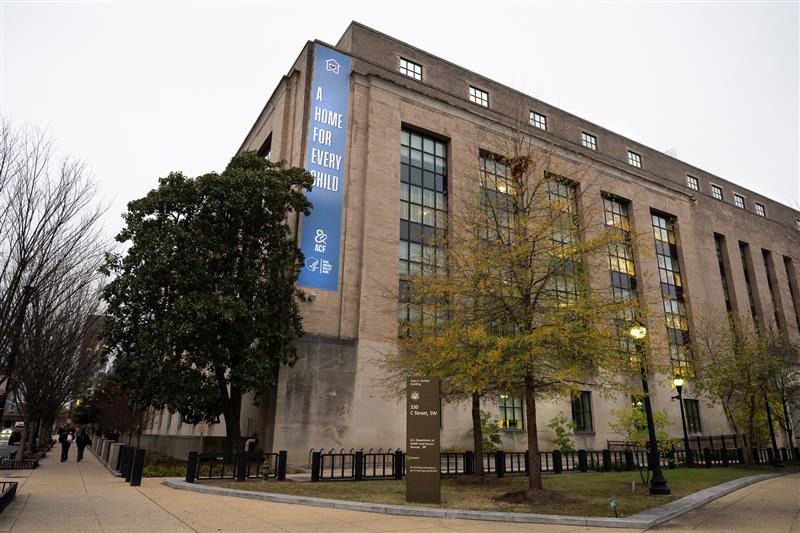

New York’s top child welfare official recently voiced concerns about a bill awaiting signature by Gov. Kathy Hochul to end anonymous reporting to the state’s child abuse hotline, arguing it could deter people from reporting suspected abuse. But this reasoning, and broader opposition to the legislation, misses a critical point: strictly confidential reporting accomplishes all of the goals of the reporting system without being unconstitutional.
The Office of Children and Families (OCFS) is putting forth a false, fear-mongering narrative in opposition to the bill. Instead, OCFS should actually do its job, and enforce air-tight identity protection of callers. If hotline workers took the time to explain court-protected confidentiality, there would be no reason to fear “missing” a concern that, left uninvestigated, might lead to a headline-grabbing case.

It is obvious from its nonsensical opposition to the Anti-Harassment in Reporting Act that what OCFS is actually worried about is shielding itself from liability. DaMia Harris-Madden, the commissioner of OCFS, admits in the letter obtained by The Imprint, that false reporting does exist, but claims that the answer to the problem is prosecution. But the District Attorney cannot prosecute an anonymous person. Anonymity blocks accountability.
False reporting has, in fact, been a crime for decades in New York, and across the nation, and this hasn’t deterred false reports. During a recent session of the New York General Assembly, Republican Assemblymember Mary Beth Walsh echoed Harris-Madden’s suggestion, opposing the bill to ban anonymous reporting but telling its sponsor she’d support one to “actually penalize people who are repeatedly making harassing, unsubstantiated hotline calls.”
That would be possible if the calls were confidential. But how exactly is that accomplished if the call is anonymous? Walsh did not offer an idea.
Take one mother in East Flatbush as an example, who was awakened in the middle of the night by police knocking on her door with guns drawn. It’s one of dozens of visits she and her son have endured over three years, as New York City’s child welfare agency investigated anonymous claims of abuse. The allegations were never substantiated. The source? A caller suspected to be a “former acquaintance with a grudge.”
This family’s experience is not rare, and it’s not harmless. Each anonymous call triggers an intrusive and traumatic chain of events: unannounced home visits, school interrogations, and in some cases, children being strip-searched without a parent present. These reports rarely reveal abuse, but they always consume time, strain caseworkers and disrupt families’ lives. Moreover, even wholly unfounded reports get stored in a state database, and this can have lifelong repercussions for innocent adults, such as preventing them from obtaining certain types of employment, like driving a school bus, or becoming foster parents.
In 2023 alone, more than 4,000 children in New York City were investigated because of anonymous reports. Just 7% of those allegations were substantiated. All the while, on the national level, 96% of anonymous calls to child abuse hotlines are deemed baseless.
Anonymous reporting was included in early hotline legislation across the nation to remove all conceivable barriers to reporting abuse. But in practice, it’s become a tool of harassment. I’ve seen it firsthand in my work at Albany Law School’s Family Violence Litigation Clinic and as a family lawyer across the country: vindictive exes, frustrated landlords, estranged relatives and abusers in custody battles regularly exploit the system to make false allegations with no consequence. And we know from decades of social science — and constitutional law — that anonymity often fosters cruelty, aggression and misuse of power. Trolling on the internet makes this point abundantly clear.
More than a decade ago, I was one of the first to raise the alarm about this issue — I conducted nationwide research on anonymous reporting to child abuse hotlines and spoke out about the dangers. It helped catalyze real change: Texas and California have since successfully eliminated anonymous reporting to child welfare agencies. Their reforms proved what I argued then: that a confidential, non-anonymous system works better for children, families and agencies alike.
Now, New York has the chance to follow suit. The Anti-Harassment in Reporting Act, which passed the State Assembly and Senate with overwhelming bipartisan support and awaits Gov. Hochul’s signature, would end anonymous reporting while maintaining strict confidentiality. Last May, the New York Advisory Committee to the U.S. Commission on Civil Rights recommended that the state “eliminate anonymous reporting and replace it with confidential reporting to reduce the incidence of false reports.” The Anti-Harassment in Reporting Act does exactly that. And it does so while preserving strong protections for mandated reporters like teachers, doctors and social workers, who would continue to report as always.
Gov. Hochul has a historic opportunity to protect thousands of families from needless trauma while preserving robust safeguards for children. This isn’t a partisan issue — it passed the State Senate 60 to 2. It’s about building a smarter, more just system. Every day the current system stays in place, more children are needlessly questioned, more families are subjected to traumatic investigations and more resources are diverted from real cases of abuse.
The Anti-Harassment in Reporting Act represents our chance to reform a deeply flawed system, one that fails families and fails to keep children safer. The question is, will Gov. Hochul take it?