
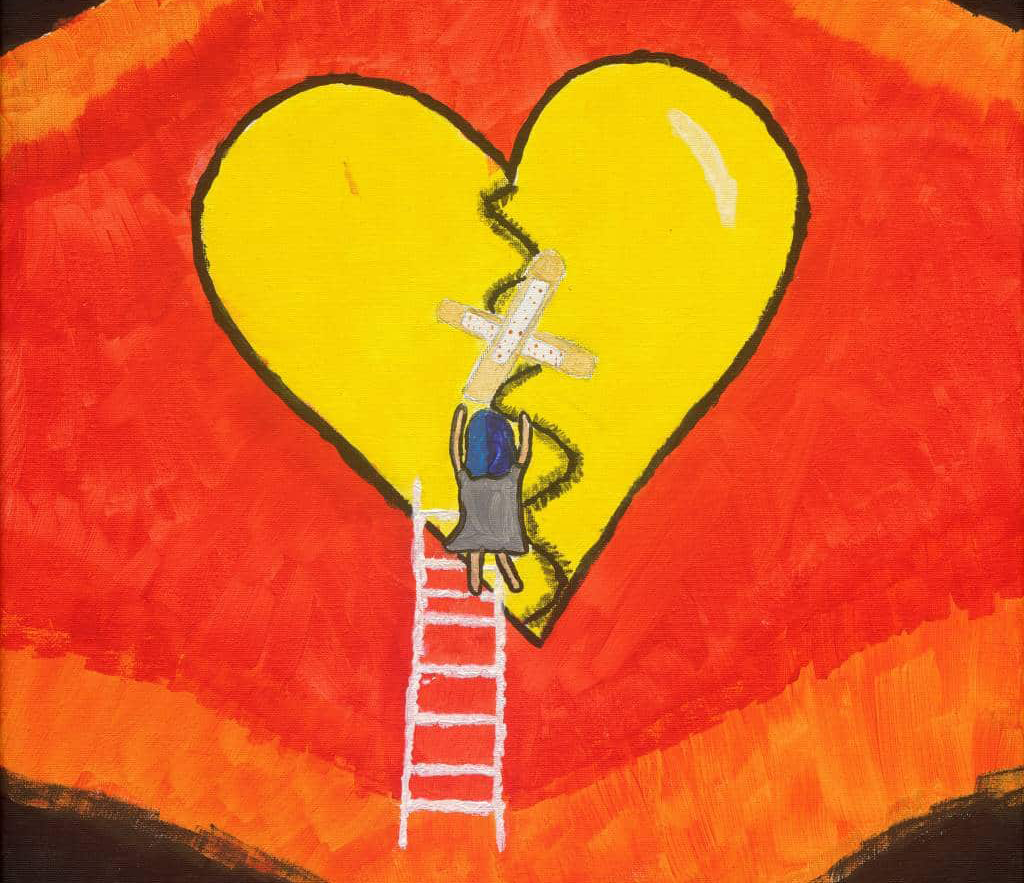
Floating in space. Drowning in a vast ocean. Mending a broken heart. Wandering through a dark forest. Flying among the birds in a rainbow sky.
When given a blank canvas and paintbrush, this is how Georgia foster youth have illustrated their rich inner worlds, as part of an art showcase that has traveled the state since 2023. Some works convey hidden struggles. But more often, these young adults — many on the brink of adulthood — express a sense of hope for a better life and future.
Sponsored by Georgia Appleseed, the See Me project has helped dozens of foster teens in group homes turn their lived experience into paintings, poems and sculpture. The nonprofit carries out policy and legal advocacy work centered on juvenile justice, foster care, housing and school discipline issues.
Liz McDaniel, director of engagement and development for Georgia Appleseed, said raising awareness about foster care experiences without forcing young people into an unwanted spotlight is the initiative’s goal. The project began as a rough idea to gain insight into kids’ perspectives through a creative medium, but the young artists surpassed expectations.
“We didn’t have an idea or any plans for displaying them or creating an exhibit,” McDaniel said. “But we were just absolutely blown away by the artwork they created and the depth of the stories they told. Instantly, we’re like, ‘This is something much bigger than we ever thought it was going to be.’”
“It’s hard to open up and trust people. But after a while, I learned not everybody is the same, and they don’t want to hurt me. Some people care.”
— 17-year-old foster teen
Though many are first-time artists, participants have produced deeply expressive, sophisticated work year after year, McDaniel said. Georgia Appleseed has identified six recurring themes: contrast of light and dark, family, sense of belonging, healing and transformation, self-determination, and faith. Revealing innermost thoughts and vulnerabilities, many of the works are signed, “Anonymous.’’
“Everybody’s individual, but there’s an underlying theme to what’s important, and it’s safety, it’s stability, it’s hope, it’s love,” McDaniel said. “That’s what these kids really long for, and you can see that coming out of their artwork.”
The roughly 50 pieces collected so far have been displayed at the Capitol building, Georgia universities, community centers, law firms and, most recently, during a Senate committee meeting.
“Instantly, we’re like, ‘this is something much bigger than we ever thought it was going to be.’”
— Liz McDaniel, Georgia Appleseed
Georgia Appleseed covers the cost of materials, and artists are paid $250 for their contributions. The artist outreach and much of the project’s hands-on support comes from Elton Dixon, co-founder of Enay Coaching, a Georgia-based company that provides academic support and mentorship to foster youth living in group homes.
McDaniel credits Dixon’s longstanding relationships with the group homes as key to the initiative’s success in recruiting artists.
Each November, working directly with the young people from start to finish, Dixon introduces the project’s concept. Anyone can participate, regardless of skill or experience.
Dixon’s role is to provide guidance, but he emphasized that the young people have complete creative freedom to express themselves. Just no profanity or violence, he tells them.
“They lose so many choices as soon as they enter the system, and this is an opportunity for them to get some choices back and share their thoughts in a way that’s not judged,” Dixon said. “A lot comes out, sometimes even more than what they’ve shared with their therapist.”
This past year’s tumultuous $85 million budget crisis within the Division of Family and Children Services was reflected in some of the most recently produced art. Funding restrictions had a “direct effect” on foster youth, who saw supportive services, such as therapy and home visits, abruptly “cut off,” Dixon said. The project became an emotional outlet for frustration and sadness they felt over missed support and time with loved ones.
“A lot of their narratives were about, ‘I don’t get to go home, I lost this opportunity,’” Dixon said. “I think this helped them feel like they had at least some chance to share what they are feeling.”
But more often, youth conveyed resilience and optimism, depicting themselves through ladders or nature imagery as works in progress and eager to blossom.
McDaniel said the written reflections that accompany the works suggest that the art represents more than abstract daydreaming: These kids see happy, fulfilling lives within their reach. Few mention education or career goals, and instead focus on family and personal growth.
“They lose so many choices as soon as they enter the system, and this is an opportunity for them to get some choices back and share their thoughts in a way that’s not judged.”
— Elton Dixon, Enay Coaching
One artist wrote about improving their grades to work toward the life they envision: living in a big blue house with adopted children of their own.
In capturing their personal journeys, McDaniel finds that the teens illustrate healing in “fascinating” ways.
“They never draw their counselor or their caseworker,” McDaniel said. “They never draw a picture of sitting on a couch and talking or filling out forms. That’s not what’s important to them. What matters are the friends around them, the house parents, the foster parents.”
This affinity toward community and belonging was especially vivid in one piece submitted this year, McDaniel said. Girls living together in a group home covered a canvas with their handprints. Each neon print contained handwritten affirmations: “You are very pretty.” “You’re not alone, we are here with you and God.” “You’re a somebody.”
INSIGHTS FROM THE ARTISTS IN THE “See ME” EXHIBITION | Art by FOster Teens
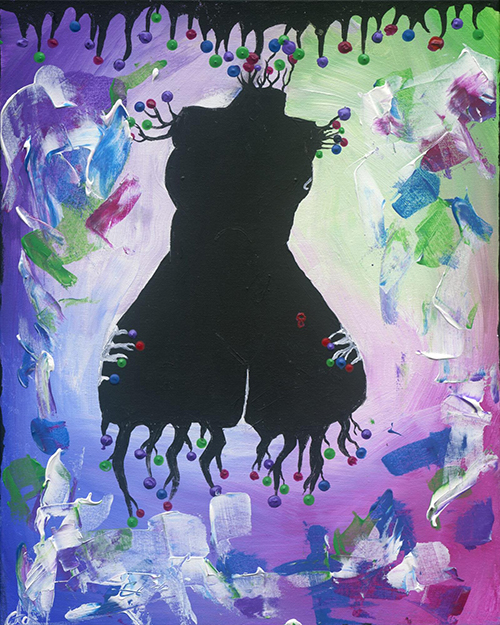
Growing | Kira Greer
Kira Greer said she entered foster care with “a lot of dark emotions.” She had long struggled with drugs and conflicts with her parents. She was trying to become independent, though she now realizes, “I’m still kind of a kid. I’m not fully grown yet.”
Greer didn’t see how things could get better until she reached adulthood. But she began finding other foster kids with similar stories and backgrounds. This is where she saw the “light and color,” evident in her piece. Even in its messiness and chaos, she found that the experience of foster care could be “beautiful.”
Greer said her art represents those bright spots that she’s discovered in foster care as she fights ongoing inner battles, particularly around body insecurity. The vines extending from the limbs of the dark, shadowy body represents the way she’s still evolving as a person.
“I want kids to realize that it’s okay to be insecure, it’s okay to be scared,” she said. “I want them to find a way for their situation to help them grow.”
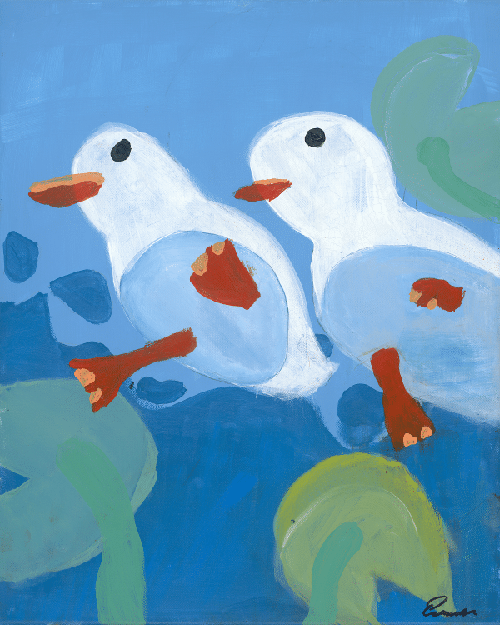
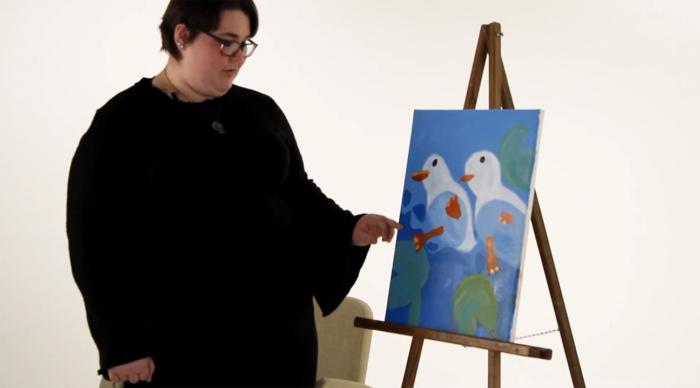
The Duck Pond | Erica Harrod, 18
“The world is just a pond, and we’re all ducks.”
That’s how Erica Harrod makes sense of her world and her place in it. The way she sees it, she said, the action of each duck leaves ripple effects on others. It’s also a microcosm of her foster care experience, which she said has not been “sunshine and rainbows.” At first, it was a difficult adjustment.
“Because, you know, people want to be with their family,” she said in a video interview.
But eventually, someone made a new ripple in Harrod’s life: her “house parent,” as some live-in group home staff are called.
“I can talk to her about anything, and she’ll help me through whatever I’m going through, with my work, in school,” she said. “Without them, I think I’d be very far behind.”
The teen’s art and story resonated so much with Georgia Appleseed staff that they’ve displayed her work each year and used it as the front cover of their 2024 annual report.
When thinking about the future, Harrod said she hopes to inspire meaningful change in the system. Her “biggest goal” is to become a child therapist.
“I want to help kids that have been through things like I have been through and just make their world better,” she said.
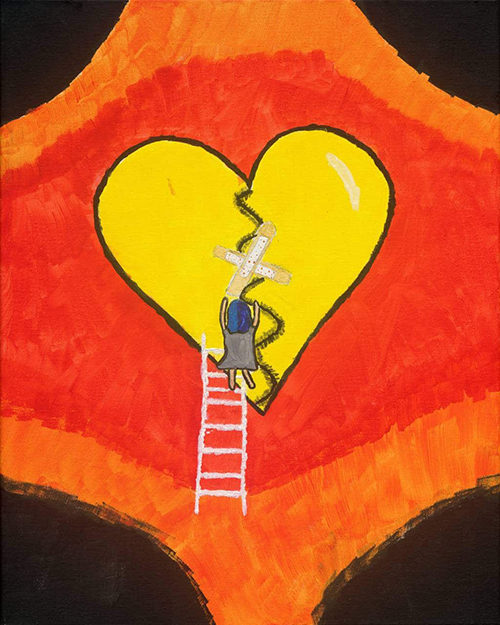
HEALING MY HEART | Anonymous
“My heart when I first got here, it was broken. I didn’t know what to do. Foster care gave me a ladder, and you know, just helped me. So my painting is basically how my heart was broken, but I’m slowly fixing it with the bandages and everything.
“And my heart — I didn’t want it to be like a regular heart, because it gotta be different. ‘Cause I’m different. I needed my heart to be yellow, because yellow is my favorite color. It’s very bright. Most people don’t like it, but I think it’s amazing. It’s bright like the sun, and that’s how I see myself.”
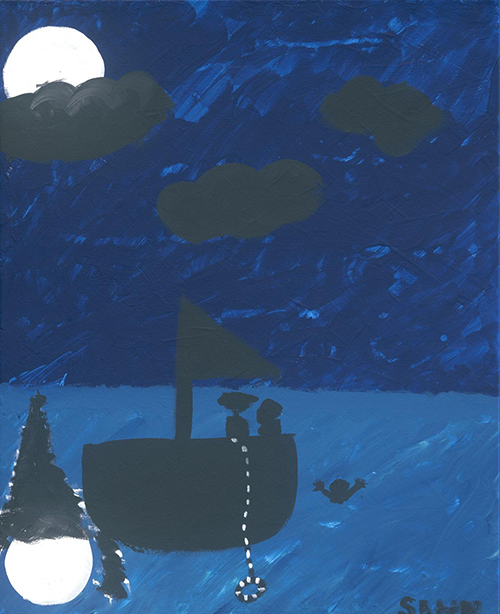
Drowning | Anonymous
“It’s a dark night and the moon is shining very brightly over everything, but the clouds are dark, and they’re blocking out the light. And there’s a reflection on the water where the moon is, and it’s reflecting the goodness, but it’s also reflecting the darkness that comes with it.
“That’s me. Right there. I’m basically drowning. And this lady right here — she’s looking at me, and she’s watching me suffer, and she’s not doing a thing. But this man right here, he saw me and cast out a little life saver boat, but the boat’s way over there, and I’m way over here. So, it’s not really doing much to help me, but I guess it shows that he tried. Yeah, I think most definitely this could be a lot of kids’ lives.”
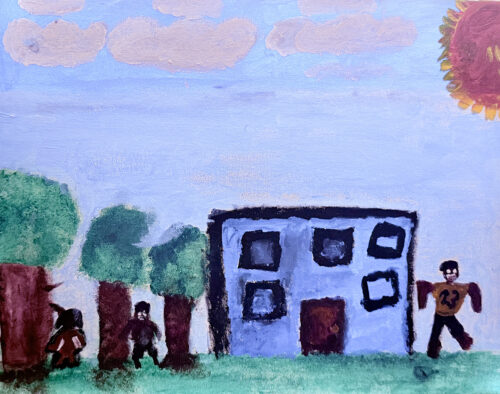
A HOUSE FOR US | Anonymous, 15
“I want to get my grades up so I can get a house and live my life. This is about my kids living good. We’ve got a big old house because I want to adopt some kids. I don’t want them to feel like they don’t have a home they can go to. So I’ll adopt them, and they’ll live in this big old blue house.”
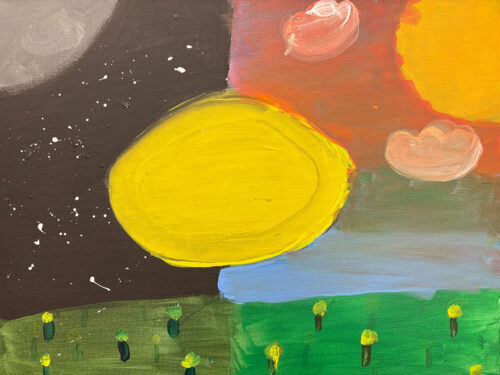
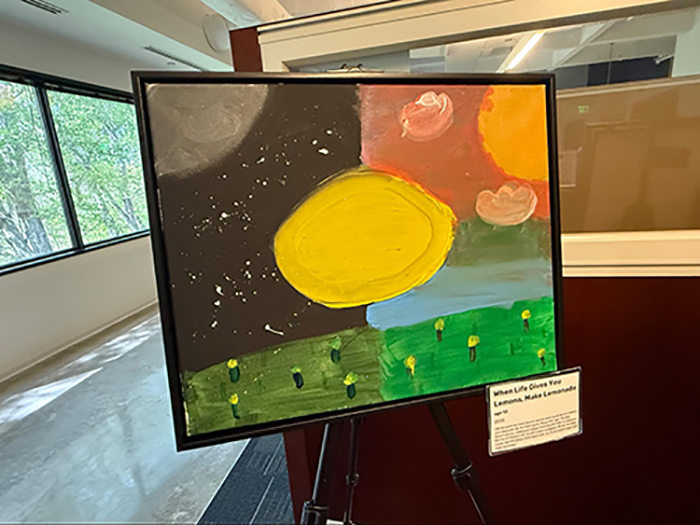
WHEN LIFE GIVES YOU LEMONS, MAKE LEMONADE | Anonymous, 13
“Life has given me many lemons, and the best I could do is make sour lemonade. The more I grow, the greater I get. The little flowers are me, unbloomed, cause I have troubles with my behavior.
“But I’m not finished yet. I’m still a work in progress. My act has been messy, and the lemons have taken over, so I try to make it clean and make lemonade.”
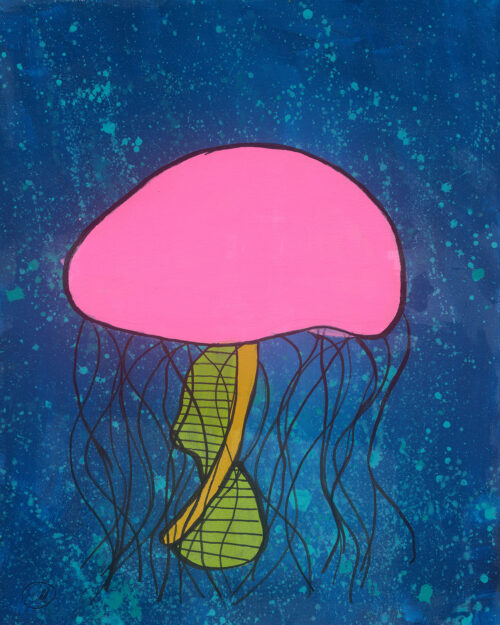
THE JELLYFISH | Anonymous, 17
“When someone sees a jellyfish, they’re like, ‘Oh no, That’s scary!” They don’t like jellyfish. But jellyfish are kinda cute. Like when you first go into foster care, everybody is trying to baby you — they’re soft and squishy and stuff.
“But then other times, the sting part, it can sting you. It was scary, you’re away from your family. And some of the time, you’re not in the best of situations.”
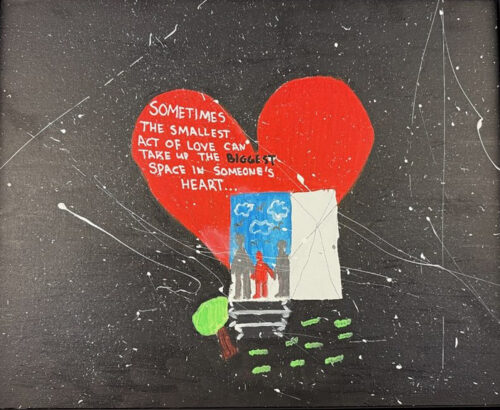
SPACE IN MY HEART | Anonymous, 17
“[My art is] basically me opening up and letting people care about me after everything I’ve been through. The smallest act of love can take up the biggest space in someone’s heart.
“I’ve been through a lot. It’s hard to open up and trust people. But after a while, I learned not everybody is the same, and they don’t want to hurt me. Some people care.”