Reversing its prior position of broad inclusion, Bethany Christian Services will require staff and prospective caregivers to disavow gay marriage and the right of transgender people to live openly.
Five years ago, one of the nation’s largest Christian child welfare agencies announced it would begin licensing LGBTQ+ people to serve as foster and adoptive parents across the country.
A spokesperson for Bethany Christian Services, founded in 1944, explained the new stance at the time: “These days, families look a lot different than they did when we started,” Nathan Bult told The Imprint. “And Bethany is committed to welcoming and serving all of them.”
But last month, the nonprofit serving nearly 50,000 children and families in 27 states reversed course. An agency spokesperson said Bethany will not license or re-license parents who do not agree to a “Statement of faith and belief” asserting that marriage is “a covenant between one man and one woman” and that “God creates human beings in His image as male and female, as determined by biological sex.”
Within a year, all staff and board members must also sign a document stating that they “personally agree and adhere to” the new policy, according to a June 10 press announcement.
Leaders of the Michigan-based nonprofit declined to be interviewed, referring all questions to the Pinkston public relations firm, which responded through emails. Pinkston declined to name the Bethany spokesperson.
“These actions reflect an intentional effort to fully align our culture, policies, and practices with our sincerely held Christian beliefs,” the spokesperson wrote.
When asked whether employees who did not agree to sign the statement denying same-sex marriage and transgender rights would be fired, the representative described adherence to the policy as “a condition of employment.” Prospective caregivers who don’t sign “will be supported through a thoughtful transition process.”
“Bethany has been known for being extremely supportive of their foster families… They are one of the groups that I always recommend to people — or recommended, I guess.”
— Danni Leader, attorney who represents foster youth
In 2021, when the agency announced its acceptance of LGBTQ+ families, the Biden Administration was uplifting anti-discrimination laws for LGBTQ+ people over religious freedom claims that President Donald Trump had bolstered in his first term. But since Trump’s second inauguration, LGBTQ+ rights and related child welfare policies have faced considerable pushback across the country.
Along with a record number of anti-LGBTQ+ bills introduced in statehouses nationwide, Alex Adams, head of the federal Administration for Children and Families, has pressed states to roll back rules requiring foster parents to affirm the preferred gender identity of youth placed in their homes. Conservative Christian law firms have successfully challenged state and local governments in Washington, Vermont and Massachusetts for such requirements.
LGBTQ+ rights at Christian foster care agency debated
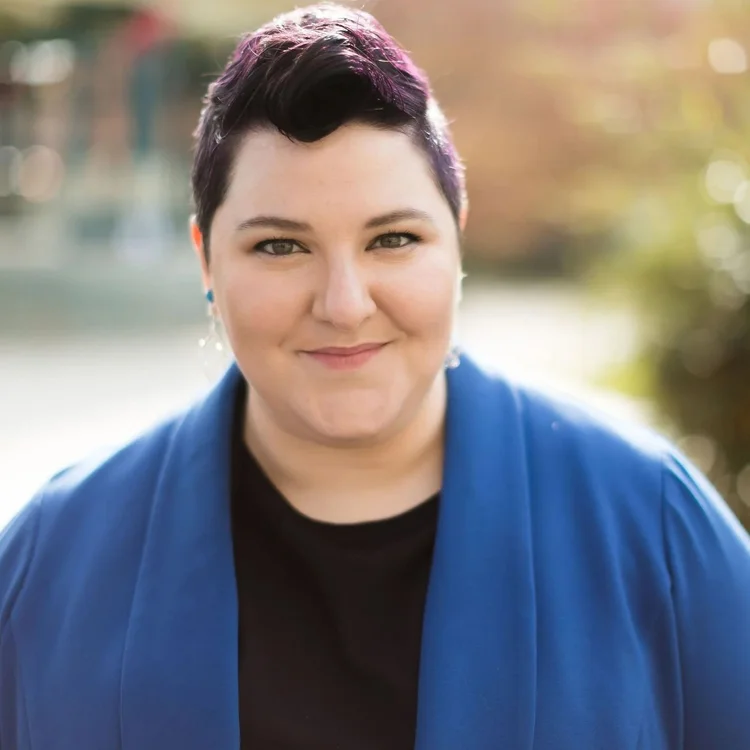
Danni Leader, an attorney who represents foster youth in Georgia, is disheartened by the abrupt change within a well-regarded agency.
“Bethany has been known for being extremely supportive of their foster families,” Leader said. “The staff had their back if something went sideways, if DFCS was slow, if Medicaid was acting up. They are one of the groups that I always recommend to people — or recommended, I guess.”
Other child welfare professionals, adoptive parents and former foster youth were saddened and angered by the move — though not surprised.
“It seriously concerns me if a youth who self-identifies as LGBTQ, or is questioning their identity, is placed with a foster family who is not accepting, understanding, or supportive of that youth’s journey. … We are compounding trauma after trauma.”
— Rich Valenza, founder, RaiseaChild
“It is always disappointing when anyone wanting to and very capable of helping children and youth in foster care is discouraged or discriminated against,” said Rich Valenza, a gay adoptive father who works as a consultant helping Northern California counties recruit foster parents.
Valenza said he felt the sting of discrimination and microaggressions while training as a foster parent, even in progressive Los Angeles. In response, he founded RaiseAChild, a nonprofit that helps agencies recruit foster parents, including LGBTQ+, single-parent and multi-faith families.
“It seriously concerns me if a youth who self-identifies as LGBTQ, or is questioning their identity, is placed with a foster family who is not accepting, understanding, or supportive of that youth’s journey,” Valenza said. “In that situation, we are compounding trauma on top of trauma for the youth and that entire foster family.”
According to research by the Williams Institute at UCLA, LGBTQ+ adults are seven times more likely than others to adopt and 10 times more likely to foster a child, so further limiting the pool of applicants strikes critics as irresponsible.
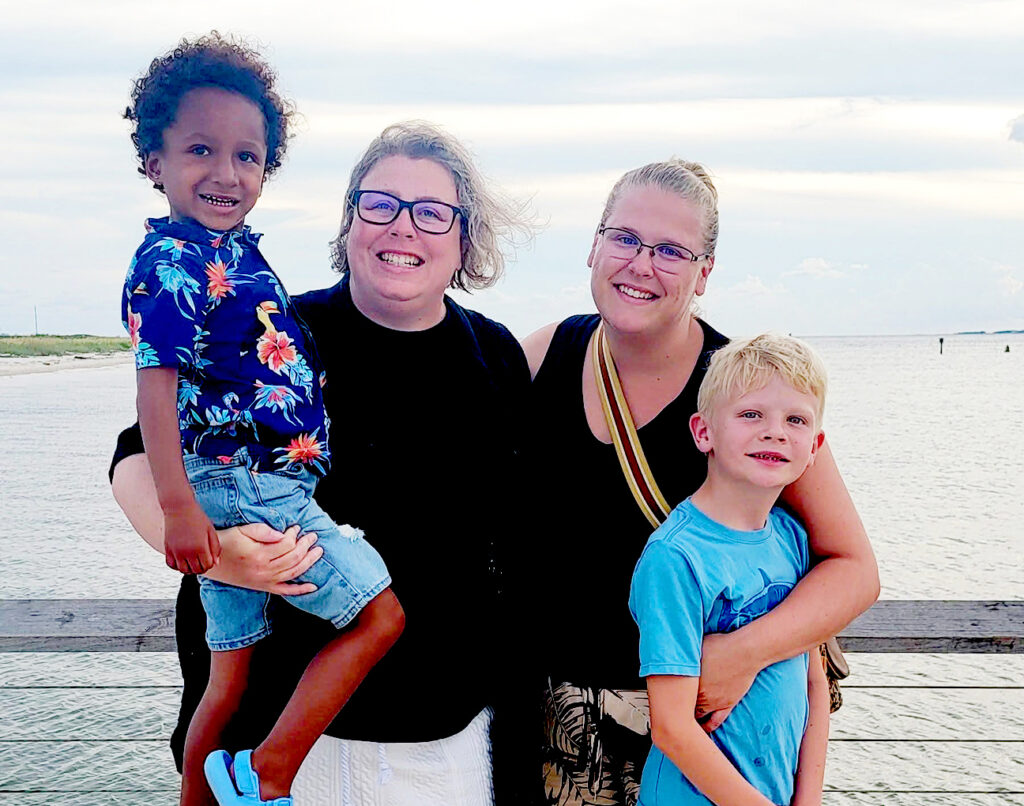
Ashley Smith, who has fostered and adopted with her wife Jenny in Indiana, called Bethany’s decision “absolutely ridiculous” and a setback to many years of progress against LGBTQ+ discrimination.
“We don’t have enough foster parents in the United States as it is, and there’s a very good vetting process in order to become a foster parent,” she said. “The fact that we would turn away able and willing individuals just because they’re LGBTQ is a major problem.”
Bethany’s recent decision was applauded by others providing faith-based child welfare services.
“This decision reflects a clear dedication to Christ-centered ministry and to serving children and families through the ultimate hope of the gospel,” stated a press release quoting Herbie Newell, president and executive director of Alabama-based Lifeline Children’s Services, which provides adoption services nationwide.
Will foster youth be affected?
Bethany’s June 10 announcement stated that the agency’s new staff and caregiver requirement will not affect the children and families they serve. The organization pledged “to serve all children and families who seek its help, regardless of their individual circumstances, beliefs, or background.”
But critics say Bethany’s new policy could harm foster youth placed in homes that do not welcome and affirm them. Multiple studies have found that roughly one in three older foster youth identify as LGBTQ+. In foster care, these young people are more likely to be repeatedly moved, placed in group homes and end up hospitalized. They also report maltreatment by foster parents at a higher rate than other foster youth, according to University of Maryland researchers.
“The fact that we would turn away able and willing individuals just because they’re LGBTQ is a major problem.”
— Ashley Smith, foster and adoptive parent
Aiyana Clark, an Indigenous former foster youth and advocate in Washington state has experienced some of this impact firsthand. In a religious Christian guardianship placement, she said she was uncomfortable as a “fem-presenting gay kid,” and was eventually kicked out.
Clark is now 25 and openly transgender and Two Spirit — a term used by Indigenous communities for people of various sexual and gender expressions.
She said she wasn’t surprised by Bethany Christian Services’ announcement “given the political climate that we’re in right now.” But from having lived through it, she said the resulting harm to foster youth is undeniable.
“I grew up wishing that I had affirming parents,” Clark said. “Maybe I would have decided to medically transition at an earlier age, maybe I would have come out at an earlier age, maybe I would have had a lot less misogyny or religious trauma that I needed to deconstruct.”
Policy shifts amid changing political landscape
State and county agencies in eight states — Georgia, California, Michigan, Maryland, Colorado, Indiana, North Carolina and Pennsylvania — contract Bethany to provide foster care and foster-to-adopt services. Last year they served roughly 5,500 foster and adoptive children and families, according to its annual report.
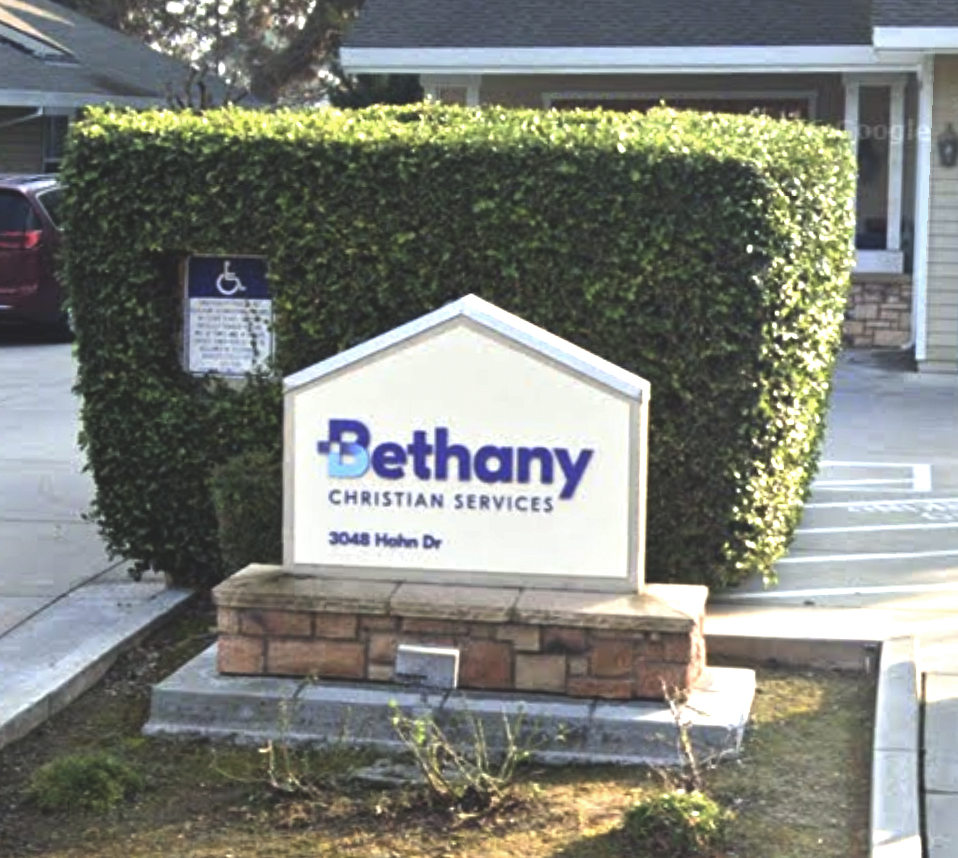
The $216 million Michigan-based agency also places immigrant and refugee children in foster homes, and provides court-ordered services aimed at keeping child welfare-involved families together.
But for most of its decades-long history, Bethany had limited its licensing of foster parents to same-sex couples. In recent years, that position came into conflict with changing paradigms in the child welfare field.
Like several child welfare agencies across the country, the city of Philadelphia’s agency required contractors to be inclusive of sex and gender identities. In 2018, it suspended Bethany’s contract for excluding LGBTQ+ prospective foster parents.
Bethany changed its local practice to align with the city contract requirements, which were later challenged successfully in the Supreme Court.
In 2019, Bethany reached a legal settlement with Michigan for refusing to serve LGBTQ+ families in that state as well.
Three years later, the agency began welcoming LGBTQ+ foster and adoptive parents nationwide.
But inside the organization, the fallout was rough, said Cheri Williams, a senior vice president at the agency from 2019 to 2023. “There were people calling Bethany, swearing at our staff, telling our staff we were all going to hell,” Williams said in an interview. “It was an incredibly challenging time.”
There were also financial consequences. The agency’s tax documents show contributions to Bethany plummeted following its turn toward inclusivity — from a peak of nearly $19 million in 2018, to as low as $5 million in 2024, though it did go up to roughly $9 million last year.
Williams has worked in the child welfare field for nearly three decades, and spent 11 years total at Bethany. During her leadership tenure, she helped spearhead the initiative to welcome LGBTQ+ families nationwide.
She said the change was made for practical reasons. Excluding otherwise qualified prospective foster or adoptive parents based on their sexual and gender orientation “hindered” the agency’s duty to house children in need of a home — a need that far outstrips the supply of licensed caregivers.
If Bethany turned away safe, prospective foster parents, children assigned to the agency were “not getting equivalent care that they would get somewhere else, which ultimately could result in a child not getting a family,” Williams said.
Williams, who said she resigned in 2023, does not begrudge Bethany its right to follow its Christian beliefs and to function as a constitutionally protected religious entity.
But she added that government agencies that contract with a faith-based foster care agency that limits who it serves should be required to also contract with an alternative, LGBTQ-friendly agency — allowing children and caregivers to choose.
“Children in foster care are already navigating a system most adults wouldn’t survive a year in: caseworkers who rotate, courts that move slowly, homes that may or may not last — the last thing any of them needs is a theology test they did not request and were never asked to agree to,” Williams said. “Bethany made its choice. I’m only asking that youth and families who didn’t choose Bethany get one, too.”
Nancy Marie Spears and Jordan Anderson contributed to this report.
July 2, 2026 correction: An earlier version of this story incorrectly stated that foster youth may have already begun leaving Bethany-licensed homes due to the new statement of faith policy. A spokesperson for Bethany stated that no children have been displaced so far due to the new policy.