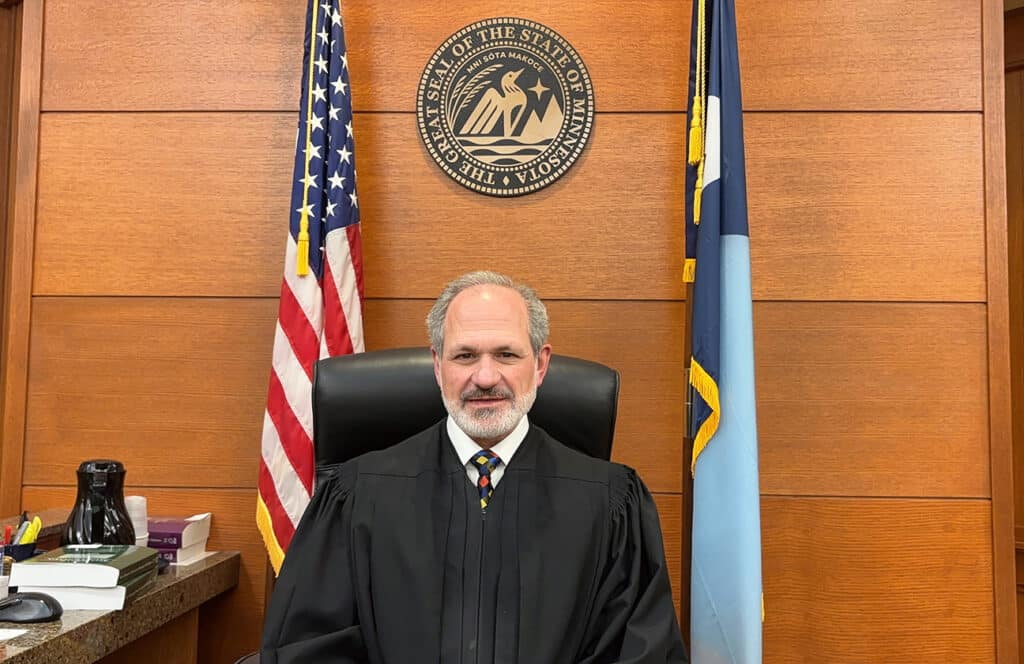
At a gathering this evening organized by the Campaign for the Fair Sentencing of Youth, people released from prison after receiving juvenile life without parole sentences will share their stories.
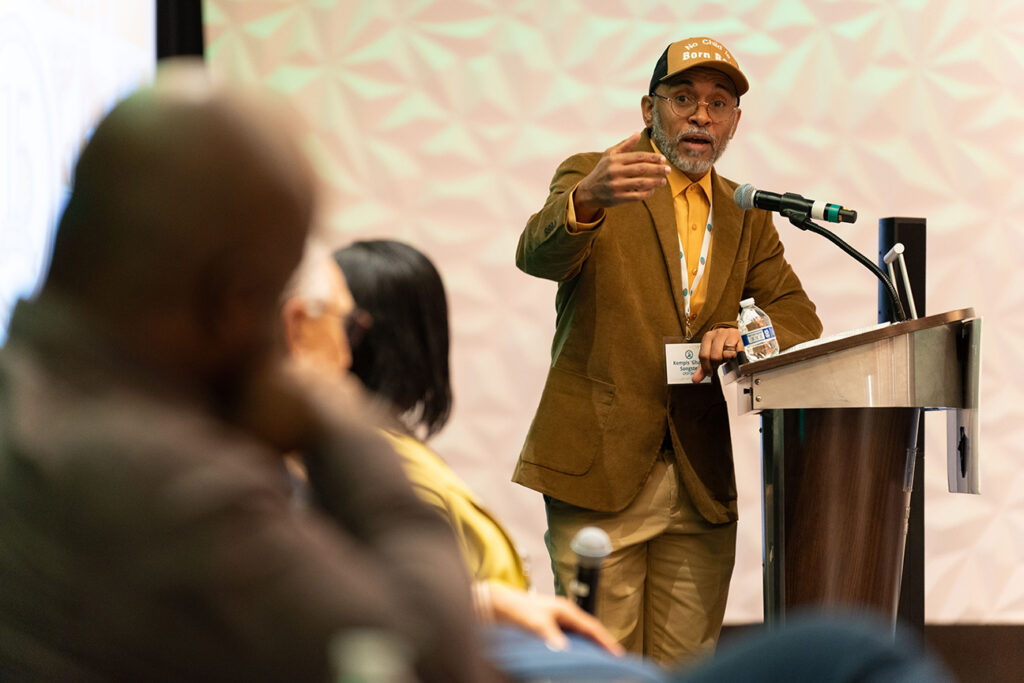
Thirty years after being sentenced to juvenile life without parole at age 15, a greying Kempis “Ghani” Songster walked out the gates of Pennsylvania’s Graterford State Prison, greeted by his mother and scores of supporters. Within weeks of his release, he joined a public interest law center, leading Philadelphia’s first restorative justice diversion program.
Angel Alejandro faced the same sentence at age 15. Today, he is co-director of development at the Campaign for the Fair Sentencing of Youth, which works to abolish juvenile life without parole sentences.
Since being freed from his sentence of life plus five years, Eddie Ellis now heads the DC-based campaign’s network of former juvenile lifers. Songster is now the group’s manager of transformative healing and restorative justice.
The three men — all freed after serving decades-long sentences — will join hundreds of other former juvenile lifers at the campaign’s Freedom Celebration tonight in Philadelphia. The event will include crime victims’ relatives and will honor the campaign’s founder, civil rights champion Bryan Stevenson.
Executive Director Xavier McElrath-Bay — sentenced to 25 years in prison at the age of 13 — will be among those highlighting what the assembled “second chancers” see as their shared responsibility. They are working to address the harm they caused as teenagers by shouldering responsibility to make their communities safer.
Back home, many of the former lifers gathering this week work as mentors, “credible messengers” and “violence interrupters.” They are among more than 1,200 juvenile lifers released across the country since a pivotal 2012 U.S. Supreme Court ruling struck down mandatory life without parole sentences for people who committed crimes as minors.
“It’s very important that we don’t just take from the community, that we also give,” Ellis said. “It’s like taking things out of the soil and not replanting. What we take we should plant.”
‘Children are different’
A dozen years ago, the nation’s highest court set a powerful new precedent in Miller v. Alabama, deeming it unconstitutional to sentence a child to mandatory life without parole.
Relying on amicus briefs from developmental psychologists and psychiatrists, justices ruled that “children are different,” and that sentencing them to life without parole without considering their individual circumstances “forswears altogether the rehabilitative ideal.” A subsequent decision in Montgomery v. Alabama made the ruling retroactive, allowing the potential for sentences in 2,600 cases to be overturned.
To date, more than 1,200 people have since been resentenced and released, according to the Campaign for the Fair Sentencing of Youth. That includes more than 450 in the state of Pennsylvania.
As is often the case with youth justice reforms, the move away from extreme sentencing has exacerbated racial disparities. The percentage of those sentenced to juvenile life without parole who are Black has increased from 61% to 77% since the Miller v. Alabama ruling gave judges greater sentencing discretion.
The gathering this week marks a pivotal time in the decades-old movement to provide young people serving lengthy sentences with second chances. The political climate for national justice reforms in the second Trump administration is far less hospitable than it was in 2012, when the Supreme Court allowed juvenile lifers a second chance.
“It’s very important that we don’t just take from the community, that we also give. It’s like taking things out of the soil and not replanting. What we take we should plant.”
— Eddie Ellis, Co-director of outreach and member services
In the current Republican-dominated Congress, legislation is pending that would repeal Washington D.C.’s Incarceration Reduction and Amendment Act. The law is one of dozens of similar laws across the country that give those who received lengthy adult sentences as young people the opportunity to have the sentences reviewed once they’ve served a certain number of years.
The effort to repeal the D.C. law is part of a larger effort by district attorneys and conservative state legislatures to roll back reforms that have limited the practice of prosecuting youth as adults. Last year, the states of Kentucky, Louisiana, Maryland, North Carolina and Vermont passed laws that require young people charged with certain felony offenses to start their cases in adult court, according to the National Council of State Legislatures.
The Campaign for the Fair Sentencing of Youth, a national nonprofit, has been pushing back.
When the repeal legislation went before the House Oversight and Government Reform Committee in mid-September, members who had been sentenced to lengthy terms in their youth and later freed imparted a consistent message to lawmakers: Far from posing a threat once released, they had devoted their lives to enhancing public safety. They’ve become justice advocates and community activists, launched small businesses, raised families and shown up as a positive presence in their communities.
A lifetime of repentance
Songster was 15 years old when he ran away from his Brooklyn home, landing in a Philadelphia drug house. When he wasn’t out selling drugs for the dealers, the older ones locked him inside.
On Sept. 19, 1987, he and a friend got into a violent fight with Anjo Pryce, another teen who had run away and was living at the house. The fight ended when Songster and his friend stabbed and strangled Pryce to death.
“I was the worst person in the room out of the three of us,” Songster said in an interview. “I was the one dealing with the highest tower of inadequacies, the one who had to prove that I wasn’t a chump and a coward — I had become someone my mother wouldn’t recognize.”
Songster was arrested quickly and charged as an adult.
The payment for Pryce’s life, a judge would later decree, would be Songster’s own. The judge sentenced the teenager to juvenile life without parole, a sentence Songster understands as “death by incarceration.”
Now 53, he describes his journey since then as one of learning, healing, repentance — and simply growing up.
It began in prison when his mother brought him a stack of books: “The Autobiography of Malcolm X,” a biography of Nelson Mandela, and the South African writer Mark Mathabane’s “Kaffir Boy.” The iconic figures and their stories “held up a mirror to me,” Songster said. “It shamed me about the wayward and selfish pursuits that I was on.”
So he spent much of his 20s reading, delving into politics, neuroscience, philosophy and spirituality. But the more he learned, the more conflicted he became.
“I had an analysis about violence and war and what’s going on in my community. But I had not come to terms with the role that I played in violence,” Songster said. “That wasn’t transformation until I was able to look at Anjo’s face in the privacy of my cell, to apologize to him from wherever he was, and take ownership of what I’d done. I left a tear in the fabric of life.”
His life since then has been an effort not to mend that tear — he understands that would be impossible — but to work to prevent further acts of violence. He began that effort while he was still in prison, mentoring fellow incarcerated men and creating the Redemption Project, which told the stories of imprisoned men and worked to promote healing between perpetrators of violence and victims’ families.
In July of 2017, Songster was resentenced to 30 years to life. By then he had already served the minimum.
New science, shifting law
The move away from sentencing teenagers to life without parole is part of a larger, decades-long shift away from charging and trying minors as adults. In 2000, roughly 250,000 children were charged as adults in the United States, the Sentencing Project reports. By 2019, that number had fallen by 80%, landing at just over 50,000 people.
To date, at least 44 states have passed laws that make it more difficult to try young people as adults or to send them to adult prisons. Seven states that once charged 16- or 17-year-olds as adults have raised the age of criminal liability to 18.
“That wasn’t transformation until I was able to look at Anjo’s face in the privacy of my cell, to apologize to him from wherever he was, and take ownership of what I’d done. I left a tear in the fabric of life.”
— Kempis “Ghani” Songster
Alejandro watched this shift take place from inside federal prison.
He was 15 years old in 1990 when he circled a New York City building on his bike, serving as a lookout while fellow gang members killed a rival inside. Charged under federal racketeering law, Alejandro was sentenced to life plus five years.
In 2009, Alejandro got a letter from Jody Kent Lavy at the Campaign for the Fair Sentencing of Youth, which was reaching out to juvenile lifers to let them know about judicial and legislative efforts that might affect their cases.
It was also building a community on the outside. The campaign flew Alejandro’s stepmother from Florida to D.C. for a convening where she was able to meet other families struggling with the same loss and pain.
“Knowing that other people besides my family were out here working to make change gave me hope,” he said.
In 2012, word of the legal changes underway reached Alejandro’s cell. An older prisoner brought him a printed document: the Supreme Court’s ruling in Miller v. Alabama, which had just been handed down. Working with a federal public defender, Alejandro appealed his sentence.
By 2014, Alejandro was re-sentenced to 25 years, leaving him with several years left to serve. As a lifer, he had previously been ineligible for higher education or other rehabilitative programming. After he was resentenced, he was able to earn two associates degrees by the time he was released.
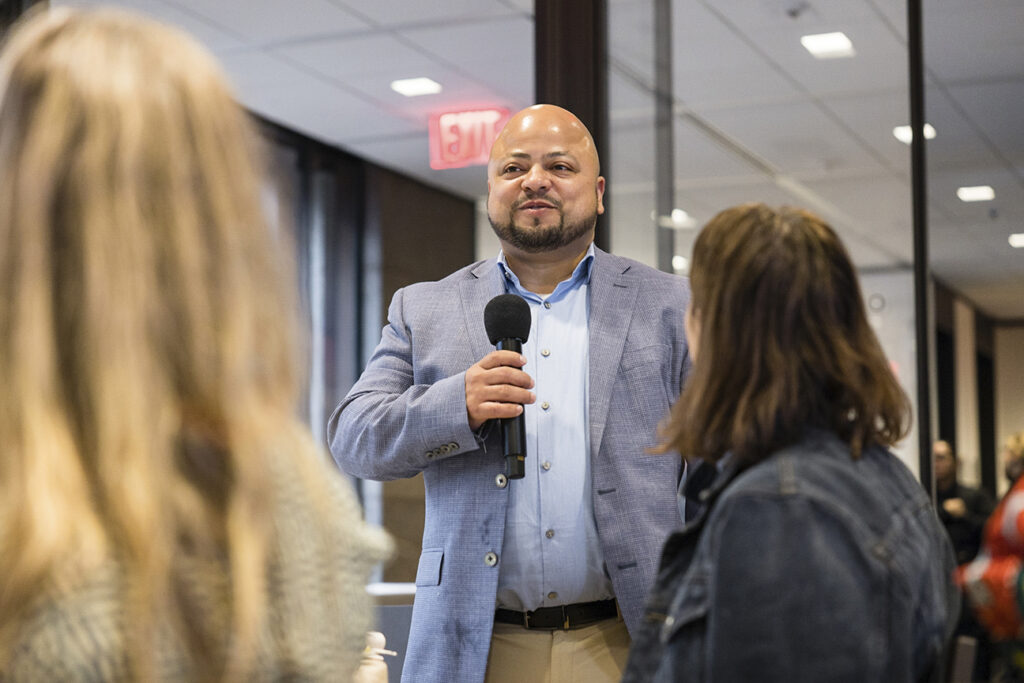
Kent Lavy reached out again to Alejandro, helping him get a job at a library and then hiring him to write grants for the campaign. The community he found there quickly became a sustaining force.
At the time, it was all new to him.
“I didn’t even know how to use a cell phone,” Alejandro said. Being able to ask others who shared his experience about how to navigate an unfamiliar world made all the difference, he said.
Healing comes about
Tonight’s event will bring together members of the campaign’s Incarcerated Children’s Advocacy Network, all of whom received long adult sentences for offenses they committed as children. It will also include members of the campaign’s National Family Network, made up of people whose loved ones are serving extreme sentences as well as those who have lost loved ones to youth violence.
Kent Lavy said the campaign has worked with survivor families since its inception, using restorative justice practices to bring them together with those who were given extreme sentences as youth. The opportunity to confront the person who harmed them can make survivors feel seen and heard in a way the traditional adversarial court process rarely achieves, she said.
As a result of their work with the campaign, a number of family members have also become advocates, working to abolish extreme sentences for youth.
“As these groups become proximate to one another, so much healing comes about,” Kent Lavy said. At the same time, these encounters “create a process in which people who have committed serious harm have a path forward to repair that harm.”