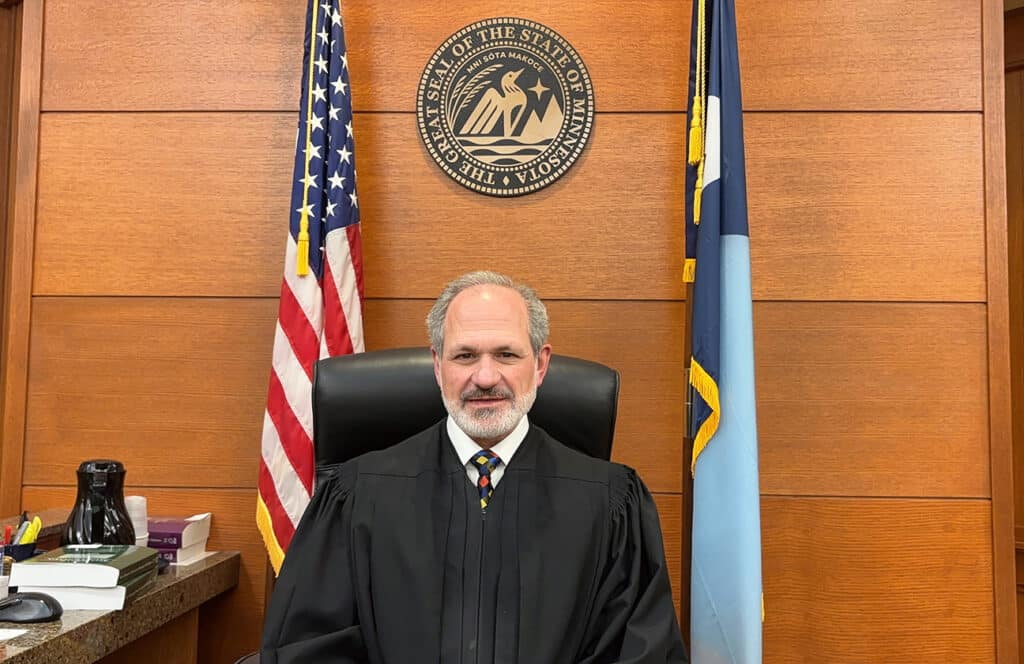
Addressing a March meeting of San Francisco’s Juvenile Probation Commission, District Attorney Brooke Jenkins explained that she had toughened her stance on charging teenagers as adults, which can lead to decades-long sentences in adult prisons.
Three years earlier, Jenkins announced that her office would only seek to do so in rare instances of “heinous crime(s) that shock the conscience of the community.” Moving forward, Jenkins told the commission, every juvenile homicide case, “heinous” or not, would be reviewed for transfer to the adult system.
“The reason that I decided that all murders would be reviewed,” Jenkins said, “is because until you have to sit across the table from a mother who’s had to bury her child, or a father who’s had to bury theirs, you don’t get to say ‘Oh well, you know what? I’m sorry, the way your child was killed just wasn’t serious enough.’ That’s not what you want to be telling a parent.”
Jenkins went on to say that she owed it to the parents of deceased children to take “a very close look” at their cases. “Because as you can imagine,” she added, “most of them come in saying ‘I want them to be charged as an adult.’”
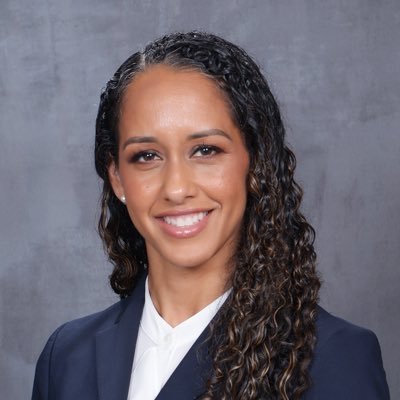
Jenkins is not alone in taking a harder line.
New district attorneys in Los Angeles and Alameda counties have also announced policies that could send more teenagers to the adult system. Both are reversing the stance of their predecessors who had instituted policies to keep teenagers in the juvenile system, which is mandated to provide rehabilitation. Several states also recently passed laws making it easier to charge young people under age 18 as adults.
Up-to-date data on how many youth are being charged as adults is not yet available. But attorneys representing youth and justice advocates are concerned that the practice, which is used far less than it was 20 years ago, is on the rise again.
The pandemic years saw temporary, localized upticks in crime, including short-term increase in youth and adult homicide rates, spurring rhetoric around “out of control” teens. Youth crime has since returned to pre-pandemic levels, but that rhetoric has been slower to fade.
“The demonization of children, and particularly children of color, is something that we’ve seen over and over again throughout U.S. history,” said Laura Cohen, director of the Criminal and Youth Justice Clinic at Rutgers University. “It truly is a pendulum. And we’re in a moment right now where — immediately on the heels of what was starting to look like true progress — the pendulum is swinging back again.”
Last year, Kentucky, Louisiana, Maryland, North Carolina and Vermont all passed laws requiring young people charged with certain felony offenses to start their cases in adult court.
In December, Los Angeles County District Attorney Nathan Hochman used his first day in office to repeal several of his predecessor George Gascón’s policies, including one that ended the practice of sending youth to the adult system — a policy DA Gascón later modified under pressure. On her first day, Alameda County District Attorney Ursula Jones Dickson rescinded her predecessor’s directive barring prosecutors from transferring children to the adult system except in “extraordinary circumstances.” Both counties declined to comment for this story.
And in Washington, D.C., then-interim U.S. Attorney Ed Martin told a neighborhood group in March that “16, 17, 18-year-olds are committing adult crimes, and they need to be held accountable as adults.”
In the future, Martin said, “We’re going to be a little bit harder on that. We’re going to charge more.”
Progress and backlash
The practice of trying children as adults gained momentum in the early 2000s, when overheated rhetoric about a looming wave of adolescent “super-predators” sent politicians scrambling for new ways to crack down. By the end of that decade, every state in the nation had passed laws sending more youth into the adult system by lowering the minimum age, adding new qualifying offenses, or handing prosecutors sole power to decide which children would be tried in adult court.
In the years that followed, youth crime dropped precipitously, exposing the talk of a youth crime wave as baseless rhetoric. Meanwhile, advances in psychology and neuroscience produced a compelling body of evidence that the human brain does not fully develop until around age 25. This makes young people more likely to act impulsively but also more amenable to rehabilitation or simply growing out of the risk-taking years.
This emerging scientific consensus on adolescent brain development informed a series of Supreme Court decisions which limited the most extreme forms of adult punishment for youth, including the death penalty and mandatory sentences of life without parole. Meanwhile, researchers found that sentencing youth to adult prison made it more likely that they would break the law again.
State courts and legislatures responded by moving away from the once-popular practice. Forty-four states and the District of Columbia passed laws that make it more difficult to try young people as adults, or to incarcerate them alongside adults. Many set minimum ages for cases to move to adult court. The result has been an 80% drop in adult transfer rates between 2000 and 2019.
State legislatures backtrack
Since the pandemic, some state legislatures have pushed back against this trend. Last year, Kentucky, Louisiana, Maryland, North Carolina and Vermont all passed laws requiring young people charged with certain felony offenses to start their cases in adult court, according to the National Council of State Legislatures.
The Louisiana law overturned “raise the age” legislation passed just five years ago, returning all 17-year-olds to the adult system. The Kentucky law — which sends anyone 15 or older who is charged with a felony involving a gun to adult court — reversed a law passed just three years earlier.
Other states have laws in the pipeline making more youth eligible for trial in adult court. In Nebraska, State Sen. John Cavanaugh has introduced a bill that would make children as young as 13 eligible for adult penalties.
Josh Rovner, director of Youth Justice at The Sentencing Project, said some states are finding innovative ways to ensure that teenagers serve adult time. He pointed to a new “blended sentencing” law in Tennessee that adds up to four years in adult prison after a juvenile sentence is served for youth convicted of particular offenses.
The notion that you can “concoct just the right list of charges that belong in adult court is in no way based in evidence,” Rovner said. “The whole point of having a juvenile justice system is to look at the kid as an individual and say, ‘What’s going on here?’”
“The demonization of children, and particularly children of color, is something that we’ve seen over and over again throughout U.S. history. It truly is a pendulum. And we’re in a moment right now where — immediately on the heels of what was starting to look like true progress — the pendulum is swinging back again.”
— Laura Cohen, Criminal and Youth Justice Clinic at Rutgers University
In Maryland, Vincent Schiraldi, who recently resigned as secretary of the Department of Juvenile Service, wrote last week in the Baltimore Sun that the state’s “draconian” transfer law, which automatically sends some youth to adult court rather than allowing a judge to weigh individual circumstances, was “foremost” among the factors that led him to step down.
“Since history doesn’t smile on people who say they were only following orders as they operationalized human rights abuses, I left,” Schiraldi wrote.
Black youth hit hardest
Black youth face harsher treatment at every stop on the youth justice circuit, from arrest through sentencing, but they are especially hard-hit by adult transfer laws. Black teens are six times as likely to be incarcerated as their “non-Hispanic white” counterparts in the juvenile system, according to the Annie E. Casey Foundation, but nine times as likely to be given an adult prison sentence, according to the Children’s Defense Fund. Data collected by the federal Office of Juvenile Justice and Delinquency Prevention show Black youth comprise less than 15% of the total youth population but 63% of those referred to adult court.
“Everything we’ve learned from the science — all of the adolescent brain development and psychosocial learning that we now have about children — goes out the window when Black children are involved, because we subconsciously can’t make those connections and see a Black child as a child,” said Kristin Henning, Blume Professor of Law at Georgetown University and author of “The Rage of Innocence: How America Criminalizes Black Youth.”
Henning is dismayed by the prospect of reverting to the practice of charging large numbers of youth as adults.
“We now know scientifically what works and what doesn’t work,” Henning said. “So for us to go backwards now is more of a sin than it was then, because we’ve been through this thing before.”