
Joining local justice leaders across the country, one Minnesota county has turned to restorative practices.
Police reports from two recent juvenile justice cases in central Minnesota would have prompted a harsher response from prosecutors in the past: Years behind bars for a young man who stole cars. Multiple charges for a 17-year-old girl who fought at her high-school campus in St. Paul.
For these young people, “the traditional ‘juvenile justice’ system hasn’t worked,” the Ramsey County Attorney’s Office now proclaims. It’s done little to deter future crimes, affected disproportionate numbers of Black, Latino and Indigenous youth, and “too often” has deepened criminality into adulthood, county prosecutors argue. So, since 2021, its juvenile prosecutors have been trying a different approach that “re-imagines” justice for young people, whose brains are still developing.
Similar restorative justice models had been growing across the U.S. — well before the recent election of President Donald Trump, who is promoting a harsh crackdown on youth accused of crimes.
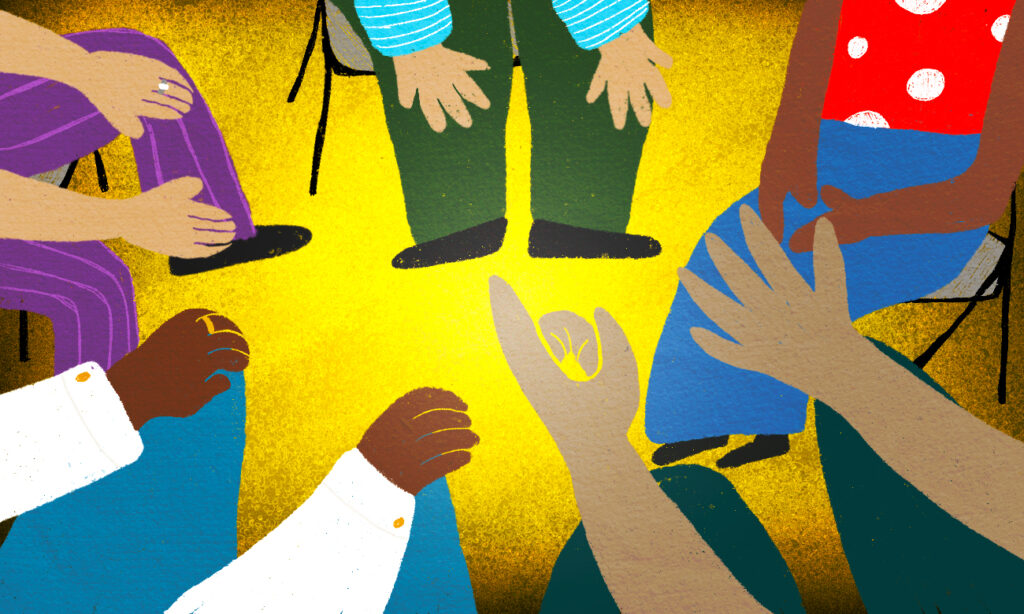
In Ramsey County, some teenagers are referred to the (Re)imagining Justice for Youth pathway through the local DA’s office. The program involves “talking circles” with parents, victims and community service providers, sometimes also working with social workers and treatment programs such as anger management courses, and confronting how others were harmed by their actions.
The DAs tasked with prosecuting the teens must follow a different approach as well.
Rather than simply relying on police reports and scoping out potential charges after youth are arrested, they have to delve into their lives and circumstances. Is this truly a criminal case, or one better suited for the child welfare system, due to abuse or neglect at home? Could local nonprofits step in to provide food, job training skills or help paying bills to prevent theft? They may also check attendance records and talk with teachers and principals to get a picture of what’s going on at school.
“The overall vision for (Re)imagining Justice for Youth is really simply, to get better outcomes for our community and for the families and youth that are coming into the system — and also for our victims,” County Attorney John Choi says in a promotional video. The result, he adds, “at the end of the day, is going to deliver a better version of community safety that we all want and we all need.”
In an interview, Choi’s Director of Strategic Initiatives, Policy, Equity and Inclusion Erica Schumacher said it’s more than just a program.
“If every adult responds restoratively, we can help youth develop empathy,” she said. “Most humans don’t want to harm other humans, if we help them understand the impacts.”
Community members said law enforcement officials were skeptical in the early stages of the program, worried that youth would not receive the full consequences they deserved. The Ramsey County Sheriff’s Office and St. Paul police declined repeated requests for comment on this story.
“We get the backstory and every single time it makes sense. That few seconds of a fight you see doesn’t tell the whole story.”
— Tamara Mattison, restorative practices trainer
But to date, nearly 1,000 young people ages 10 to 17 have participated in (Re)imagining Justice for Youth in Ramsey County. The majority of the cases referred to the program involve crimes of theft, fights or assaults.
“Law enforcement has been taught that what works is to give people consequences. The strategy previously would be to lock them up and keep them detained to prevent them from doing it again,” said Schumacher. “But we are getting better results by focusing on the underlying causes.”
In an interview, the 18-year-old boy who participated said he had been stealing cars for five years — too many to count — and had spent 11 months in juvenile detention. Earlier this year, he stole again: this time, a white Honda Pilot. He said he drove 9 miles to his high school but his mind started spinning in the parking lot.
“I was sitting in the car and thinking and thinking about everything that could go wrong,” said the teen. “Anything can happen. I can go to jail, be killed by the cops.”
And then he said he did what had once been unthinkable. He returned the car to the exact spot he had stolen it from, left the keys under the car and called the police, telling them what he had done. He asked if he could be part of the talking circles he’d heard about during his previous stint in lockup.
The county attorney’s office agreed, tapping Juliet Mitchell, a life coach and community leader, to lead discussions that involved the teen — who The Imprint is not naming to protect his privacy — and his mother.
“Trust is built into the fabric of the circle, getting to know them as a human being and creating a safe space to tell that story,” Mitchell said. “There’s always something that police didn’t see, hear or ask about.”
To have his criminal case dropped, the teen signed an accountability contract that required him to take ownership of his actions, review the consequences he could have faced had he been formally charged, and promise not to engage in the behaviors again.
And after going through the program, which averages three to four months, he graduated high school on time, landed a job at Home Depot and is now applying for trade schools, either in carpentry or HVAC work, which the program referred him to. He and a partner are expecting twins this month.
The teenager called Mitchell “a community grandmother,” and the two remain in touch.
“She treats you as one of her own. She doesn’t discriminate,” he said. “She treats me like a human being and not like a criminal like most of the people who try to help you.”
Research shows positive outcomes
Restorative justice models like Ramsey County’s have become increasingly popular across the country in recent years. The Department of Justice’s Office for Victims of Crime has even published a how-to manual for both adult and juvenile cases.
Forty-five states have enacted laws supporting the use of restorative justice or similar models, in a variety of settings, according to a 2019 analysis in the Utah Law Review. Critics note, however, that many victims decline to participate in the process and that restorative models only work if young people are truly willing to take accountability.
San Francisco launched its Make it Right program in 2013 and expanded it in 2020 to include young adults through age 24.
Researchers found that roughly 25% of youth who went through the program were arrested again within six months, compared to 43% who went through the traditional course of the justice system, according to a study by California Policy Lab based at the University of California.
Similarly, a key component of (Re)imagining Justice for Youth in Ramsey County is tracking outcomes. Researchers at the University of Minnesota have that contract.
They’ve recently reported on the Ramsey County restorative justice program’s first three years and found a sharp reduction in recidivism for participants, compared with youth who did not choose to participate and faced the more traditional route through the DA’s office. Racial disparities regarding which youth are offered — and succeed — in the program have also been reduced, the researchers’ analysis shows.
“Trust is built into the fabric of the circle, getting to know them as a human being and creating a safe space to tell that story. There’s always something that police didn’t see, hear or ask about.”
— Juliet Mitchell, community leader
Between 2021 and 2024, a greater percentage of youth were offered and agreed to take part in the program — a diversion rate that has grown from 15% to almost one quarter this past year.
The researchers used a matching algorithm across three groups of youth who participated in the restorative model between 2021 and 2024 to measure the program’s impact. They compared outcomes of participants with the outcomes for youth with similar cases that were not diverted from the traditional criminal justice system, accounting for age, gender, race and the severity of the crime.
In each year, the youth who participated in the restorative process had lower recidivism rates than the control group. Young people in the program whose first arrest or citation included an assault charge were 60% less likely to reoffend, the researchers found.
Tamara Mattison, a trainer on restorative practices for the Minnesota Department of Education, explained why the approach is effective.
“We get the backstory and every single time it makes sense,” she said. “That few seconds of a fight you see doesn’t tell the whole story.”
During one memorable circle, Dr. Mattison facilitated a meeting between a teenage boy and the woman whose car he had stolen. In emotional detail, the victim explained how his actions had harmed her, cost her money and caused her to lose work. Then she pulled out a vial of broken glass from the stolen car and on top of it, she placed healing crystals.
“She said to him, ‘This might be your beginning, but this does not have to be your ending,” Mattison recalled.
The teenager is now back in school and on the basketball team.
“We’ve never had another case involving him again,” she said.
Troubled childhood, a fight, and then a window of opportunity
Graphic video footage of a 2024 fight involving the 17-year-old girl at a St. Paul high school led to multiple charges, including disorderly conduct, offensive conduct, and obscene language.
But it doesn’t show what else was going on in her life: violent fights between her mother and stepfather, and her choice to have an abortion rather than bring a baby into such a troubled household.
“Every action doesn’t need a reaction. You can just walk away.”
— Teen who took part in Ramsey County’s restorative program
The teen, who asked not to be identified, was volunteering at a Black Student Union event when a fight broke out between several girls and their mothers, including her cousin, who she rushed to defend. In the year leading up to the fight, she said, she was constantly bullied at school and online. She said she repeatedly sought help from teachers and school officials, but they had already “taken sides.”
“It felt like they were just treating us as these threats,” she said.
But after her arrest last year, Ramsey County prosecutors offered her an out through the (Re)imagining Justice for Youth program. After completing the program, her charges were dropped, she got help re-enrolling in school after being expelled and she is now dual-enrolled in community college classes and scheduled to graduate on time.
The program taught her about anger management and that “every action doesn’t need a reaction,” she said.
“You can just walk away.”
Correction: This article originally referred to Tamara Mattison as Brenda Mattison. It also originally stated that referrals to the (Re)imagining Justice for Youth program are done “in exchange for diminished charges and a chance for a clean record”; that is not the case.