
Advocates for incarcerated youth decry Trump-driven reductions in prison rape protections as NY facility psychologist pleads guilty to sexual assault of teens in her care.
A sentencing scheduled for Sept. 10 in upstate New York will decide the fate of a prison psychologist who pleaded guilty this summer to sexual assault of a teenager in her care.
Maya Hayes, 47, faces 2 ½ years in prison, 10 years of post-release supervision and a requirement to appear on the state sex-offense registry for at least 20 years.
She’s also accused of sexual abuse by four former patients ages 15 through 18, who say she assaulted them during counseling sessions. One of the four alleged in a court filing that he suffered “severe mental anguish, shame, embarrassment, humiliation, and emotional and physical distress, indescribable conflict and confusion due to his inability to comprehend the reasons and level of depravity of the abuse inflicted upon him by Defendant Hayes.”
Prior to the plea agreement, Hayes had pleaded not guilty throughout the legal proceedings, maintaining her innocence.
Longstanding federal law is designed to ensure that incarcerated youth and adults are protected from such crimes. The 2003 Prison Rape Elimination Act, known as PREA, requires detention facilities to conduct regular audits and produce reports on how protections from rape and sexual assault are being ensured.
Those requirements haven’t changed.
But in April, the Trump administration defunded the National Prison Rape Elimination Act Resource Center, which manages audits and PREA compliance in juvenile and adult lockups. The nonprofit Impact Justice, which runs the center, lost more than $8 million. In an April letter to grantees, the center’s director informed grantees “with great sadness” that its online audit system was being shut down, and along with it, all access to its “documents and records.” That director, Dana Shoenberg, left her position three months ago and is now the Inspector General for Maryland’s Department of Juvenile Services.
One advocacy group called the shutdown a “devastating blow to the fight to stop prisoner rape.”
Since then, some of the center’s services appear to have been restored, though critical elements remain unfunded, according to juvenile justice experts, the resource center’s website and a statement from a U.S. Department of Justice spokesperson sent to The Imprint.
After initially being cut by the Trump administration, the resource center’s role in training PREA auditors has been restored, for example. But most training and technical assistance provided to prisons and jails by outside groups under contracts and agreements remains unfunded.
“juvenile facilities are as vulnerable — maybe even more vulnerable — than adult facilities in the potential for sexual assault.”
— Cindy Struckman-Johnson, University of South Dakota psychology professor
At least one key DOJ program for juvenile facilities, the Targeted Implementation Planning and Support Program, has disappeared from the PREA Resource Center’s website altogether. An archived snapshot of the webpage described it as providing grants to youth lockups to create sexually safer environments.
Asked for more details about the cuts, the DOJ spokesperson declined to answer further questions. Some local impacts have been publicly reported, however, including in South Dakota, where the second year of funding in a two-year federal PREA grant was rescinded.
Advocates for youth and prisoners’ rights say the center’s diminished capacity puts incarcerated people at greater risk, because prisons and jails across the country rely on the center for training and technical assistance to meet the federal rape-prevention mandates.
The Trump administration’s PREA-related cuts have been “fast, sudden, unexplainable and potentially catastrophic,” said University of South Dakota psychology professor Cindy Struckman-Johnson, a member of the Prison Rape Elimination Act Commission. The commission created nationwide standards implemented in 2012.
“The PREA standards create many walls of protection for your typical prisoner. And juvenile facilities are as vulnerable — maybe even more vulnerable — than adult facilities in the potential for sexual assault.”
Before PREA took effect, prisons and jails had no obligation to collect or disclose data on sexual assault and abuse, such as the charges filed against psychologist Hayes.
A January 2010 DOJ report, based on the first-ever PREA-mandated survey by the department, noted that in six juvenile facilities in five states, 30% or more of incarcerated youth reported being sexually victimized.
More than a decade of oversight seemingly undone this year
New York State’s Office of Children and Family Services did not respond to questions about whether there had been any policy changes in the aftermath of the Hayes case.
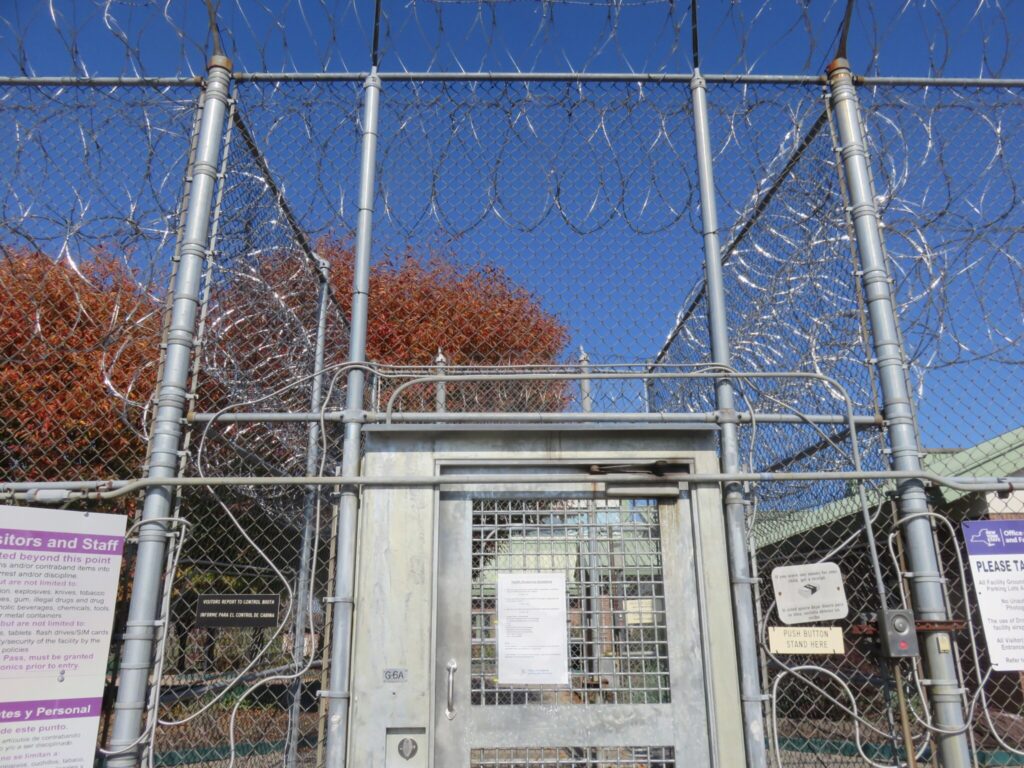
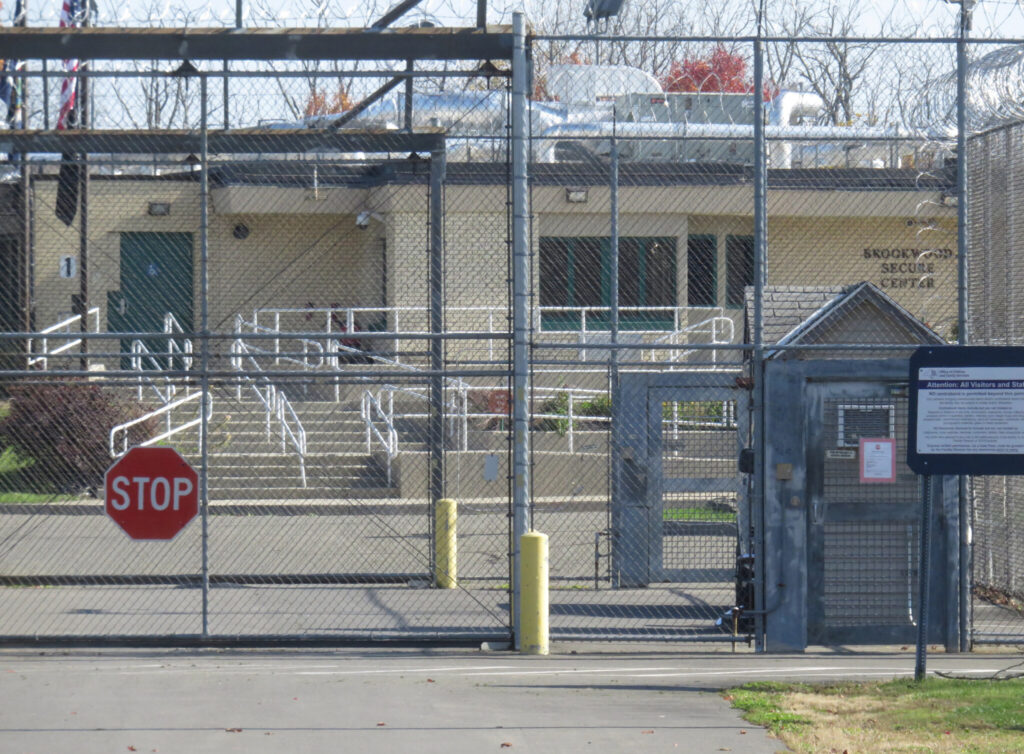
Last year, Hayes was accused in a Columbia County Superior Court of committing sex crimes at the state-run Brookwood Secure Center outside the town of Claverack, where she provided psychological care to detained youth.
The facility is one of three youth detention facilities run by the state’s Office of Children and Family Services, which hold roughly 165 young people ages 14 through 21. The detained youth have been sentenced in adult or family court of violent felonies, or have been transferred from less-restrictive settings.
In the agency’s latest survey of sexual victimization across its nine juvenile facilities in 2023, it reported 16 substantiated cases of sexual abuse out of 607 youth admitted that year. Four of the 16 involved staff abusing young people.
These youth are protected under PREA. Passed unanimously by Congress in 2003 and fully implemented in 2012, it required the creation of national standards for youth and adult prisons and lockups, regular audits of those facilities, ongoing staff training on sexual assault and more. It also required, for the first time, collection of data through regular surveys, as well as independent audits of prisons and jails every three years.
The PREA Resource Center, opened in 2010, was tasked with training the independent auditors who carry out the reviews, training facility staff and providing technical assistance to help prisons and jails comply with federal standards. The dozens of standards are complex, with different requirements depending on facility type. The 43 covering juvenile prisons, for example, mandate how facilities must determine staffing levels for proper supervision, and how sexual abuse allegations must be handled.
Former PREA commissioner Brenda Smith said that since April, according to her conversations with people who work in the field, the DOJ has “severely cut back” the center’s training and technical assistance. Despite the vital importance of in-person training and direct conversations with staff, she added, most facility assistance is now being provided solely by the center’s online resources. Those include a resource library with several hundred PREA-related publications, detailed pages about the audit process and a help desk staffed by subject-matter experts who respond to questions submitted online, according to the center’s website.
Cuts to PREA protections will be particularly harmful to incarcerated youth, Smith said, because their experiences behind bars “follow them for the rest of their lives.”
New York reported 16 substantiated cases of sexual abuse out of 607 youth admitted in 2023. Four of the 16 involved staff abusing young people.
Hayden Smith, a criminology and criminal justice professor at the University of South Carolina who studies PREA, was part of an outside training team that worked with his state’s Department of Corrections starting in 2015. The work included looking at state prison system data on the prevalence of sexual violence, prison responses, and how many cases ended up in court. Another outside group used that information to design a training for prison leaders across the state, targeting aspects of the state prison culture seen as tolerating sexual violence, Smith said.
The DOJ’s latest moves and its explanations for them suggest that the Trump administration believes “people working in the prison system know best, and we’re trimming the fat, and these external sources that we’re paying for aren’t bringing much to the table,” Smith said.
That contradicts his direct experience.
“Every bit of research that I’ve done on this topic counters that,” Smith said. “Inmates, frontline staff and administrators desperately want these organizations to come in.”
A Jan. 20 executive order by President Trump on “gender ideology extremism” takes aim at PREA’s protections for incarcerated youth.
The PREA standards require, for example, that decisions about whether transgender or intersex residents are housed in male or female facilities be based on what’s best for their health and safety. But the executive order requires that “males are not detained in women’s prisons or housed in women’s detention centers.”
The order means employees will more likely make dangerous mistakes, Hayden Smith said. If staff aren’t told to prioritize transgender youths’ safety or trained on how to do so, “these decisions can be made by one new employee who’s been there for a couple of weeks at 3 a.m. on a Tuesday morning,” he said. “And the outcomes are horrendous.”
Background on the Hayes case
The September sentencing in the Hayes case comes more than a year after she was first charged with sexually assaulting youth in her care. The initial April 2024 indictment by a Columbia County grand jury included 65 counts of sexual assault and rape of eight detained youth. Following settlement talks, Hayes pleaded guilty on June 25 to just one count of a criminal sexual act.
The two lawsuits against Hayes and her co-defendants were filed by four formerly detained people, who were between the ages of 15 and 18 when they were first locked up at Brookwood. They allege in court documents that other staff knew Hayes was abusing them but failed to act.
Hayes was first stationed in an office equipped with a surveillance camera, one lawsuit states. But she was allowed to switch to an office without a camera.
Both filings allege that the new office had a window that she was allowed to paper over, and that no one reported that violation of policy. In that office and elsewhere, she repeatedly sexually assaulted the plaintiffs during counseling sessions, they said in their filings. Three of the four said Hayes threatened that if they reported her, she’d retaliate by making negative recommendations to their parole boards that would keep them locked up longer.
Two of those suing her note the incongruity of the alleged abuse: They called it “unfathomable” that someone entrusted with their mental health care instead abused them, and how that created “cognitive dissonance.” All four said that the experiences led them to distrust health care providers, “outsiders,” and others who may profess to help them.
‘Hopefully, money will come’
The alleged abuse took place at the same time Brookwood underwent a PREA audit in May 2021, illustrating the limits of oversight even before the Trump administration scaled back protections. The resulting audit report concluded that Brookwood met or exceeded all 43 PREA standards, thanked administrators for their “hospitality, hard work, and commitment to the full implementation of PREA in their facility,” and cited numerous posters calling for “zero-tolerance,” and “an ample amount of video surveillance cameras.”
That a sexual crime took place nonetheless, according to Hayes’ guilty plea, reveals what the PREA compliance and reporting system is up against, said Hayden Smith. Audits scrutinize nuts and bolts, like whether the facility has a reporting kiosk, a robust investigation process, and a plan for transporting victims to hospitals and other services.
“Zero-tolerance,” he added, “is probably not realistic. PREA is more of a risk reduction policy.”
Now, with fewer federal resources for PREA, states could be forced to invest more of their own money for enforcement. Struckman-Johnson said states like New York could contract with experts who were previously connected to the resource center to provide prisons and jails with training and technical assistance.
“Hopefully, money will come from somewhere,” she said. “I try to be optimistic. I think that reason and compassion and common sense will prevail and that the money will be restored eventually.”