
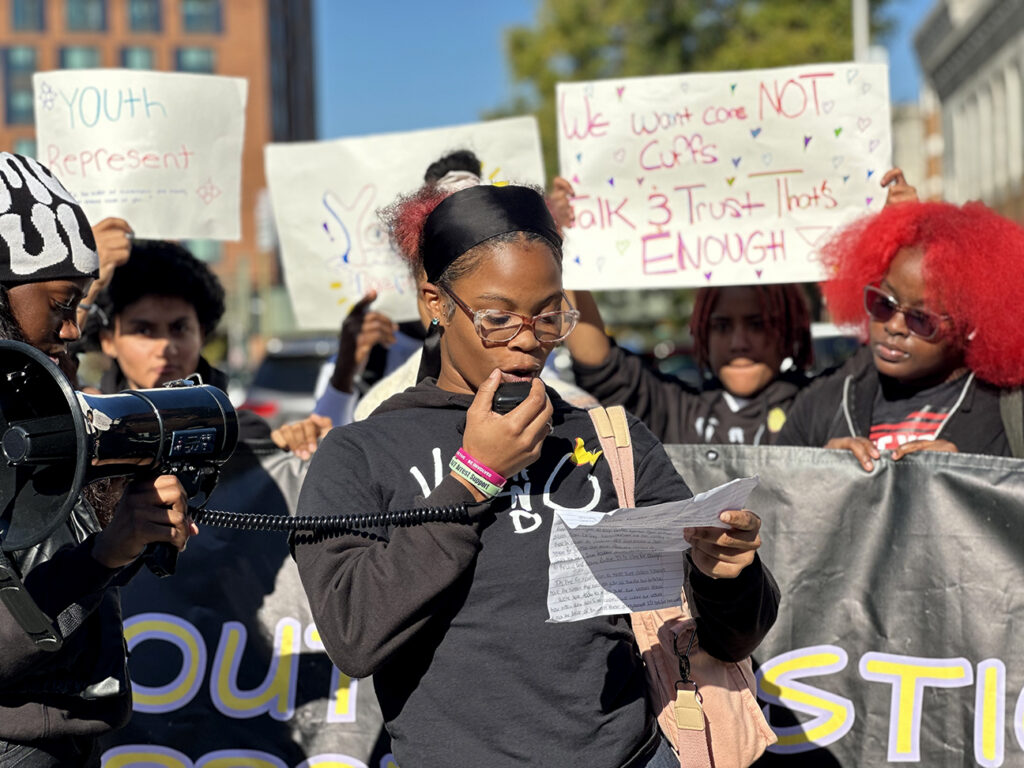
Dozens of youth justice advocates and young New Yorkers who’ve been arrested and incarcerated marched from a Bronx detention center to a local park Tuesday afternoon, calling for long-stalled statewide reforms and warning of mounting threats from the federal government.
“They’d rather lock us up than understand where the roots of the problems come from and provide alternatives for us,” activist Danyil Alvarez told the crowd at the rally that followed.
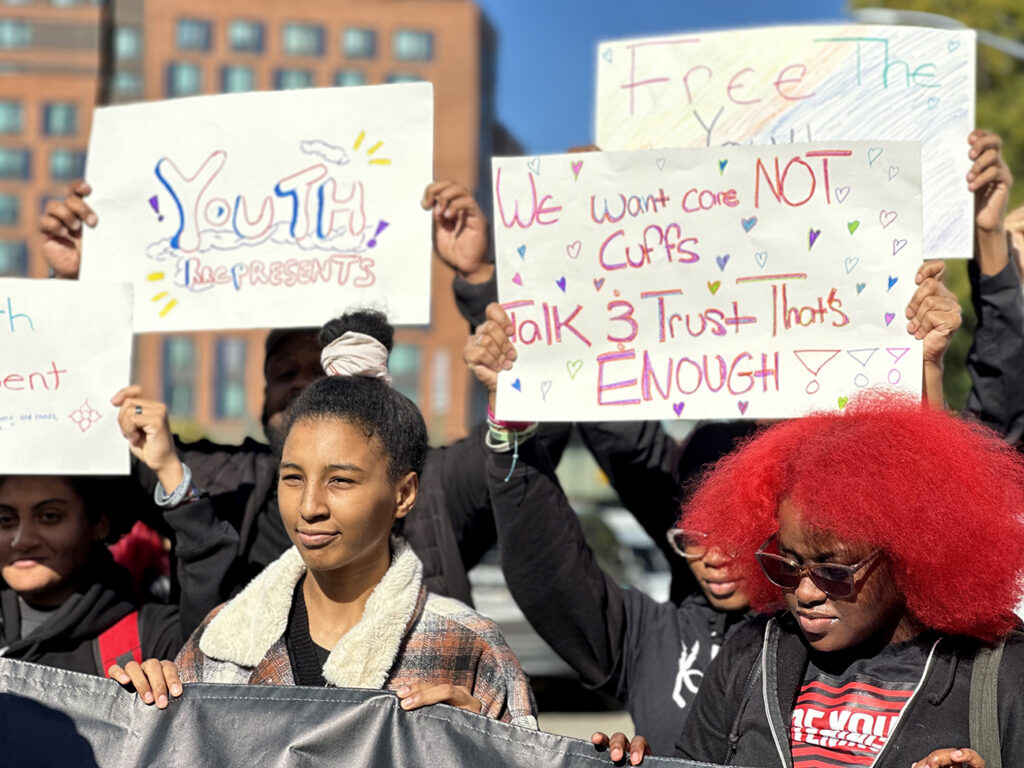
En route from the Horizon Juvenile Center to St. Mary’s Park, the roughly 50 assembled chanted and waved signs like the one reading “We want care NOT cuffs! Talk & Trust That’s ENOUGH.”
Together with a prominent state lawmaker and lawyers representing children in the child welfare and youth justice systems, the youth called for passage of three bills that have failed to garner approval in less-challenging times:
- A $50 million Youth Justice Innovation fund for community-based organizations that provide services such as behavioral health therapy, life-skills and job training to young people at risk of deeper involvement in the justice system
- The #Right2RemainSilent Act, which would ensure that arrested minors are able to consult with an attorney before waiving their Miranda rights, and that parents are notified before their children are transported to police stations
- The Youth Justice and Opportunities Act, which would expand alternatives to detention such as counseling and diversion programs for young adults through age 25, and allow records to be sealed
But passing juvenile justice reforms in the New York State Legislature will be an uphill slog for the near future, conceded Assemblymember Andrew Hevesi, who called the Trump administration’s crackdown a “nightmare.”
With federal immigration raids and troops sent to patrol cities nationwide as a backdrop, there’s growing pressure on state lawmakers to roll back the landmark 2017 Raise The Age law.
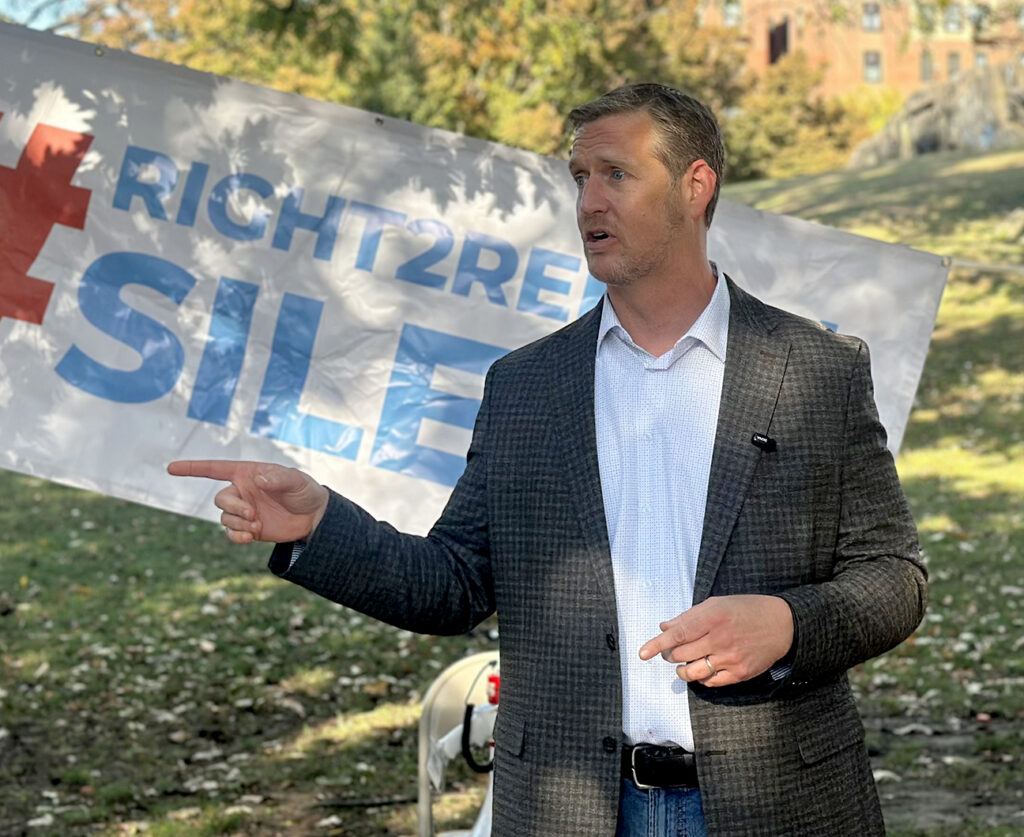
“You know how much the state has set aside for Raise The Age? Donut, zero, nothing.”
— New York Assemblymember Andrew Hevesi
The reform, which shifted most 16- and 17-year-olds accused of crimes out of the adult justice system, has been lambasted by law enforcement and Republicans in recent years who describe it as too lenient. A wider group of skeptics focus on the stalled-out funding Raise the Age promised to local governments to serve older teens accused of crimes.
“We’re very concerned about the threat of rollbacks to Raise The Age,” Legal Aid attorney Theresa Moser said in an interview. “What we’re seeing in a lot of the media is a public safety narrative that is not supported by the data, which shows a decrease in youth-related crimes over the years since Raise the Age has passed.”
She pointed to a recent paper by John Jay College of Criminal Justice Professor Jeffrey Butts that analyzed long-term crime trends in New York City and showed a significant decline in the percentage of total arrests of minors.
“Are recent crime trends for under-18 youth different from those of adults in ways that point to a failure of youth justice systems? Is it accurate to say our crime problems are increasingly due to the behavior of youth under age 18?” researchers asked. “Recent data from New York City and the nation suggest the answer to these questions would be no.’”
Butts and co-author Gina Moreno, a research analyst, went on to state: “Politicians blaming youth justice policies and practices for much of the nation’s violent crime problem may be simply mistaken, or they may be drawing on rhetoric from the 1990s.”
New York City mayoral candidates Zohran Mamdani and Andrew Cuomo both defended Raise the Age in a debate last night. But problems with implementing the reform are widely acknowledged.
Although the 2017 law allowed for an annual distribution of $250 million for revamping youth detention centers around the state and prevention efforts such as alternatives to detention and community-based programs, only scant funds have been distributed.
“You know how much the state has set aside for Raise The Age?” Hevesi asked those assembled. “Donut, zero, nothing. But we are going to be ready with our solution.”
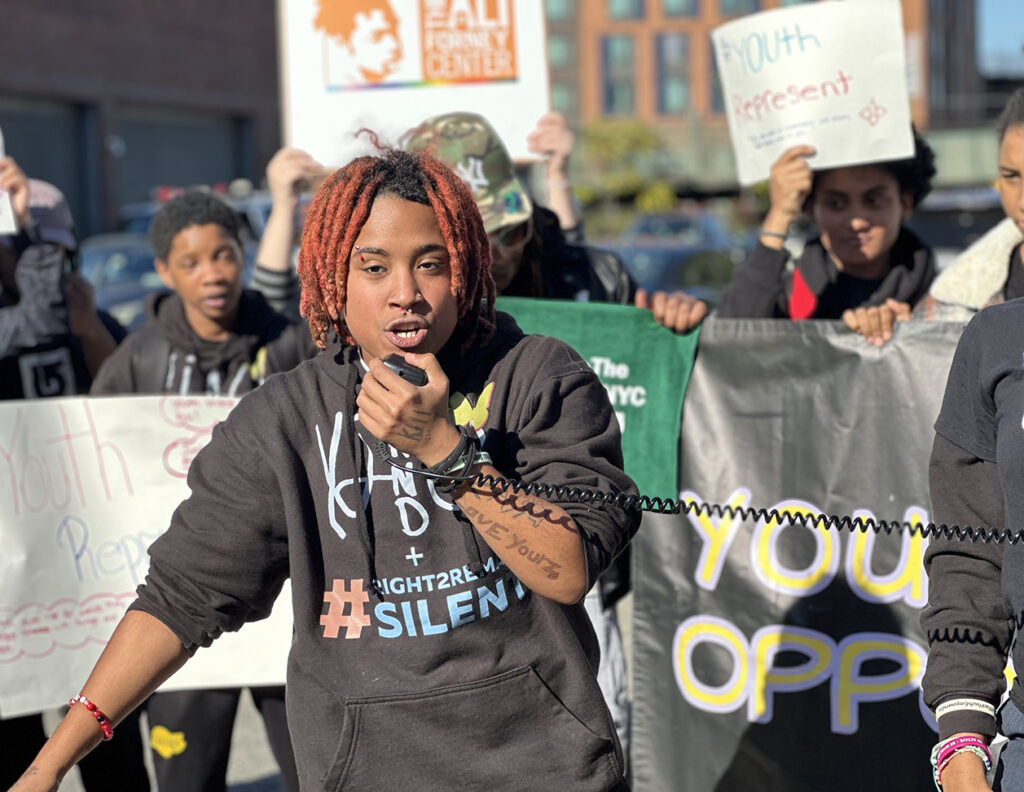
“They’d rather lock us up than understand where the roots of the problems come from and provide alternatives for us,”
— Rally speaker Danyil Alvarez
Echoing calls by rally-goers to prioritize “funding more community centers and fun healing spaces” to prevent juvenile incarceration, Hevesi pointed to the latest funding proposal for the ‘youth justice innovation fund’ he sponsored in the Assembly this year.
The bill, which passed the Senate in May but was not included in Gov. Kathy Hochul’s final budget this year, would make New York City eligible for Raise the Age funds for the first time, in addition to using a portion to directly fund local, youth-centered services statewide.
“The solution is $50 million to get money into the community groups that take care of the kids, because it’s the promise that we made in 2017 and we can’t keep failing this way,” Hevesi said amid hoots and cheers from the crowd.
Legal Aid attorney Samantha Seda spoke about the inappropriate conditions at the youth detention centers statewide. The children she represents in New York City, she said, have been forced to sleep on rat-infested cafeteria floors.
“And then they wonder why these kids act up,” Seda said. “Because you treat them like animals. There needs to be legislation, and there needs to be a lot of services provided, so that when these children come back to the community, they can learn to be productive.”
Seda said many of her recent clients, some as young as 13 or 14 years old, don’t speak English, and their parents can’t always advocate for them effectively. She emphasized the need to pass the #Right2RemainSilentAct, which would require that parents or legal guardians are notified of a child’s arrest. It would also allow children to consult with an attorney in person, by phone or video, before waiving their Miranda rights or agreeing to a police interrogation — something children don’t often understand, advocates note. Absent these protections, frightened youth could incriminate themselves or confess to crimes they did not commit. Under the proposed law, judges could suppress statements made to police before legal counsel was offered.
When Tuesday’s marchers reached St. Mary’s Park, they were surrounded by stalls where they could paint Halloween masks and take home free books.
The mood was somber in the public speeches by young people who have experienced arrest.

“I was scared. That was my first time getting arrested, they didn’t explain anything to me. They just kept me in a cold room, and then they transferred me in the middle of the night.”
— Rally speaker Angelique Williams
Police stopped Angelique Williams after a domestic violence incident with an older partner three years ago, when she was 17. In an interview, Williams said she wasn’t read her Miranda rights by the police before being questioned — an oversight that many of the young people who spoke to The Imprint said was common during their arrests. She also was not told she had the right to contact her guardian or lawyer.
Williams said that left her feeling lost and alone as she was transported to the Crossroads Juvenile Center, a detention facility far away from her Bronx neighborhood.
“I was scared,” she said. “That was my first time getting arrested, they didn’t explain anything to me. They just kept me in a cold room, and then they transferred me in the middle of the night.”
Williams, now 20, called out the city’s Administration for Children’s Services for “forcibly” removing children from their home into foster care, where “youth are more likely to experience the criminal justice system, trauma, abuse and homelessness by the time they are 17.”
“It’s a cycle of failure that must be broken,” she added. “We want our voices to reach the inside of the walls that these young people sit behind.”
She urged legislators to prioritize the Youth Justice and Opportunities Act, the third bill highlighted at the rally. If signed, it would create a “youthful offender status” for those aged 19 through 25 accused of less-serious crimes. That status would cap sentences at a maximum of four years, and allow certain cases to be dealt with in family court rather than criminal court, where young people would have greater access to detention alternatives.
Williams currently works part time as a mentor for young kids, a job she wouldn’t have been able to get if her arrest records weren’t sealed, she said. Through its record-sealing provision, the Youth Justice and Opportunities Act would give other young adults the chance to do the same.
The legislation would protect young adults “from devastating collateral consequences associated with a permanent criminal record, including deportation, eligibility for student loans, and employment and housing discrimination,” it states.
But lawmakers have struggled to garner full support for the legislation — sponsored by Sen. Zellnor Myrie and Assemblymember Latrice Walker.
Another youth advocate, Carlos Caiza, a 17-year-old from Harlem, said he was arrested last year for fighting with another minor. An officer threw him onto a trash can and searched him for guns, but Caiza was only wearing a fanny pack filled with video games. He was arrested and spent the night at the 30th precinct police station, unable to lie down and properly sleep because he was handcuffed in an awkward position, he said.
“I asked for a blanket,” Caiza said.“They were like, ‘No, this is jail. We don’t have a blanket.’” So he used his oversized T-shirt to cover his legs all night.
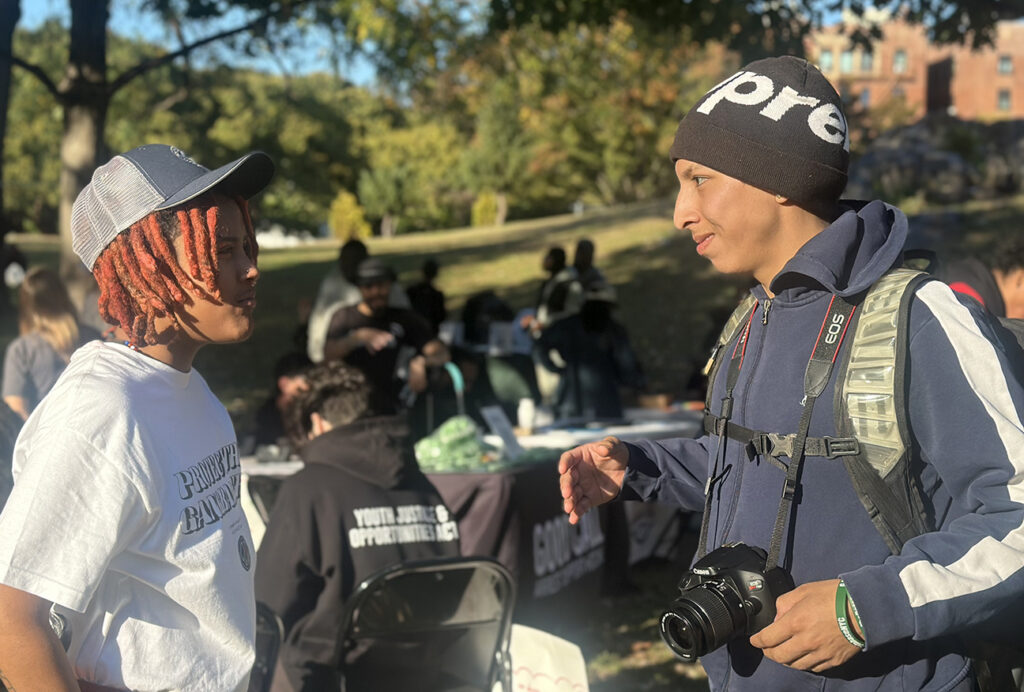
After his arrest, Caiza’s probation officer recommended he join Arches, a mentoring program for justice-involved young adults. Caiza commended his mentor at the program for “helping me change my whole life,” and encouraging him to pursue photography and get a degree in social work.
The pending New York reforms would help fund more resources like that, he added.
“Kids like me, I didn’t have nobody to speak to, and that ended in me doing this stuff I ended up doing,” Caiza said. “Now I’ve got a whole career ahead of me.”
As he spoke to a reporter Tuesday, Caiza was interrupted by cheers because he’d won a blue bicycle in the event’s raffle.
Blushing, he gave it away to a younger child.