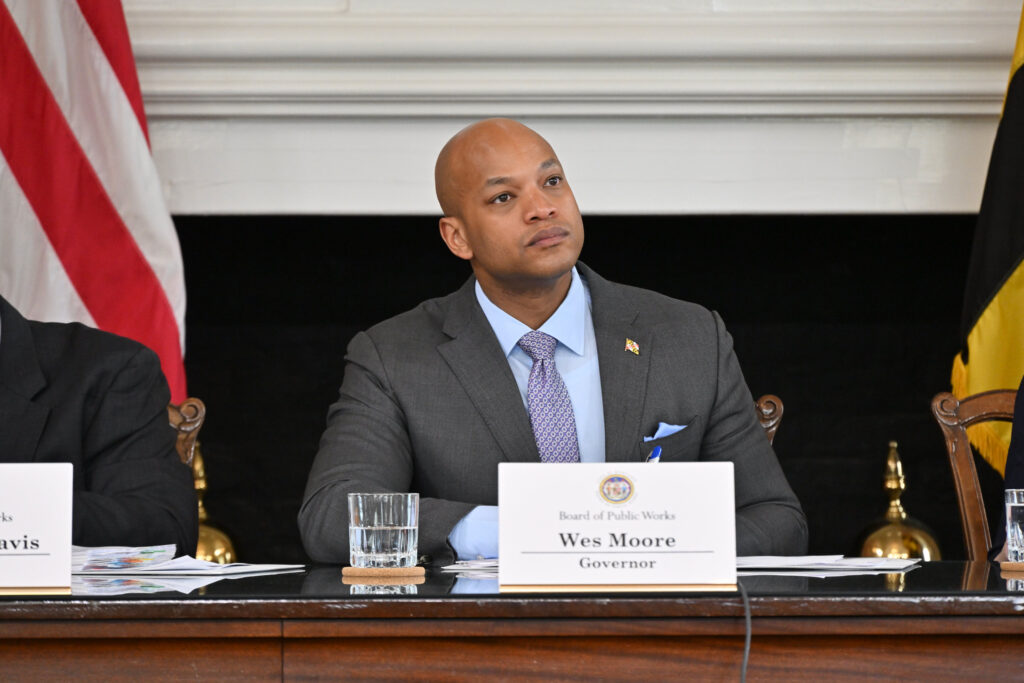
Maryland Gov. Wes Moore signed a law Tuesday to reduce the number of children being charged in adult court and held in adult prisons.
Under the newly signed Youth Charging Reform Act, most of those cases — barring the most serious — will now fall under juvenile court jurisdiction. Offenses punishable by life in prison will still result in automatic charges in adult court for those 16 and older. The juvenile court will have the discretion to transfer 15-year-olds in these cases to adult court.
The law will take effect in October 2026. Effective 2029, it will bar children from being incarcerated in adult facilities.
Supporters laud the reform as a long overdue move away from punitive responses that do more harm than good.
“This progress brings us closer to ensuring that hundreds of young people in Maryland are met with support and services in the juvenile system, rather than being routed into a process that leads to worse outcomes for both youth and public safety,” Sen. Will Smith Jr., the bill’s primary sponsor, said in a press release.
He and fellow lawmakers say they’ve worked for nearly 15 years to pass the reform law. While the likelihood of children being tried in adult court has plummeted in recent decades, Maryland has had the second-highest rate in the country of automatically charging children, according to The Sentencing Project, a nonprofit that pushes for alternatives to incarceration.
The nonprofit Human Rights for Kids estimates the change will mean 500 fewer Maryland minors tried in adult court each year. Black youth will be the group most impacted: Historically, they have comprised nearly 80% of children charged as adults in the state.
“Today, Maryland moves to recognize that safer communities are built by investing in young people — not by burdening them with lifelong consequences for adolescent errors in judgment.” Olivia Naugle, youth justice campaign strategist at The Sentencing Project said in a press release.
Prosecutors warned that the juvenile justice system is not prepared to handle “these young, violent, repeat offenders.” In a statement, Ivan Bates, president of the Maryland States Attorneys Association said the new law is a step backwards.
“The General Assembly chooses to ignore the data once again and pass legislation that will allow youth with guns — who commit robberies and violent assaults — to be given a free pass time after time when they are caught illegally carrying and/or using a firearm. Sending these violent offenders back to the juvenile system and giving them a timeout is not the answer to such egregiously violent crimes.”
Under current law, any teen 14 or older is charged in adult court for a crime punishable by life in prison. Minors 16 years or older are also automatically charged in adult court for an array of offenses — ranging from traffic and boating violations to firearms-related crimes.
The new Maryland law also runs counter to the Trump administration’s ongoing attempts to roll back youth justice reforms in Washington, D.C., where proposed legislation would allow teens as young as 14 to be tried as adults.
Still, advocates say they will continue to push for further reform until no child in Maryland is automatically routed to adult court.
“While this progress is meaningful,” Naugle said, “it is not the finish line.”