New York lawmakers have passed a bill that would end a common practice widely despised among foster youth: moving between homes with their possessions dumped in a garbage bag.
The bill, sponsored by Assemblymember Andrew Hevesi and Sen. Jabari Brisport, was unanimously approved Thursday by both houses of the New York State Legislature. It directs the Office of Children and Family Services to fund and provide proper luggage to the roughly 13,000 foster youth in the state’s care, and submit an annual report to the governor to track progress.
“Youth in foster care deserve to be treated with dignity and respect, not made to transfer all of their belongings in trash bags,” Hevesi said in a statement emailed to The Imprint. “I look forward to Governor Hochul signing this bill into law.”
If signed this year, New York would become the fourth state in the country to end such use of trash bags — joining Texas, Maryland and Oregon.
Children in foster care often move between multiple homes while under the government’s care. In New York, that amounts to three different placements on average, according to the bill’s text.
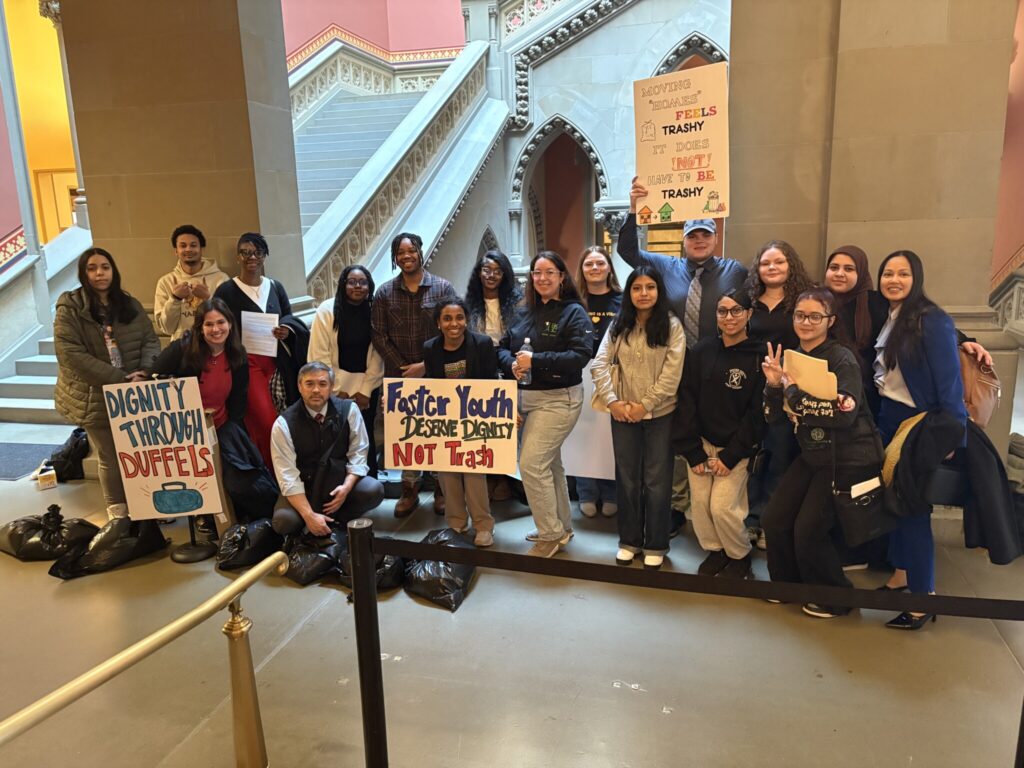
Former foster youth who describe the humiliation of using garbage bags during such moves have spent months calling attention to the problem, through advocacy campaigns and public demonstrations.
They were left frustrated earlier this year, when lawmakers excluded from the state budget the $200,000 laid out in the legislation that’s needed to supply duffel bags and suitcases to all foster youth in the state.
At a rally in March soon after, dozens of supporters gathered at the steps of the Capitol to push back against the move, including senators and assemblymembers who carried black garbage bags as a show of support.
“No more garbage bags!” shouted one young advocate, Anthony Turner, who spoke to the crowd from personal experience moving through the foster care system. “It felt like such a dehumanizing experience, feeling judged when people looked at me as I shifted from one home to another.”
New York’s Office of Children and Family Services has tried to address the problem in the past through its My Bag initiative that launched in 2021, distributing duffel bags to local social service agencies.
But advocates say the program falls far short of the need for the state’s 13,000 foster youth, who experience roughly 23,000 transitions each year. The state agency gave out 3,560 bags in 2023, the latest state figure publicly available. According to numbers shared with The Imprint by advocate Sofie Fashana, even fewer were allocated in 2024 — roughly 2,700 bags — and none were given to New York City’s roughly 6,500 foster youth.
Fashana has led a national campaign to address the problem, drawing on her own experience. She spearheaded a bill similar to New York’s that passed in her home state of Oregon in 2023.
Since then, Fashana has worked through the Next100 think tank to broaden her campaign. In New York, she has organized and rallied alongside other foster youth; met with lawmakers and child welfare officials in Albany; helped craft legislation and promoted the cause through social media.
In a recent interview, Fashana said she felt surprised and elated about the New York bill’s progress, and remains hopeful about its success. If the bill is signed into law, “no child would have to go through this again,” Fashana said. “We’re killing a generational trauma that many young people have experienced, so that is the biggest win.”
Hochul has 30 days to sign or veto the legislation, if it is delivered to the governor’s desk after the New York legislative session ends this month.