
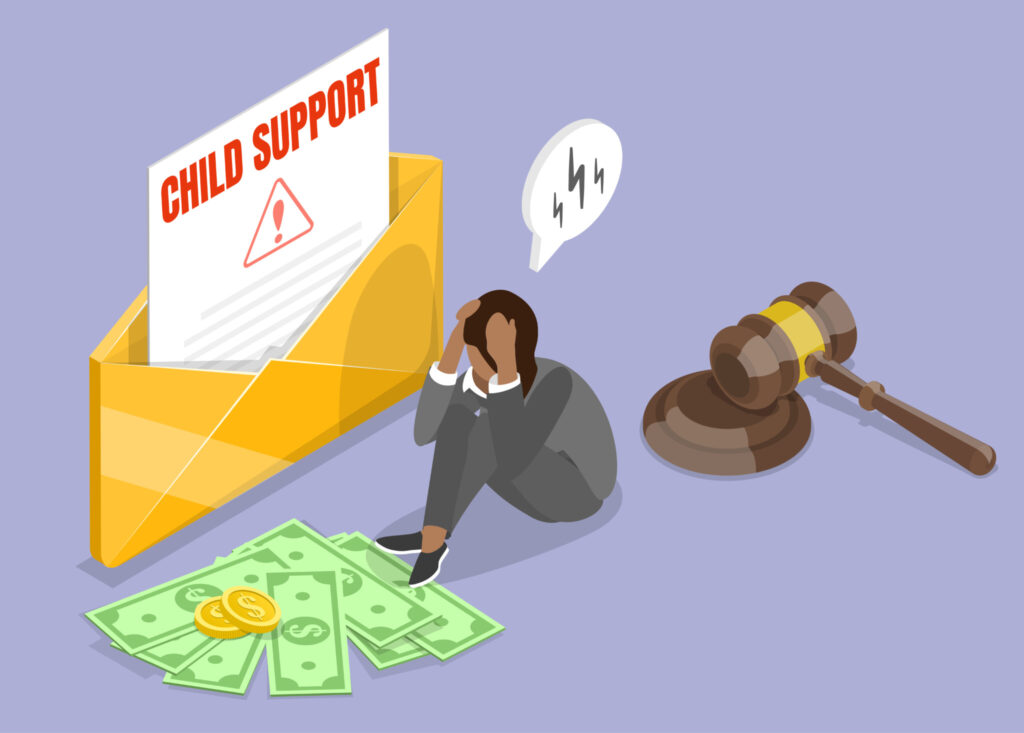
Across the country, impoverished parents whose kids are removed from their homes following allegations of abuse and neglect are later stuck with the bill for foster care — a practice critics say makes it harder for families to reunify.
A bill now before the New York Legislature aims to reduce the number of low-income families saddled with such debt, mirroring similar reforms nationwide.
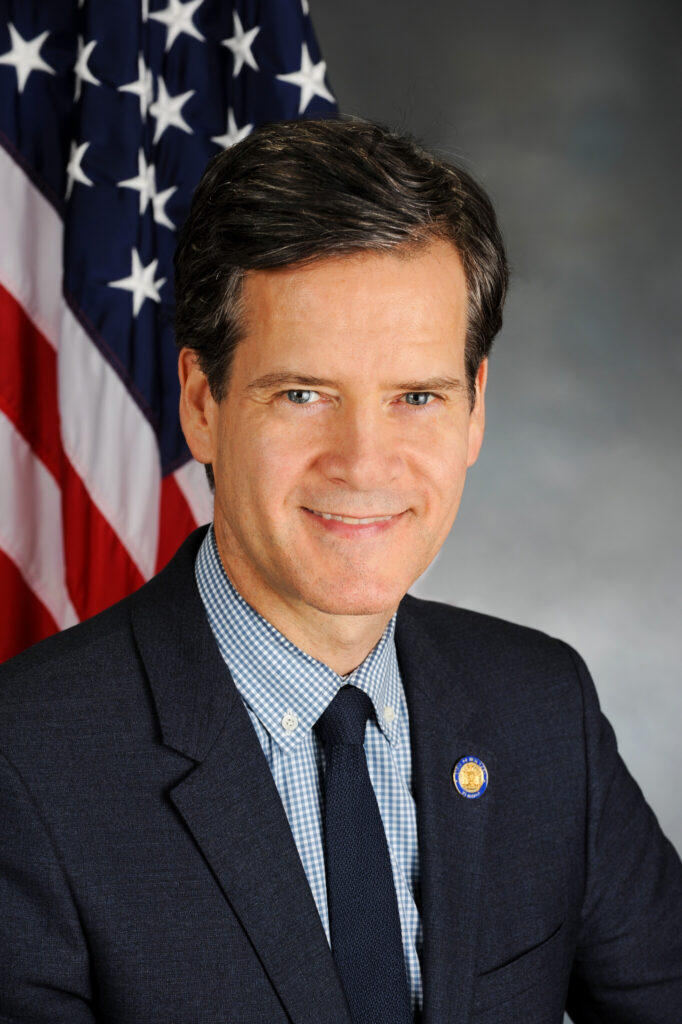
“Every year, thousands of parents whose children have been involuntarily removed to foster care are required to contribute to the cost of their child’s stay in the foster system,” Sen. Brad Hoylman-Sigal stated in an email to The Imprint. “Not only does this create a financial burden for thousands of families, it actually extends the amount of time parents and children are apart, as poverty-related conditions are among the greatest contributors to the child welfare system.”
Under Senate Bill 7054, which is sponsored by Ron Kim in the Assembly, collecting child support from parents with kids in foster care would be far less frequent. Lawmakers Kim and Hoylman-Sigal said they introduced the bill after hearing concerns from social workers and family law attorneys and reviewing research that shows tracking down child support payments from struggling parents costs taxpayers more than is ultimately retrieved.
Meanwhile, the children pay the biggest price. When parents who are required to complete an array of court-ordered services have the added burden of monthly debt, it can deter their ability to meet strict child welfare timelines.
“Research shows that for every $100 child welfare-involved parents pay towards foster care costs, their child’s duration in care lengthens 6.6 months,” Hoylman-Sigal stated. “These effects are especially pronounced for Black families, who are dramatically over-represented in New York’s child welfare system.”
How the law would change in New York
The proposed legislation revises current law so that the state’s default position in child welfare cases is to not collect child support. “New York State should focus on reuniting families,” Hoylman-Sigal said, “not allowing financial burdens to keep children from their parents.”

At present “foster care maintenance” payments cannot be imposed in New York if they “adversely affect the health, safety or welfare of the child on whose behalf such payments are to be made,” or other family members. Payments also cannot be imposed if they “adversely affect the length of the child’s placement or impair the ability of the child to return home when discharged from foster care.”
But Hoylman-Sigal and Kim want restrictions further tightened, unless the child “was subjected to aggravated circumstances.” Those include cases involving severe abuse or neglect, abandonment or those involving parents who made no effort to reunify.
According to New York’s Office of Temporary and Disability Assistance, roughly 4,000 of the 614,813 open child support cases in September involved parents with kids formerly or currently in foster care. The payments are used to cover the county cost of caring for children in out-of-home placements, although some of the payments go to parents who have reunified.
Federal data showed that New York collected about $2.3 million from parents in 2022.
Under the proposed legislation, local social service agencies would not send as many cases to the Office of Child Support Enforcement for collections, saving money, time and resources for the courts and the government agencies. These collection efforts, costly to taxpayers, can amount to child support payments as low as $25 a month.
In an email, Assemblymember Kim underscored that poverty is the biggest “risk factor” for involvement with the foster care system. Yet, “instead of getting to the root causes of why we have so many children with unmet needs,” he said, “our child welfare system punishes the people who are most disadvantaged. We need a more supportive approach.”
Kim said his legislation would “help keep families intact,” and alleviate the administrative burden of tracking down child support payments from people who have difficulty paying.
If signed into law, the bill would take effect immediately, and the state would have to stop imposing new demands for child support. It remains unclear whether ongoing cases would be halted.
The bill originated with New York University Law student Mary McNicholas who was working with Kim’s office when she learned of National Public Radio’s “The Hidden Bill for Foster Care” investigation. The reporting revealed that in at least 12 states outside of New York, a parent’s failure to pay child support for children in foster care could be used against them in the court’s decision to terminate parental rights.
“The only reason that this policy exists in this form in New York state is that in the 1980s the federal legislature said that states had to do it this way,” McNicholas said in an interview. “But we know that this policy is incredibly harmful, it’s financially wasteful, and works against the interests of kids and parents in our child welfare system.”
A ‘less intrusive’ approach
States looking to revise their laws are responding in part to a 2022 letter sent by the federal Administration for Children and Families which stated that biological and non-custodial parents should be billed for foster care “only in very rare circumstances” and only when the payments don’t delay reunification.
The approach allowed for current practice to continue in “appropriate cases,” but called on state agencies to be “less intrusive in the lives of the families we serve.” Parents in the child welfare system, the letter explained, “have already been whipsawed by economic insecurity, family instability and separation.”
In much of New York state, one child can cost a parent 17% of their income, but adjustments can be made to the final amount paid based on the judge’s discretion. Low-income parents who make less than $15,060 pay no more than $25 per month, with a $500 cap on arrears.
But arrears add up, accruing 9% interest. Wages and tax refunds can be garnished, driver’s licenses revoked and even jail time threatened.
New York City does not bill parents in this way, having ended the practice.
“I’ve known of people whose kids were in care 30 years ago, and they’re still making a $50 monthly payment”
— UC Berkeley social welfare professor Jill Duerr Berrick
Robert Turner, lead attorney in the Family Defense Unit for the Monroe County Public Defender’s Office, is among the critics of the practice, which he says makes it harder for parents “to stay on their feet when the children are returned home.” Arrears can easily accrue, making the problem even more insurmountable, he added.
“If the child support petition gets filed six months after the removal, and the children are not on their way home yet, then it may not get resolved for two or three court appearances — which can be three months later,” Turner said. “And then support is owed from the filing date, so the parent already has arrears that they’re going to have to pay.”

University of California, Berkeley social welfare professor Jill Duerr Berrick has long been studying the practice — pointing out its harmful effects — and tracking reforms nationwide.
“I’ve known of people whose kids were in care 30 years ago, and they’re still making a $50 monthly payment,” Berrick said. “Once a parent has been required to make a payment, states are extremely aggressive in trying to get parents to pay.”
According to her research, California, Washington, Colorado, Montana, Michigan, North Dakota and Oregon have passed laws or enacted administrative orders to minimize billing parents with children in foster care. Four states and the city of Philadelphia have forgiven payments that were in arrears.
Last year, California’s Child Support Services forgave $400 million in debt, citing both the cost of collections and the harmful impact on vulnerable families. The move freed tens of thousands of state residents from debt accrued over the past two decades.
A 2016 study by scholars at the University of Wisconsin-Madison’s Institute for Research on Poverty found that ordering mothers in that state to pay for foster care delayed reunification. Similar analyses in Orange County, California and Washington showed that the states collected an estimated 41 cents and 39 cents, respectively, for every dollar spent trying to collect child support payments from parents.
Judith Gerber, chief attorney of the Attorneys for Children Unit at the Legal Aid Bureau of Buffalo, said the issue was crystalized for her when the local Department of Social Services sought child support payments from a 17-year old client — a foster youth who had two children of her own placed in the child welfare system. The department “was responsible for the care and support of this teenage mother,” Gerber said, yet asked her to pay money into county coffers for the care of her children.
With Gerber’s intervention, social services agreed not to seek payments from her client. But she learned her predicament is not uncommon.
“The broader concern is that parents of children in foster care face tight legal timelines within which to reunite with their children, and many struggle to obtain affordable housing, income, food, clothing and other essentials,” Gerber said. “The additional burden of a child support obligation can significantly derail these efforts. Each additional day a child remains in foster care, the greater the risk the child will not return home at all — with profound consequences for children, families and communities.”