In a far-reaching decision, a state appellate court has ordered a stop to New York City’s child welfare agency practices that subject domestic violence victims to caseworker supervision when the only accusation against them is that they have an abusive partner.
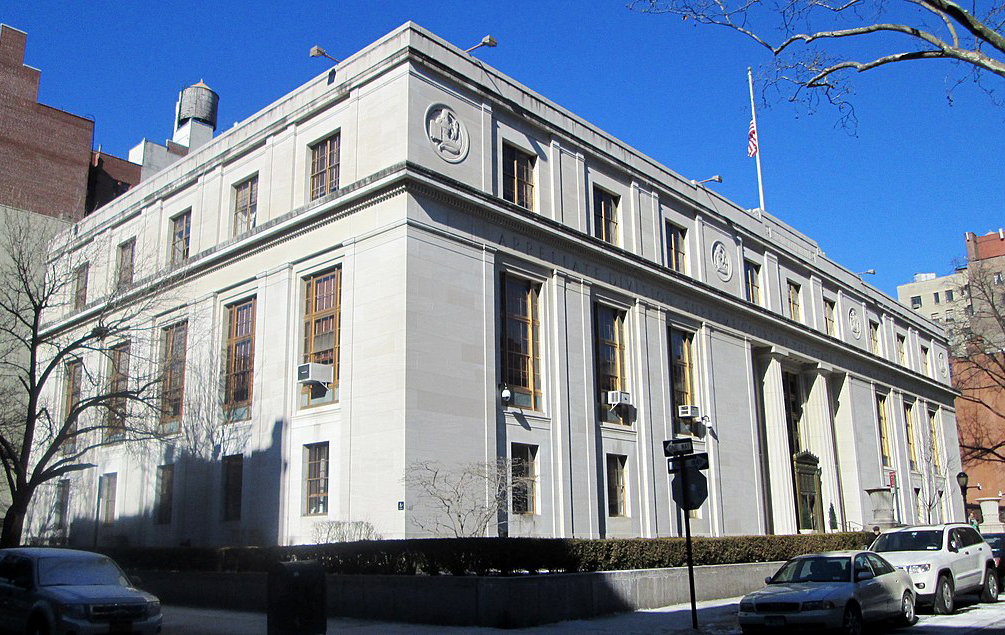
The Wednesday ruling by a four-judge panel of the State Supreme Court’s appellate division in Brooklyn will impact rulings in family court statewide, according to legal experts.
National and local advocates hailed the landmark decision that challenged the actions of the city’s Administration for Children’s Services (ACS). The Family Justice Law Center stated in a press release: “This illegal practice ends today.”
The lawsuit, filed by the law center on behalf of a Brooklyn mother identified as Ms. W. by her attorney, included amicus briefs of support from 18 groups across the political spectrum, including the American Civil Liberties Union, the conservative Americans for Prosperity Foundation and Lawyers Committee Against Domestic Violence.
“Because of Ms. W.’s bravery and determination, today’s decision transforms the way ACS surveils thousands of families every year,” stated David Shalleck-Klein, co-counsel and executive director of the Family Justice Law Center, which represented W. “ACS’s widespread practice was paternalistic, patronizing, and patently illegal.”
A spokesperson for the Administration for Children’s Services said the city agency is reviewing the appellate court’s decision with its law department. Unless the city decides to appeal, it will be binding law for family courts across the state, legal experts said.
The case under review represents a common action taken by the child welfare agency after a report of domestic violence is called into the Statewide Central Register of Child Abuse and Maltreatment. CPS workers request courts to grant them continued access to the non-offending parent — in order to collect information and make assessments that go into government records. Although not a formal investigation, lawyers say the emotional impact on families is harmful.
In W.’s case, the appeals court ruled, “the Family Court improperly placed the mother under the supervision of ACS and the court, and directed her to cooperate with ACS in certain respects.”
According to court documents filed in 2023, W. was slapped, hit and had her hair ripped out by the father of her then-1-year-old daughter. Child welfare investigators designated her as the “non-respondent” parent — meaning she wasn’t suspected of abusing her child — and the father was accused in family court of child maltreatment. The judge confirmed that W. was “not accused of anything” and was “able to care” for her daughter.
Despite this, W. had to agree to supervision by caseworkers in order to retain custody of her child, which involved numerous “announced and unannounced” visits. Investigators visited her home at least 10 times in fewer than five months, her lawyer said. They frequently searched her daughter’s small body for signs of maltreatment, which W. described as “traumatic.”
“As a survivor of domestic violence, I thought I would be supported and heard. Instead, the family court subjected me and my baby to months of traumatic ACS surveillance,” W. said in a press release praising the decision. “I’m so glad that other families won’t have to go through what my family did.”
On Wednesday, the appeals court unanimously ruled that nothing in the Family Court Act — the state law governing child welfare matters — gave judges permission to order supervision in such cases.
The panel of four appellate judges also noted the stark racial disparity at every stage of child welfare investigations. In New York City, although Black people make up less than one fourth of the population, they comprise 38% percent of child maltreatment reports and 52% of children removed from their home without a court order.
“Considering the intrusive and potentially traumatic impact of ACS involvement in a family’s life, the disproportionate involvement of Black and Hispanic children in the child welfare system cannot be ignored,” the court document stated.
“As a survivor of domestic violence, I thought I would be supported and heard. Instead, the family court subjected me and my baby to months of traumatic A.C.S. surveillance. I’m so glad that other families won’t have to go through what my family did.”
— W., Brooklyn abuse survivor improperly placed under child welfare supervision
Chris Gottlieb, Director of the NYU Law Family Defense Clinic, which also represented W. in the appellate court case, emphasized the judges’ observation following the legal decision.
“We do not allow routine violations of the constitutional rights of families who live in more privileged neighborhoods, and we should not have a different system of justice for the low-income families of color who are policed by ACS,” Gottlieb stated in a press release.
Child welfare agencies and courts have cited concerns that victimized parents could maintain contact with abusive partners and possibly put children at risk for exposure to violence as justification for CPS supervision.
In W.’s original family court case, the judge, Robert Hettleman, stated, “Sometimes people follow [orders of protection] very carefully but sometimes people, including the victims, sometimes change their mind and then the orders get violated.” When W. was reminded that she should not speak with the father, court documents indicate that she replied: “I definitely will not.”
Her attorney, Shalleck-Klein, said in an earlier interview with The Imprint that assuming parents will welcome abusers back into their homes relies on unfair “generalizations and stereotypes about survivors of domestic violence that they can’t protect themselves.”
He said W’s case demonstrates what advocates called the “double-abuse” of such non-respondent parents — first by their abusive partners, and then the fear of losing custody of their children.
W. echoed this sentiment.
“Mothers who have experienced domestic violence should be able to get help instead of feeling ashamed or made to feel like we did something wrong,” she previously said in an email.