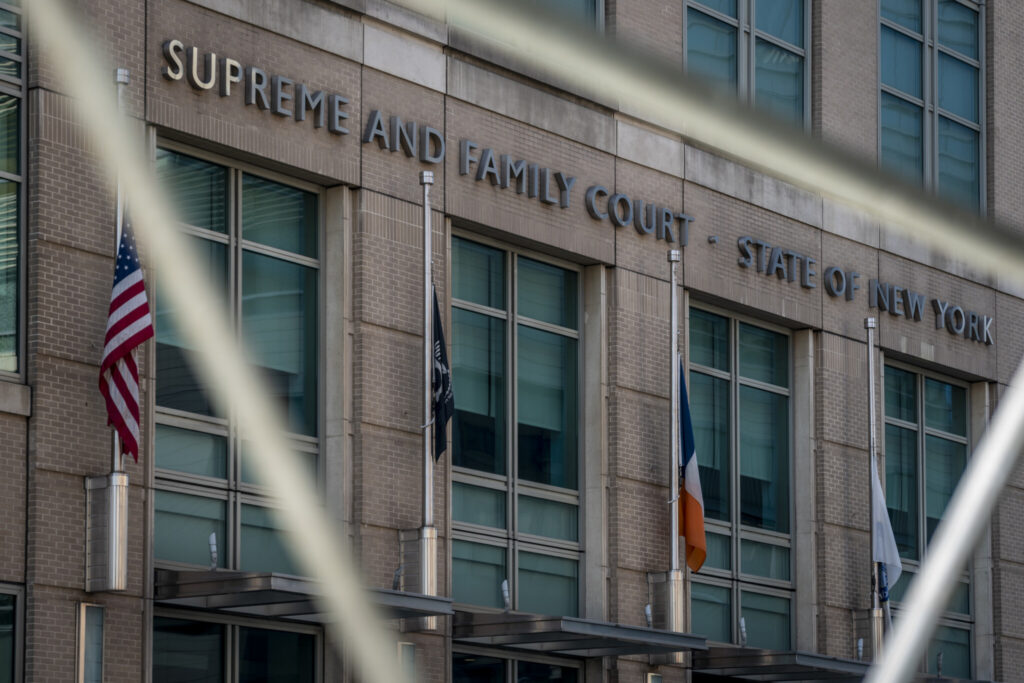
A rare legal challenge now before a New York appeals court takes on an all-too-common reason parents lose their children to foster care: they failed to protect them from an abusive spouse’s acts of domestic violence. Although they are not alleged to have abused or neglected their children themselves, these “non-respondent” parents can become entangled with Child Protective Services.
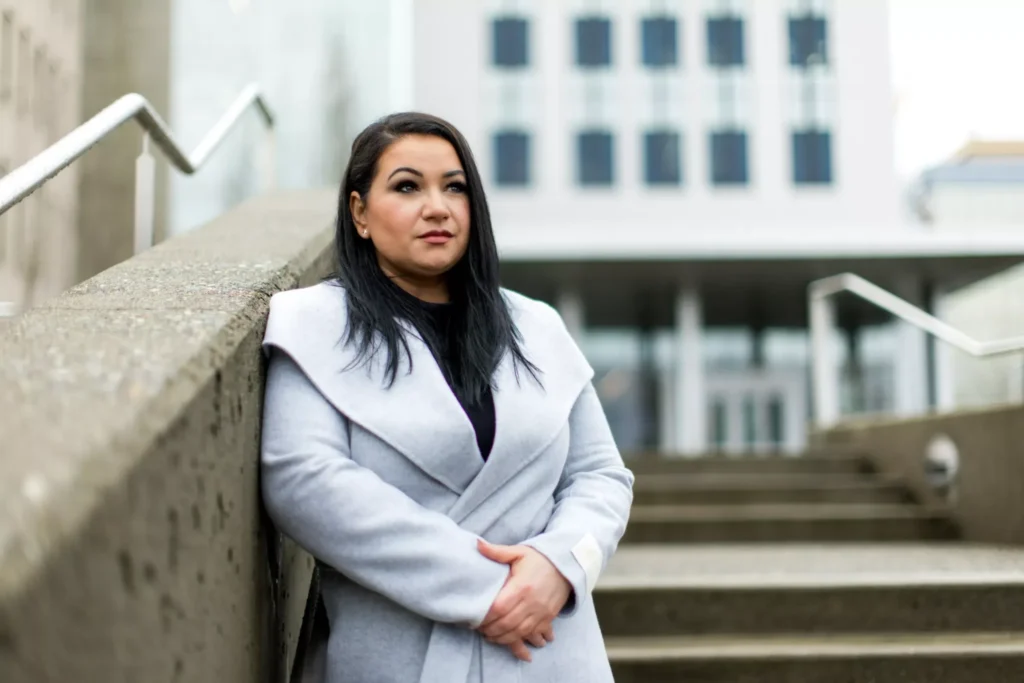
In the case of a New York City mother identified in court documents as “Ms. W.,” she was physically abused by her daughter’s father in front of the couple’s 1-year-old, according to legal documents filed with the New York appellate division in Brooklyn last week. Before she filed an order of protection against the toddler’s father, W. described being called a “snitch” and “stupid,” before she was slapped and hit, her appeals court filing states. The child’s father is also alleged to have ‘ripped the dreadlocks out of her hair.’” New York City’s child protection agency was notified of the domestic abuse from the mother’s therapist, whom she had confided in after telling him to leave for good.
A trial is ongoing in Brooklyn’s family court, in which only the father is a respondent and accused of maltreatment.
The judge has confirmed that W. was “not accused of anything” and “able to care” for her daughter. But to retain custody of her child, she had to agree to CPS supervision. City investigators would have unfettered access to her home without restrictions on the “time, frequency, or scope of these searches,” the brief stated.
W.’s lawyers have pushed back, and oral arguments against the court order will likely be heard in the appeals court early next year.
In an email to The Imprint, the Brooklyn mother identified in court documents as W. to protect her identity said most people don’t understand how traumatic it is when social workers conduct investigations and examine children’s bodies for marks and bruises — especially when there is no abuser in the home.
“Mothers who have experienced domestic violence should be able to get help instead of feeling ashamed or made to feel like we did something wrong,” she said.
A spokesperson with the city’s Administration for Children’s Services (ACS) declined to comment on the pending case. Speaking generally, she said: “We seek the court’s permission to supervise only when we assess it is necessary to see to the protection of the child.”
She added that the agency “has continued to significantly decrease the number of families for which we seek court ordered supervision,” but noted that family court judges “often order ACS to supervise the child in the non-respondent parent’s home” through both “announced and unannounced visits.”
“They kidnapped my son’s whole childhood.”
-Dana Hanuszczak, organizer with voices of women
According to a 2021 report on the federal government’s national database of child abuse and neglect, hundreds of thousands of victims of child maltreatment — more than one-quarter of the total — lived with caregivers who had domestic violence “risk factors.”
A landmark appeals court case in 2004, Nicholson v. Scoppetta, addressed a parent in a similar set of circumstances. In that case, the New York Court of Appeals ruled that just because children witness domestic violence, it does not place them in “imminent danger,” and therefore does not justify a child’s removal from home solely on that basis.
Legal advocates for the mother say the 2004 ruling clearly established that “intrusive government intervention against a survivor of domestic violence” is unconstitutional. And although W.’s daughter was not taken into foster care, the supervision condition the court placed on her illustrates a predicament in New York City that remains far too prevalent.

“What never changed is that today, they continue to treat those parents who are victims of domestic violence as suspects, as subjects of surveillance and policing rather than as parents who deserve our support,” said Chris Gottlieb, co-counsel for W. and co-director of the New York University law school’s family defense clinic.
Court documents show W. was questioned about future contact with her daughter’s father, ensuring he would be out of the home.
The judge noted “Sometimes people follow [orders of protection] very carefully but sometimes people, including the victims, sometimes change their mind and then the orders get violated,” records state. Referencing guidance that W. should not speak with the father, she replied: “I definitely will not.”
Assuming parents will welcome abusers back into their homes relies on unfair “generalizations and stereotypes about survivors of domestic violence that they can’t protect themselves,” said David Shalleck-Klein of the Family Justice Law Center and co-counsel for W. “It’s not giving them the presumption that the law requires that they will do what is needed to protect their child.”
W. felt she was “treated like a statistic,” cast unfairly as a parent unable to fully extricate herself from a violent former partner.
“I took steps to protect myself and my daughter, and I’m being compared to other people I don’t even know,” W. said. “That doesn’t seem fair and is causing further trauma for my family.”
Raquel Bates, executive director of the Voices of Women advocacy group in New York City, said CPS agencies display “a complete lack of understanding” about intimate partner violence when they accuse a non-respondent parent of failing to protect a child for harms they have not committed.
Bates said she is pleased to see the legal challenge to a ruling that subjected W. to ongoing CPS supervision.
“Because of the view of ‘failure to protect,’ there’s always this assumption that a survivor of domestic violence who oftentimes is being physically assaulted themselves should be able to protect everyone in the home,” Bates said. “So the courts and ACS use that and it’s just a horrible way to respond to domestic violence. It doesn’t help,” Bates said.
Dana Hanuszczak, a mother from the Bronx who has worked as an organizer with Voices of Women, said she left her abusive husband when her son, now 13, was just 4 months old.
“Although he was the abuser, although he was the one causing harm, ACS constantly went after me,” Hanuszczak said.
She spent more than five years fighting in family court, while CPS workers repeatedly showed up at her house. On one occasion, she recounted, a worker accused her of being on too much pain medication when she was recovering from a spinal injury from working as an emergency medical technician.
“They would in turn come check on me and come and ask me if I was all right or did I need to go to the hospital? Was I having a mental breakdown?” Hanuszczak said. “Like it was constantly twisted on me for surviving what we were surviving — and they never once believed me.”
Eventually, Hanuszczak moved away to Pennsylvania where she was safe. Her son suffered distress during the violent period of his early family life, but she said he’s doing better now, despite what she believes is lasting damage caused in part by the persistent CPS supervision.
“They use the fear of you losing your child to the abuser against you,” she said. “They kidnapped my son’s whole childhood.”
Advocates commended W. for fighting the family court ruling through her ongoing appeal, calling the case a significant step toward curbing a long-standing child welfare practice.
“The case has the potential to really transform the field,” Shalleck-Klein said, “and to force ACS and family courts to stop creating and perpetuating this double abuse of women.”