A growing number of Michigan jurists are calling on the state to better protect parents from being accused of neglect in the family courts when they are unable to manage their teenagers’ mental health crises and unsafe behaviors.
An April state Supreme Court ruling offers the latest message from the bench.
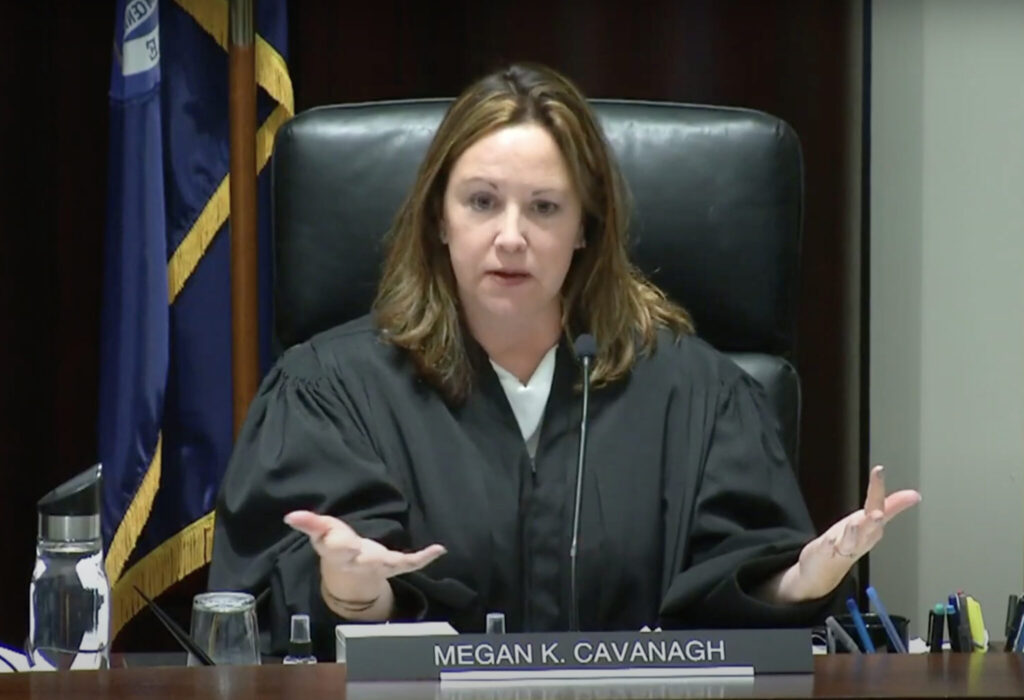
“Parents who have gone to great lengths to help their mentally ill children but who ultimately exhaust the resources at their disposal should not suffer additional legal and collateral consequences,” Justice Megan Cavanagh wrote. She appealed to lawmakers to create a “no-fault” pathway for such parents, forced to turn their children over to CPS because everything else has failed.
In an ongoing series of stories, The Imprint is documenting the plight of parents who “relinquish” their children to foster care because they can’t afford or can’t access mental health care or residential treatment programs. A federal report released in January found that cases like these account for roughly 5% of all entries into foster care. The vast majority involve teenagers. Once they relinquish their children, parents can be investigated by child protective services, and accused of neglecting their kids.
In its ruling on In re Lange, the state’s highest court overturned a lower court’s finding of neglect against a mother who refused to take her adopted son home from the hospital when she couldn’t get him placed in inpatient treatment. In a separate opinion, Cavanagh added: “Reform is needed, or parents and children will continue to suffer.” She delivered a similar message to state lawmakers in a 2023 case, alongside then-Chief Justice Elizabeth Clement.
One key lawmaker in Michigan has taken notice.
In an interview with The Imprint, State Rep. Luke Meerman said he’s heard “many stories of parents desperate for help and abandoning their kids at a hospital,” and he plans to introduce legislation on the issue in the coming weeks.
“I’m in favor of making a statute change,” the chair of the House child welfare oversight committee said.

Meerman said his committee will recommend legislation to the House on the issue in the coming weeks, and prior to that he plans to reach out to Justice Cavanagh.
“I’d love to hear from her about what the law might look like,” he said.
The federal report on relinquishments, produced by the Department of Health and Human Services, relied on data gathered between 2017 and 2019. Michigan’s rate fell far below the national average, at 2%.
Although Meerman said parents should be protected from accusations of neglect in these situations, turning kids over to the foster care system must have some guardrails and truly be a last resort, the lawmaker added.
“This can’t be an open door for people who are having difficulty with a child, saying, ‘I’m done,’” Meerman said. In order for the state to take custody of a child, parents must be able to show they have tried, but are unable to meet the child’s needs at home.
The Michigan Department of Health and Human Services did not respond to requests for comment on this case or more current data on relinquishment rates in the state. But in October oral arguments before the state Supreme Court, Assistant Attorney General Jennifer Rosen said that while the child welfare agency was “sympathetic” to the “extraordinary circumstances” in the Lange case, it’s the parents’ responsibility “to meet the needs of their children regardless what those needs are, and ensure children’s safety.”
Lawmakers across the country seek solutions
Cavanagh is not the only Michigan judge in recent years to decide that a legislative fix is needed. In an earlier stage of the In re Lange case, a trial court judge expressed similar concern: that the neglect finding against the boy’s mother — who had gone to great lengths to help him — was an unfair designation. “Maybe the law needs to be changed,” the judge said, according to court records.
“Parents who have gone to great lengths to help their mentally ill children but who ultimately exhaust the resources at their disposal should not suffer additional legal and collateral consequences.”
— Justice Megan Cavanagh
And in a 2021 case, a panel of Michigan appellate court judges noted concerns about the predicament of another mom who had relinquished her child — even as they ruled against her. The ruling described the “scant and costly resources” for children in need of acute mental health care and notes that other parents are likely facing the same problem.
“Our concern is that this mother, who took desperate action to get care for her child, is now labeled ‘unfit’ and listed on a registry for persons who acted to harm children when she, in fact, was seeking to protect her child,” wrote Judges Cynthia Stephens, Christopher Murray and Kirsten Kelly. “We can only look to our policymakers for a resolution to this conundrum.”
The issue is not new. But it has gained growing attention amid an ongoing youth mental health crisis, the new federal data findings and media coverage. Foster care relinquishments have been the subject of news stories across the country, from Texas to Iowa and Virginia, where as many as 20% of children enter foster care this way.
On Wednesday, The Imprint published the story of one Minnesota adoptive mother who could not safely care for her teenage son at home, after repeated hospitalizations and violent episodes. Although she described caring deeply about the boy, she said she relinquished custody because she was unable to protect herself and his siblings from his erratic behavior, and get him the treatment he required.
“No parent ever wants to leave a child in an emergency room,” Argie Manolis said. “But I feared for the safety of my family. And I felt that we were failing to give our son the help he needed.”
Minnesota lawmakers have taken note of the dilemma that Manolis and parents in her position face. Gov. Tim Walz signed a new law in June to protect parents from being accused of neglect for refusing to bring a child with severe mental health needs home from the hospital if there’s “a lack of access to necessary services and the child cannot be safely discharged to their family.”
In Texas, lawmakers also aimed to address the concerning trend. They introduced several bills this year to expand Medicaid coverage for a wider range of behavioral health services, as a means of intervening earlier on in mental health crises and bolstering access to acute care. But those failed to pass.
‘Heartbreaking’ plea for help
The In re Lange case, in which the state Supreme Court overturned a neglect finding against the mother, has brought renewed local attention to the issue. The parties are mostly unnamed in court documents, but lawyers on the case have spoken publicly on her circumstances, and records in the higher courts are public.
At the heart of the case is a teenage son who was adopted by a single mother when he was 5 after “he had been exposed to trauma and abuse while in the care of his family of origin.” His diagnoses included post-traumatic stress disorder, attention-deficit/hyperactivity disorder, reactive attachment disorder and oppositional defiant disorder.
Despite psychiatric treatment from a young age, the boy became violent and volatile, according to court documents. He tried to set the house on fire and harmed the family pets. He was hospitalized at least half a dozen times between ages 10 and 13 for threatening to hurt himself, his siblings and his parents. Each time, the boy would return home after a week or two with orders for outpatient treatment.
“He would complete that and things would be OK for a while, and then it would go right back where it was,” the boy’s mother said in court testimony.
Assistant Attorney General Jennifer Rosen said that while the child welfare agency was “sympathetic” to the “extraordinary circumstances” in the Lange case, it’s the parentS’ responsibility “to meet the needs of their children regardless what those needs are, and ensure children’s safety.”
At 13, Lange enrolled her son in an out-of-state residential treatment program meant to last a year. Halfway through, the facility sent him home, stating that he’d exhibited sexually inappropriate behavior with other residents, court filings show.
The teen’s mental health continued to deteriorate after that, his mother told the courts. In the summer of 2021, she took him to the hospital after he expressed plans for suicide. He waited in the emergency room as hospital and state social workers searched for a pediatric psychiatric inpatient program for him. None were to be found. Lange testified that the facilities refused to accept her son because of the severity of his symptoms and that “they couldn’t guarantee the safety of the other patients.”
With no inpatient option, the hospital discharged the teen with recommendations for intensive outpatient care, even though one day prior they had determined he was unsafe to send home, court records show. CPS offered to help obtain the treatment, but Lange declined, citing the family’s prior experiences with unsuccessful outpatient programs and her belief that she couldn’t keep him or his siblings safe if he were to return home.
“To hear that there was no help was … heartbreaking,” the mother told the court. She described her situation as a “Sophie’s choice.” She loved her son, but had “exhausted everything the state has to offer, everything, and nothing has made a difference.”
Choosing to enter her son into foster care came at a high cost to Lange’s family.
The child welfare agency also filed to remove his two siblings from her custody, saying the family home was unsafe for all.
But a trial court judge objected: “I just don’t see how I can find that she’s been neglectful or abusive in terms of her actions to date,” the judge said, according to court records. “I don’t know how anybody is supposed to manage that situation.”
Meanwhile, the two siblings went to live with their other parent while the case continued.
The state kept pushing for a neglect finding against the mom. And in 2023, the Michigan Court of Appeals agreed, finding that the mother’s actions made the home dangerous for the child. One of three judges on that panel, Judge James Robert Redford, dissented. He concluded that the mother’s refusal to bring the teen home “with two other minor children who would be endangered was not an act of neglect.”
Unsatisfied with the appeals court decision and seeking broader clarification, last October, University of Michigan law school professors Timothy Pinto and Vivek Sankaran brought the Lange case before the state Supreme Court. They saw it as a chance to have the justices weigh in on a “recurring issue” that had previously been taken up by the high court but never resolved.
In April, the justices ruled in their favor, and dismissed the neglect case against the mother. She retained parental rights over her son, but lost access to help from the state.
By this point, he was close to turning 18 and had a bed in a treatment center, her attorney said.
Attorney Pinto said in a May news release from the law school that the Supreme Court ruling adds important case law in “an area ripe for clarification and improvement.”
“It’s an example of an issue that continuously arises where parents are put in unfair positions — parents who may have exhausted their resources trying to help a child and are now at a loss,” Pinto said. “Accusing someone of abuse and neglect who has shown no sign of such behavior is unlawful.”