
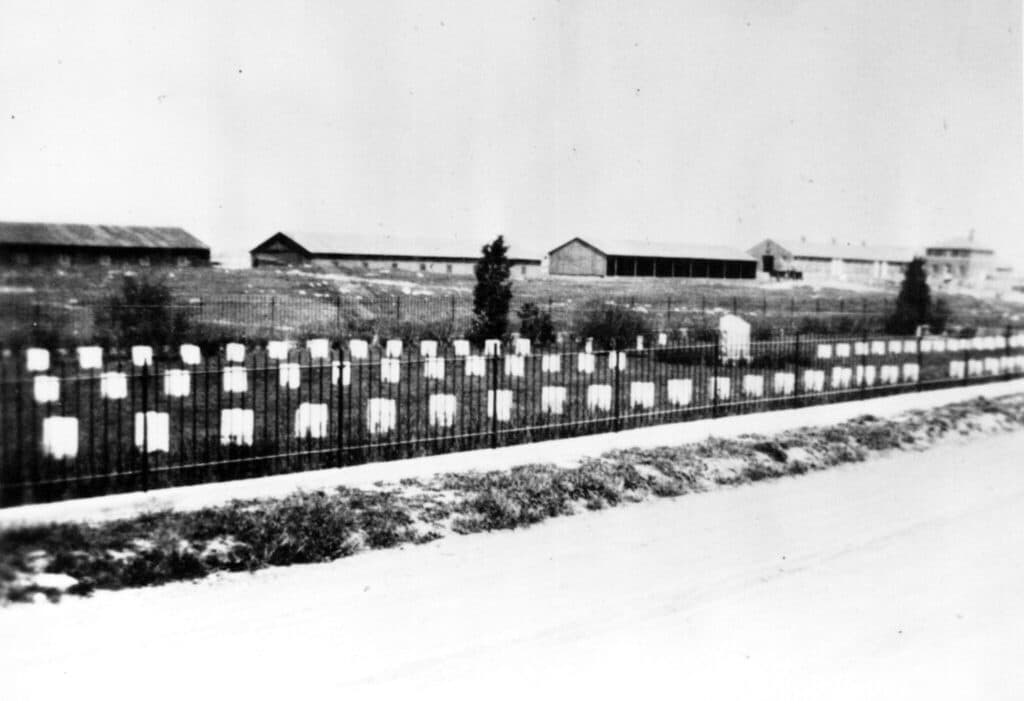
Update: A federal district court in Virginia has ruled the U.S. Army is not required to excavate or return the remains of Samuel Gilbert and Edward Hensley to the Winnebago Tribe of Nebraska. The teenagers died over a century ago while attending the Carlisle Indian Boarding School, the nation’s first government-run school in Pennsylvania. In the Aug. 20 ruling, Judge Claude Hilton concluded that the provisions of the Native American Graves Protection and Repatriation Act doesn’t apply to the tribe’s case.
Roughly 35 years ago, Congress passed a federal act ensuring that the remains of deceased Indigenous people and sacred and cultural artifacts would be repatriated to the tribes where they belong. The Native American Graves Protection and Repatriation Act requires that the return to lineal descendants “must at all times be treated with dignity and respect.”
But in a lawsuit now before the U.S. District Court in eastern Virginia, the Winnebago Tribe of Nebraska argues Army officials are violating this federal law by delaying the return of two tribal members’ remains. Samuel Gilbert and Edward Hensley died as teenagers over a century ago while attending the nation’s first government-run Indian boarding school. A hearing in the case is set for July.
In its filings to the federal court, the Winnebago Tribe objects to the bodies remaining at the Carlisle Barracks Main Post Cemetery in Pennsylvania, and seeks their return for culturally appropriate burials. Defendants include the U.S. Army, the Office of Army Cemeteries, and three employees who oversee the cemetery, which is located on the grounds of the Carlisle Indian Industrial School.
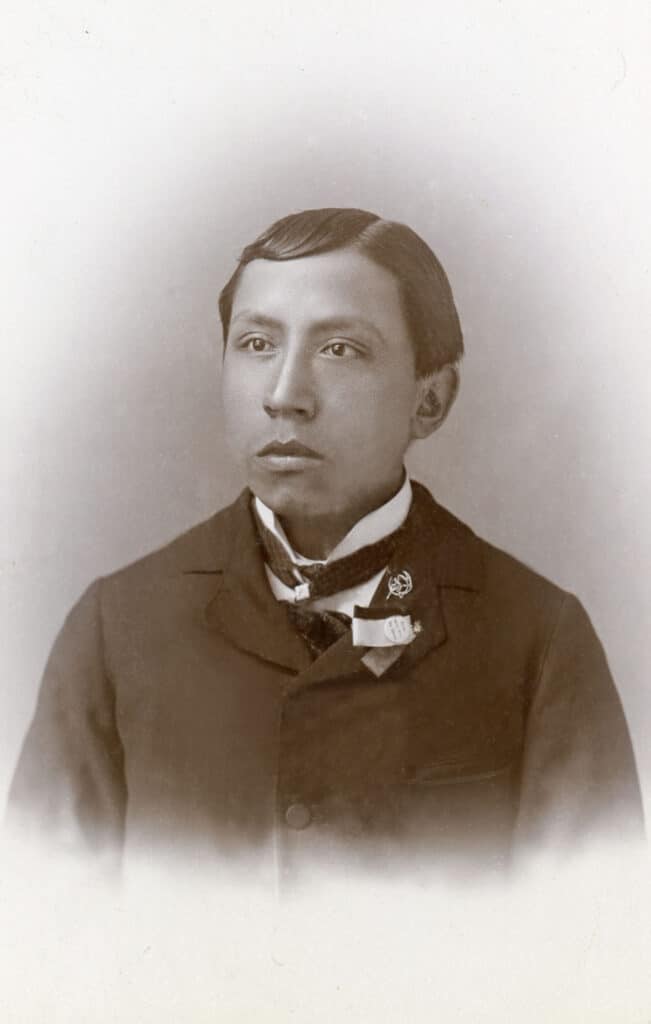
“According to Winnebago traditional beliefs, the longer that Samuel and Edward remain at Carlisle, the more harm is done to their spirits and to Winnebago,” the tribe states in Jan. 17 court filings. Further, the Army’s conduct “perpetuates an evil” that Congress sought to correct in 1990, the “historical and longstanding practice of abusing and mishandling Native American human remains, funerary and sacred objects, and objects of cultural patrimony.”
This month, the Army rejected the tribe’s claims — first filed in January— and insists the Native American Graves Protection and Repatriation Act (NAGPRA) does not apply to Samuel and Edward.
In its May 3 filing to dismiss the case, the Army states it has “informed Plaintiff more than once, Defendants are ready and willing to assist in the return of the boys’ remains to their rightful resting place, and at the Army’s expense.” But the lawsuit, officials say, is “of no help in making that happen,” because the tribe has invoked provisions of federal law that do not apply to remains interred at the Carlisle Barracks Main Post Cemetery, which is under the Army’s jurisdiction.
They maintain that the Graves Protection and Repatriation Act does not apply to the Carlisle cemetery because the two boys’ graves have names, and do not amount to a “holding or collection” — such as unmarked human remains, baskets, weavings or other museum pieces. Thus, Army lawyers argue, they are not obliged to unearth and return the children’s remains. They further argue that even under Army rules, the bodies can’t be unearthed, given that the tribe has not identified the “closest living relatives” to approve of the exhumation.
In an email to The Imprint, a spokesperson for the Office of Army Cemeteries said officials could not comment on pending litigation. But the spokesperson pointed to other cases of cooperation, and wrote that “the Army has been and will continue to be committed to working with our tribal partners and families to ensure all law and policy is complied with.” She noted that since 2017, the Army has paid for 32 children to be returned to their families and tribes, and an additional 29 are scheduled for return over the next two fiscal years.
The Carlisle Indian Industrial School was among hundreds of boarding schools across the country run for centuries by the church, federal government and military branches.
The U.S. Department of the Interior has been documenting the devastating legacy of these institutions that can only loosely be described as “schools.” In its second report now underway, the department details life for the children who were wrenched from their families and subjected to horrors including “solitary confinement; flogging; withholding food; whipping; slapping; and cuffing,” according to federal archives. Christian and state agencies perpetuated the assault on Indigenous tribes, families and communities, forcing countless children into white foster and adoptive homes through the government’s Indian Adoption Project.
In its court filing, the Winnebago Tribe quotes Carl Schurz, a former Commissioner of Indian Affairs, who said in the 1800s that Indian boarding schools were the most economically efficient path for the government, concluding “that it would cost a million dollars to kill an Indian in warfare” but “only $1,200 to school an Indian child for eight years.”
The Army’s court filings in the Winnebago case describe the federal government’s intent with boarding schools as a method of teaching agriculture, reading, writing and arithmetic to Native children, with goals to “employ capable persons of good moral character.” But between 1819 and 1969, the military conceded, 408 Indian boarding schools at 431 locations were “designed in significant part to accomplish the forced assimilation of Native Americans to European/American culture.”
Carlisle students began dying in the school’s first year of preventable diseases. United States officials shut it down in 1918 “because of the high death rate of Indian students, evidence of rampant physical abuse, and financial corruption,” the Winnebago Tribe states in its court filings.
And when the school closed, its barracks returned to military use. But the government left the grounds strewn with dead children.
“Today, Winnebago continues to experience the pain of knowing that Samuel’s and Edward’s spirits remain lost and unable to rest as they have been waiting to come home for nearly 125 years.”
— Lawsuit filed by the Winnebago Tribe of Nebraska
The Carlisle Indian School Cemetery — established for the burial of Native American students who died while attending the school — now contains 229 burial plots, including 179 students and one former student, members of roughly 50 tribes.
Samuel and Edward are among them. They both arrived at the school in September 1895 and quickly succumbed to pneumonia. According to an investigation by the nonprofit news outlet Flatwater Free Press, of the five Winnebago children who boarded the same three-day train ride from their northeastern Nebraska reservation to Pennsylvania, only two would return home alive.
Samuel, whose traditional name was La-coo-hoo-he-kaw, died 47 days after his arrival at age 19. Samuel had a deceased father, White Gull, whose name was written on the child’s information card. Samuel’s mother’s name was not recorded.
Edward, who was 17 when he arrived, died four years later in 1899. No living parents were recorded. Flatwater Free Press reported that during his time at Carlisle, he learned to be a tinsmith and played in the school band. But Edward was also farmed out for free labor, working for four different white families through the school’s “outings” system. Records show he was “a most excellent young man, beloved by all.”
The teenagers appear to have been buried at the Carlisle cemetery without notice to the Winnebago Tribe, or to their families.
The limited information available makes identifying the deceased all the more difficult. According to Winnebago’s court filings, when the Army moved the children’s remains as it redeveloped various parts of the Carlisle property — “coffins crumbled” and “remains were removed haphazardly and placed in pine boxes of one-foot width by two-feet length.” At other times throughout this dark chapter of history, “the Army replaced gravestones with an astounding lack of care, incorrectly transcribing many students’ names, Tribal affiliations, and dates of deaths.”
Gravestones for Samuel and Edward contain inaccurate spellings of their tribal affiliation. Edward’s grave states he was a member of the “Winnebaloo” tribe — Samuel’s grave mistakenly spells Winnebago as “Winnchaga.” Neither headstone shows an accurate birth or death date for the teenagers.
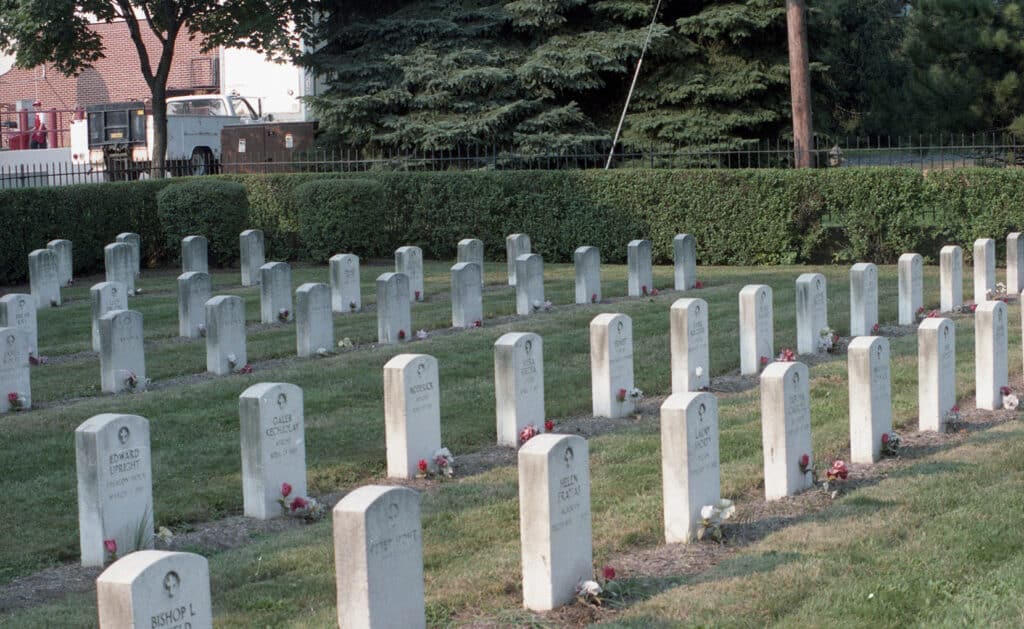
Today, the Army maintains it is working to identify students’ remains and return them to the descendants’ families through its Office of Army Cemeteries Disinterment and Return Process, the office spokesperson said. That process, however, requires a notarized affidavit from a closest-known living family member to ensure “that the family and/or relatives of the deceased child concur with the disinterment and return of the remains of that child.”
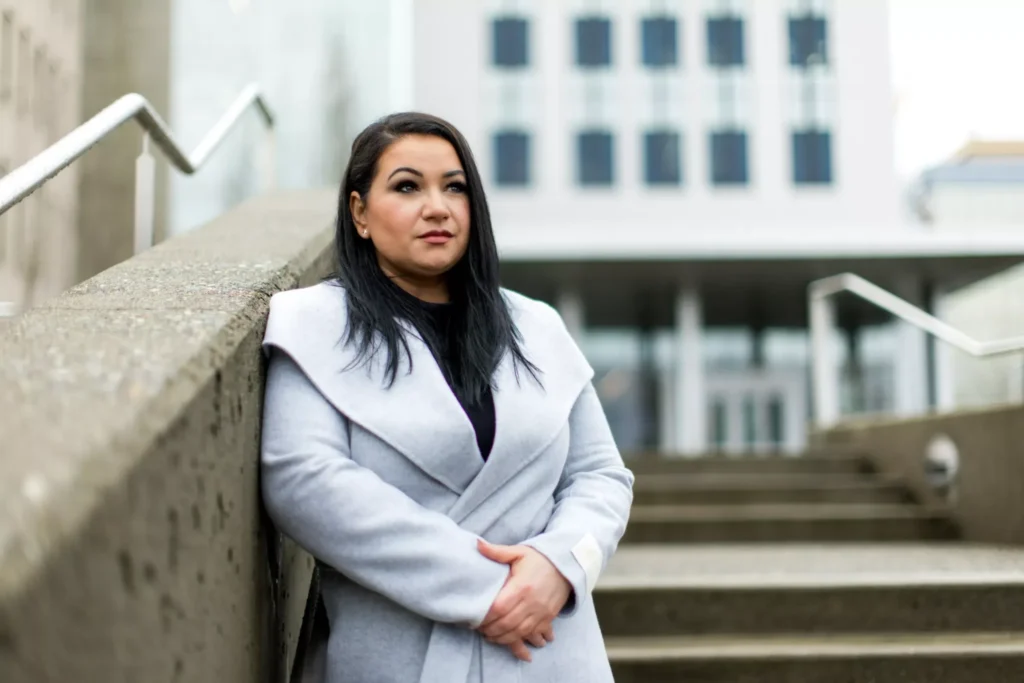
But in the case of the two boys, that person does not appear to exist. Court documents show that Sunshine Thomas-Bear, an official with the Winnebago Tribe, began investigating how to bring Samuel and Edward home from the cemetery in July 2021.
Tribal leaders state that establishing the relationships the Army requires can be nearly impossible nearly 125 years after an Indigenous person’s death. Like many teens who perished at boarding schools, Samuel and Edward didn’t have any children.
Court documents show that when the Army instructed Thomas-Bear to file the request with her name listed as the teens’ closest relative, she and her fellow community members declined. To do so, tribal leaders stated, would have required the tribal council to “knowingly make a false statement to the federal government, as there is no evidence that Ms. Thomas-Bear is the boys’ closest living relative.”
Some tribes that have identified living relatives have been more successful in repatriating their ancestors’ remains from Carlisle, but Winnebago Tribe reports that even in those cases the process was “onerous, time-consuming, and confusing to navigate.”
Poor management of the graves has exacerbated the problems. “On at least five prior occasions, when families and Tribal members went to Carlisle Cemetery to have their children’s remains returned to them, Defendants exhumed graves that contained remains that were not those of the correct child, or contained multiple sets of remains within one box,” the Winnebago Tribe states in court filings.
On April 9, the Office of Army Cemeteries announced it would be returning the bodies of 11 deceased Carlisle students from across the U.S. later this fall as part of a “multi-phase disinterment project.” One of those children is Albert Mekko from the Seminole Nation of Oklahoma. The son of a chief had been set to return home, but died at school of a lung ailment.
Native American news outlets have also reported other examples of students’ remains scheduled for return from Carlisle. They include Alfred Charko and Kati Rosskidwits from the Wichita and Affiliated Tribes; Fanny Charging Shield, James Cornman and Samuel Flying Horse from the Oglala Sioux Tribe; Leonidas Chawa from the Pechanga Band of Indians; William Norkok from the Eastern Shoshone Tribe; Almeda Heavyhair, Bishop L. Shield and John Bull from the Gros Ventre Tribe of the Fort Belknap Indian Community.
The Nebraska case remains pending while legal proceedings unfold. In the conclusion of their request that a judge dismiss the case filed by the Winnebago Tribe, government lawyers Brian Boynton and Jessica Aber concede that Congress has worked closely with tribes to “remedy many of the egregious wrongs done to the remains of Native American men, women, and Children.” They stated that “the Army is trying to do the right thing in honoring the remains of Samuel Gilbert and Edward Hensley.”
But the Native American Graves Protection and Repatriation Act does not “require cemetery managers to unearth the dead,” they state.
The Winnebago Tribe rejects that claim.
“Today, Winnebago continues to experience the pain of knowing that Samuel’s and Edward’s spirits remain lost and unable to rest,” the tribe’s lawsuit asserts, “as they have been waiting to come home for nearly 125 years.”