

A recent New York appeals court ruling has reinforced the authority of family court judges when youth are placed in residential facilities.
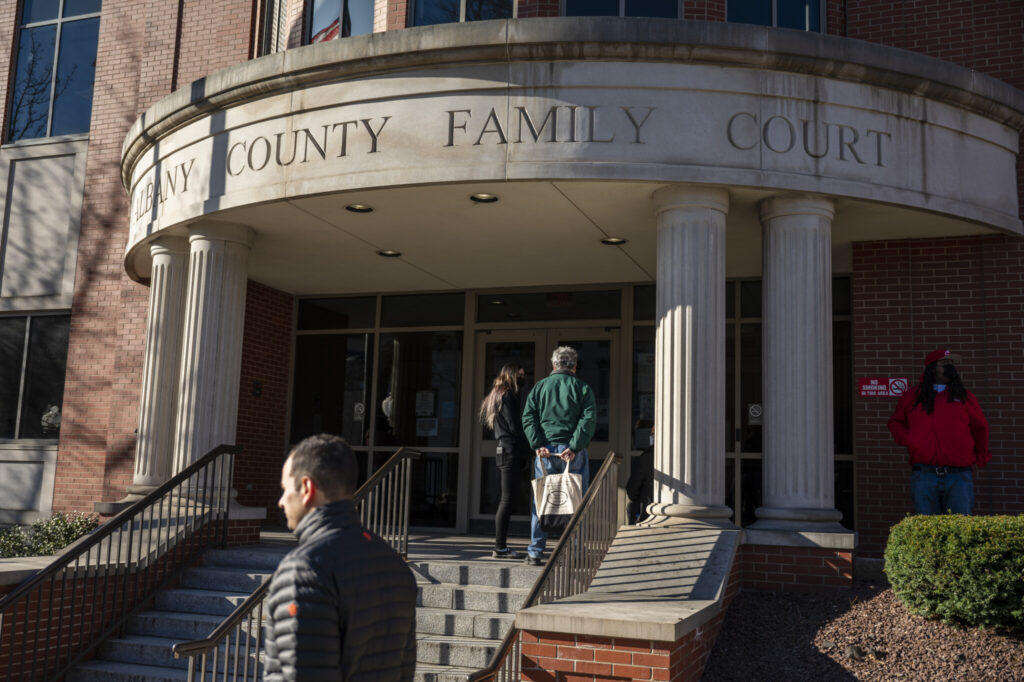
Following widespread acceptance that children belong in family homes and not institutions, for years the government has required states to more closely monitor foster youth sent to facilities. A key element of the stepped-up oversight is judges, who must agree a child has specific needs that can only be provided through group care. No more would a child be warehoused simply because a foster home can’t be found.
But youth advocates in New York City say that too often, these state and federal rules aren’t being followed. They have argued in court that the Administration for Children’s Services has undermined a critical element of court oversight, by arguing that judges lack the authority to put an end to longer stays in group homes.
A state appeals court has agreed, in a notable ruling this summer.
“It’s a huge deal because children and young people are too often placed in congregate facilities where they don’t want to be, and we don’t believe that their needs are being met,” said Betsy Kramer, director of policy and special litigation at Lawyers for Children. “And there was no route to challenge that.”

Previously, a family court in Manhattan had sided with New York City’s child welfare agency: that judicial approval was not necessary after a child had been in congregate care for 60 days. Appeals court justices rejected that view, ruling that “whenever foster children are placed in residential treatment programs, the Legislature intended for the court to have ongoing oversight and review power.”
In response to a request for comment, the city’s child welfare agency noted its reduced reliance on group facilities. There has been a nearly 11% decline in the number of foster youth in residential care — from 650 children in May of 2023 to 580 a year later, according to the Administration for Children’s Services (ACS).
Spokesperson Marisa Kaufman said the figures demonstrate the agency’s commitment to “the spirit and letter” of the Family First Prevention Services Act of 2018 and its increased oversight of residential care, referred to as a Qualified Residential Treatment Program (QRTP).
“ACS is continuing to comply with the New York statutes implementing Family First,” Kaufman’s email stated, “including by ensuring our highly qualified social workers conduct the required assessments of every child placed in, or possibly going to be placed in, a QRTP level of residential care as well as providing this information to family court judges for judicial review.”
Under the act known as Family First and subsequent amendments, states can receive federal funds to pay for group care for no more than two weeks — unless a clinician and family court judge agree the child has specific clinical needs that can only be provided in a residential setting. Facilities must be approved as a Qualified Residential Treatment Program (QRTP), with licensed clinical staff available around the clock, family involvement in treatment and a plan for after care.
Ongoing court oversight of such arrangements is at the heart of the case involving Malachi B., a boy who is now 20 and remains in a residential program.
Malachi entered foster care in 2010, after his parents were accused of neglect and “excessive corporal punishment,” according to court documents. For the next decade, he was moved in and out of multiple foster homes as his behavior and mental health deteriorated, requiring several psychiatric hospitalizations. He went into a residential treatment facility in 2017 and three years later, SCO Family of Services, the foster care agency in charge of his treatment at the time, recommended a “step-down” to a family foster home.
Both New York City’s Administration for Children’s Services and staff at the facility opposed this move, and the court repeatedly placed him in a variety of group care settings against the boy’s wishes and his therapist’s recommendations.
“Including the voice of the child in this process is critical.”
— Melissa Friedman, children’s lawyer, The Legal Aid Society
At Malachi’s “permanency hearing” last year — these occur every six months — attorneys for the city’s child welfare agency once again urged the family court judge to approve his continued placement in residential care. And this time, they took it a step further: The agency argued that under the law known as Family First, group home placements do not require judicial review after the initial 60 days, meaning any of Malachi’s future placements would be solely up to the agency.
The family court agreed. But Malachi and his lawyers appealed the decision to the appellate court in Manhattan.
“We find that Family Court has the decision-making authority as to the appropriateness of the child’s continued placement in a QRTP at every permanency hearing,” the June 27 ruling states. “A contrary reading goes against the express purpose of the Family First Act, which is aimed at reducing the use of institutional group placements for children in foster care by limiting the length of time that they can spend there.”
Both federal law and New York state amendments “explicitly” seek to ensure more foster children remain within families, the justices wrote, adding that judicial review of congregate care placements at regularly scheduled hearings must be substantive.
The appellate ruling further notes that it would be an “absurd outcome” if family court judges were “powerless to exercise any level of oversight, even if there is proof that the placement is no longer appropriate.”
Melissa Friedman, a children’s lawyer in charge of legal strategy and training at The Legal Aid Society, pointed to the significance of the ruling in centering the needs and rights of children, rather than leaving the decisions solely to child welfare agencies. She noted that despite Malachi consistently asking to be sent to a family home, his wishes were disregarded.
Friedman said she is aware of at least two other cases in New York City with similar lack of judicial review at permanency hearings, allowing the agency’s opinion on group care to go unchallenged.
“Including the voice of the child in this process is critical,” Friedman said. “The appellate court here made clear that courts have the power to, and must, review these placements periodically.”
For years, social science researchers have analyzed the dire outcomes for youth who experience long stays in residential settings. The institutional placements result in poorer mental health outcomes — for instance, foster children in one group home that was studied had “clinically significant depressive outcomes” at almost five times the rate of those who lived with kin. Children placed in facilities also tend to spend longer in foster care. They are also less likely to reunify with their parents, more likely to have involvement with the justice system, and show poorer educational outcomes when compared with peers placed in family homes.
According to a study by New York’s Center for Innovation in Data Intelligence, graduation rates for foster youth who spent some time in congregate care were far lower than those who grew up in family homes — roughly 7% compared to 20%. Only 5% of children who spent their entire time in foster care at an institution graduated from high school.
Attorney Friedman acknowledged the shortage of available foster homes, particularly those households willing to take in kids with higher needs. But she added that the city agency should not be able to “leave a child in a congregate care setting, for lack of an alternative home or other reason, irrespective of what is best for the child.”