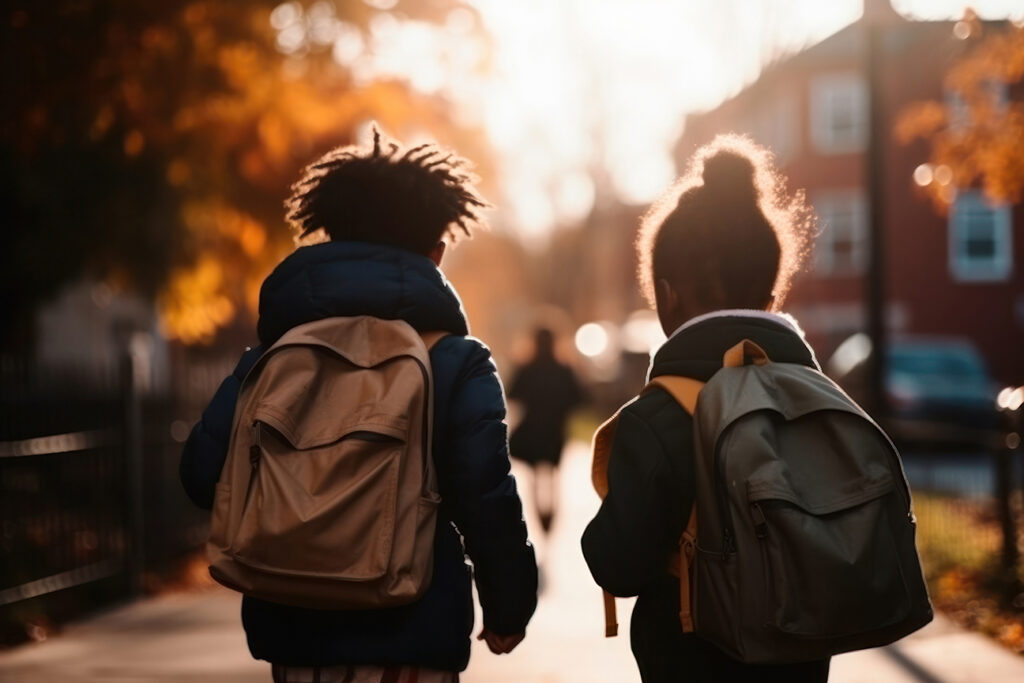
About one in every eight New York City public school students — nearly 146,000 children — experienced homelessness during the 2023-24 school year, data released late last year from the nonprofit Advocates for Children of New York has revealed.
That figure, a 23% jump from the year before, marks the ninth consecutive year that more than 100,000 students were identified as homeless. They included children living in hotels, motels and shelters, or temporarily sharing housing belonging to others.
The record numbers highlight the city’s ongoing affordable housing crisis and the critical need for schools to offer extra support for these students, said Jennifer Pringle, director of the nonprofit’s Learners in Temporary Housing Project.
“The city should really focus its efforts on making sure these young people who are in temporary housing now — who struggle with regular attendance, who struggle with making academic progress — get the needed support and services so they can thrive and graduate from high school,” Pringle said.
Continuous barriers
The overall rate of student homelessness continued to be highest in school districts in upper Manhattan, the southwest Bronx, and parts of northeast and central Brooklyn, according to the nonprofit’s analysis.
For 24-year-old mom Juleefha Thomas, the numbers don’t seem shocking. Thomas has a 7-year-old son and said many of his classmates also live in family shelters.
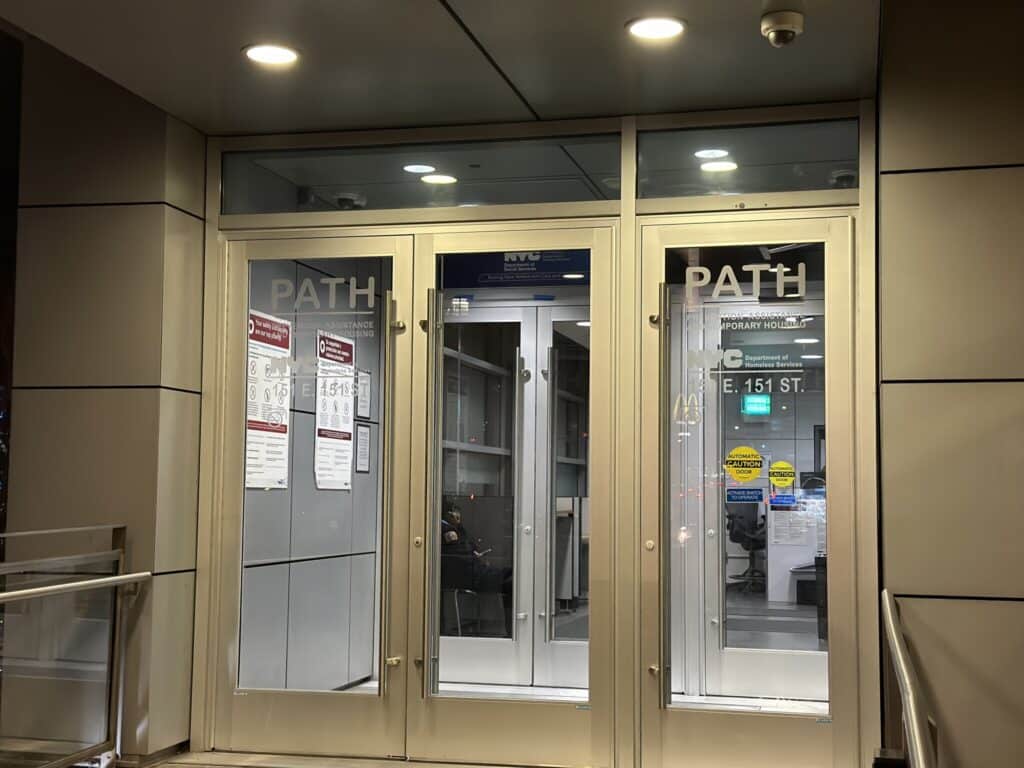
Last November, Thomas huddled against the cold outside the city’s Prevention Assistance and Temporary Housing office in the Bronx. The intake center is where homeless families with children and pregnant women must go to apply for temporary shelter.
Despite having a full-time job making deliveries for Amazon, Thomas has been without permanent housing for roughly three years. She has tried using government-issued housing vouchers to secure an apartment, but said she has been discriminated against by landlords unwilling to accept tenants using the rental assistance. So she often waits hours with other families at the intake center to receive her next shelter placement and has little say about where she and her son wind up.
“Sometimes you come back, they’ll send you to Manhattan, Brooklyn, Queens, all around,” Thomas said. “They tell you to move schools so it could be easier for you, but I usually keep him in the same school because he’s 7, and transitioning from school to school, he’s not getting any work done.”
This is one of the biggest disadvantages that homeless students face, advocates say: Parents are often put in a difficult position of choosing between uprooting their child or spending hours on transportation getting them to school.
“Almost 20% of students in shelters transfer schools mid-year, which is not surprising when almost 40% are being placed in a different borough from where the kids go to school,” Pringle said.
A long-standing issue
Along with a chronic lack of affordable housing in the city, the increasing number of homeless students is being partly driven by the influx of immigrant families and asylum-seekers arriving in New York in recent years, according to Advocates for Children.
But Pringle cautioned against simplifying the problem, noting that the rising numbers predate recent immigration.
“Family and student homelessness is a long-standing issue here in New York City,’’ she said.
The nonprofit’s data showed dire outcomes for students in unstable housing, including profound impacts on students’ academic success. In particular, students living in shelters dropped out of school at triple the rate of housed students. Additional studies have shown that those who don’t receive a high school diploma are four and a half times more likely to experience homelessness as adults, Pringle said.
High absentee rates were also an issue. In 2022-23, half of all students in temporary housing and roughly 70% of students in shelters were chronically absent, data showed, compared to roughly 30% of permanently housed students.
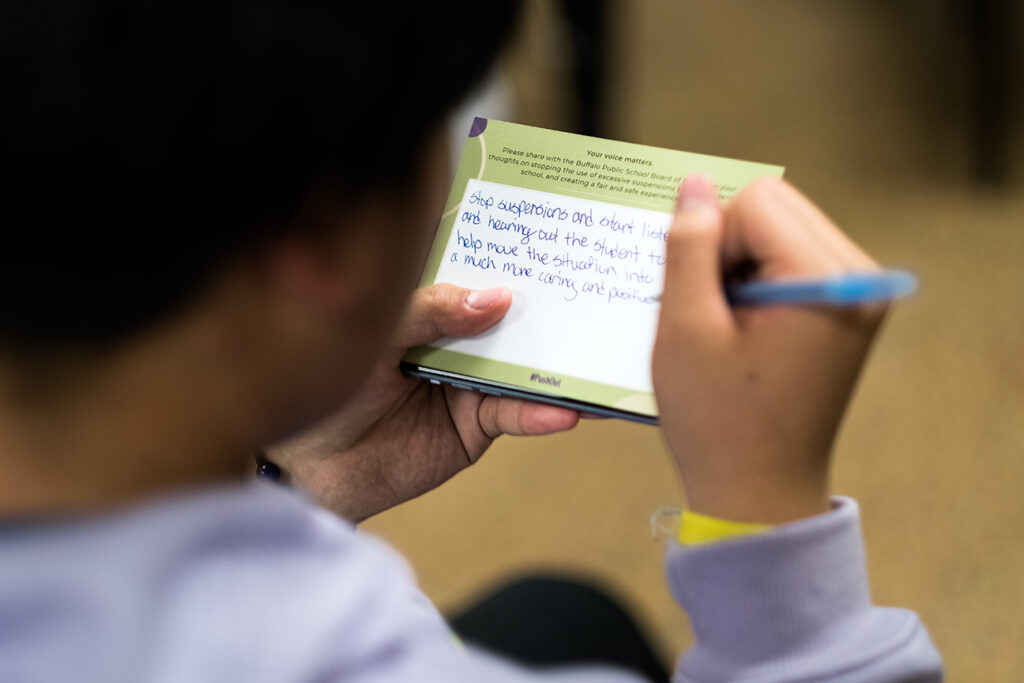
Additionally, homeless students were disproportionately disciplined by school officials — one in every 32 students living in a shelter was suspended, compared to one in 49 who had secure housing.
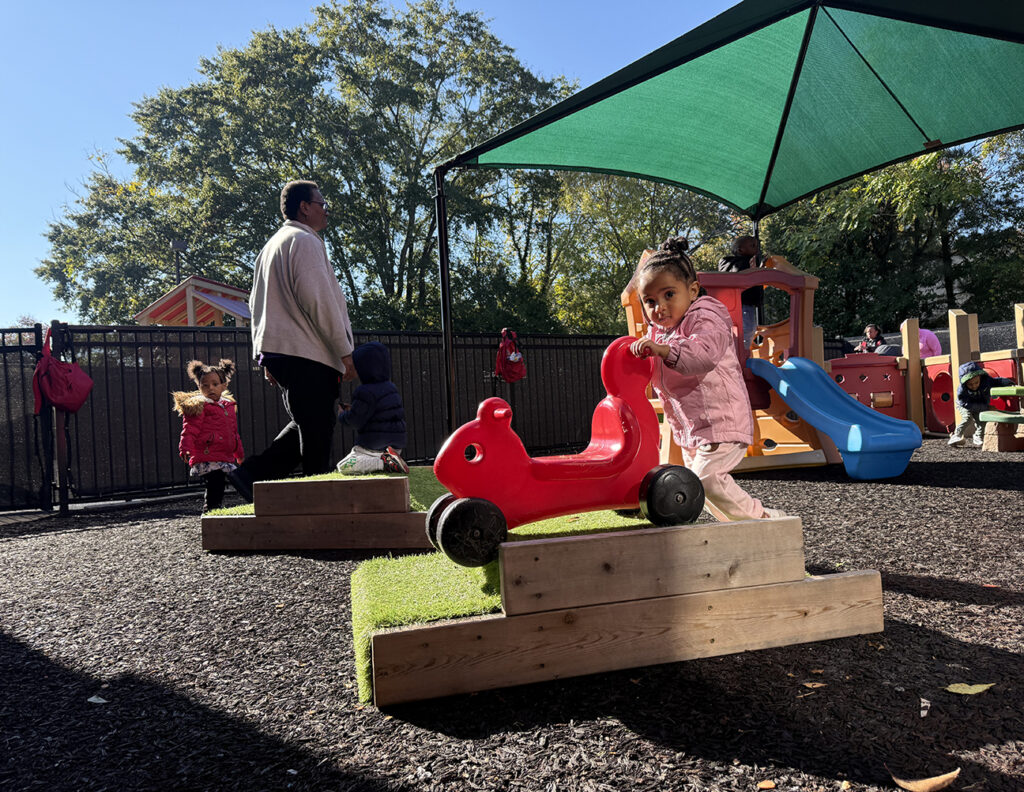
Some advocates have pushed “community schools” as a strategy that might help students struggling with homelessness. Under the concept, which has existed since 2014, organizations partner with public and charter schools and connect students with after-school classes, mentoring, parent engagement and health services.
Children’s Aid, a youth services nonprofit in New York City, operates 20 community school programs in the South Bronx, Washington Heights and other neighborhoods.
The nonprofit recently conducted a two-year pilot program at one community public school that officials believe could benefit homeless children citywide.
Under the pilot at the Whitney Young Jr. Campus in the Bronx, 29 housing-insecure families were additionally assigned student support coordinators who responded to each family’s specific needs. The coordinators remained in contact with the families after the pilot ended, providing check-ins and counseling.
Brenda Sanchez, one student support coordinator, said she and colleagues helped families meet basic needs, such as securing groceries, school supplies or furniture. Coordinators took students on arts and culture field trips to show them the world beyond their neighborhoods.
And if a family’s address and commute changed, she said, coordinators continued to help. Sanchez recalled staying in touch with one family that moved to Brooklyn, and helping the mother find a new school and after-school programs for her child.
When poor school attendance was identified as a problem for another family, Sanchez drove the children to school herself.
Perhaps most importantly, she said, the long-term support that coordinators were able to provide under the pilot program offered the housing-insecure families a small sense of stability.
“I still have relationships with them. They still call me,” Sanchez said, adding that families were initially shy and hesitant to reach out for help. “It’s not easy. It takes time to build that trust with the families. And we were able to manage that well during the pilot program.”
Results of the pilot are yet to be released, but preliminary data shared with The Imprint showed a nearly 70% improvement in school attendance rates among students in participating families.
The pilot was funded by the city’s Department of Education using $500,000 in federal COVID-relief monies and was also conducted in partnership with the Administration for Children’s Services.
The nonprofit plans to evaluate whether the program will continue past a pilot stage or be expanded to other community schools.
Children’s advocates also called on the city to do more to help homeless children by increasing funding for services designed to support homeless students. New York State is currently examining its per-pupil funding formula for the first time in more than 15 years.
Pringle said the city should consider that schools with high numbers of homeless students, especially those located near shelters, must constantly adjust their curriculums because of high student turnover. Also needed, she said: additional monies for busing students whose families may be placed in temporary housing far from their schools.
“Schools are not getting any additional funding for students experiencing homelessness, even though we know that they need additional support,” Pringle said. “There’s a lot of stigma attached to being in temporary housing, to being homeless, to living in a shelter. There’s shame and embarrassment associated with it, even though it’s not their fault.”