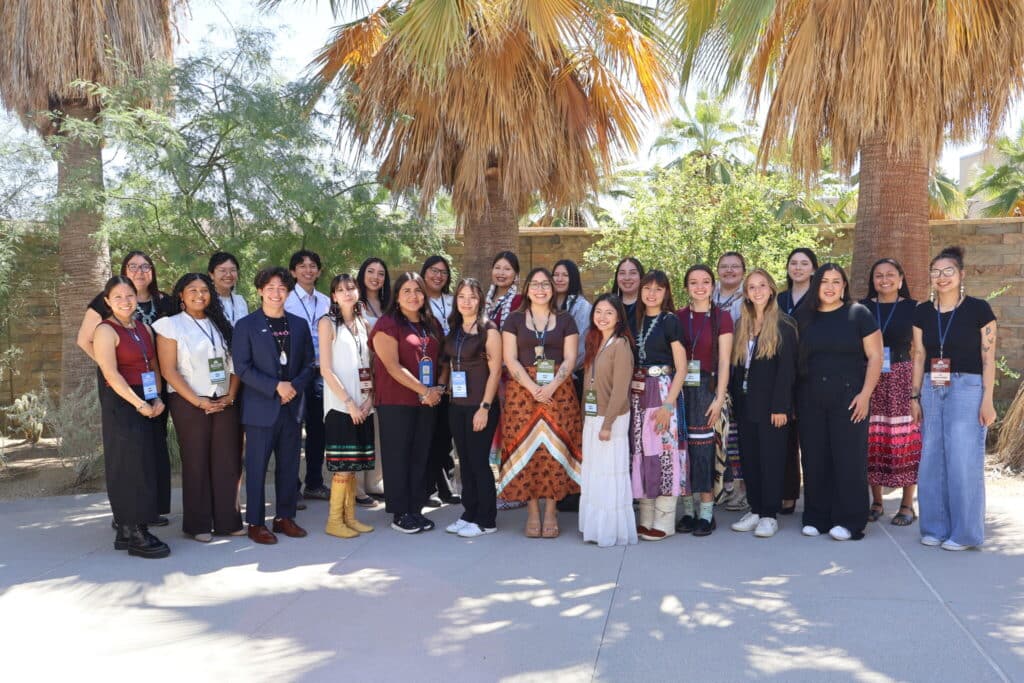
Two former foster youth, Christina (Mool-Mool) Kaltsukis of the Yakama Nation and Sunny (Puc) Wahquahboshkuk, of the Prairie Band Potawatomi and Muscogee Creek Nations, have received yearlong fellowships from the Center for Native American Youth to continue their advocacy work on behalf of tribal communities.
The fellowships, announced March 17 by the Washington, D.C.-based center, provide “microgrants” of varying amounts, mentorship and practical support to complete projects. The Imprint spoke with both recipients about their child welfare histories and what they hope to achieve over the course of the fellowship year.
“Puc and Mool-Mool both exhibit a strength and grace undoubtedly shaped by their lived experiences,” said the center’s executive director Tracy Canard Goodluck, who is Oneida and Muscogee. “They show great care and compassion for their peers, are fierce advocates for their communities and uplift other Native youth through their advocacy.”
“They show great care and compassion for their peers, are fierce advocates for their communities and uplift other Native youth through their advocacy.”
— Tracy Canard Goodluck, Center for Native American Youth executive director
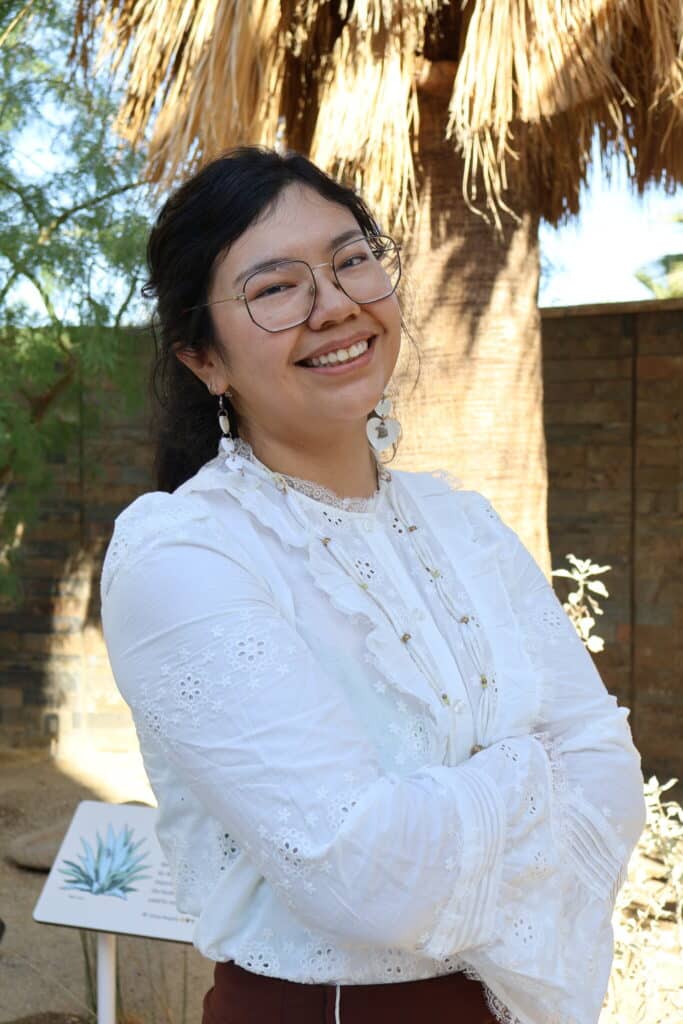
Kaltsukis, 24, also uses her Yakama name given to her as an infant, which means “bubbling spring waters.” The former Washington state resident now lives in Idaho. She was first removed from home as a toddler, and moved in and out of the foster care system numerous times. She and her 3 siblings were raised by biological grandparents who regularly took them to the seven longhouses on the Yakama reservation. A longhouse is a spiritual place, somewhat similar to a church, where sacred Indigenous songs are sung and only the Yakama language is spoken.
The first song she remembers trying to memorize, at age 5, was about the importance of sustaining Yakama communities, feeding them and providing nourishment from the land. That lesson has come full circle in her life. Kaltsukis has a degree in organizational science from the University of Idaho.
She interns as a tribal engagement outreach coordinator for the Pacific Lamprey Conservation Initiative, a collaboration of Indigenous tribes, local, state and federal government agencies and nonprofits working to protect these eel-like fish and their habitat. The species has long been a central food source for the Yakama and other tribal people, and advocates have pushed for their federal protection.
Kaltsukis was awarded her third fellowship from the Center for Native American Youth — the 2026 Brave Heart fellowship, which recognizes youth in the Pacific Northwest advocating for climate justice.
Kaltsukis, who writes songs, poems and stories in her spare time, said she will use her fellowship to create coloring and activity books for children and youth to teach them about tribal cultures and traditional ways of life, including environmental lessons from her own Yakama heritage.
She said the teaching she has upheld the most is “who I am as a person and how I present myself or walk this Earth. It is transcribable to the elders who are not here with me.” Kaltsukis added: “Our connection is still there. It is to walk with your head up, with your chest out, carry your name and your family proudly.”
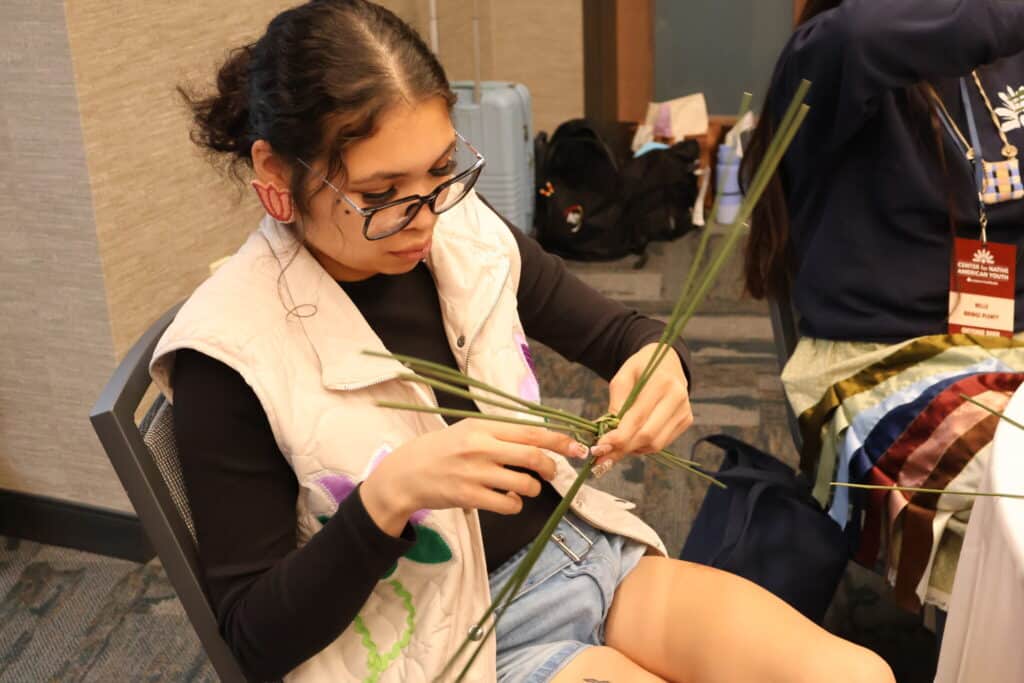
Wahquahboshkuk goes by a shortened version of her traditional name, Puc. She was accepted into the 2026 Remembering Our Sisters cohort of the center’s fellowship program. That fellowship supports digital art and storytelling for female and femme-identifying youth spotlighting the issue of Missing and Murdered Indigenous Women, Girls and Two Spirit People. Wahquahboshkuk has close ties to the issue: her transgender cousin was beaten to death by three men.
Wahquahboshkuk was removed from her mother’s care due to substance use when she was 15 months old, and placed into foster care. She was separated from her three siblings and recalls being moved to at least a dozen placements. Her mother died when she was 8 years old, following a two-year stint when the kids were back at her home. After that, she received her mother’s Indian name. The authorities deemed it as an overdose, but Wahquahboshkuk remains unconvinced that’s the whole story.
Now 22, Wahquahboshkuk said she was “excited” to learn she’d been selected for the fellowship, her first such experience. As an aspiring journalist, she plans to launch her own podcast this year.
Now equipped with a budget for equipment, she said she intends to interview living relatives of Indigenous people who have gone missing or were murdered, and obtain documents from law enforcement agencies to inform her reporting.
Her podcast project is inspired by her cousin’s murder, which affected her deeply. To this day, she doesn’t know what happened and — similar to the circumstances leading her into foster care — some relatives make a point to not talk about it.
Wahquahboshkuk, who is based in Kansas, attends Haskell Indian Nations University and will graduate next month with an associate degree in media and communications. She plans to transfer to either Fort Lewis College or the Institute of American Indian Arts to get her degree in Indigenous studies.
As a journalist, she hopes to cover issues related to the high rates of Indigenous people who are murdered or go missing, including within child welfare, and wants to educate others about the dark times Indigenous foster youth often go through when placed in state child welfare systems.
“Not many people know my mom’s story, and neither do I, because people won’t speak about it. That’s what sucks, is people will hide because they’re scared or something — and I’m not scared,” Wahquahboshkuk said. “I want to speak out for my people, to get the stories out. Our people deserve justice. They deserve their names to be said, they deserve to be remembered.”