
Billions of dollars in anti-poverty funds will continue flowing to five Democrat-led states targeted by the Trump administration, following a Friday federal court decision. But the uncertainty over funding for lifeline programs — including threats to Temporary Assistance to Needy Families, subsidized child care and child welfare systems — remains a lingering fear as the court case continues.
“There’s huge amounts of fear because people know that without this funding, child care will crumble,” said Maria Snider, vice president of the Minnesota Child Care Association. Snider, who also runs a Twin Cities-area child care center, said more than half of the families she serves are dependent on federal assistance to stay enrolled. “Centers will close, and some of them will never reopen.”
New York Attorney General Letitia James, who sued the Trump administration with four other states, broadcast similar concerns in a Friday press release. “Every day, hundreds of thousands of New Yorkers rely on these funds to pay for necessities and provide their children a safe place to learn,” she stated. “This illegal funding freeze would have caused severe chaos in the lives of some of the most vulnerable families in our state.”
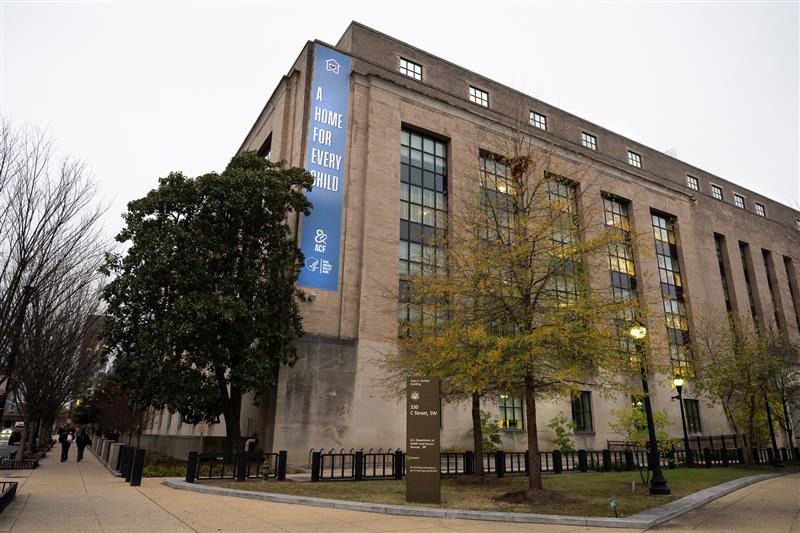
Spokespeople for the federal Administration for Children and Families and the overarching U.S. Department of Health and Human Services, both of which were sued by the states, declined comment on the Friday ruling by U.S. District Court Judge Vernon Broderick of New York, citing the pending litigation.
The court dispute arose after the Trump administration and its allies drew attention late last year to a series of criminal convictions for welfare fraud in Minnesota — including the largest such scheme of the pandemic. Federal prosecutors have alleged billions of dollars in taxpayer funds were misdirected toward luxury cars and real estate, for example, instead of meals, therapy, housing and other services for needy children and adults.
Drawing on that criminal case, in December and January the Administration for Children and Families began issuing a series of escalating information demands to states, beginning with Minnesota. Then, in letters sent to Gov. Tim Walz and Democratic governors in California, New York, Illinois and Colorado, the administration announced it was freezing roughly $10 billion in federal funding for those states’ social services, child care and cash assistance programs. A spokesperson for the Department of Health and Human Services stated that the “Democrat-led states and governors have been complicit in allowing massive amounts of fraud to occur under their watch.”
Simultaneously, assistant secretary of the Administration for Children and Families Alex Adams asked the governors for “the complete universe” of administrative records for Temporary Assistance for Children and Families (TANF), the Child Care and Development Fund, and the Social Services Block Grant Program. Adams’ letters on Jan. 5 and Jan. 6 announced that states would face “temporarily restricted drawdown” of federal funds, interrupting weekly flows that help maintain states’ social safety nets.
Attorneys general in New York, California, Colorado, Illinois and Minnesota immediately sued in response. And within days, a federal judge barred any funding freezes from taking place for a month.
On Friday, Judge Broderick approved a longer-term injunction for the duration of the lawsuit.
Elected officials in blue states praised the extension. They have blasted the Trump administration for punishing innocent families in a campaign of political retribution, including low-income Americans who rely on cash assistance and subsidized services for food and shelter.
“I wouldn’t be able to pay rent, and I would have to probably go back to a homeless shelter. All I would really have left is my car. It wouldn’t be ideal. We would make it work, but it would just be devastating.”
— Marilynda Bustamante
The attorneys general argue in court documents that the January funding freeze was “arbitrary and capricious;” based on no evidence; contrary to federal administrative law and exceeded the executive branch’s authority under the U.S. Constitution. They also say the administration illegally sought to “coerce” them to provide “personally identifying information of millions of their residents.”
Trump administration Health and Human Services officials have stated they do not seek to freeze funds, but rather to merely require the five states “to submit some additional corroborating documentation before drawing down funds.” Adams and Health and Human Services Deputy Secretary Jim O’Neill have been the public face of the funding freeze. The pair have narrated their efforts on the funding crackdown in Fox News appearances and YouTube videos.
“We are stopping Minnesota and other states from allowing federal funds to be diverted into scams,” O’Neill said in a Jan. 20 video. Adams touted hundreds of tips he said his agency has received through a new fraud hotline.
In court, their attorneys have argued the administration is performing its constitutional duty to protect federal spending, and that states are only speculating about excessive reporting burdens, or undermined trust in public programs. They’ve also argued legal precedent does not require them to “provide written findings about every piece of evidence” that prompted the freeze. The aim, they argue, is to ensure that “funds appropriated for vital social services make it into the hands of the communities Congress intends to benefit.”
The $30 billion Temporary Assistance for Needy Families program has been the subject of federal audits finding inadequate program oversight, though not only in Democratic states, and the Trump administration has not detailed any new specific fraud cases it has uncovered.
The crackdown on blue states aligns with President Donald Trump’s long-stated political goals. His 2024 campaign heavily emphasized claims of widespread fraud in federal spending, typically without detailed evidence. Since returning to office in January last year, though, he has also openly pursued retribution against political opponents, law firms, federal law enforcement, his own former staff, universities, journalists and cultural institutions.
Many, but not all, of those efforts have been stymied by the courts.
Nick Gwyn, a former top Democratic congressional advisor, has argued the freeze on the five states’ social services spending illustrates Trump’s strategy of unilateral cost-cutting, far beyond constitutional bounds. In a piece published by the Center on Budget Policy Priorities, he wrote: “If the Administration can unilaterally block funding to any state on the flimsiest of pretexts, without legal authority or justification, then every federal program and service people rely on is at risk.”
Families wait and worry
Judge Broderick’s latest ruling means the federal government cannot cut off the social service funds during the course of what could be a lengthy trial — unless the federal government successfully appeals the injunction. But in interviews, families in the affected states said they are nonetheless preparing for the worst.
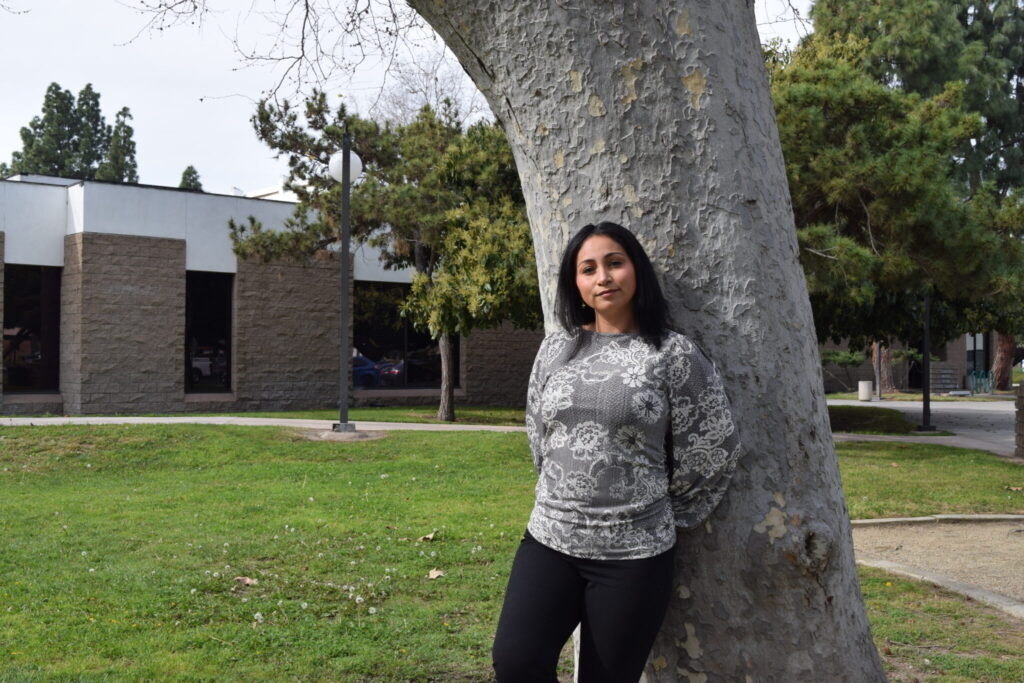
Thirty-year-old mother and student Marilynda Bustamante once lived in a homeless shelter with her newborn daughter. But CalWORKs, California’s welfare-to-work program funded in part by the federal government, helped cover her child care costs while she got back to work, enrolled in college and found a permanent home.
With the ongoing uncertainty over federal funding, Bustamante has spoken to lawmakers in hearings and privately about the looming challenges she and other parents in the state now face. To ensure her family remains stable, she has applied for a child care grant from her school, which she may or may not obtain. But if she loses child care that enables her to go to school, or her $900 monthly CalWORKs grant, the impact would cause “a ripple effect.”
“I wouldn’t be able to pay rent, and I would have to probably go back to a homeless shelter,” she said. “All I would really have left is my car. It wouldn’t be ideal. We would make it work, but it would just be devastating.”
In California, four million residents rely on benefits now at risk, and the loss would be enormous, Western Center on Law and Poverty Senior Attorney Jodie Berger said. The threatened funds cover low income families’ utilities, rent and transportation to school and work.
“The consequences are unending,” Berger said. “For both the funding freeze and the data that they’re trying to get, it’s just shocking. The impact would just be enormous.”
In a court filing in the five states’ case against the Trump administration, Los Angeles County’s chief financial officer warned the court that halting federal TANF dollars could endanger children, given that some of it is used to run the child protection hotline and to fund social workers on emergency response teams who investigate the most serious reports of abuse or neglect.
A northeastern Minnesota mom who asked to be identified only by her first name, Kristina, received her TANF funds this month — about $600 that goes toward her rent and a variety of other essentials. Amid the funding precarity, she and her 4-month-old son’s father have spent the icy Duluth winter brainstorming where to find additional income, if needed.
If the federal government freezes the funding, “We won’t be able to pay rent, get diapers, wipes, stuff for the baby, stuff for the house, gas,” she said. “I wish they would understand the people that need it — where we’re coming from. Not all of us are wealthy like them and can afford to pay a babysitter or nanny all day, every day, to be away from their kids.”