


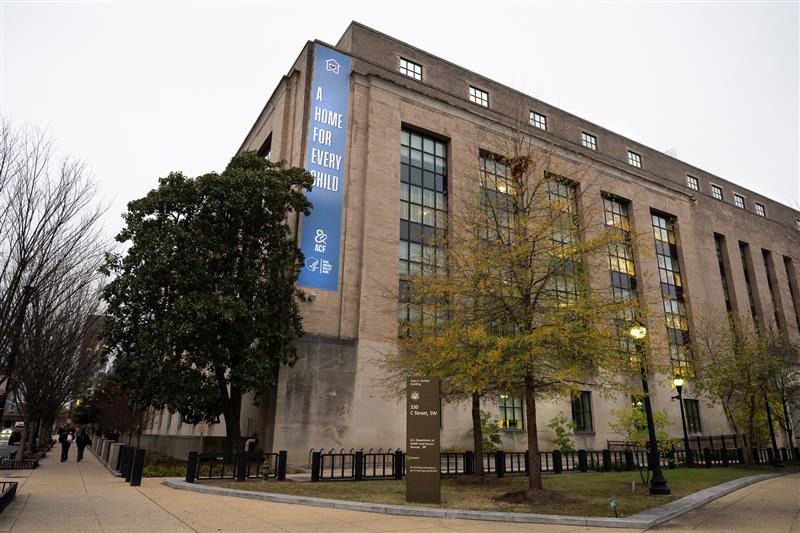
All 50 states, as well as Washington, D.C. and Puerto Rico, have opted in to the Trump administration’s A Home for Every Child initiative, which carries a goal of increasing the ratio of foster homes to children in the system by lowering entries into care or raising the amount of available homes.
The initiative offers states a tradeoff. By opting in, they are exempted from a fairly lengthy and laborious process of crafting and working on the program improvement plans (PIPs) that stem from failure on the periodic federal Child and Family Service Review, which no state has ever passed.
Instead, they commit to improving the home-to-youth ratio within foster care, and working on some related goals and “chaser metrics” that will be publicly available on the website of the Administration for Children and Families (ACF).
Alex Adams, who leads ACF for the Trump administration, said he had hoped to have a pilot group of about 10 states for the initiative. By April of this year, 14 had signed on. A meeting hosted by Casey Family Programs in Washington, D.C., attended by several state leaders, was an early catalyst.
“There was a big white board that showed all states, and we had colored in the six states that had joined already,” Adams told Youth Services Insider. After he and other ACF officials had presented, “in a moment of spontaneity, state leaders grabbed the marker and colored in their states. That was the first time it felt like a … dam about to break.”
A little money on the table probably didn’t hurt. The administration sweetened the pot further for states in May when it announced a funding competition available only to states that participated in A Home for Every Child. That one-year competition will commence at the start of the 2027 fiscal year in October, and award a total of $7 million to the two states with the highest home-to-youth ratios, and two states who increase their ratio the most during the year.
So what’s next, now that A Home for Every Child is officially a nationwide project? First, states have to submit their new program improvement plans for approval. So far, 23 states have had those cleared by ACF.
Next comes the launch of the public dashboard to track state progress, which Adams said will likely launch in October in time for the start of the competition. He said he envisions the dashboard showing each state’s home-to-youth ratio along with some common measures that will be tracked by all participants. Then, a reader can click on any state to access more details about their program improvement plan, and any state-specific goals related to it.
The administration has finalized the equation for how states should calculate their home-to-youth ratio. Click here for details, but bottom line: The numerator is the total number of licensed foster homes plus the number of unlicensed foster homes that have a child in them at the end of each month. And the denominator is the number of youth in foster care, excluding those who are 18 and over.
The four additional monthly measures that will be included on the dashboard for all states are:
- Percentage of children living with a relative or other caregivers regarded as kin
- Percentage of all days in foster care that were spent in congregate care
- Percentage of children substantiated for maltreatment who had a previous substantiation in the past 182 days
- Percentage of homes with a child placed in it that experienced a disruption during that month
The current national ratio of homes to children is around .57, though that is arrived at using data from The Imprint’s foster care capacity project and somewhat dated federal foster care figures.
Asked if he has a goal for where the national ratio would be by the end of fiscal 2027, Adams passed.
“It’s hard for me to say right now,” he told Youth Services Insider. “Our role is at an arms length, so my goal for us is, let’s get this scoreboard live, and let’s orient people to what’s on there and what’s not on there. I certainly want it to be better than .57.”