Officials with New York state’s child welfare and juvenile justice systems have launched a new initiative aimed at helping fathers become better engaged in their children’s lives.
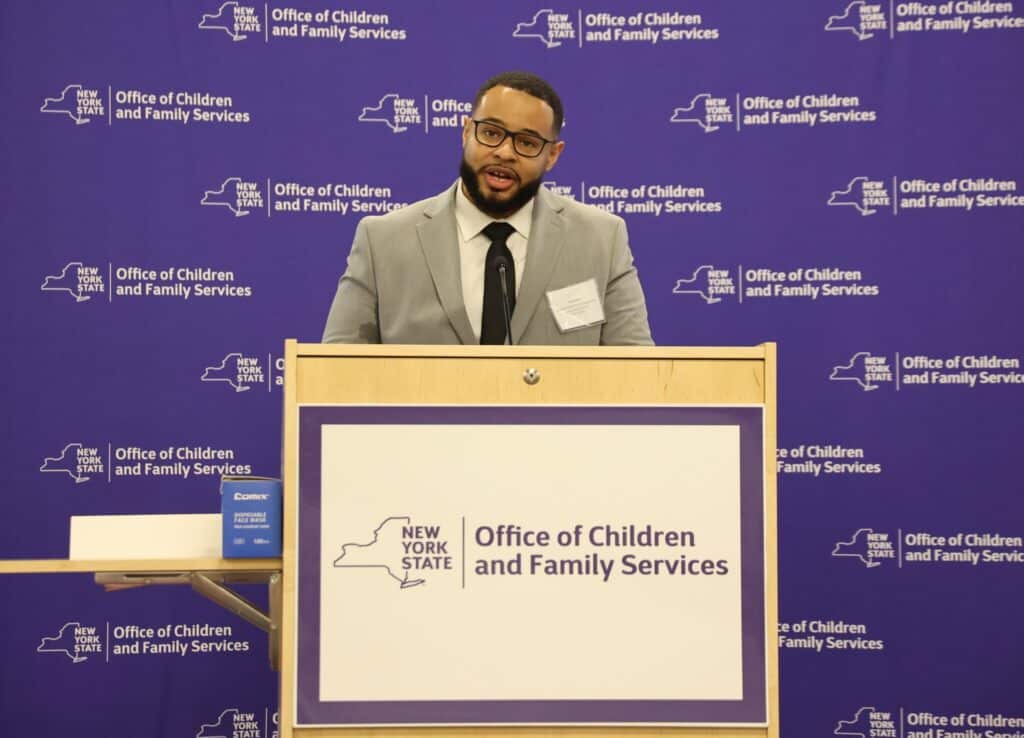
Office of Children and Family Services Commissioner DaMia Harris-Madden announced the effort in June as a strategic priority for her office.
“There is growing recognition that fathers must be intentionally included in the work of strengthening children, families and communities,” Harris-Madden stated. “Research continues to affirm what many families and communities have always known: When fathers and father figures are meaningfully and positively engaged, children and youth are more likely to experience better educational outcomes, fewer behavioral concerns, greater long-term stability and overall well-being.”
A key component is a newly formed New York State Fatherhood Steering Committee, made up of city and state officials, advocates for youth and families, and leaders of foster care agencies. The committee will recommend statewide policies and practices on how to promote father engagement. Some of its 33 members are fathers who have gone through difficult custody battles themselves. Others were incarcerated as minors or grew up in foster care.
The broad intent behind the initiative is to strengthen families. But by providing more targeted support and resources to fathers navigating the child welfare system, the agency aims to reduce the need for CPS intervention and keep more families intact.
Troy Grant, a licensed clinical social worker and policy advisor at the agency, will lead the fatherhood engagement initiative. He cites research findings that foster children with an engaged father figure are less likely to be moved frequently in foster care and significantly more likely to be reunited with their families.
Yet New York’s Office of Children and Family Services has found that fathers are less likely than mothers to participate in meetings about their children in foster care. In its most recent four-year service plan, the office directed local social service departments to ramp up efforts to include more fathers in case planning, school and medical appointments and family therapy.
Typically, child welfare conversations resources have centered on mothers, and support services for fathers have been lacking — even though they struggle with the same economic and parenting challenges.
“In the child welfare system, too often we disconnect from the dad,” Commissioner Harris-Madden said in an interview with The Imprint.
“Perhaps we can change not only their trajectory, but their child’s trajectory, and empower them to understand that, irrespective of where they are right now, they still have a valuable place in their child’s life and in society.”
— DaMia Harris-Madden, Office of Children and Family Services Commissioner
Last month, New York’s child welfare agency held a virtual training session for CPS workers, clinicians and nonprofit staff on the importance of fatherhood engagement. Attendees heard from a panel of fathers who shared stories about reunifying with children placed in foster care, and learned about how to better include fathers in case planning, visitation and navigating family court.
The agency also has a new podcast series about fathers. Episodes cover topics such as the emotional role they play in children’s lives, how their presence strengthens permanency outcomes, and specific tips for them about interacting with the child welfare system.
Young dads in the state’s juvenile facilities are receiving attention as well. Harris-Madden said her agency is working on a plan to offer parenting classes for roughly 40 fathers in the state’s nine residential facilities housing youth who’ve committed crimes.
“We’ve got to find things that give them hope,” Harris-Madden said. “Perhaps we can change not only their trajectory, but their child’s trajectory, and empower them to understand that, irrespective of where they are right now, they still have a valuable place in their child’s life and in society.”
Moving away from “Deadbeat Dad” framing
New York has made attempts to support fathers in the past. Nearly 20 years ago, Kenneth Braswell, CEO of Fathers Incorporated, directed pilot programs in five New York counties that were designed to help low-income, non-custodial parents, mostly fathers, secure stable employment and pay child support on time. He also trained judges on how to treat fathers more respectfully in family court cases.
Back then, he said, fathers were frequently described using “deficit language: deadbeat, absent, noncompliant, uninvolved, hard to reach, missing, a problem to manage.”
The question, “What about dad?” was often missing from the conversation, said Braswell. He delivered the keynote address at the initiative’s June launch event, which was co-hosted by the nonprofit Casey Family Programs. His national nonprofit works to equip fathers with the resources they need to be a consistent presence in their children’s lives.
“Sometimes that question was whispered by a father standing outside a courtroom, sometimes it was hidden inside a mother’s frustration,” said Braswell. “Sometimes it showed up in the face of a caseworker who knew something was missing from the family plan but did not have the structure, the training, or the permission to name it.”
Now, New York child welfare officials are looking to the newly formed Fatherhood Steering Committee to provide the state with a roadmap for the future.
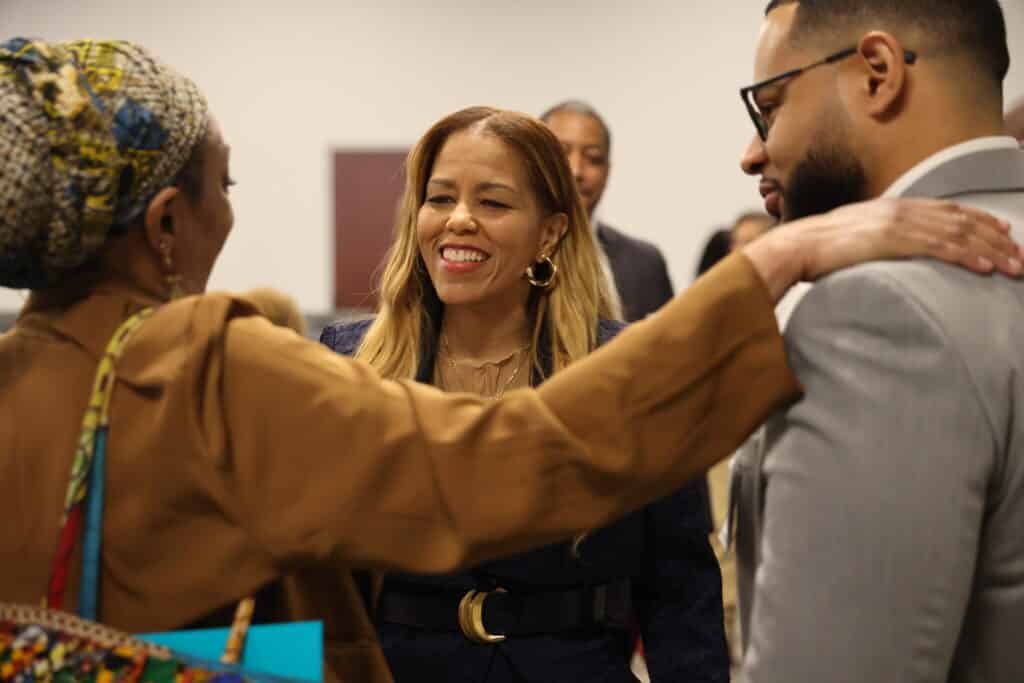
The committee will hold its first monthly meeting in September. Its primary task will be to identify and address barriers that prevent fathers from engaging with services and with their children, Grant said.
Grant’s interest in supporting fathers comes from a personal place. He said he entered the foster care system at 10 years old. His father, a Jamaican immigrant, lost custody of him following abuse allegations, and he believes different cultural approaches to discipline played a role in how his father’s actions were perceived.
“When my dad came to the U.S., there was no real support,” said Grant. “Maybe things would have been different if my dad had a father figure, or somebody here, a mentor, to guide him.”
With his father’s experiences in mind, Grant intentionally recruited committee members who reflected the state’s diverse cultural and ethnic backgrounds.
Another committee task will be to advise the state about ways to partner with more community-based organizations that offer resources and education on child support payments, housing insecurity, court advocacy, mental health support, domestic violence and co-parenting.
“When my dad came to the U.S., there was no real support. Maybe things would have been different if my dad had a father figure, or somebody here, a mentor, to guide him.”
— Policy advisor Troy Grant, a former New York foster youth
Vernon “Dyverse” Wooten is a steering committee member who runs a program called Fatherhood Matters for the Staten Island-based social services nonprofit United Activities Unlimited. Wooten was never involved with the child welfare system, but did endure a bitter custody battle over his 8-year-old daughter when he was a young father.
“My daughter’s 27 now, and we have a great relationship, but it’s still not, I think, what it should have been, or could have been, if there wasn’t so much trauma and hurt,” Wooten said. “I missed her middle school graduation, I missed her high school graduation. It was a lot.”
That custody fight inspired him to become a parent advocate for the New York City’s Administration for Children’s Services, he said. He also worked as a “visit coach” for parents with children in foster care, helping them build confidence, manage emotions, and engage in positive interactions during supervised visits, he said.
He later turned his focus to uplifting dads and helping them build stronger relationships with their children. His program offers support groups and male mentors for elementary school students. Parenting, anger management classes and mediation services for co-parents are also available.
Wooten said he believes expanding access to father-focused programs like his across New York will be vital to the initiative’s success.
“Those should just be basic, fundamental things that we do, to just put men on their feet,’’ Wooten said, “Stabilize the man, so that he can stabilize the child.”
Disclosure: Casey Family Programs, mentioned above, is a funder of Fostering Media Connections, The Imprint’s parent nonprofit. Per our editorial independence policy, the organization has no role in our news coverage.