

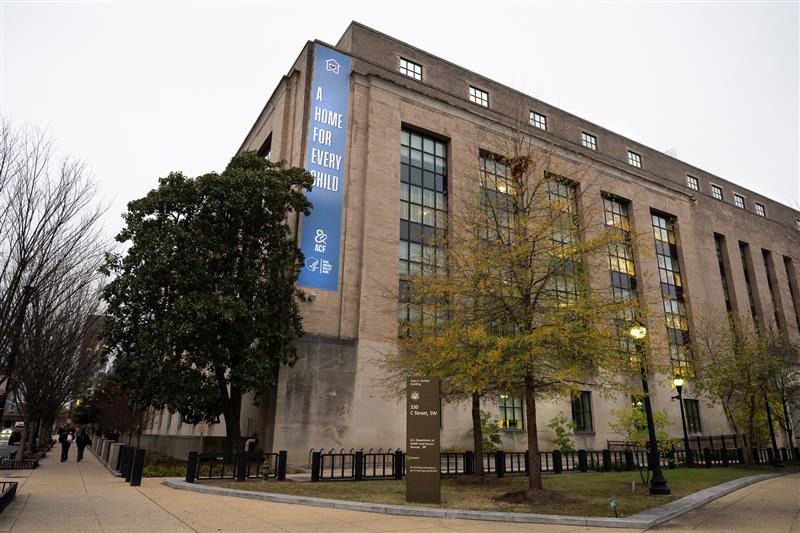
The nation’s top child welfare official has emphasized one urgent priority above others: ensuring there’s a home for every child in foster care.
To achieve that goal, Administration for Children and Families Assistant Secretary Alex Adams is calling on states to loosen an array of licensing requirements for foster parents — from vaccinations to a standard that “at least one applicant in the home must have functional literacy, such as having the ability to read medication labels.” Both of those provisions have been deleted from model standards released last month.
The administration’s May 5 recommendations also remove prior language stating that foster parents must have barriers around their swimming pools, and driver’s licenses and insurance if they use a car. States are not required to adopt the National Model Foster Family Home Licensing Standards, but they represent the federal government’s recommendations.
In an interview with The Imprint last month, Adams said his administration retained “the core features of health and safety” in its new guidelines. But when faced with kids sleeping in hotels, Airbnbs and government offices due to a lack of licensed caregivers, removing foster home standards for things like vaccines are appropriate, he said.
“If the choice is between keeping in this parameter and keeping out a family or placing a kid in the Red Roof Inn, which is preferable?” Adams asked.
Some advocates for foster youth praised the revised federal recommendations for scaling back what they called unnecessary foster home requirements that have not changed since 2019. They also praised newly added language urging states to fast-track some licenses and to reconsider automatic disqualification of applicants with less-serious criminal records.
Heidi Redlich Epstein, an associate director for the American Bar Association’s Center on Children and the Law, has studied states’ foster parent licensing for more than a decade. She has long argued the licensing process is cumbersome, and sees loosened requirements as necessary for increasing the availability of foster homes and keeping children out of government offices and hotels.
“There is a lack of good, appropriate homes for children,” said Redlich Epstein. “This is a really good pathway to getting children into safe homes.”
But some pediatricians expressed alarm about removing safety standards that protect foster children from infectious diseases and drowning.
A spokesperson for the American Academy of Pediatrics said it was dangerous to remove all vaccination requirements for foster homes.
“A child placed in a foster home should not be at risk of exposure to vaccine-preventable illnesses while in a home that is meant to offer them safety and stability,” said Dr. Katie Lockwood, a pediatrician, foster parent and spokesperson for the American Academy of Pediatrics.
In a letter to state agency leaders last month that accompanied the new guidelines, Adams and his top deputy, Cody Inman, said the federal government’s new model standards are aimed at the “clear and urgent need” to improve the ratio of foster children to available homes, and to remove “barriers that prevent qualified caregivers from stepping forward.”
“There is a lack of good, appropriate homes for children. This is a really good pathway to getting children into safe homes.”
— Heidi Redlich Epstein, American Bar Association’s Center on Children and the Law
In a follow-up interview, Adams said his team consulted with national groups about the guidelines, but said he did not know if his agency had discussed removing the vaccination requirements prior to the final decision.
States set their own licensing standards for foster homes, with widely varying requirements.
Simplifying the standards and making them more consistent has been a priority for Congress. In 2018, lawmakers passed the Family First Prevention Services Act, which requires Health and Human Services to create a model template states can follow.
But the law included no penalties for states that decline to follow those recommendations. What’s more, few state child welfare offices have adopted the federal government’s original licensing guidance released in 2019, Redlich Epstein said.
Nonetheless, some states have spent years working to reduce licensing requirements, with particular focus on kinship caregivers, such as children’s grandparents or aunts and uncles.
States have been more hesitant to scale back requirements for non-kin foster parents, as the Trump administration now proposes. According to one child welfare policy specialist, that’s due in part to states’ concerns about litigation risk if a foster child is harmed, as well as rising insurance costs.
Many of the changes issued last month apply to both kin and non-kin foster parents, including new language clarifying best practices for criminal background checks. That issue is at the center of a federal class-action lawsuit brought by foster children who’d been denied placements with relatives.
The new recommendations urge states to reconsider which prior criminal convictions automatically disqualify caregivers from fostering. Outside of a narrow federal list of the most serious felonies — including rape, murder and child abuse — they now ask states to consider the type and seriousness of other crimes, how long ago they were committed, “evidence of rehabilitation since conviction,” and “character references.”
The updated guidelines also specify a wider variety of suitable sleeping arrangements for babies, including a “bassinet, crib, pack and play, Native American baby board, or a baby box.” The new standards’ instructions for fast-tracking certain foster parent applicants applies to those previously vetted by other states, for example, or caregivers willing to house large sibling groups.
No vaccination rules for foster parents
Since 2019, federal licensing standards have stated that all would-be foster parents should have an up-to-date pertussis vaccine, and annual flu shots as well if they care for infants and medically fragile children. In addition, the standards required that all children already living in a prospective foster home receive the childhood vaccines recommended by medical experts.
“A child placed in a foster home should not be at risk of exposure to vaccine-preventable illnesses while in a home that is meant to offer them safety and stability.”
—Dr. Katie Lockwood, Pediatrician
In its recent update, the federal government removed any mention of immunization or vaccination rules for foster homes seeking a license.
Lockwood, who also holds an endowed chair with the Children’s Hospital of Philadelphia, described that move as ill-advised. She recalled seeing an infant who had not been immunized and later died from pertussis, a highly contagious respiratory disease known as whooping cough.
“It is important that we do everything we can to minimize the chances of catching this preventable disease,” she said.
Vaccine access has been under threat by the Trump Administration. Last year, the American Academy of Pediatrics and other leading medical associations sued Health and Human Services Secretary Robert F. Kennedy, Jr. and his agency to block their attempts to scale back the childhood vaccine schedule. A judge issued a temporary injunction in March, halting the reduction while the trial proceeds. The Trump administration is appealing that interim decision.
As with vaccines, until last month, federal model licensing standards also required foster homes with swimming pools to have life-saving floatation devices nearby, and “a barrier on all sides.” Now, the standards only require that any outdoor spaces, including pools, be “safe.”
Lockwood objected to that change as well, pointing to drowning as a leading cause of death among children.
Rick Barth, a child welfare expert and distinguished professor of social work at the University of Maryland, deferred to medical experts on what was most appropriate for vaccinations in foster home licensing.
But in general, he said he supports simplifying licensing standards for foster homes. He urged child welfare professionals to prioritize more thorough inquiries into foster parents’ judgement and character through applicant interviews and surveys of their personal references.
State child welfare agencies “should be erring a little bit more on the side of allowing for some discretion by foster parents and child welfare professionals about what is the pragmatic approach,” Barth said.
Sara Tiano contributed to this report.