

Unconditional, direct cash payments each month can provide a lifeline to young people transitioning out of foster care in New York City, new youth-led research suggests.
A report released Monday summed up the researchers’ conclusions: “Trust young people. Trust them with money. Trust them to name what they need. Trust them to make decisions about their lives.”
The yearlong pilot program was conducted by YouthNPower, a collective supported by the Children’s Defense Fund and the Public Science Project at City University New York, with one-time funding of $1.2 million from private philanthropic donors.
Starting in June 2023, 100 former foster youth ages 18 to 22 received no-questions-asked cash payments of $1,000 every month until May, 2024, along with counseling and other support. The YouthNPower team then surveyed the participants and contrasted their experiences with a control group of young people who did not receive similar monthly income.
The city’s Center for Innovation through Data Intelligence further analyzed the results and found “YouthNPower pilot participants were more likely to participate in the formal labor economy compared to a group of similar youth who were not receiving the payments.”
Most significantly, said Julia Davis, director of the Children’s Defense Fund, sustained cash payments allow former foster children — who often leave the system without family or financial support — to have some breathing room and stability.
“It gives young people the ability to be more buoyant in environments that are extremely precarious,” said Davis. “They can imagine and plan for a future, think more about their choices, rather than just survival.”
“Young people in the pilot described this shift as a turning point — from struggling to survive to beginning to feel like they were truly living in the world and had a place in it.”
— YouthNPower report
The study participants were chosen from over 400 applicants through youth-serving organizations and foster care agencies. After 12 months, most reported using the money for basic necessities: 90% reported that the money eased financial burdens so they could stay in school and more than 80% of participants were able to pay for housing essentials, many to get out of “abusive living situations.”
A majority of participants also used the money for medical emergencies, mental health medication and healthier groceries instead of fast food.
One unnamed participant quoted in the report described moving into her new apartment after a long search while two months pregnant.
“It’s a big help when you’re pretty much alone,” she said. “The adjustment was hard but I love having my own space, being out of the shelter, being able to do what I need to do for my kids.”
These are some of the similar struggles LaTroya Lovell, 32, faced when she voluntarily left the government’s care at 18. Now a researcher with the City University and a part of the team at YouthNPower that facilitated the study, Lovell said this type of assistance would have been invaluable.

At 21 years old, Lovell was “two steps away from” dropping out of college. Despite having received hard-earned scholarships, she felt overwhelmed balancing school with taking care of her newborn while living in a shelter.
Some of her sisters, who also grew up in foster care, chose to stay in the system through age 21 for housing help.
Lovell knew the city child welfare agency could have helped her find a bed or even provide some diapers. But walking into the building that housed the Administration for Children’s Services (ACS) felt impossible after all she had endured.
“You have to re-traumatize yourself by entering the building or calling the agency or speaking to a social worker,” Lovell said. “I was refusing to return, refusing to get help from a social worker, because it didn’t feel good for my mental health.”
The pilot project zeroed in on that urgent need for independence, something the report identified as “crucial for young adults transitioning from a system that dictated all aspects of their lives.”
Amid worries about what lies ahead, the consistent financial support offered by the pilot program protected participants from the “precarity of their lives after foster care,” the report stated. “Young people in the pilot described this shift as a turning point — from struggling to survive to beginning to feel like they were truly living in the world and had a place in it.”
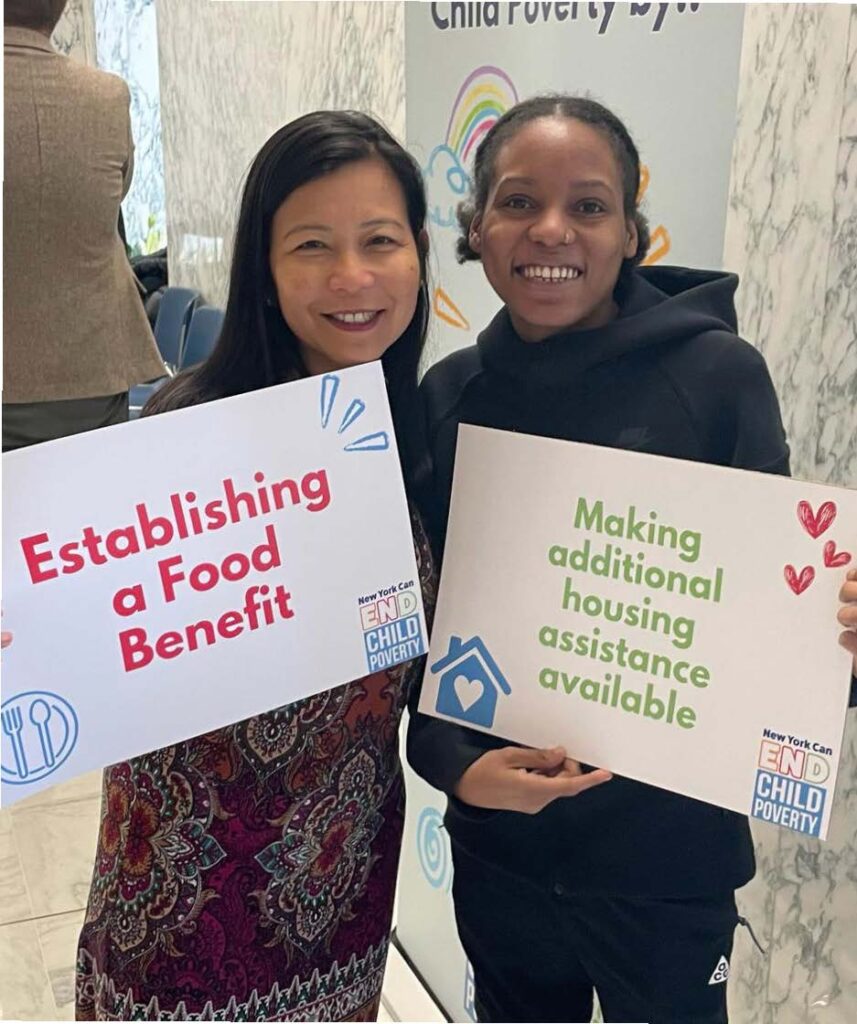
Many former foster youth in the study who were employed before the pilot started said they lived paycheck to paycheck. Young people in both the treatment and the comparison groups lived far below the federal poverty level — $15,060 annually for a household of one — according to the report’s analysis.
Accessing government assistance is yet another battle. Even though many aging-out foster youth qualify for federal benefits such as food stamps and housing vouchers, they often give up on applications after encountering complicated forms and long waiting lists. Over half the pilot’s participants had been unable to afford food in the month before receiving cash assistance, according to the study.
“Some of these services are so punitive and inaccessible. There are so many hurdles that it can disempower you,” Lovell said.
If direct-cash assistance were available for former foster youth like herself, she added, “maybe that time of life would have felt a little bit less volatile — because we all were in survival mode and we did not feel like ACS was supportive.”
Other than basic essentials, participants reported finally being able to save for their future, throwing their children a birthday party and even sharing the money to help friends afford school and transportation — an overlooked need for those in foster care, Davis said.
“Young people aging out of foster care have had their legal rights to their family terminated by the courts,” Davis said. “So to have resources they can use within their networks of family and friends really helps to reestablish and support young people’s connectedness.”
Inspiration for the study came from a state-approved guaranteed income program for foster youth in California. The historic law was passed in 2021 with a $35 million budget and directed the state to give its transitioning foster children $1,000 a month for up to a year, with no strings attached. Similar efforts are growing nationwide, many with a focus on tackling youth homelessness: A 2024 federal bill proposed payments for up to five years, but did not make it onto either the Senate or Assembly floors.
Davis, who oversaw the pilot, emphasized that direct cash assistance only works as an addition to other long-term solutions for foster youth — similar to the conclusion reached by the Center for Innovation through Data Intelligence.
And despite the positive findings, the report found limitations with the year-long program. After 12 months of payments, 40% of the young participants indicated they were still unable to afford food or groceries, and 33% struggled with rent, according to the YouthNPower report.
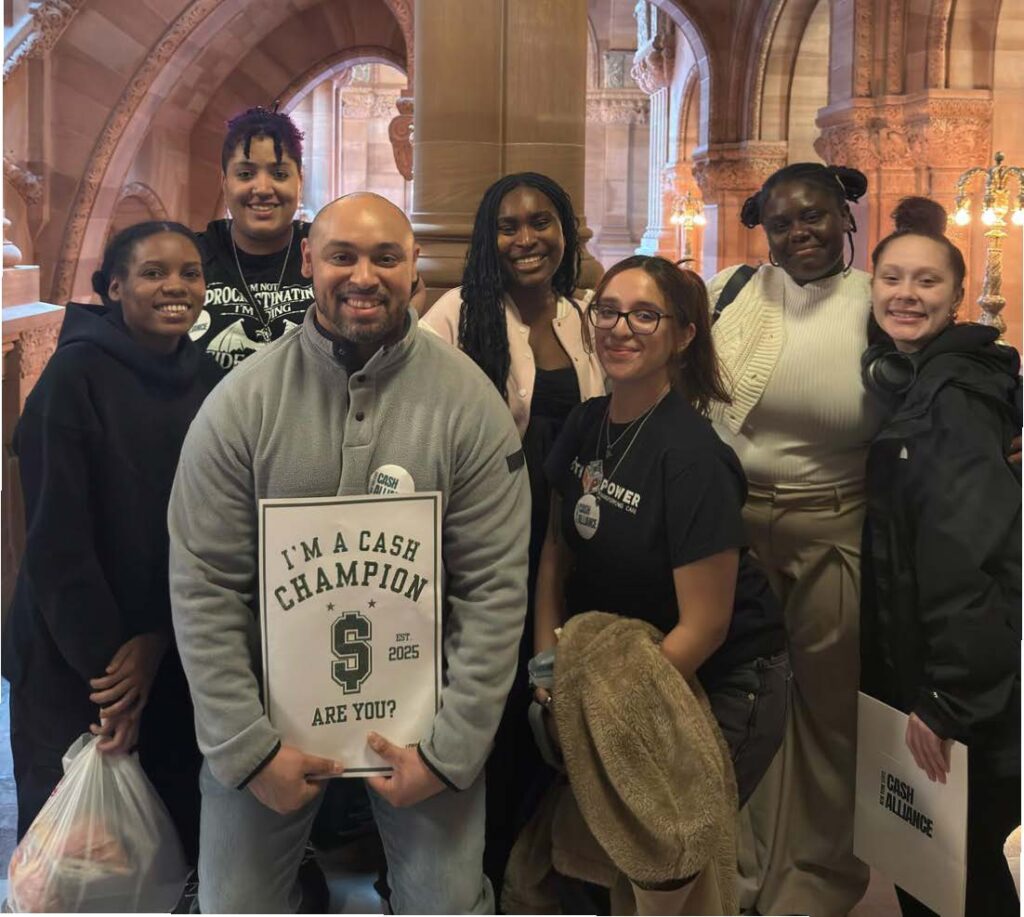
The group’s goal is to convince New York lawmakers to propose legislation providing transition-age foster youth with $1,500 per month for up to five years. The organization plans to release a second round of data next year, following up on whether the cash infusion helped participants maintain employment, education and housing two years later.