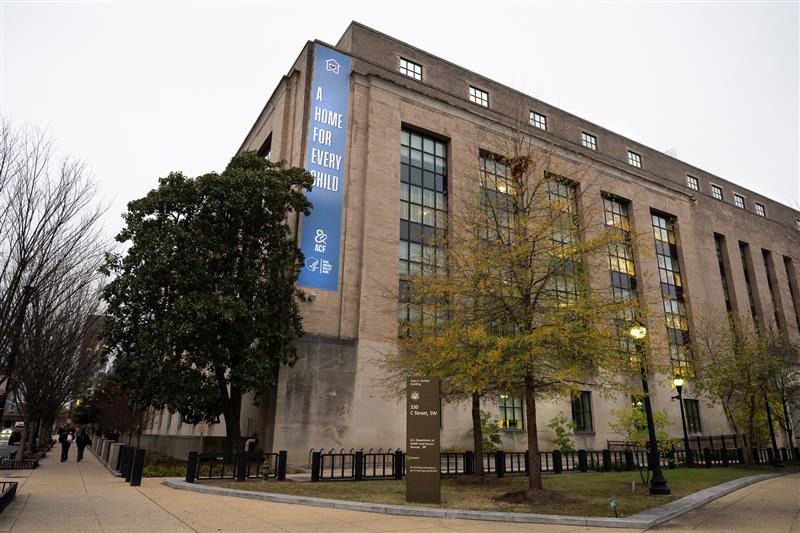


Part one of a two-part series. Read part two here.
As this country battles yet another drug epidemic, medical authorities and the federal government continue to promote “medication-assisted treatments” like methadone as the most-effective frontline defense against the ravages of opioid addiction. The Rehabilitation Act of 1973 and the bedrock Americans with Disabilities Act protect these patients from being discriminated against for their prescriptions.
Yet too often, parents managing addiction under doctor’s orders with methadone or similar medications are set up for failure in the nation’s foster care courts. Problems exist to some extent across the country, according to recent lawsuits, federal investigations and interviews with more than a dozen court officials, parents, advocates and disability rights activists.
“It’s against the law to hold it against people, but the courts don’t understand that,” said Montgomery County Juvenile Court Judge Anthony Capizzi of Ohio.
Capizzi is among those concerned that misinformed hospital employees, social workers, and even his fellow judges are part of the problem. Against all sound medical advice, he said, too many players in the child welfare system pressure parents to quit medication-assisted treatment, known as MAT, under the threat of losing their children to foster care.
He pointed to a 2019 resolution approved by the National Council of Juvenile and Family Court Judges, which advises the 30,000 professionals it serves that “denying access to the use of safe and legal MAT to persons in need is a violation of federal anti-discrimination laws.”
Yet Judge Capizzi — the council’s past president who trains court officials on medication-assisted treatment — said most judges still consider it a sign of active addiction that poses a risk to children.
“Clearly the majority don’t have the education,” he said. “They believe the only way to succeed is abstinence.”
Discrimination concerns in multiple states
The full extent of such conflicts with the law is not currently known.
Lawyers, social workers, judges and advocates in California, New York, Texas, Ohio and West Virginia described bias in the child welfare system against medication-assisted treatment as regularly occurring, despite the federal protections.
“These are not just life sustaining, but life-saving medications,” said longtime methadone patient advocate Abby Coulter, who founded the grassroots organization Methadone Maintenance Treatment Support & Awareness. Yet “people actually have to fight to have their own kids in their lives just because they’re on methadone.”
Federal agencies have also weighed in. In the past seven years, officials have intervened in three states after identifying discrimination against parents or caregivers offering to care for foster children.
Among the cases:
- An ongoing federal lawsuit in upstate New York involves a mother who was investigated by CPS in the hospital and at her home after the birth of her newborn due to her use of Subutex, a brand name buprenorphine medication. In an amicus brief, the U.S. departments of justice and health and human services concluded that such scrutiny violated federal anti-discrimination laws:
Hospital staff who called CPS and temporarily separated Nicole Costin from her newborn followed a blanket policy that “discriminates on the basis of disability by targeting pregnant people taking medication for opioid-use disorder for disparate treatment — specifically drug testing and CPS scrutiny,” federal officials wrote to the court.
The experience upended what should have been a joyous moment, Costin told The Imprint. “The focus was taken off of me being pregnant and the baby, and it was now on this biased vision that they had,” she said. “They were being very discriminatory. They saw me in a certain light, and they were sticking to that and treating me accordingly.”
- In Pennsylvania last year, an agreement announced by the U.S. Department of Health and Human Services’ Office for Civil Rights ensured the state cannot discriminate against prospective foster parents receiving medical treatment for substance use disorder. The agreement stemmed from a complaint that the Northumberland County child welfare agency discouraged a woman from applying to become a foster parent based on her use of methadone.
- In 2020, federal officials also called West Virginia to task, following a similar complaint filed by an aunt and uncle who had been barred from fostering their young niece despite a favorable home study. The oversight agency determined that social workers denied the placement “based on the uncle’s being in recovery from opioid use disorder and his long-term use of physician-prescribed Suboxone as part of his medication-assisted treatment (MAT) program.”
In that case, federal officials said, West Virginia’s Bureau of Children and Families Programs “declined to provide the aunt and uncle the opportunity to serve as a kinship placement option for these children, even though the aunt would have been the primary caregiver, and even though the uncle had not tested positive for illegal use of drugs during the course of his treatment (and eventually ceased using Suboxone altogether).”
In both Pennsylvania and West Virginia, the agreements forced by the feds required the states to determine children’s safety based on “current medical knowledge or the best reliable objective evidence,” rather than “generalizations and stereotypes.” They required the state child welfare agencies to train employees that medication-assisted treatment “is not akin to the illegal use of drugs” and “does not indicate that an individual is trading one addiction for another or using MAT to get high.”
Overall numbers on how often discrimination occurs are hard to pin down.
In a joint investigation published last year by Reveal and The New York Times Magazine, a reporter sent public records requests to all 50 states and Washington D.C. She found no agency tracks how many parents on legally prescribed medications are investigated by CPS, nor how frequently their children are taken into foster care as a result. But the report found nearly 4,800 women had been reported to authorities for using medication-assisted treatment while pregnant, and at least 40 newborns subsequently taken into foster care. Sixteen hadn’t been returned to their parents as of last year.
“Judges have been acting as a medical opinion, with really no checks or balances on the fact that they’re not licensed to practice medicine and actually shouldn’t be making a medical determination for the person who’s standing in front of them in family court.”
— Melissa Moore, the Drug Policy Alliance
“It’s like a sick game,” one mother from Oklahoma is quoted in the piece. Caitlyn Carnahan’s baby was taken from her five years ago, for eight months. “They don’t want you on illicit street drugs, so here, we’re going to give you this medicine,” she said. “But then if you take this medicine, we are going to punish you for it and ruin your family.”
‘Still a drug addict?’
In an interview this summer from her Southern California apartment, a mother from San Pedro described the role her methadone use played in the loss of three children over a decade. The Imprint is not naming the 41-year-old to protect her children’s identities.
She has taken methadone or Suboxone for nearly 23 years to treat an addiction to heroin. When she was pregnant with her first child in 2011, she said she openly discussed her reliance on medication-assisted treatment with her health care providers. She went to prenatal visits and gave birth without issue.
But 18 months later, she said she visited the hospital due to side effects from her anxiety medication, and received an unexpected, devastating blow: Medical staff were concerned about methadone being among her prescriptions, and reported her to child protective services.
“They basically said I was still on drugs, I was still a drug addict,” she said.
When she went to court to regain custody of her daughter, her use of methadone landed her in trouble again. The judge ordered her to inpatient rehab programs. She put out calls to multiple treatment providers. None would allow her to join a program while she was on medication-assisted treatment for her addiction, she said.
“I couldn’t do it,” she described of her multiple attempts to go cold-turkey in order to enter court-ordered rehab. “I couldn’t get my daughter back because I couldn’t get off the methadone.”
As of 2020, nearly half of the nation’s residential drug treatment programs do not offer patients methadone or similar medications, according to federal data, and some don’t admit patients at all if they use these treatments. Narcotics Anonymous, the largest 12-step program targeting opioid users, states that “addiction is treated by abstinence,” and many sober living facilities — or “halfway houses” for people leaving in-patient rehabs — follow this abstinence-only mandate, too.
Years ago when the San Pedro mom was seeking help, it was even harder to find rehabs that permitted medication-assisted treatment, said Ahmed Eid, who leads the opioid response program at the Hazelden Betty Ford drug treatment center.
Days after a court date at which a judge declined to reunify mother and daughter, she gave birth to a second baby girl. Authorities took custody before the newborn left the hospital, citing the in-utero exposure to methadone, she said.
At first, both girls stayed with their father. A judge ordered their mother to leave the family home. When CPS discovered he was allowing her to babysit the girls while he worked, he too lost custody. The children went to live with a nearby aunt and uncle, and later went into foster homes.

It would take nearly 10 years and losing custody of a third child before the San Pedro mother’s case landed in front of a judge who saw her methadone reliance as an acceptable medical treatment, she said. She brought her children home this summer.
A series of 2018 reports by the Department of Health and Human Services confirmed similar cases elsewhere in the nation. Researchers for the federal agency who studied the issue interviewed 180 judges, social workers and treatment providers in 11 communities and found that “a number of stakeholders” considered medication-assisted treatment to be another form of addiction. “Some viewed buprenorphine as a primary drug of abuse, little better than heroin,” the report stated.
“There’s a mindset that ‘you can’t take these drugs and get your kids back,’” Judge Capizzi said.
‘Gold standard’ of treatment for opioid addiction
Opioids comprise a class of drugs that include heroin as well as prescription painkillers like oxycodone, morphine, codeine and fentanyl. They trigger the release of endorphins, easing pain and boosting feelings of pleasure and well-being. They are the deadliest type of drug.
Although the numbers appear to now be in retreat, almost 82,000 Americans died from opioid overdoses last year, according to federal data.
Methadone, buprenorphine and naltrexone are approved by the Food and Drug Administration to treat opioid use disorders. They block receptors in the brain targeted by the drugs, reducing cravings and withdrawal without producing euphoria. Patients are more likely to remain sober, and less likely to relapse or overdose than those who attempt abstinence, according to the National Institutes of Health. Methadone, the oldest of the medications, has been prescribed since 1947 and is covered by Medicaid, often for many years or even over an adult patient’s lifetime.
What’s more, the American Medical Association, the Centers for Disease Control and the American College of Obstetrics and Gynecologists endorse the medications for use among parents and pregnant patients struggling with opioid addiction.
Use of medication-assisted treatments can also decrease the necessity for foster care removals and long-term, out-of-home placements. A 2016 study of 600 family court clients in Kentucky found that parents with opioid addiction were 120% more likely to retain custody of their children if they treated their substance use disorder with addiction medication. That rate increased by 10% for each additional month a parent stayed on the meds.
A newer study released in July by researchers at Vanderbilt University found similar results: “If women are given medications to treat opioid use disorder during their pregnancy they are significantly more likely to retain custody of their newborns after delivery,” according to a press release on the research.
“If anything, it makes them a better parent,” said Eid of the Hazelden Betty Ford center.
The federal government has tended to agree. In 2019, methadone was endorsed as an approved form of treatment for funding through the national Family First Prevention Services Act, which aims to prevent foster care removals. The federal law allows local governments to receive federal reimbursement for evidence-backed treatments such as methadone maintenance therapy, which pairs the medication with counseling.
Nonetheless, at the same time the federal government has promoted medication-assisted treatment to combat the ongoing opioid epidemic, Congress passed legislation bringing parents who rely on it into the crosshairs of Child Protective Services.
Hospitals were previously required to report all newborns who tested positive for illicit drugs such as heroin or cocaine. As rates of prescription opioid abuse soared over the past decade, a 2016 law required them to flag when newborns are impacted by prescribed drugs like methadone as well.
This federal law requires that CPS be “notified” in such cases, but the notification does not necessarily constitute a report alleging abuse or neglect. The law also requires that non-identified, cumulative data on such cases be shared with state health authorities.
But many medical professionals, who are trained as mandated reporters, misunderstand that, said Melissa Moore, director of civil system reform with the Drug Policy Alliance, and so abuse and neglect cases ended up in the foster care courts.
“Judges have been acting as a medical opinion, with really no checks or balances on the fact that they’re not licensed to practice medicine and actually shouldn’t be making a medical determination for the person who’s standing in front of them in family court,” Moore said.
It would take nearly 10 years and losing custody of a third child before the San Pedro mother’s case landed in front of a judge who saw her methadone reliance as an acceptable medical treatment.
Christine Waer, managing director of litigation at New York City’s Center for Family Representation, said requiring parents in child welfare cases to stop using medication-assisted treatment or risk losing their children reflects a “total misunderstanding by the government and the court about what opioid treatment looks like.” She emphasized that medication-assisted treatments can be lifelong. “Many people remain on some course of methadone for the long term, and maybe never wean off of it.”
“Because of that misunderstanding,” Waer said, “it can result in termination of parental rights, because our client will never test negative, because they always have to be on methadone.”
Balancing child safety with realities of addiction
The hazards to children of parental addiction are real, and authorities reluctant to accept methadone and similar treatments typically fear the worst.
Parents abusing substances are more likely to neglect their children, leave the house in disrepair or fail to keep cupboards stocked with food. They may not be able to properly supervise their kids while intoxicated, and are more likely to physically harm them as well, according to a 2018 study that drew from the federal National Survey of Child and Adolescent Wellbeing. Parental substance abuse is also considered an adverse childhood event that can impact a child’s ongoing health and development.
Of youth who end up in foster care, federal data shows that a parent’s drug use played a role in a third of those removals.

Nearly 725,000 children live with a parent who abuses opioids, according to a 2022 report from the federal government. Parents have overdosed in front of their children and babies and toddlers have died after ingesting fentanyl left unattended in homes and day care centers. Federal health officials report that parts of the country with the highest rate of opioid overdoses have simultaneously seen the highest increases in both child maltreatment and entries into foster care.
That reality means decision-makers working maternity wards, CPS hotlines and the juvenile courts may be wary of leniency for moms on methadone.
Some remain skeptical, in no small part because they know drug addiction has no easy fix. Between 80% and 95% of people who quit opioids will relapse in the first year, according to data from the Hazelden Betty Ford Foundation.
In a related court case in Sullivan County, New York, federal officials pointed to the potential for widespread bias. They noted that few other societal issues “give rise to the same level of public fear and misapprehension as the challenges facing persons recovering from substance abuse disorders.”
Training for change
Not every state, county and courtroom follows a hard line. Some authorities have changed earlier stances. How parents are treated can depend on the hospital where a baby is born, or the social worker assigned to investigate a report of alleged maltreatment. Outcomes in court can shift depending on who hears the cases.
Texas Judge Aurora Martinez Jones, who hears foster care cases in Travis County, said learning from medical experts about medication-assisted treatment helped her become more open to working with parents who rely on it. That has allowed her to help keep more families intact.
“Whenever we started following doctor’s orders to fidelity, then we were seeing the improvement,” Martinez Jones said.
She also pointed to the disconnect between how treatment for substance use disorder is viewed less compassionately than other mental health conditions: “I don’t know at any time that I would demand that a parent stop taking their medication for something like depression, anxiety or ADHD before they can have their child.”
In Ohio, Judge Capizzi had a similar experience.
“When I started on the bench 23 years ago, I had a hard time understanding the validity of giving people drugs to get them off drugs,” Judge Capizzi said. “I needed to be trained and to talk to people that had been in it, to realize how successful it was and how it could help my kids and families.”
In Los Angeles County, lawyers for parents have received training on Americans with Disabilities Act protections as they apply to their clients facing child abuse and neglect allegations. Social workers at the local child welfare agency are removing far fewer children because of their parents’ use of medication-assisted treatment, attorney Curtis said. And when those cases do come into her firm, Curtis said the ADA arguments they’ve been trained up on have been largely successful.
Her San Pedro, California, client’s case is the first one in which Curtis successfully used this anti-discrimination argument in court. On June 29, a Los Angeles County judge restored custody of the mother’s youngest child to her custody. Shortly thereafter, she was able to get shared custody of her oldest two, as well. After several months of being monitored at home by CPS, the case is set to be closed this week.
A fragile reunion
The San Pedro mother recalled the judge saying “not only that I shouldn’t get off’’ methadone, “but that I should stay on it as long as it’s helping me. She understood that methadone is a treatment, and that it shouldn’t be a reason to lose your kid.”
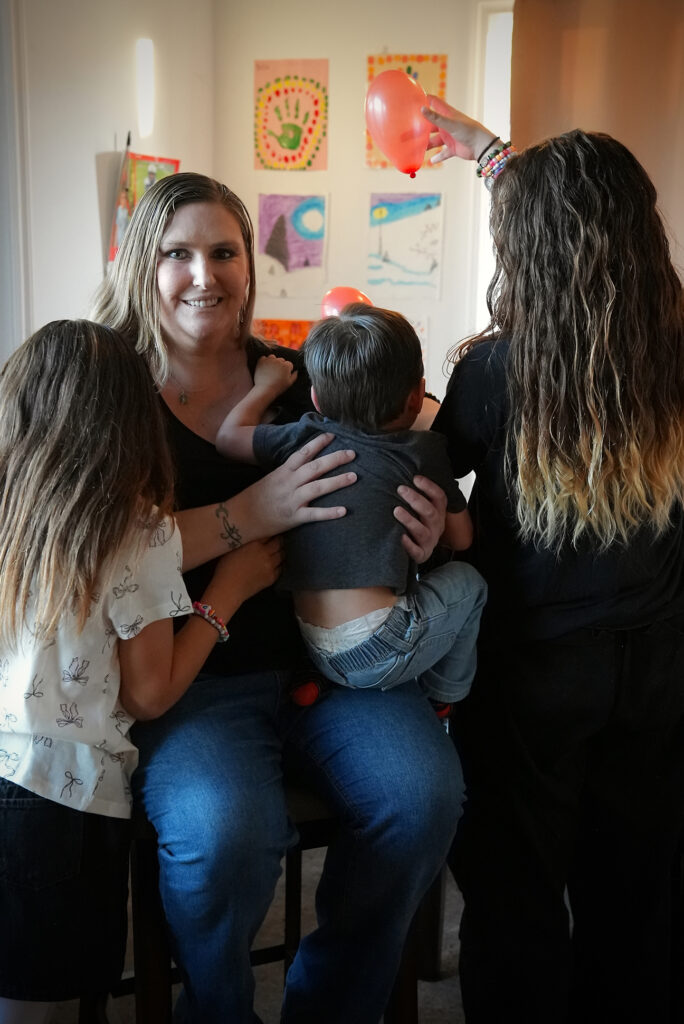
In late July, she sat inside her home holding her 2-year-old — a quiet boy with big, brown eyes — in her lap. The apartment was quiet, too. Two older daughters, 8 and 13, were spending the week with their father. But their faces smiled out from a photo calendar by the window, and artwork and school awards decorated the walls. Name tags marked their places at the table in the dining nook.

The family’s reunion is new and fragile. The mom said she feels relieved the worst feels over, and she’s excited about being able to fully care for her children.
But she said she also feels a lot of anxiety. Even though her children are back home, she knows that she and parents in recovery like her are under the ever-watchful eyes of child welfare systems. In her case, it’s the Los Angeles County’s Department of Children and Family Services (DCFS).
She says she hasn’t used illegal drugs for years.
But nonetheless, “I’m always thinking, what if he falls and hits his head or something?’ she said, as she rubbed soft circles on her son’s small back. “I take him to the hospital, and — just because I’m on methadone — they call DCFS. It terrifies me that anything could happen. Anyone could think I’m high. And they could just take him — just like that.”
This story has been updated to more accurately describe the 2016 federal law affecting children exposed to prescribed drugs.
Tomorrow: An upstate New York mother has sued the hospital where she gave birth, after she was reported to CPS for using prescription medications for her addiction.
BEFORE YOU GO… If you learned something from this article, pay it forward and contribute to The Imprint. Our work is funded by readers like you who are committed to unbiased journalism that works for you, not for the algorithms.