Foster youth luggage bill also signed, while “hidden foster care” tracking is vetoed
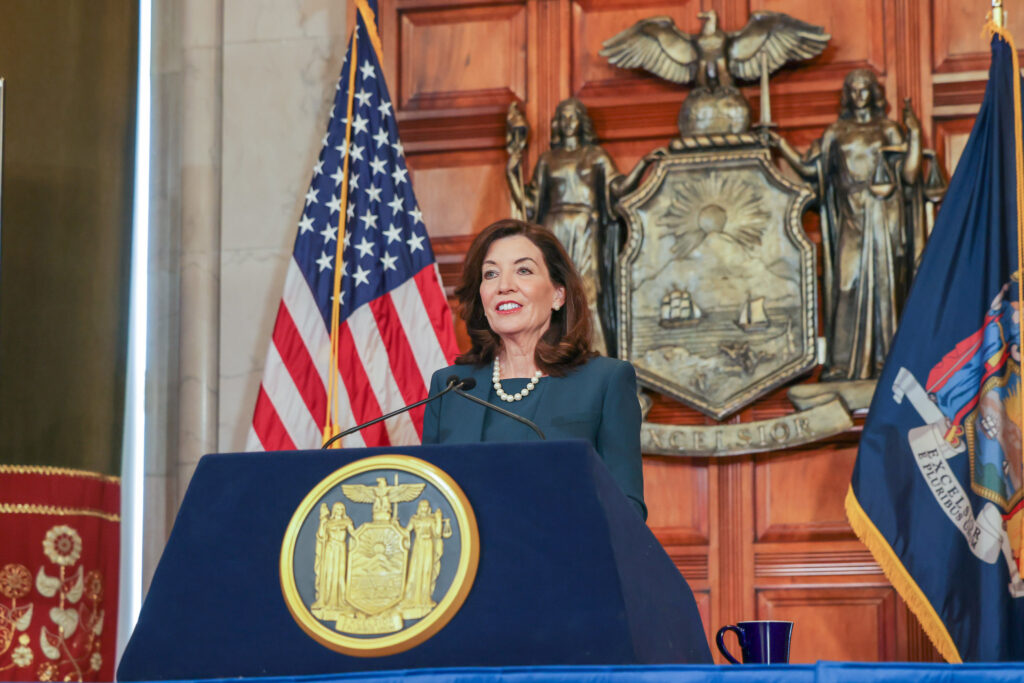
Marking a major victory for parents rights advocates, New York Gov. Kathy Hochul signed a bill Friday night to end the long-standing yet controversial practice of accepting anonymous reports to the state’s child abuse and neglect hotline.
Supporters of the legislation have argued that callers to the Statewide Central Register of Child Abuse and Maltreatment (SCR) who do not leave their names and contact information are more likely to be lodging false accusations — a form of harassment that can result in frightening home investigations. Anonymous calls are often made by abusive former partners and in some cases vindictive landlords and neighbors.
Shalonda Curtis-Hackett, a parent advocate who has testified before New York lawmakers about her personal experience with false CPS reports, said that after four years of raising awareness about the issue, news of the signed legislation felt “amazing.”
“As a parent who’s been impacted by anonymous reporting, you always feel that nothing’s going to change,” said Curtis-Hackett, now with the Neighborhood Defender Service of Harlem. “You just had to hope somebody didn’t make a call. You just had to hope that the CPS investigator believed you. So we live in a constant state of fear. And I really want people to feel like now we can walk this earth less fearful of a system that is technically supposed to help.”
Text of the new law, the Anti-Harassment in Reporting Act, was first drafted by members of the Parent Legislative Action Network, founded by parents’ rights activist Joyce McMillan.
Assemblymember Andrew Hevesi and Sen. Jabari Brisport co-sponsored the bill, which was initially introduced in 2021.
“This moment is a victory by and for working class people — and proof that when our community comes together and fights, we have the power to win meaningful change,” Brisport said in a statement. “I look forward to following this historic step with additional legislation to protect Family Civil Rights in New York.”
The law goes into effect next summer. In the meantime, it requires updated training for hotline operators. Advocates have promised to track how well the new rules are implemented by monitoring new data on investigations.
New York now joins Texas as the only state to fully curb the practice of anonymous reporting to the child maltreatment hotline. California passed a “confidential reporting” law in 2024, requiring all callers to provide their names and phone numbers, but with the assurance their information will not be disclosed.
In New York to date, there have been no restrictions on calls made to the Statewide Central Register of Child Abuse and Maltreatment. Hotline staff pass on reports to county social service agencies, triggering CPS investigations that can last up to 60 days. Child welfare workers must investigate every credible allegation, even if the reports are repeat claims and child welfare workers have not found evidence of maltreatment in the past.
The law requires callers to leave their names and contact information making reports to the hotline. If they refuse, no formal investigation will occur. Hotline staff will instead direct callers to the state’s HEARS line, which connects families to services such as housing and child care. The law ensures caller confidentiality by prohibiting the state from releasing identifying information unless ordered by a judge.
Legislators say the change will enable CPS workers to spend more time on credible claims instead of false reports.
Anonymous reports of child maltreatment are often unreliable. Data collected by the Family Policy Project showed that from 2015 to 2019, the percentage of maltreatment allegations that are “substantiated,” or deemed legitimate by CPS — was far lower for anonymous calls than those where callers identified themselves. In 2023, just 7% of investigations stemming from anonymous calls in New York City were substantiated, compared to 22.5% of all reports. The bill’s summary cites an even lower substantiation rate for anonymous reports, based on federal data: just 4%. And there’s a stark racial disparity in the number of calls and investigations — 88% of children involved in investigations in New York City are Black and Latino.
“Too often, family regulation laws and practices inflict harm on the very children they are supposed to serve,” Chris Gottlieb, director of the Family Defense Clinic at New York University, said in a press release. “The shift from anonymous to confidential reporting is expected to significantly reduce the number of unnecessary, harmful investigations.”
“This moment is a victory by and for working class people — and proof that when our community comes together and fights, we have the power to win meaningful change”
State Sen. Jabari Brisport
In other child welfare news as the year draws to a close, Gov. Hochul has also signed legislation that aims to end the use of trash bags to transport foster children’s belongings when they move between homes, and to provide duffels or suitcases instead. Current and former foster youth have been advocating for the bill at the state Capitol since early this year, describing their experiences during moves — with everything they own jammed in a plastic trash bag — as “humiliating” and “dehumanizing.”
Foster children in New York typically move an average of three times, according to the bill’s text. At a rally this spring, young people described caseworkers tossing their belongings into the black bags, their precious mementos often falling out or breaking during transport.
Texas, Maryland and Oregon already have laws barring the practice.
Although the New York bill passed the Legislature unanimously this summer, its youngest advocates are unhappy with recent amendments made by the governor’s office.
Under final bill language, responsibility will fall on local social service departments to provide suitcases to the roughly 13,000 foster youth in New York, rather than the state Office of Children and Family Services. A previous proposal requiring data reporting has also been removed.
“I’m encouraged that New York State has taken an important step to ensure young people in the child welfare system are treated with the dignity and respect they deserve,” youth advocate Sofie Fashana, who championed the bill, said in an emailed statement. But, she added, “Removing reporting requirements and a clear funding structure weakens the bill and leaves no meaningful way to ensure agencies are actually complying. Children should never bear the burden of accountability for a basic, common-sense practice that the state has a responsibility to ensure.”
Another much-watched bill has had less success this year. Legislation that aims to track “hidden” or “shadow” foster care — informal living arrangements for children who are removed from their homes and placed with relatives or friends after a CPS investigation — was vetoed by the governor yesterday.
Update: This article has been updated to include more information about the origins of Bill S550A, also known as the Anti-Harassment in Reporting Act.