

Two years after the COVID-19 pandemic began, the number of youth in foster care continues to decline, according to new federal data covering fiscal 2022.
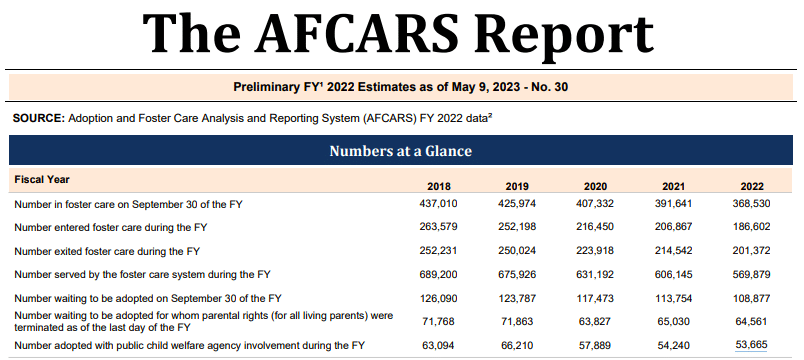
There were 368,530 youth in foster care in the 50 states, Washington, D.C. and Puerto Rico in 2022, 6% fewer than 2021 and 16% fewer than 2018. The decline continues to be fueled by plummeting entries into care, which has more than made up for the fact that stays in foster care have grown longer and exits from the system have slowed.
“We are pleased the overall number of children entering foster care is declining,” said Aysha Schomburg, associate commissioner of the U.S. Children’s Bureau, which oversees the Adoption and Foster Care Analysis and Reporting System (AFCARS). “We will continue to work hard to ensure families have the necessary supports and services so children can remain at home as often as is safely possible and avoid the foster care system.”
Data collected directly from states each year by The Imprint suggests that the trend downward continued in 2023. There were 355,032 youth in traditional foster care settings at the end of March 2023, based on our state-by-state surveys, which did not include Puerto Rico.
Youth Services Insider will soon dive into the minutiae of the AFCARS report, including the state-by-state data. For now, below are a few topline numbers and a few things that jumped out right away to us. Click here to read the AFCARS national report yourself, and here for the state-by-state numbers.
In Foster Care
Total: 368,530
Vs. 2021: -6%
Vs. 2018: -16%
Entries during Fiscal 2022
Total: 186,602
Vs. 2021: -10%
Vs. 2018: -29%
Exits During Fiscal 2022
Total: 201,372
Vs. 2021: -6%
Vs. 2018: -20%
Adoptions from Foster Care during Fiscal 2022
Total: 53,665
Vs. 2021: -1%
Vs. 2018: -15%
Reunification Rate Declines Again
The percentage of children exiting foster care to reunification dropped below 50% for the first time in 2017, and it has not gotten back over that mark since. In 2022, it ticked down to a new low of 46%. While the report shows adoptions from foster care declined, the percentage of exits that were to adoption went from 25% to 27%.
Time in Care Continues to Go Up
The AFCARS report includes the mean and median time for youth in foster care, and both continue to trend upward. Based on the mean, the average youth in foster care spent 22.5 months in the system, nearly three more months than in 2018.
Drug-Related Cases Down
In 2015, the annual AFCARS report started to include a breakdown of the reasons related to foster care removals, with the caveat noted that more than one reason is frequently documented in a single case. After “neglect,” the second-most frequent reason listed has been drug abuse by the parent.
That is the case in 2022 as well, but the presence of drug use on removal reports declined quite a bit from the previous year. There was a 17% drop in total cases where drug abuse was a listed reason for removal, and the percentage of cases where it appeared dropped three percentage points. When you compare to 2018, the number of drug-related removals is down 35%.