When they turn 18, foster youth disconnected from their families with no permanent home are given a choice: In exchange for working, training or studying, they can remain in the child welfare system and receive cash stipends and housing support.
But unlike help from most parents at this vulnerable age, foster youth have to sign up for the assistance. And under strict federal rules, the support is conditional. If they fail to perform, young adults can be cut off from these lifeline extended foster care benefits in just one month.
Novel legislation passed by the Washington Legislature this month tosses aside those restrictions. Senate Bill 5908, authored by state Sen. Claire Wilson, acknowledges the unfair nature of the deal, and the particular challenges foster youth face achieving complete independence at age 18.
“Parents believe their job is to help their children,” Wilson told The Imprint. “And if we’ve got kids that are being raised by the state, then it is our job to be the parent for those kids and to help them — and that’s what I think this does.”
Wilson’s SB 5908 would make enrollment at age 18 easier for those aging out of foster care and would ensure all participants in the program receive financial help, regardless of whether they meet work and study requirements. The assistance, alongside case management, would continue through age 21 unless participants chose to leave.
The legislation represents a significant expansion of the ways extended foster care programs operate nationwide, and would require state funding to enact. Because states receive federal funds for extended foster care only when they enforce work and study requirements, Wilson’s legislation would require an estimated $1.8 million from state coffers over the next five years. The bill — passed by lawmakers on March 6 — awaits approval from Gov. Jay Inslee. If signed into law, it would take effect in June.
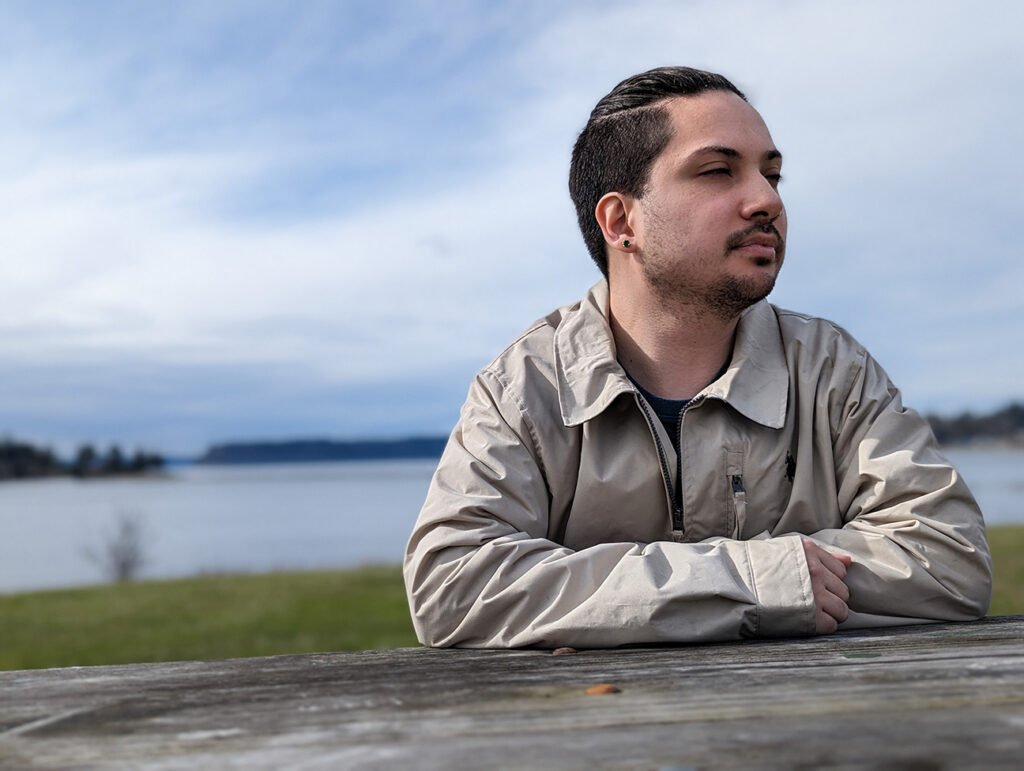
Former foster youth Andres Thornock, 23, is among the supporters.
Thornock, who was featured in The Imprint’s Born of History series, knows all too well the struggles of aging-out foster youth. A member of the Tulalip Tribes, Thornock was placed with guardians off the reservation — a white, Christian couple who Thornock says made living as a Two Spirit person in the foster home feel unsafe.
In extended foster care, Thornock ultimately found a path back to the Tulalip Tribes. But it was far from easy to remain eligible for the program, given the upheaval of independent life after a childhood in foster care.
“It can be overwhelming, and if you don’t have the right support, or a lot of support, you can just fall through,” Thornock said. “It would have been nice to not have to jump through so many hoops in order to just get funding to secure a place of my own.”
Thornock now heads up child welfare advocacy for their tribe, and has fought for foster youths’ rights on numerous statewide bills in Washington — attempts to smooth the path for others aging out of foster care.
‘Supporting young people developmentally where they’re at’
Washington’s Department of Children, Youth and Families reports that as of February, there were 757 youth ages 18 to 21 in the state’s extended foster care program.
Although the pending legislation would make participation easier, the benefits would remain slim: in Seattle, for example, the average apartment rental is close to $2,000 a month.
Under the bill, youth in extended foster care would receive a subsidy of $860 per month, along with case management, health insurance and legal support. This amount will increase to $1,034 in 2025. Also beginning in July 2025, those who meet the school or work criteria, or those who are exempt from the rules due to disability, would receive additional payments, though the amount is yet to be determined.
Sen. Wilson said those terms strike the balance of “supporting young people developmentally where they’re at,” while also helping them launch their lives as young adults, regardless of circumstances.
Part of understanding the reality for young adults in foster care is knowing how precarious life can be for them, advocates say, and the Washington legislation allows for that: Participants could leave and re-enter as many times as needed.
“Kids like that tend to get villainized, people say, ‘Oh, well, they’re just taking advantage of the system,’” Thornock said. “I don’t think that’s fair. We’re all going through something — we’re all dealing with trauma. And we take longer to work that out and mature.”
The pending legislation, they added, would “help us with that.”
Still, some advocates remain concerned that the bill will not go far enough to stave off homelessness during and immediately after extended foster care. An earlier version of the bill, and a proposal from the state child welfare agency, included an additional stipend for housing, but it was not included in the final bill.
Instability, despite state support
Last year, the research and advocacy group Partners for our Children released a report analyzing the quality of Washington’s extended foster care program. Similar to shortcomings nationwide, the issues youth confronted were myriad and destabilizing, even with state support. They included housing instability, benefits that fell far short of meeting financial needs, and overly restrictive eligibility criteria.
“Rather than representing a time of self-discovery, identity formation, and opportunity to learn about work and relationships,” the authors stated, “for too many young adults exiting foster care, the transition to adulthood represents a premature role transition, with high-stakes consequences if they falter.”
States have been wrestling with these realities since extended foster care was first funded by the federal government in 2008. While the program has staved off justice-system involvement, food insecurity and homelessness to some extent, it still does not match the needs of aging-out foster youth.
According to the Washington Department of Social and Health Services, for example, 23% of people in extended foster care experience homelessness or housing instability. A legislative analysis found that barriers, including the strict eligibility criteria, are keeping more than a quarter of foster youth from entering extended care.
“Parents believe their job is to help their children. And if we’ve got kids that are being raised by the state, then it is our job to be the parent for those kids and to help them.”
— Washington state Sen. Claire Wilson
The problems are not unique to Washington. An Imprint investigation published last year revealed that Texas child welfare officials made it unnecessarily difficult for foster youth to enroll, creating burdensome hurdles and failing to provide housing even when beds were available.
Problems can be found in states with more liberal approaches as well. In California, foster youth have had to fight in court to maintain their benefits. “Unfortunately,” the youth-led advocacy group California Youth Connection stated in a recent report, “extended foster care has become a system that foster youth must prove their worthiness to participate in.”
Sen. Wilson’s efforts aim to change that perception in Washington.
And while the state’s Department of Children, Youth and Families (DCYF) told The Imprint it is neutral on the bill, officials have pledged to cooperate.
“DCYF supports the goal of addressing homelessness and housing instability for youth in extended foster care and ensuring youth leaving foster care have the support they need to transition to adulthood,” department spokesperson Nancy Gutierrez said in an emailed statement.
Update March 15: This story has been revised in the sections describing Senate Bill 5908 to more accurately reflect the legislation language. Some additional context has also been added.