
The filing is one of several lawsuits challenging state policies designed to protect openly LGBTQ+ foster youth.
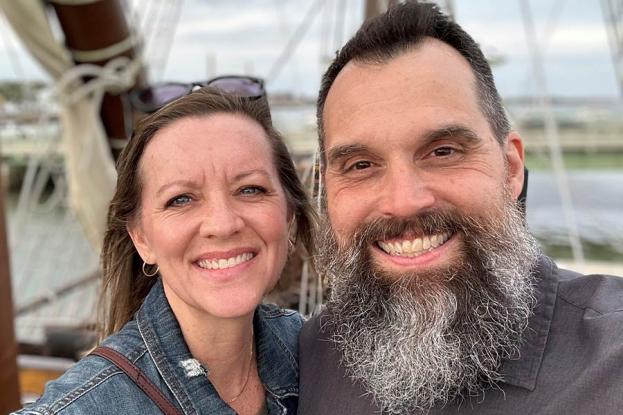
Washington foster parents are suing their state in federal court over requirements that the couple use chosen pronouns with LGBTQ+ youth in their care, saying the policy violates their rights as Christians to free speech and faith-based beliefs.
After nine years as foster parents, Jennifer and Shane DeGross claim they were unable to renew their foster care license due to their religious views on gender identity. According to the recent filing, the couple believes that a person’s biological sex is given by God and can’t be changed.
Alliance Defending Freedom, a right-leaning Christian law firm, filed the lawsuit March 22 in U.S. District Court on behalf of the couple, naming officials with the Washington state Department of Children, Youth and Families as defendants.
In an emailed response sent to The Imprint, a spokesperson for the department declined to comment on a pending lawsuit. But Jason Wettstein said it is “well-documented” that LGBTQ+ youth — who are over-represented in foster care compared with their peers — “have high rates of depression, anxiety, suicide, self-harm, and eating disorders.” As a result, Wettstein added, “whether a family accepts or rejects a child’s sexual orientation, gender identity or expression (SOGIE) has a profound impact on their wellbeing. In Washington, we are committed to ensuring that these vulnerable children and youth do not experience additional trauma when placed out-of-home into foster care.”
The Imprint’s ongoing examination of the issue has revealed numerous findings that as many as one-third of older foster youth identify as LGBTQ+, and they all too often end up in homes where they do not feel safe and uncomfortable.
The Alliance Defending Freedom highlighted the case in a post on the law firm’s website, calling out state officials for refusing to renew the couple’s foster-care license “because of their common-sense and religiously inspired view that people can’t change their sex.”
“whether a family accepts or rejects a child’s sexual orientation, gender identity or expression has a profound impact on their well-being.”
— Department of Children, Youth and Families spokesperson Jason Wettstein
The suit alleges that the state department’s regulations requiring that foster parents “follow all state and federal laws regarding nondiscrimination while providing services to children in your care,” is discriminatory because it requires that they “support and engage with foster children” regardless of their actual or perceived “sexual orientation, gender identity or expression,” and refer to foster children by their preferred pronouns and chosen name, and respecting their right to privacy.
The DeGross couple pledged to “love and support any child placed in their home but could not lie to a child about who they are or encourage a child to reject their sex,” according to the complaint. Their attorney — Johannes Widmalm-Delphonse, a former Minnesota public defender — did not respond to a request for comment.
But in the public post he stated: “Washington state officials are putting their own ideological agenda ahead of children who just need a loving home. Despite the couple’s faithful service as foster parents for nine years, the state disqualified them simply for having views that Washington does not like.”
Well-documented presence of LGBTQ+ foster youth
A series of studies in recent years have shown that as many as one in three foster youth identify as lesbian, gay, bisexual or transgender, and they are among the most likely to face difficulty in government care. A 2021 report published by the federal government’s Children’s Bureau and the University of Maryland cited data from states including California, Ohio and New York revealing the hardship they often face — higher levels of emotional distress and hospitalization, less stability and ability to rely on caring adults, and more frequent placements in group homes.
In Ohio’s Cuyahoga County, 42% of the LGBTQ+ foster youth ages 12 to 21 reported “that they could never be themselves in the place they are currently living.”
The prevalence and needs of these foster youth has promoted reaction from the White House. In 2022, President Biden issued an executive order stating that his administration would fight to protect “lesbian, gay, bisexual, transgender, queer, and intersex (LGBTQI+) Americans,” from unlawful discrimination. The order specifically pledges to protect LGBTQI+ foster youth by “safeguarding” their “privacy, safety, and civil rights” and advancing policies that prevent the placement of queer youth in foster and congregate care settings “that will be hostile to their gender identity or sexual orientation.”
Inspired by “biblical command”
The DeGross couple were licensed foster parents in Washington from 2013 to 2022, and during that time they cared for four children. They’ve described their work as “inspired by the biblical command to care for widows and orphans.” Two years ago, the couple tried to renew their foster care license through Olive Crest, a private agency that assists the state child welfare agency with the application process.
Court documents show that Ashlynn McDonald, an Olive Crest licensing coordinator, explained state regulations regarding LGBTQ+ youth with the couple in the fall of 2022. “Saying ‘I will support a child’ was not enough,” McDonald told them, explaining that the child welfare agency “is looking for ‘I will support a child by referring to him/her/them by preferred name and pronouns.’”
When they declined to abide by the state’s rules, they were informed they would be denied a foster parent license, which is the basis of the current suit. An additional complaint alleges a violation of the 14th Amendment, which provides equal protection under the law, by excluding or limiting foster parent applicants based on religious beliefs.
As many as one-third of older foster youth identify as LGBTQ+, and they all too often END UP IN HOMES where they do not feel safe and uncomfortable.
The DeGrosses seek unspecified punitive damages, to have the state regulation in question ruled unconstitutional, and to block state officials from denying foster licenses to applicants who do not comply.
The Scottsdale, Arizona-based Alliance Defending Freedom that is championing the case has also backed a nationwide campaign targeting transgender children. The Southern Poverty Law Center has deemed the organization a “designated hate group,” calling it one of the most influential in the nation launching attacks on LGBTQ+ rights.
In 2018, Alliance Defending Freedom sued New York on behalf of the faith-based adoption agency New Hope Family Services, arguing against directives that permit same-sex and unmarried couples to adopt.
Washington couple not alone
Lawsuits similar to the recent case in Washington have also been filed in Massachusetts and Oregon. In the Oregon case, a district court judge sided with the state and determined that its policy wasn’t illegal because it didn’t require prospective foster parents to use specific language, such as a young person’s preferred pronouns. The case is now before the Ninth Circuit Court of Appeals.
They follow a 2020 lawsuit filed by foster parents James and Gail Blais, who sued the Washington Department of Children, Youth and Families (DCYF) while trying to obtain a license to foster their great-granddaughter. They, too, challenged the state’s policy protecting children and youth who identify as LGBTQ+ from “discrimination or harassment.”
During a home study as part of the vetting process for placement of the child identified in court documents as H.V., a social worker asked hypothetical questions, including:
“How would we react if H.V. was a lesbian?”
“If at 15 years old, H.V. wanted to undergo hormone therapy to change her sexual appearance, would we support that decision and transport her for those treatments?”
“If as a teenager, H.V. wanted to dress like a boy and be called by a boy’s name, would we accept her decision and allow her to act in that manner?”
In their response, the couple stated that although they would love and support their great-granddaughter, in the “unlikely event” that she developed gender dysphoria and sought gender-affirming medical care, as Seventh Day Adventists they “could not support such treatments based on our sincerely-held religious convictions.”
A federal district court in eastern Washington issued a mixed opinion in the case in 2020, stating that while staff must comply with the provisions of state policy, foster parent applicants’ answers to hypothetical questions “cannot serve as the sole determining factor when an applicant expresses sincerely held religious beliefs.” License denials therefore must be based on other factors.
“If the only factor weighing against an otherwise qualified applicant has to do with their sincerely held religious beliefs, the Department must not discriminate against a foster care applicant based on their creed,” the 2020 opinion stated.
While they would not comment on the pending lawsuit involving the DeGross couple, Washington state officials said in an email that the final ruling in the case involving H.V. requires foster parent applicants to “agree to follow the child’s case plan and to allow the physical, medical, psychological, emotional, cultural and social needs of foster children who identify as LGBTQ+ or who may so identify in the future.”
Nonetheless, spokesperson Wettstein said, “This does not mean that foster parents must agree with or support all of DCYF’s policies. We cannot and do not disqualify people from becoming foster parents on the basis of sincerely held religious beliefs.” The federal court ruling, however, “does permit DCYF to take an applicant’s views on LGBTQ+ issues into account when reviewing foster family home license applications or family home study applications.”